
Butterfly species number around 18,000 to 20,000 across the world, from the great orange monarchs that migrate thousands of kilometres to the tiny blues that fit on a fingertip and the giant swallowtails of the tropical rainforest. If you are wondering how many butterfly species there are and what makes a butterfly different from a moth, the short answer is this: butterflies are day-flying insects with slender bodies, clubbed antennae and brightly coloured wings covered in tiny scales, while most moths fly at night, have feathery or tapering antennae, and rest with their wings folded flat.
Key takeaways
- Around 18,000 to 20,000 butterfly species are known, and new ones are still being found every year.
- Butterflies fly by day, with clubbed antennae and wings held upright at rest; most moths fly by night.
- A butterfly begins life as a caterpillar, changes inside a chrysalis, and emerges as an adult.
- Monarchs migrate thousands of kilometres, swallowtails are the largest butterflies, and blues are the smallest.
- Meadows, gardens, woodland rides and tropical rainforests are the best places to see butterflies, on warm sunny days.
What makes a butterfly a butterfly
A butterfly is an insect with four wings covered in tiny overlapping scales, which give the wings their colour. The scales are what rub off as a fine dust on your fingers if you touch a butterfly’s wing, and they are also why a damaged wing cannot heal. The wings are joined to a slender body with a small head, large eyes and two antennae that end in tiny clubs.
Butterflies feed through a long coiled tongue called a proboscis, which unrolls like a drinking straw to sip nectar from flowers. They also drink from damp mud, rotting fruit and even animal dung, taking in salts and minerals they cannot get from nectar. A butterfly tastes with its feet: when it lands on a flower, sensors on its legs tell it whether the plant is worth laying eggs on.
The butterfly’s life has four stages: egg, caterpillar, chrysalis and adult. The caterpillar eats and grows, shedding its skin several times, and then it forms a chrysalis, inside which its body is rebuilt into a butterfly. Among the forest animals of sunny woodland rides, butterflies are among the most visible insects of summer.
Monarchs: the great migrants
The monarch is the most famous butterfly species in the world, a large orange and black butterfly that lives across North America. Every autumn, millions of monarchs fly south to Mexico, some travelling more than 4,000 kilometres to spend the winter clustered in the fir forests of the mountains of central Mexico. In spring they fly north again, breeding along the way, and it takes several generations to complete the return journey.
No single monarch makes the whole round trip. The butterflies that fly south in autumn are the great-grandchildren of the ones that flew north in spring, yet they find the same mountain forests their ancestors used, guided by the sun and by an internal compass that scientists are still working to understand. The winter colonies can hold tens of millions of butterflies, covering the trees like orange leaves.
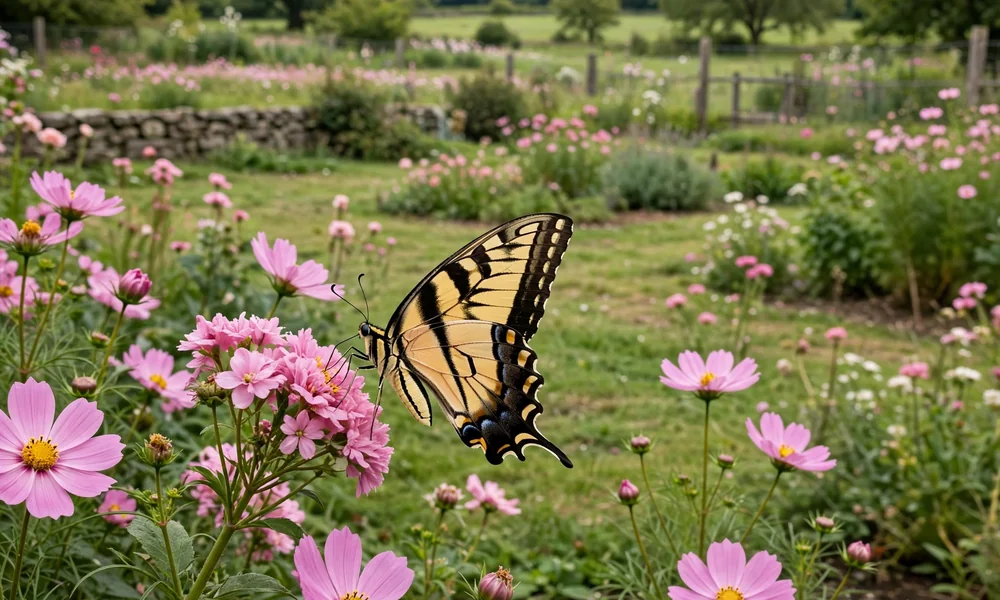
Monarch caterpillars feed only on milkweed, and the plant’s bitter chemicals pass into the caterpillar and then into the adult butterfly, making monarchs taste so bad that most birds learn to leave them alone. The viceroy butterfly, which looks almost exactly like a monarch, gains protection by copying it. Monarchs are best seen in the open meadows and gardens where milkweed grows, drifting from flower to flower on a warm summer day.
Swallowtails: the largest butterflies
Swallowtails are the largest and most spectacular butterflies in the world, with broad wings and long tails streaming from the hind wings, like the tail of a swallow. There are around 550 species, living on every continent except Antarctica, and the largest of them all, Queen Alexandra’s birdwing of Papua New Guinea, has a wingspan of around 25 centimetres, making it the biggest butterfly on Earth.
The yellow swallowtail of North America is one of the best-known species, a big yellow and black butterfly that glides through gardens and woodlands. The common yellow swallowtail of Europe is similar, a large yellow butterfly with black markings and blue and red spots near the tails. Swallowtail caterpillars are often green with black and orange markings, and when they are disturbed they push out a forked, foul-smelling organ from behind the head.
Birdwing butterflies, the giants of the swallowtail family, live in the rainforests of Southeast Asia and Australasia. The males are brilliantly coloured in green, blue and gold, while the females are larger and browner. The rainforest animals of the tropical canopy include birdwings gliding high above the forest floor, far above the reach of most watchers.
Blues, coppers and hairstreaks: the small butterflies
The blues are the largest family of butterflies, with around 6,000 species, and they include some of the smallest butterflies in the world. The western pygmy blue of North America has a wingspan of around a centimetre and a half, small enough to sit on a fingertip. Most blues are small, delicate butterflies with blue, brown or grey upper wings and spotted undersides.
Coppers are small butterflies with bright copper-orange wings, found in meadows and wetlands across Europe, Asia and North America. Hairstreaks are small butterflies with thin tails on their hind wings and a habit of rubbing those wings together when they rest, which may distract predators from the butterfly’s head. Among the mountain animals of high alpine meadows, small blues and coppers are often the commonest butterflies of all.
Admirals, tortoiseshells and fritillaries
The brush-footed butterflies are the largest butterfly family after the blues, with around 6,000 species, and they include some of the best-known butterflies of all: admirals, tortoiseshells, peacocks, fritillaries and the monarch itself. They are called brush-footed because their front legs are small and brush-like, and they walk on only four legs.
The red admiral is a striking black butterfly with red bands and white spots, found across Europe, North America and Asia, and it is one of the butterflies most often seen in gardens, feeding on buddleia, rotting fruit and tree sap. The peacock butterfly of Europe has large eyespots on its wings that flash open when it is disturbed, startling birds that try to eat it.
Whites, yellows and skippers
The whites and yellows are the butterflies of gardens, fields and roadsides, with white, yellow or orange wings and a strong, steady flight. The large white, the small white and the green-veined white are among the commonest butterflies of Europe, and their caterpillars feed on cabbages and other members of the cabbage family, which is why gardeners know them well.
Skippers are small, stout butterflies with hooked antennae and a fast, darting flight that gives them their name. There are around 4,000 species, and they are often brown or orange, with a habit of basking with their wings half open. The urban animals of city parks and gardens include whites, holly blues and skippers among the butterflies that have adapted to town life.
Where butterflies live
Butterflies live on every continent except Antarctica, and they are most numerous in the warm, wet tropics. The rainforests of the Amazon, the Andes and Southeast Asia hold thousands of species each, and a single day in an Ecuadorian cloud forest can reveal more butterfly species than a whole summer in northern Europe.
In temperate countries butterflies are creatures of meadows, woodland edges, chalk hills and gardens. Each species needs its own food plant for its caterpillars, so a meadow with many wildflowers supports many more butterflies than a field of a single crop. The chalk grasslands of southern England are among the richest butterfly habitats in Europe, holding dozens of species in a single hillside.
| Species | Family | Where it lives | Wingspan |
|---|---|---|---|
| Monarch | Brush-footed | North America, migrating to Mexico | 10 centimetres |
| Common yellow swallowtail | Swallowtail | Europe and Asia | 9 centimetres |
| Queen Alexandra’s birdwing | Swallowtail | Rainforests of Papua New Guinea | 25 centimetres |
| Western pygmy blue | Blue | Deserts and salt marshes of North America | 1.5 centimetres |
| Large blue | Blue | Grasslands of Europe and Asia | 4 centimetres |
| Red admiral | Brush-footed | Europe, North America and Asia | 6 centimetres |
| Peacock | Brush-footed | Woodlands and gardens of Europe | 6 centimetres |
| Clouded yellow | White and yellow | Europe, North Africa and Asia | 5 centimetres |
Best seasons for butterfly watching
Summer is the finest season for butterflies in temperate countries, when meadows are full of flowers and dozens of species are on the wing. Warm, sunny days between late morning and mid-afternoon are the best time, since butterflies need the sun to warm their flight muscles, and they rest in the shade when clouds cover the sun.
Staying safe around butterflies
Butterflies are fragile, and they deserve a gentle approach. Never catch a butterfly by its wings, since the scales rub off and the wing cannot heal. Watch with your eyes, and photograph them where they rest, rather than chasing them through the meadow.
Butterfly watching checklist
- Visit a wildflower meadow on a warm, sunny day between late morning and mid-afternoon.
- Look for monarchs on milkweed in North America, and for swallowtails gliding through gardens.
- Check mud puddles and riverbanks in the tropics, where butterflies gather to drink.
- Plant buddleia, lavender and other nectar flowers, and leave nettles for caterpillars.
- Photograph butterflies where they rest, and never catch one by its wings.
- Leave no trace: keep to paths through the meadow, and take your rubbish home.
Frequently asked questions
How many butterfly species are there?
Around 18,000 to 20,000 butterfly species are known, and new ones are still being found every year, especially in the rainforests of South America and Southeast Asia. Butterflies are a small part of the much larger group of moths and butterflies, which holds more than 150,000 species.
What is the difference between a butterfly and a moth?
Butterflies fly by day, have slender bodies and clubbed antennae, and rest with their wings held upright. Most moths fly by night, have feathery or tapering antennae, and rest with their wings folded flat. There are exceptions, but the antennae are the most reliable clue.
How is this guide different from the rainforest animals guide?
This is a species-level guide to butterflies: it covers monarchs, swallowtails, blues, admirals, whites and skippers in detail. The rainforest animals guide is a general roundup of many different animals that live in rainforests, and does not go into any one group in this depth.
How is this guide different from the jungle animals guide?
This guide covers butterflies wherever they live, from Arctic tundra to city gardens, including their life cycle, feeding and migration. The jungle animals guide covers the many different animals that live in jungles, of which butterflies are only one part.
How far do monarch butterflies migrate?
Monarchs fly more than 4,000 kilometres from North America to the fir forests of central Mexico each autumn. No single butterfly makes the whole round trip: it takes several generations to complete the return journey north in spring.
Why are butterflies important?
Butterflies pollinate flowers as they feed on nectar, and their caterpillars are food for birds, bats and other animals. Because each species needs its own food plant, butterflies are also sensitive indicators of the health of meadows and woodlands: when butterflies disappear, it is often a warning that wildflowers and habitats are being lost.
Conclusion
Butterfly species are the great day-flying insects of the world: monarchs crossing a continent, swallowtails gliding through the garden, blues on a fingertip and morphos flashing blue in the forest shade.
The next step is to pick one meadow and one sunny day — a summer morning in a wildflower field, a spring walk on a chalk hillside or a dry-season riverbank in the tropics — and watch the wings.














