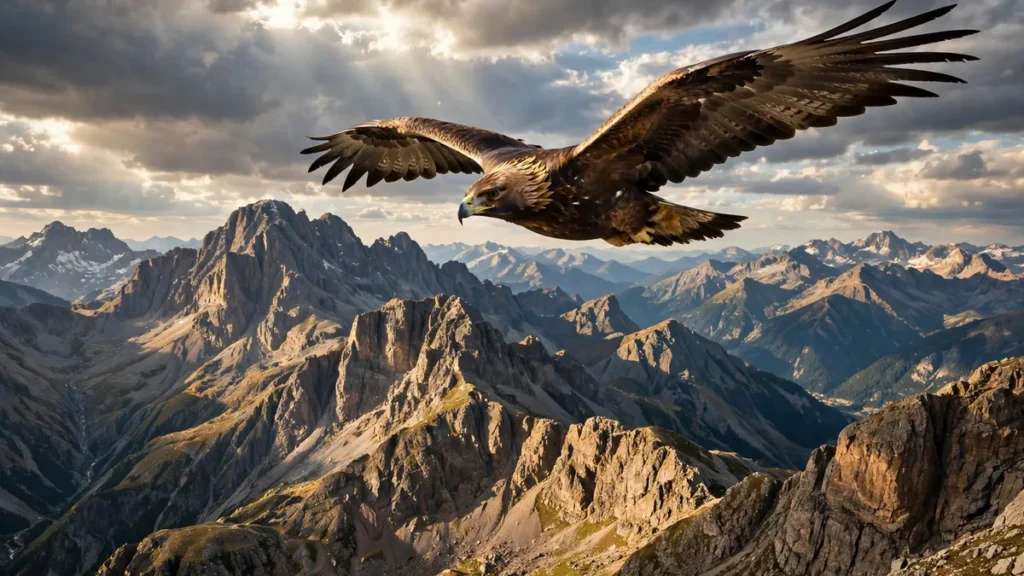
Eagle species are the great diurnal birds of prey, from the golden eagle of the mountains to the bald eagle of North American rivers, the harpy eagle of the South American rainforest and the Philippine eagle. If you are wondering which eagle species exist and what makes an eagle different from other birds of prey, the short answer is this: eagles are large, powerful hunters that fly by day, with hooked beaks, huge talons and eyesight several times sharper than ours, and they live on every continent except Antarctica.
Key takeaways
- Eagle species are large diurnal birds of prey: they hunt by day, unlike owls, which hunt by night.
- The golden, bald, white-tailed, martial, harpy, Philippine, steppe and wedge-tailed eagles are the best-known species.
- Eagles have eyesight several times sharper than ours, and they can spot prey from more than a kilometre away.
- Most eagles mate for life and return to the same eyrie year after year.
- Mountains, coasts, rivers and open grassland are the best places to see eagles, in the morning when they ride the rising air.
What makes an eagle an eagle
An eagle is a large bird of prey with a heavy hooked beak, powerful legs and huge curved talons, built to catch and kill animals as large as hares, fish, monkeys and small deer. Eagles are diurnal hunters: they fly and hunt by day, using their extraordinary eyesight to spot prey from far above the ground. Owls, by contrast, hunt by night.
Eagles belong to the same family as hawks, kites and buzzards, but they are bigger, heavier and stronger. A golden eagle can weigh more than six kilograms, and a martial eagle can take prey as heavy as a small antelope. Their broad, fingered wings are made for soaring on rising air, and they can stay aloft for hours without flapping.
An eagle can see a rabbit from more than a kilometre away, and its eyes are several times sharper than a human eye. The eyes face forward, giving the depth perception needed to judge a dive, and a bony ridge above each eye shades it from the sun.
The great eagles of the world
The golden eagle is the best-known eagle species of all, and the most widespread, living across the mountains of North America, Europe and Asia. Golden eagles are dark brown with golden feathers on the back of the neck, and they hunt hares, rabbits, grouse and marmots, stooping at speeds of more than 150 kilometres per hour.
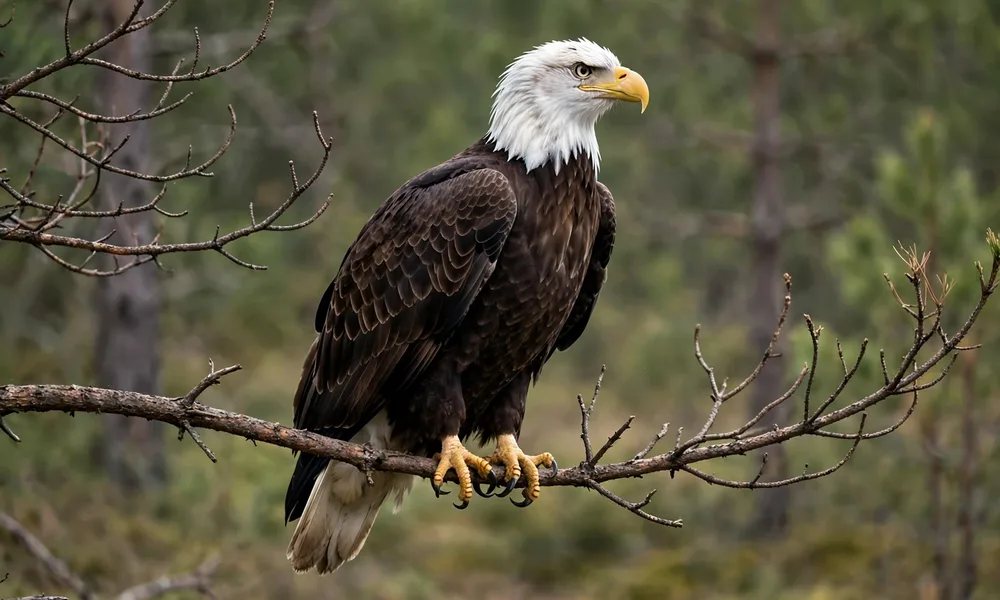
The bald eagle is the national bird of the United States, and one of the great conservation stories. It lives along the rivers, lakes and coasts of North America, where it eats mostly fish, snatching them from the water with its talons. The adult has a white head and tail and a dark brown body, and it was once close to extinction before recovering across the continent.
The white-tailed eagle is the largest eagle of Europe, a huge grey-brown bird with a pale head and a short white tail. It lives along the coasts, lakes and rivers of northern Europe, where it eats fish, water birds and carrion. Like the coastal animals it hunts among, it is a bird of the sea edge, once extinct in Scotland before it was brought back.
The martial eagle is the largest eagle of Africa, a powerful hunter of the open savannas and woodlands, taking hares, guinea fowl, small antelope and young jackals, and it can kill prey as heavy as itself. The harpy eagle is the great eagle of the South American rainforest, one of the most powerful birds of prey alive, with legs as thick as a human wrist and talons as long as a grizzly bear’s claws. It hunts monkeys and sloths in the canopy.
The Philippine eagle is one of the rarest eagle species in the world, a huge bird of the forests of the Philippines with a shaggy crest and a massive beak, eating monkeys, flying lemurs and large birds. The steppe eagle hunts ground squirrels on the grasslands of Central Asia, and the wedge-tailed eagle is the largest bird of prey in Australia, a dark bird with a long wedge-shaped tail that soars over the outback hunting rabbits, wallabies and carrion.
Hunting and eyesight: how eagles catch their prey
Eagles hunt in several ways, and each species has its own style. The golden eagle soars high over the mountains, then stoops on its prey in a fast dive. The bald eagle flies low over the water, snatching fish from the surface with its talons. The harpy eagle flies through the forest canopy, snatching monkeys and sloths from the branches with its enormous feet.
Whatever the style, the kill is made with the feet: an eagle’s talons are long, curved and needle-sharp, and its legs are among the strongest of any bird. The grip of a large eagle can crush bone, and the bird kills by piercing its prey with its talons and squeezing. The hooked beak is used afterwards, to tear the prey into pieces small enough to eat.
Eagles also steal. The bald eagle and the white-tailed eagle are both known to chase ospreys and other fishing birds until they drop their catch. Among the predators of the bird world, eagles take an unusual share of their food by theft as well as by hunting, and they eat carrion too, especially in winter when live prey is scarce.
Nests, family life and territories
Most eagle species mate for life, and a pair will hold the same territory for years. The nest, called an eyrie, is one of the largest structures built by any bird: a huge pile of sticks on a cliff ledge or in a tall tree, added to year after year until it can be two metres across.
The female usually lays one to three eggs, and the parents share the work of sitting on them and feeding the young. In many species, only one young eagle usually survives to leave the nest.
Young eagles stay with their parents for months after leaving the nest, and then they wander. A young golden eagle may travel hundreds of kilometres before it finds a territory of its own, and it may not breed until it is five or six years old. The mountain animals of the high ridges include the golden eagle at the top of the food chain.
Where to see eagles
The best place to see a golden eagle is a high mountain valley in the morning, when the birds ride the rising air along the ridges. In Scotland, the Isle of Mull and the Highlands are the best places; in North America, the Rockies and Alaska hold the largest numbers. Watch the ridges for a large dark bird soaring with its wings held flat.
Bald eagles are best along the rivers and coasts of North America in winter, when they gather where fish are plentiful; the Chilkat River in Alaska holds one of the largest gatherings in the world. White-tailed eagles are best on the coasts of Norway and the Scottish islands, where boat trips take visitors to the sea cliffs.
Harpy eagles are best in the rainforests of Central and South America, where they are rare and hard to see. Martial eagles are best in the national parks of East and southern Africa, soaring over the savanna in the morning, and the forest animals of the tropical canopy include the harpy eagle at the top of the food chain. Wedge-tailed eagles are best over the outback of Australia, soaring high above the dry grassland.
| Species | Where it lives | Best-known prey | Wingspan |
|---|---|---|---|
| Golden eagle | Mountains of North America, Europe, Asia | Hares, rabbits, grouse | 2.3 metres |
| Bald eagle | Rivers and coasts of North America | Fish, water birds, carrion | 2.3 metres |
| White-tailed eagle | Coasts and lakes of northern Europe | Fish, water birds, carrion | 2.4 metres |
| Martial eagle | Savannas and woodlands of Africa | Hares, antelope, guinea fowl | 2.6 metres |
| Harpy eagle | Rainforests of Central and South America | Monkeys, sloths | 2.2 metres |
| Philippine eagle | Forests of the Philippines | Monkeys, flying lemurs | 2.2 metres |
| Steppe eagle | Grasslands of Central Asia | Ground squirrels, small mammals | 2.2 metres |
| Wedge-tailed eagle | Outback of Australia | Rabbits, wallabies, carrion | 2.8 metres |
Best seasons for eagle watching
Spring is the finest season for eagles, when the birds are displaying over their territories and feeding young in the nest. Golden eagles soar over the mountain ridges in the morning, at their most active and visible. It is also the most sensitive season, so keep your distance from nests and give every bird more space than you think it needs.
Winter is the best season for bald eagles, when they gather in large numbers along the rivers and coasts of North America. Summer is the easiest for white-tailed eagles on the coasts of northern Europe.
Staying safe around eagles
Eagles are wild animals, and they deserve respect. Never approach a nest, never use a drone near an eyrie, and never leave food or rubbish where wild animals can reach it. Watch with binoculars or a telescope rather than walking closer: a disturbed eagle may abandon its nest, so the best view is always the distant one.
Eagle watching checklist
- Watch the mountain ridges in the morning for golden eagles.
- Look along rivers and coasts in winter for bald eagles.
- Take a boat trip on the coasts of Norway or Scotland for white-tailed eagles.
- Scan the savanna in the morning in East Africa for martial eagles.
- Never approach a nest, never use a drone near an eyrie, and always watch with binoculars.
- Leave no trace: take your rubbish home and keep to marked paths.
Frequently asked questions
What is the largest eagle species?
The wedge-tailed eagle of Australia has the largest wingspan of any eagle, up to 2.8 metres, and the Philippine eagle and the harpy eagle are among the heaviest and most powerful.
How is this guide different from the owl guide?
This guide covers eagles, which are diurnal birds of prey: they hunt by day, using their extraordinary eyesight to spot prey from far above the ground. The owl guide covers owls, which are nocturnal: they hunt by night, using their hearing to find prey in the dark.
How is this guide different from the predator animals guide?
This is a species-level guide to eagles: it covers the golden, bald, white-tailed, martial, harpy, Philippine, steppe and wedge-tailed eagles in detail. The predator animals guide is a general roundup of many different predators, and does not go into any one group in this depth.
Do eagles mate for life?
Yes, most eagle species mate for life. A pair will hold the same territory for years, sometimes for decades, and return to the same eyrie year after year.
How good is an eagle’s eyesight?
An eagle’s eyesight is several times sharper than a human eye. An eagle can see a rabbit from more than a kilometre away, and its forward-facing eyes give it the depth perception it needs to judge a dive.
Where is the best place to see a golden eagle?
Golden eagles are best in the high mountain valleys of Scotland, the Rockies and the Himalayas in the morning. Watch the ridges for a large dark bird soaring with its wings held flat.
Conclusion
Eagle species are the great hunters of the daytime sky: golden eagles over the mountains, bald eagles along the rivers, white-tailed eagles at the sea cliffs, martial eagles over the savanna, harpy eagles in the canopy and wedge-tailed eagles over the outback.
The next step is to pick one species and one season — a spring morning in the Highlands, a winter river in Alaska or a summer boat trip in Norway — and plan your visit around it.














