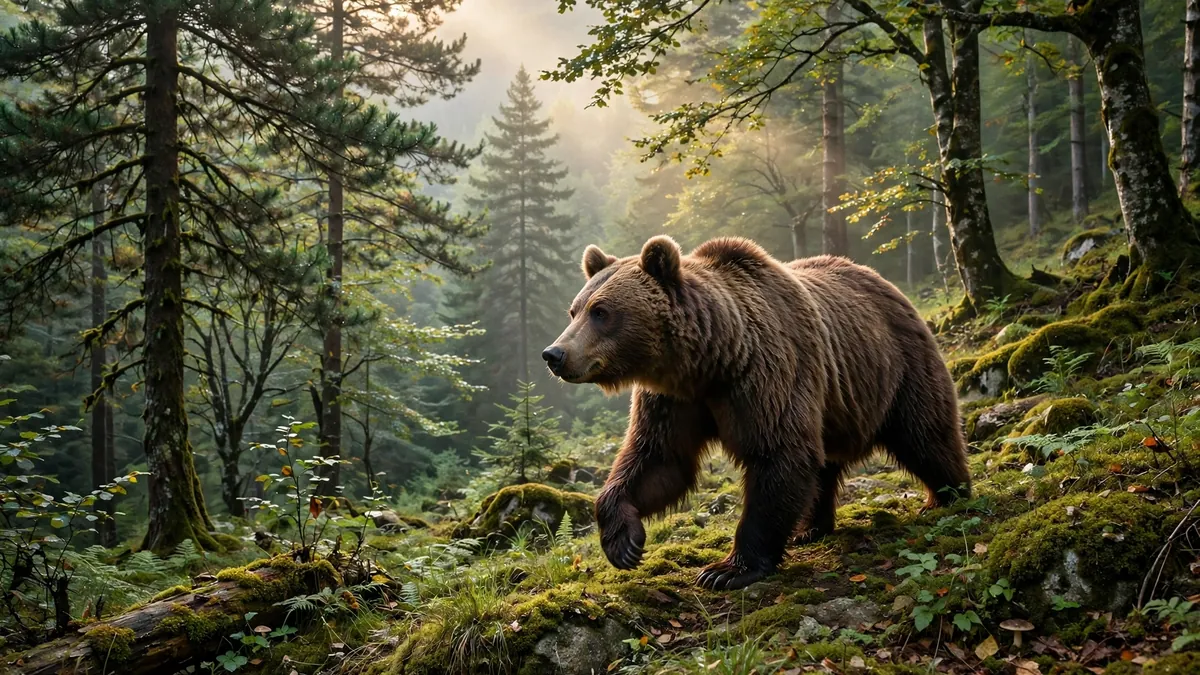
Kosovo animals include brown bears, grey wolves and Eurasian lynx in the forests of the Sharr Mountains and the Accursed Mountains, chamois on the high rocky slopes, golden eagles and griffon vultures above the ridges, and Dalmatian pelicans on the lakes of the lowlands. If you are wondering which animals live in Kosovo and where to see them, the short answer is this: the mountains hold bears, wolves, lynx and chamois, the skies hold eagles and vultures, and the lakes and rivers hold pelicans, herons and otters.
Kosovo is a small, mountainous country, and its wildlife is concentrated in the high ranges that frame it on three sides. The Sharr Mountains rise along the southern border, the Accursed Mountains along the west, and between them lie valleys, lakes and fast rivers that give the country a surprising variety of habitats for its size.
Key takeaways
- Kosovo holds brown bears, grey wolves and Eurasian lynx in the forests of the Sharr Mountains and the Accursed Mountains.
- Chamois live on the high rocky slopes above the treeline, and golden eagles and griffon vultures hunt over the mountain ridges.
- Dalmatian pelicans visit the lakes of the lowlands, and otters hunt in the clean, fast-flowing rivers.
- Kosovo has no endemic land mammal: no mammal lives only in Kosovo.
- Dawn and dusk are best for mammals, spring and early summer for birds, and autumn for the deer rut in the mountain forests.
What makes Kosovo’s wildlife special
Kosovo sits where the Dinaric Alps meet the Balkan ranges, and that meeting of mountains is what makes its wildlife worth seeking out. Two great ranges, the Sharr and the Accursed Mountains, hold forests, alpine meadows and bare rock within a short distance of each other.
Kosovo has no endemic land mammal: no mammal lives only in Kosovo. What it has instead is a stronghold for the large mammals of the Balkans. Bears, wolves and lynx survive here in numbers that have vanished from much of Europe, because the mountain forests are large, remote and thinly settled.
The country also holds a meeting point of birds. Golden eagles and griffon vultures circle over the high ridges, while Dalmatian pelicans and herons feed on the lowland lakes, and the rivers hold kingfishers, dippers and grey wagtails.
The great mammals of Kosovo
The brown bear is Kosovo’s most impressive animal, living in the beech and pine forests of the Sharr Mountains and the Accursed Mountains. Bears are most active at dawn and dusk, feeding on berries, nuts and roots in summer and autumn, and they are shy of people, so a sighting takes a guide and patience.
Among the predators, the grey wolf hunts in packs through the mountain forests and valleys, and the Eurasian lynx moves silently through the same woods, most active at night. Wolves are heard far more often than they are seen, and the lynx is one of the hardest animals in the country to glimpse.
Chamois live on the steep rocky slopes above the treeline, where they pick their way across cliffs that few other animals can use. Red deer and roe deer live in the mountain forests, wild boar root through the oak woods of the lower slopes, and the forest animals of Kosovo also include badgers, pine martens and red squirrels.
The red fox is common in farmland and forest edges across the country, and the Balkan chamois shares the high ground with the golden jackal in the valleys below. The mountains also hold the brown bear’s smaller neighbours: the beech marten of the rocky slopes and the stoat of the alpine meadows.
Birds of the mountains and the lakes
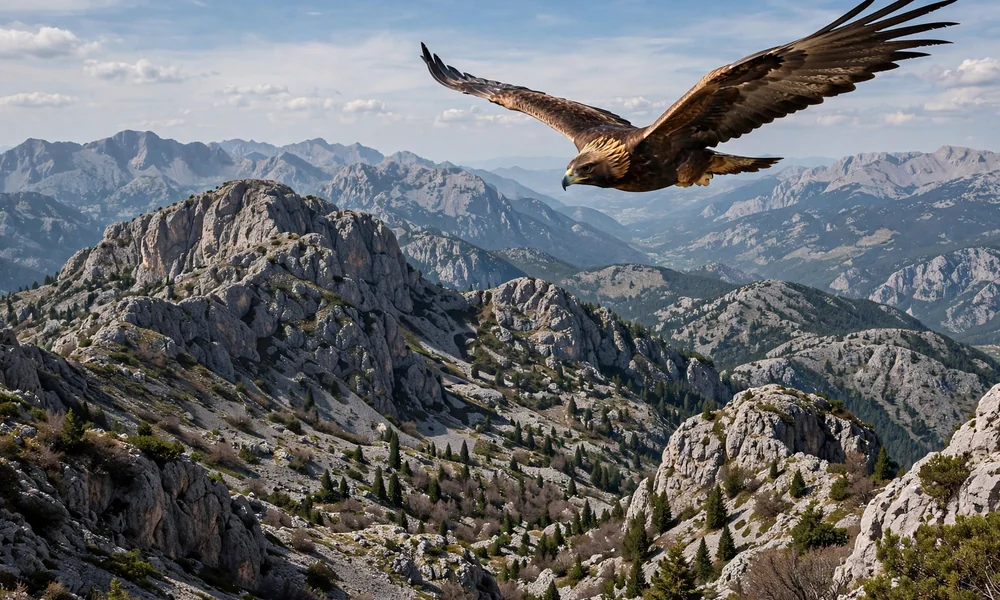
The golden eagle is the great bird of Kosovo’s mountains, hunting over the ridges of the Sharr and the Accursed Mountains, where it takes hares, marmots and young chamois. Griffon vultures circle over the same cliffs, riding the thermals in small groups, and the peregrine falcon nests on the high crags.
The lakes of the lowlands hold a different cast of birds. Dalmatian pelicans visit the larger lakes to feed, and great white pelicans pass through on migration. Grey herons and little egrets wade in the shallows, and the reed beds shelter bitterns and marsh harriers.
In the forests, the owls of Kosovo include the tawny owl of the woodlands and the eagle owl of the rocky valleys. Woodpeckers drum in the old beech trees, and the meadows hold hoopoes and rollers in summer. In winter, the lakes hold flocks of ducks and geese from the north.
Otters, fish and life in the rivers
Kosovo’s rivers run fast and clean from the mountains, and their banks hold otters, which hunt fish at dawn and dusk. The otter is most active in the quiet stretches of the Drin and its tributaries, where the water is clear and the banks are wooded.
The rivers hold brown trout in their upper reaches and chub and barbel lower down, and the gravel banks shelter frogs and water snakes. Kingfishers flash along the slower stretches, dippers walk the streambed in the mountain torrents, and grey wagtails bob on the rocks.
The lakes also hold carp and perch, and the reed beds of the lowland lakes shelter coots, grebes and moorhens through the summer. The smaller streams of the foothills are clean and shaded, and they hold the same dippers and wagtails as the mountain rivers.
Smaller animals of the mountains and valleys
Not all of Kosovo’s wildlife is large. The alpine meadows hold marmots, which whistle a warning from the rocks on warm days, and the forests hold red squirrels and dormice. Hares are common on the open slopes and in the farmland of the valleys.
Bats roost in the caves of the Accursed Mountains and in the old buildings of the hills, and the meadows are rich in butterflies and wild bees in summer. The fire salamander, black and yellow, lives in the damp forests after rain.
Adders bask on sunny slopes in the mountains, and the meadow viper lives in the grasslands of the lowlands. The ponds and marshes hold marsh frogs and newts, and the summer evenings fill with the calls of frogs from the reed beds.
Where to see Kosovo’s wildlife
Brown bears are best in the forests of the Sharr Mountains, where a guide can take you to the clearings and berry patches the bears favour. Go early in the morning and expect to walk quietly for a long while before you see one.
Golden eagles and griffon vultures are best looked for over the ridges of the Accursed Mountains, where they circle high above the valleys on a clear day. The mountain animals of Kosovo are reached by the marked trails from the valley villages, and the birds are most active in the late morning, when the thermals rise.
Dalmatian pelicans are best on the larger lowland lakes in spring and summer, when the birds gather to feed. Otters are hardest to see, and the quiet stretches of the Drin and its tributaries at dawn are the best places to try, with a local guide and plenty of patience.
| Species | Where to look | Best season | How likely is a sighting |
|---|---|---|---|
| Brown bear | Sharr Mountains forests | Spring to autumn, at dawn | Low, needs a guide |
| Grey wolf | Mountain forests and valleys | Winter, at dawn | Low, heard more than seen |
| Eurasian lynx | Accursed Mountains forests | All year, at night | Very low |
| Chamois | Rocky slopes above the treeline | All year | Good with binoculars |
| Golden eagle | Ridges of both ranges | All year, late morning | Fair on a clear day |
| Griffon vulture | Cliffs of the Accursed Mountains | Spring to autumn | Fair over the ridges |
| Dalmatian pelican | Larger lowland lakes | Spring to summer | Fair from the shore |
Best seasons for wildlife watching
Spring is the finest season. The pelicans return to the lowland lakes, the meadows of the mountains fill with flowers and butterflies, and the bears emerge from their winter dens. It is also the most sensitive season, so keep to paths, keep dogs on a lead and give every animal more space than you think it needs.
Summer is the easiest season for the mountain birds, with long days and the eagles and vultures at their busiest over the ridges, and for the lakes, where the pelicans and herons feed through the warm months. Autumn brings the deer rut in the mountain forests.
Winter is the quiet season, and the hardest for watching, but wolf tracks are easiest to find in the snow of the mountain forests, and the lakes hold flocks of ducks and geese from the north.
Staying safe around Kosovo’s wildlife
Kosovo’s wild animals are usually calm, but they deserve respect, and the bear most of all. Never approach a bear, never walk between a mother and her cubs, and never leave food or rubbish where wild animals can reach it. Keep your distance from any animal you meet, and walk with a local guide in the mountains.
Kosovo wildlife watching checklist
- Book a guided bear visit in the Sharr Mountains, and go early in the morning.
- Scan the ridges of the Accursed Mountains on a clear day for golden eagles and griffon vultures.
- Visit the larger lowland lakes in spring for Dalmatian pelicans and herons.
- Walk the marked trails with binoculars for chamois on the rocky slopes above the treeline.
- Never feed wild animals, and never use food or calls to lure them closer for a photograph.
- Leave no trace: take your rubbish home and keep to marked paths in the forests and the mountains.
Frequently asked questions
What is the most famous animal in Kosovo?
The brown bear is the most famous, living in the forests of the Sharr Mountains and the Accursed Mountains. The golden eagle is the best-loved bird of the mountain ridges.
Are there wolves and bears in Kosovo?
Yes, there are brown bears and grey wolves in Kosovo, living in the mountain forests of the Sharr and the Accursed Mountains. The Eurasian lynx lives in the same forests, but it is very rarely seen.
What animal lives only in Kosovo?
No land mammal lives only in Kosovo. The country holds no endemic land mammal, but it does hold brown bears, wolves, lynx and chamois, and its mountains are among the best places in the Balkans for golden eagles.
When is the best time to see pelicans in Kosovo?
Dalmatian pelicans are best on the larger lowland lakes in spring and summer, when the birds gather to feed. The birds are most active in the morning and evening.
Can I see brown bears in Kosovo?
Yes. Brown bears live in the forests of the Sharr Mountains and the Accursed Mountains, where they feed on berries, nuts and roots. The best way to see them is on a guided visit at dawn.
Where can I see golden eagles in Kosovo?
Golden eagles hunt over the ridges of the Sharr Mountains and the Accursed Mountains, where they are easiest to spot on a clear day in the late morning, when the thermals rise, with binoculars.
Conclusion
Kosovo’s wildlife rewards patience: brown bears in the forests of the Sharr Mountains, golden eagles over the ridges of the Accursed Mountains, chamois on the high rocky slopes and Dalmatian pelicans on the lowland lakes are all within reach if you plan around the seasons and go with a local guide.
The next step is to pick one species and one season — a spring visit to the lowland lakes for pelicans, a morning bear walk in the Sharr Mountains, or a clear day on the ridges for golden eagles — and plan your visit around it.