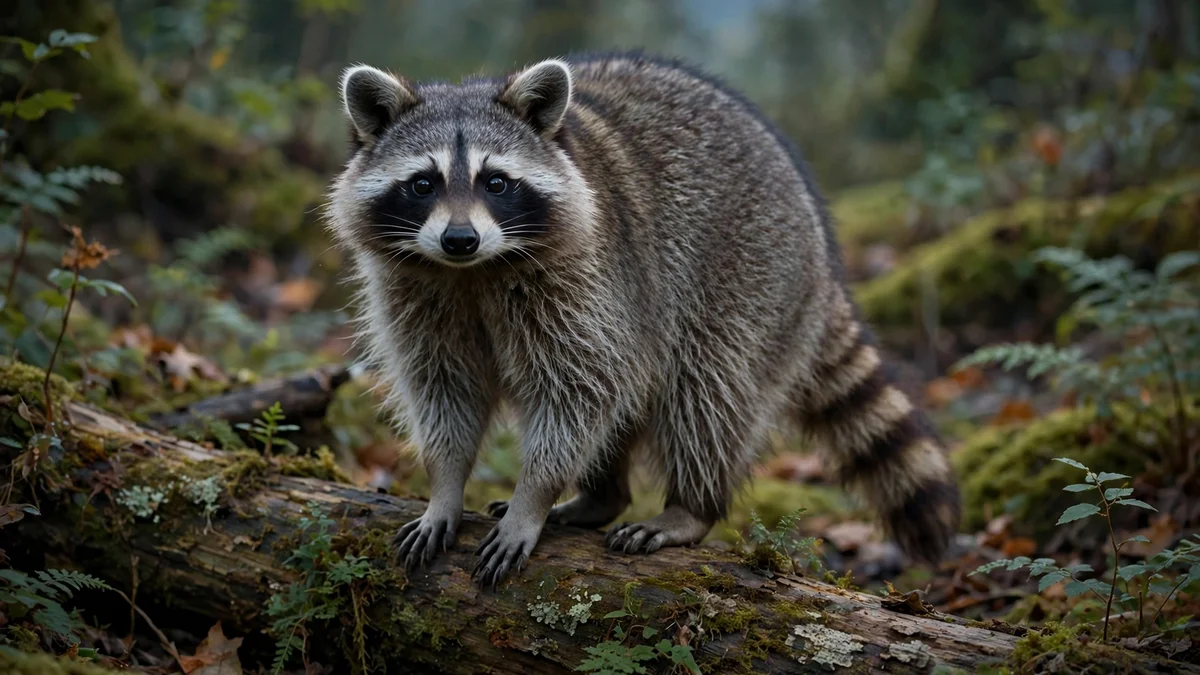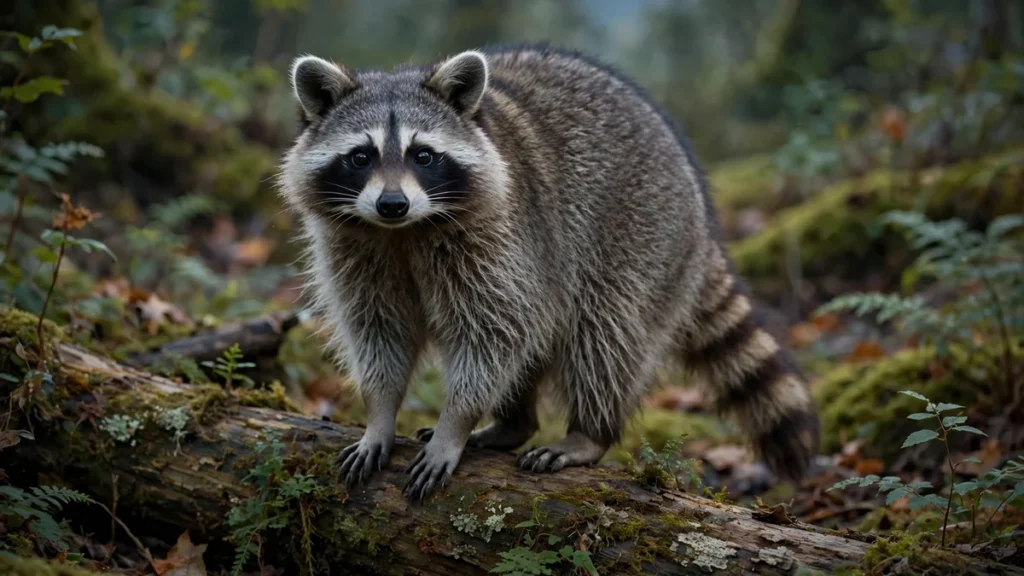
Raccoon species are among the most recognisable mammals in the world, and there are only three true raccoon species, all in the genus Procyon: the common raccoon, the crab-eating raccoon and the Cozumel raccoon. If you are wondering how many raccoon species exist and how to tell them apart, the short answer is this: only three species carry the name raccoon, and each one is a masked, ring-tailed animal that lives close to water, from North American forests and cities to a single small island off Mexico.
Key takeaways
- There are only three true raccoon species in the genus Procyon: the common, the crab-eating and the Cozumel raccoon.
- The common raccoon is the widespread raccoon of North America, also found in parts of Europe and Japan.
- The crab-eating raccoon lives in Central and South America and hunts for crabs and crayfish in shallow water.
- The Cozumel raccoon lives only on Cozumel Island in Mexico and is critically endangered, with a very small population.
- All raccoons share a black face mask, a ringed tail, dexterous fingers and the famous habit of dipping food in water.
What makes a raccoon a raccoon
A raccoon is a medium-sized mammal with a pointed face, a black mask across its eyes, a bushy tail ringed with dark bands, and long front paws that work almost like hands. Its fur is usually grey-brown, and its stocky body is built for climbing, swimming and opening latches and bins.
The mask is the raccoon’s most famous feature, but the real secret of the raccoon is its hands. The front paws have five long, flexible fingers, and the sense of touch in those fingers is so fine that a raccoon can feel the shape of an object in the dark or in water. Raccoons are strong swimmers and good climbers, and they are mostly active at night, resting by day in tree hollows, burrows and quiet corners of buildings.
The three raccoon species
The common raccoon, Procyon lotor, is the raccoon most people know. It lives across North America, from southern Canada through the United States to Mexico, and it has been introduced to parts of Europe and Japan, where it now lives wild. It is the largest of the three species, usually weighing between 4 and 9 kilograms, and it is the raccoon of forests, wetlands, suburbs and cities. Its diet is famously wide: fruit, nuts, insects, eggs, fish and whatever it finds in bins and compost heaps.
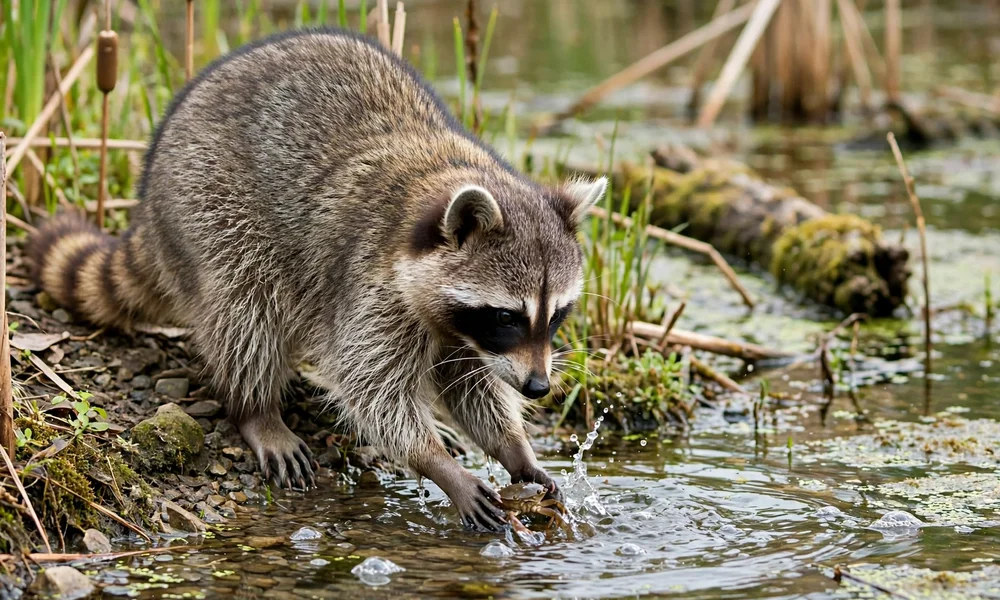
The crab-eating raccoon, Procyon cancrivorus, lives in Central and South America, from Costa Rica south to Argentina and Uruguay. It is a little smaller than the common raccoon, with shorter, coarser fur, and it spends much more of its life in and around water, eating crabs, crayfish and shellfish it finds in streams and mangroves, feeling for them with its sensitive fingers.
The Cozumel raccoon, Procyon pygmaeus, is the smallest and rarest of the three, and it lives only on Cozumel Island, off the eastern coast of Mexico. It is a dwarf species, noticeably smaller than the common raccoon, with a shorter tail and a golden tint to its fur. It lives in the island’s mangroves and forests, feeding on crabs, fruit and insects, and it is critically endangered, with only a few hundred animals left, threatened by habitat loss, roads and introduced predators.
Conservation work on Cozumel protects the mangroves and forests where the raccoon lives, reduces road deaths and keeps dogs and other introduced animals away from its remaining habitat.
Why raccoons wash their food
Raccoons are famous for washing their food, dipping it in water and rubbing it between their front paws before eating. The common raccoon’s scientific name, Procyon lotor, means roughly “the washer before the dog”. Yet the name is a little misleading, because raccoons do not wash their food to clean it.
What a raccoon is really doing is feeling its food. The skin on a raccoon’s front paws is covered in tiny nerve endings, and when those paws are wet, the sense of touch becomes even sharper, so the animal can tell exactly what it is holding. A raccoon will dip and rub a piece of food in water to learn its shape and texture. Raccoons kept away from water will still rub dry food between their paws in the same washing motion, which shows that the habit is about touch, not about cleaning. The same clever hands also open jars and lift latches, which is one reason raccoons thrive in cities.
Where raccoons live
Raccoons live in forests, wetlands, marshes and river valleys, and they are never far from water or from a safe den. A raccoon’s den may be a hollow tree, a rock crevice, an old burrow or a quiet corner of a building. In the wild they prefer woodland near streams and ponds, where they can hunt for frogs, crayfish and fruit, but they have also become masters of the city. The urban animals of North American cities include the raccoon, one of the most successful city animals of all, living in parks, gardens, attics and storm drains. The common raccoon has spread far beyond its original range, living wild in Europe and Japan as well as North America, while the crab-eating raccoon has stayed within Central and South America, and the Cozumel raccoon has never lived anywhere but its one small island.
Raccoons and people
People have a complicated relationship with raccoons. On one hand, the raccoon is a beloved animal, a symbol of cleverness and charm, appearing in stories and on the badges of parks and wildlife groups. On the other hand, raccoons can be a nuisance, raiding bins, tearing open rubbish bags and nesting in attics, and farmers and householders in raccoon country know to secure their bins and their chicken houses.
Raccoons can also carry diseases, including rabies, and their droppings can carry parasites, so people should never handle a wild raccoon or its droppings with bare hands. Yet raccoons do a great deal of good, eating insects and pests. The best way to live alongside raccoons is to admire them from a distance and keep food and bins secure. The nocturnal animals of the garden include the raccoon, most active after dark, and the forest animals of woodland and wetland include all three raccoon species.
| Animal | Type | Where it lives | Best-known food |
|---|---|---|---|
| Common raccoon | Species | North America, Europe, Japan | Fruit, nuts, fish, insects, eggs |
| Crab-eating raccoon | Species | Central and South America | Crabs, crayfish, shellfish, fruit |
| Cozumel raccoon | Species | Cozumel Island, Mexico only | Crabs, fruit, insects |
| White-nosed coati | Close relative | Central America, southern United States | Fruit, insects, small animals |
| South American coati | Close relative | South America | Fruit, insects, eggs, small animals |
| Kinkajou | Close relative | Rainforests of Central and South America | Fruit, nectar, honey, insects |
| Ringtail | Close relative | South-western United States and Mexico | Mice, birds, insects, fruit |
| Olingo | Close relative | Rainforests of Central and South America | Fruit, nectar, insects |
Best seasons for raccoon watching
Spring and summer are the finest seasons for raccoon watching, when mothers lead their young kits out at dusk and the animals are at their most active. On a warm summer evening near a stream, pond or wetland edge, a patient watcher may see a raccoon dipping its paws in the shallow water, feeling for crayfish, or a mother raccoon with her kits following her.
Autumn is also a good season, when raccoons feed heavily to build up fat for winter and are often seen raiding fruit trees and gardens at night. Winter is the hardest season, when raccoons in cold regions sleep for long stretches in their dens, though they do not truly hibernate.
Staying safe around raccoons
Raccoons are wild animals, and they deserve respect. Never try to feed a raccoon by hand, never approach a mother with kits, and never corner a raccoon in a shed or attic, because a frightened raccoon can bite and scratch. If a raccoon is in your garden, give it space and let it leave on its own, and keep pets and children indoors until it has gone.
Keep bins closed with tight lids, lock sheds and attics, and clear away fallen fruit and pet food left outdoors overnight. Never handle raccoon droppings with bare hands, and wash your hands well after cleaning up any area where raccoons have been. If a raccoon looks sick, unsteady or unusually bold, keep well away and contact local wildlife services.
Raccoon watching checklist
- Watch at dusk and after dark, when raccoons are at their most active.
- Look near streams, ponds and wetland edges, where raccoons hunt for food.
- Check for five-toed tracks in soft mud, like a small hand.
- Listen for rustling in trees and soft chattering calls.
- Never feed a raccoon by hand or approach a mother with kits.
- Leave no trace: take your rubbish home and keep to marked paths.
Frequently asked questions
How many raccoon species are there?
There are only three true raccoon species in the genus Procyon: the common raccoon, the crab-eating raccoon and the Cozumel raccoon. The table above also shows five close relatives in the same family, the Procyonidae, but these are not raccoons.
How is this guide different from the nocturnal animals guide?
This guide covers only the three true raccoon species of the genus Procyon, with a table of their close relatives. The nocturnal animals guide covers the whole community of animals that are active at night, from owls and bats to badgers and foxes, and it does not tell the three raccoon species apart.
What is the difference between the common raccoon and the crab-eating raccoon?
The common raccoon is larger, with longer, softer fur, and it lives in North America and in introduced populations in Europe and Japan. The crab-eating raccoon is smaller, with shorter, coarser fur, and it lives in Central and South America, where it hunts in shallow water for crabs and shellfish.
Why is the Cozumel raccoon critically endangered?
The Cozumel raccoon is critically endangered because it lives only on Cozumel Island in Mexico, and its whole population is small and confined to the island’s mangroves and forests. Habitat loss, roads, dogs and other introduced animals have all reduced its numbers, and every loss of habitat puts the species at greater risk.
Do raccoons really wash their food?
Raccoons do dip and rub their food in water, but they are not washing it clean. The behaviour is about touch: wet paws make the sense of feeling in a raccoon’s fingers sharper, so the animal can learn the shape and texture of what it is holding. Raccoons kept away from water will rub dry food between their paws in the same way.
Where is the best place to see a raccoon?
The best place to see a raccoon is at dusk near a stream, pond or wetland edge in North America, where a common raccoon may be feeling for food in the shallow water. In Central and South America, look for the crab-eating raccoon in the same kind of wet habitat. The Cozumel raccoon can only be seen on Cozumel Island, where it is protected and best watched from a distance.
Conclusion
Raccoon species, just three of them, show how much variety can fit inside one small genus: the common raccoon of forests and cities across North America, the crab-eating raccoon of the marshes and rivers of Central and South America, and the tiny Cozumel raccoon, holding on in the mangroves of a single Mexican island.
The next step is to watch for one at dusk, near water, with its mask and ringed tail and those clever hands — and to remember that the rarest of the three needs its island home protected, because a species with only one home has nowhere else to go.