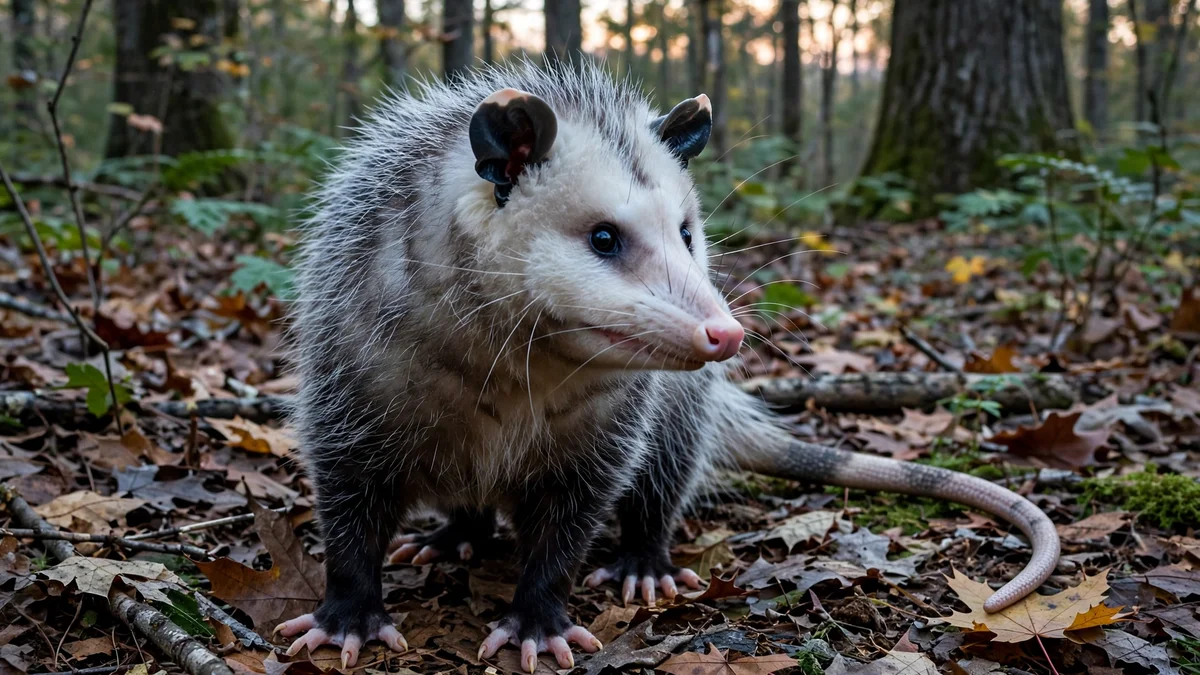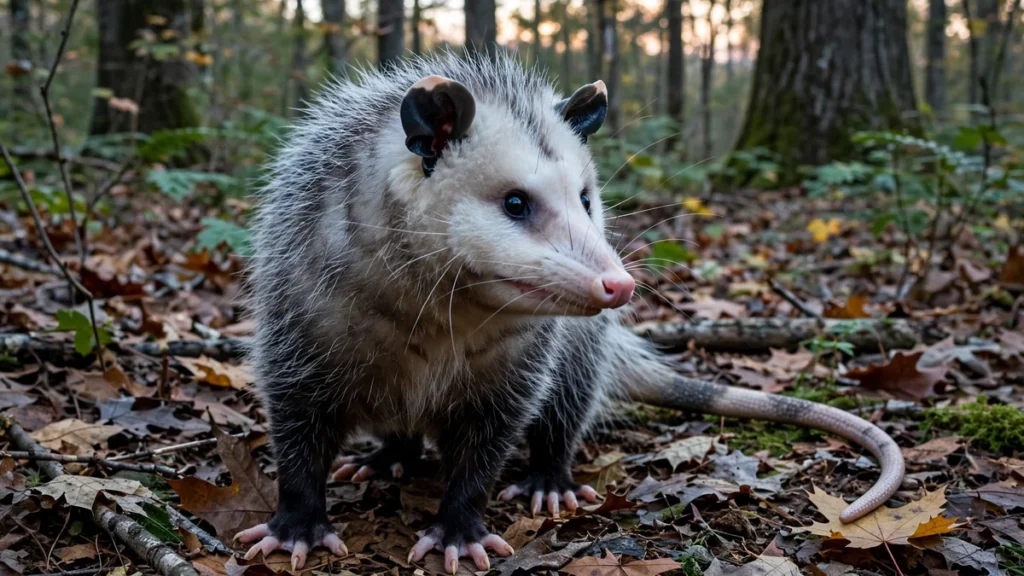
Opossum species are the pouched marsupials of the Americas, and there are more than 100 opossum species in the family Didelphidae, all of them living in North, Central or South America. If you are wondering how many opossum species there are, the short answer is this: more than 100, from the famous Virginia opossum of North America to tiny mouse opossums in the rainforests of South America, and every one of them is a marsupial, not a rodent.
Key takeaways
- There are more than 100 opossum species in the family Didelphidae, and all of them live in the Americas.
- Opossums are marsupials, not rodents, and females carry their tiny babies in a pouch.
- The Virginia opossum is the famous North American opossum, and the only opossum species found in the United States and Canada.
- Opossums can play dead, a defence called thanatosis, and they have prehensile tails.
- Opossums eat almost anything, from fruit and insects to carrion, and they live in forests, wetlands and cities.
What makes an opossum an opossum
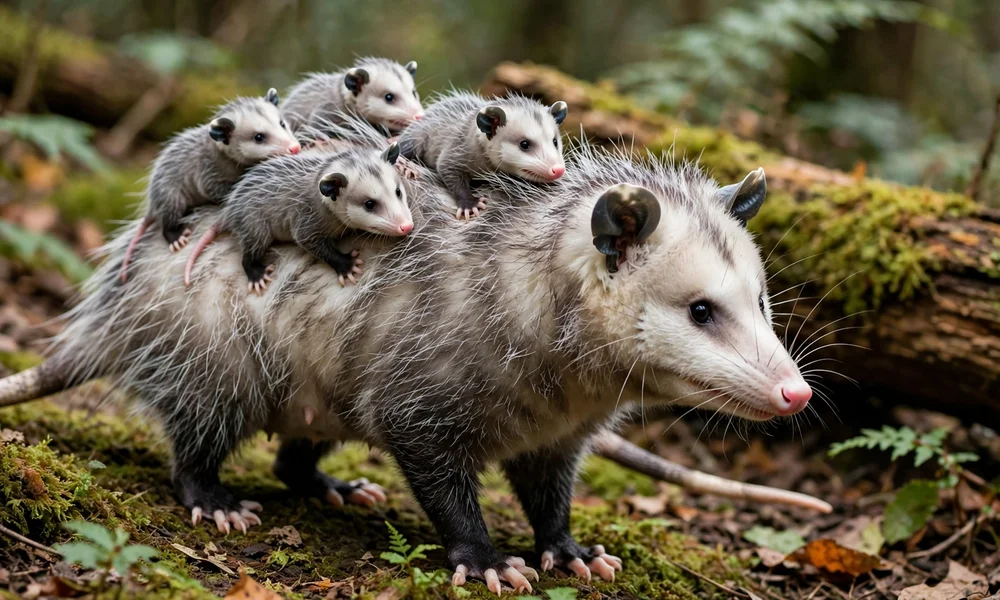
An opossum is a marsupial, which means its babies are born very small and finish growing in the mother’s pouch. A newborn opossum is no bigger than a honeybee, yet it can crawl to the pouch, where it latches on to a teat and stays for two or three months. When the babies are too big for the pouch, they ride on their mother’s back until they are old enough to live alone.
The opossum’s face is easy to recognise, with a long, pointed snout, a pink nose, dark eyes ringed with black fur, and large, thin, rounded ears. Its fur is usually grey or white with black-tipped hairs, giving it a frosted look. Its tail is long, scaly and mostly hairless, and it is prehensile, which means that it can curl around a branch and grip it, helping the opossum to climb and to balance.
Opossums are not rodents, even though they are sometimes mistaken for large rats. Rodents have front teeth that grow all their lives, while opossums have 50 teeth.
The opossums of the world
The Virginia opossum, Didelphis virginiana, is the famous North American opossum, and the only one that lives in the United States and Canada. It is about 70 centimetres long, with grey-white fur and a pink nose, and it lives in woodlands, farmland, suburbs and cities from southern Canada to Central America.
The common opossum, Didelphis marsupialis, is the Virginia opossum’s close cousin in Central and South America, about the same size. It has grey fur and dark ears, and it lives in forests, scrub and farmland from Mexico to the Amazon.
The white-eared opossum, Didelphis albiventris, lives in South America, from Brazil and Bolivia to Argentina. It is about 70 centimetres long, with grey fur and pale ears, and it lives in forests, grasslands and farmland, often near water.
The big-eared opossum, Didelphis aurita, lives in the Atlantic forests of eastern Brazil, Paraguay and Argentina. It is about 70 centimetres long, with dark grey fur and very large ears, and it spends much of its life in trees, moving through the canopy at night.
The grey four-eyed opossum, Philander opossum, is named for the pale spots above its eyes, which look like a second pair of eyes. It is about 60 centimetres long, with grey-brown fur, and it lives in forests and scrub from Mexico to South America.
The black-eared opossum lives in the forests of South America, where its dark ears set it apart from its paler cousins. It is about 65 centimetres long, with grey fur and black ears, and it feeds at night on fruit, insects, eggs and small animals.
The water opossum, also called the yapok, Chironectes minimus, is the only aquatic opossum. It is about 60 centimetres long, with dense, water-repellent grey and black fur, webbed hind feet and a pouch that seals shut underwater, so the babies stay dry while the mother swims.
The mouse opossum is not one species but a group of small opossums, and the common mouse opossum, Marmosa murina, is one example. It is only about 25 centimetres long, with soft brown fur, large dark eyes and a long, thin tail, and it lives in South American forests, climbing through shrubs and small trees at night.
How opossums live: pouches, tails and playing possum
Playing possum is real, and it is one of the strangest defences in the animal world. When an opossum is frightened and cannot run away, it may fall on its side, go limp, close its eyes and drool, looking and smelling dead. This state, called thanatosis, is an involuntary reaction, not a trick, and it can last from a few minutes to several hours. Many predators lose interest in dead prey, so the opossum survives by being left alone.
Before it plays dead, an opossum usually tries to escape, hiss, growl or show its 50 teeth. It is a good climber, and it will run up a tree, using its prehensile tail and gripping hind feet to hold on. Young opossums can hang from a branch by their tails, although adults are too heavy to hang for long, and the tail is used more for balance and carrying nesting material.
Opossums are nocturnal, active at night and asleep during the day. They sleep in hollow trees, burrows, rock piles, barns and garden sheds, lining a den with dry leaves and grass. They do not hibernate, although they may stay in the den for days in very cold weather.
An opossum eats almost anything: fruit, berries, nuts, insects, snails, frogs, eggs, small mammals and birds, and carrion, the flesh of dead animals. This varied diet helps opossums to live in many places, and it helps farmers and gardeners, because opossums eat slugs, snails, mice and ticks.
Where opossums live
Opossums live only in the Americas, from southern Canada to Argentina, in almost every kind of habitat in between: rainforests and dry forests, grasslands and scrub, rivers and wetlands, and farmland, suburbs and cities. The forest animals of the Americas include many opossum species, and the urban animals of American cities include the Virginia opossum, which has learned to live in gardens, parks and bins.
The Virginia opossum has spread northwards over the last hundred years, following roads, farms and towns into Canada. It likes places with water nearby, with trees to climb and shelter to hide in, and with plenty of food, from fallen fruit to pet food left outside. The nocturnal animals of the Americas include opossums, which feed mostly after dark.
| Species | Where it lives | Best-known food | Length |
|---|---|---|---|
| Virginia opossum | Canada, United States, Mexico and Central America | Fruit, insects, carrion, small animals | 0.70 metres |
| Common opossum | Mexico, Central America and South America | Fruit, insects, small animals, carrion | 0.70 metres |
| White-eared opossum | Brazil, Bolivia, Paraguay, Uruguay and Argentina | Fruit, insects, eggs, small animals | 0.70 metres |
| Big-eared opossum | Eastern Brazil, Paraguay and north-eastern Argentina | Fruit, insects, small vertebrates, carrion | 0.70 metres |
| Grey four-eyed opossum | Mexico, Central America and South America | Frogs, insects, fruit, small animals | 0.60 metres |
| Black-eared opossum | Forests of South America | Fruit, insects, eggs, small animals | 0.65 metres |
| Water opossum, or yapok | Central and South American forest streams | Fish, frogs, crabs, water animals | 0.60 metres |
| Mouse opossum | Forests of South America | Insects, fruit, nectar | 0.25 metres |
Best seasons for opossum watching
Spring and summer are the finest seasons for opossum watching, when the nights are warm, food is plentiful, and mothers carry babies on their backs. A quiet walk at dusk along a woodland edge or a garden path may reveal a mother opossum with a row of small faces peering over her back.
Autumn is also good, because opossums feed hard before winter, eating fallen fruit, nuts and insects, and they are out for longer each night. In winter, opossums are less active, and in cold northern places they may stay in the den for days, although fresh snow can show their tracks.
Staying safe around opossums
Opossums are wild animals, and they deserve respect. Never try to catch an opossum, never put your hand into a den, and never handle one with bare hands. An opossum is usually shy and will run away or play dead, but a cornered animal has sharp teeth and can bite. Keep dogs on a lead where opossums live. Leave a young opossum alone, because its mother is almost certainly nearby.
Opossums can carry fleas and ticks, so do not touch a dead opossum, do not feed opossums by hand, and wash your hands after working in a garden where opossums visit. Keep pet food indoors at night, secure bins with tight lids, and block gaps under sheds and decks, so that opossums do not move in. Watch from a distance, using a torch with a red filter.
Opossum watching checklist
- Look for opossum tracks at dawn, with five toes on each foot and a tail drag line.
- Watch at dusk or after dark, along woodland edges, stream banks and quiet garden paths.
- Listen for hisses, growls and clicks, the sounds of a threatened opossum.
- Look for a mother opossum with babies riding on her back in late spring and summer.
- Use a red-filter torch and binoculars, and keep a respectful distance.
- Leave no trace: take your rubbish home, keep dogs on a lead, and never feed opossums.
Frequently asked questions
How many opossum species are there?
There are more than 100 opossum species in the family Didelphidae, all of them in the Americas. The Virginia opossum is the only one found in the United States and Canada, while most of the others live in Central and South America.
How is this guide different from the raccoon species guide?
This guide covers opossums, which are marsupials, while the raccoon species guide covers raccoons, which are placental mammals. Opossums carry their tiny babies in a pouch, have prehensile tails, and can play dead when frightened, while raccoons give birth to fully formed young, have bushy ringed tails, and never play dead.
Are opossums rodents?
No, opossums are not rodents. They are marsupials, in the family Didelphidae, and their babies finish growing in a pouch. Rodents have front teeth that grow all their lives, while opossums have 50 teeth.
Do opossums really play dead?
Yes, playing possum is real. When an opossum is frightened and cannot escape, it may fall on its side, go limp and close its eyes, in a state called thanatosis that can last from a few minutes to several hours. It is an involuntary reaction, not a trick, and many predators leave it alone.
Can opossums hang by their tails?
Young opossums can hang from a branch by their prehensile tails, but adults are too heavy to hang for long. Adults use the tail mainly for balance while they climb, and for carrying bundles of leaves to line a den.
Where is the best place to see an opossum?
The best place to see an opossum is a woodland edge, a stream bank or a quiet garden at dusk, in spring or summer, when mothers carry babies on their backs. The Virginia opossum is the easiest to find, in parks, gardens and farmland across the United States and Mexico.
Conclusion
Opossum species, more than 100 of them, are the pouched survivors of the Americas: Virginia opossums playing dead in North American gardens, common and white-eared opossums climbing through South American forests, water opossums swimming in forest streams, and tiny mouse opossums hunting insects at night.
The next step is to walk a woodland edge at dusk, look for five-toed tracks and a tail drag line, and remember that the shy, grey-white animal you may see is a marsupial, not a rodent, carrying its babies in a pouch.