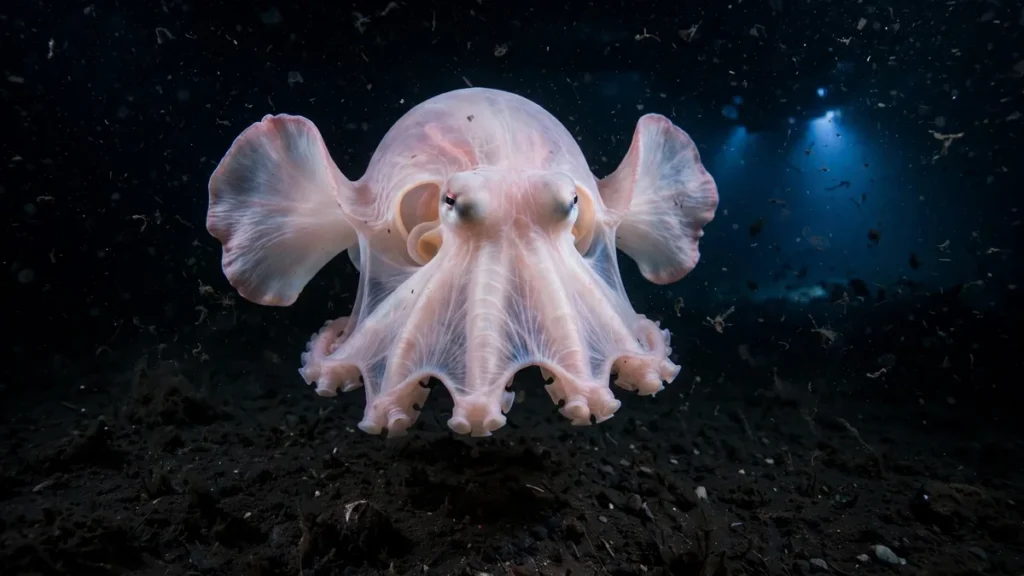
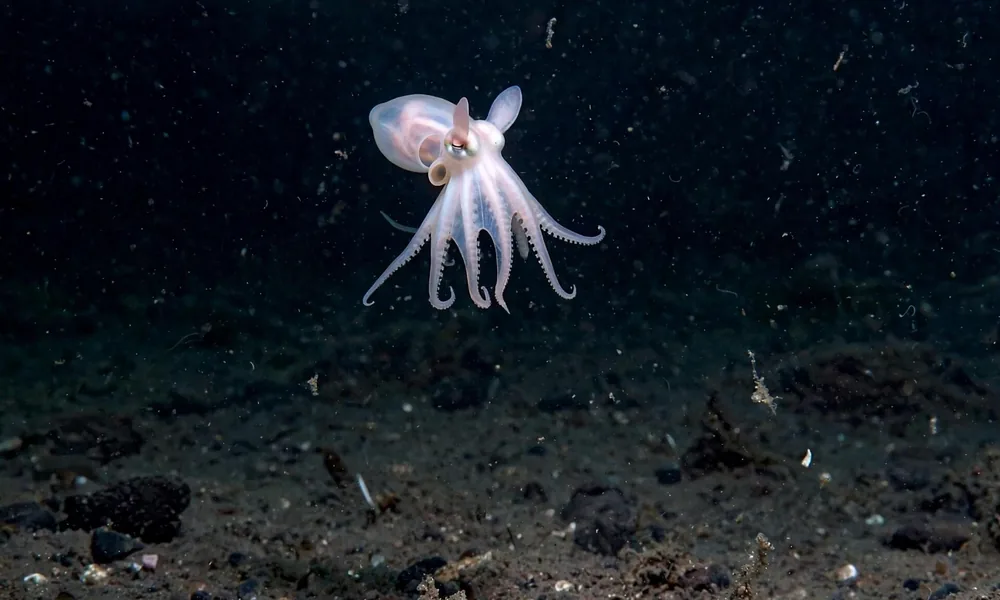
The dumbo octopus species are the deepest-living octopuses known, small, pale, finned octopuses that spend their whole lives on the cold, dark seafloor between about 1,000 and 7,000 metres down, where no sunlight ever reaches and the pressure is hundreds of times greater than at the surface. If you are asking what a dumbo octopus is, the short answer is a deep-sea octopus of the genus Grimpoteuthis, named for the pair of large, ear-like fins on its bell-shaped mantle. Most dumbo octopuses are only 20 to 30 centimetres long, they swallow their small prey whole, and they are so rarely seen that almost everything we know about them comes from a handful of submersible dives and trawled specimens.
What makes the dumbo octopus so fascinating is how completely it has given up the octopus way of life as most people know it. It does not hide in a rocky den, it does not squirt ink, and it never sees the sun. Instead it drifts and flaps just above the abyssal mud, hovering in water barely above freezing, feeding on tiny crustaceans and bristle worms that it wafts towards its mouth with the hair-like cirri on its arms.
Key takeaways
- The dumbo octopus species covered here are the finned octopuses of the genus Grimpoteuthis, with 17 recognised species, led by Grimpoteuthis umbellata, the type species of the genus.
- Most dumbo octopuses are only 20 to 30 centimetres long, though the largest specimen ever recorded reached 1.8 metres and weighed 5.9 kilogrammes.
- Dumbo octopuses live on the deep seafloor worldwide, from about 1,000 to 7,000 metres down, and the deepest one ever filmed was recorded at 6,957 metres in the Java Trench in 2020.
- They feed by swallowing small prey whole, mostly copepods, amphipods, isopods and bristle worms, using the hair-like cirri on their arms to waft food towards the mouth.
- No Grimpoteuthis species has been formally assessed for conservation status, and the animals are so rarely seen that their population trend is unknown.
The dumbo octopus species and their relatives
Dumbo octopuses belong to the phylum Mollusca, and within it they sit in the class Cephalopoda, alongside the squid, the cuttlefish and the nautilus. They are true octopuses of the order Octopoda, but they belong to the suborder Cirrata, the finned octopuses, set apart by two features: the pair of fins on the mantle and the fringe of hair-like cirri beside the suckers on each arm. The genus Grimpoteuthis is traditionally placed in the family Opisthoteuthidae, the umbrella octopuses, named for the wide web of skin that joins their arms, and it was named in 1932 by the zoologist Guy Robson, after the German cephalopod biologist Georg Grimpe. Like the animals in our octopus guide, dumbo octopuses have eight arms, a beak and a soft body with no shell, but the resemblance ends there, because the dumbo has traded the reef for the abyss, and speed and ink for fins and patience.
The lead species of this guide is Grimpoteuthis umbellata, the type species of the genus, described in 1883 by the French zoologist Paul Fischer from a single specimen collected near the Azores at a depth of 2,235 metres during the Challenger expedition, the pioneering voyage of 1872 to 1876 that first revealed the deep sea to science. Grimpoteuthis umbellata is a North Atlantic dumbo octopus, typical of the genus at about 20 to 30 centimetres long, with a bell-shaped mantle, short arms joined by a deep web, and the two fins that give the whole group its name. The genus has grown steadily since that first specimen, and 17 species are recognised today, with new ones still being described whenever a research submersible brings back a specimen from a seamount or trench nobody has sampled before.
| Type | Animal | Where it lives | Best-known food | Length or Weight |
|---|---|---|---|---|
| Family | Umbrella octopuses (Opisthoteuthidae) | Deep oceans worldwide | Small crustaceans and bristle worms | Most 20 to 30 cm long |
| Genus | Dumbo octopuses (Grimpoteuthis) | Deep seafloor, 1,000 to 7,000 m | Copepods, amphipods, isopods and bristle worms | Average 20 to 30 cm; largest 1.8 m |
| Species | Grimpoteuthis umbellata | North Atlantic, near the Azores | Small crustaceans and worms | About 20 to 30 cm long |
| Species | Grimpoteuthis imperator | Emperor Seamounts, North Pacific | Small crustaceans and worms | About 20 to 30 cm long |
| Species | Grimpoteuthis abyssicola | Tasman Sea, 2,821 to 3,180 m | Small crustaceans and worms | About 20 to 30 cm long |
| Species | Grimpoteuthis discoveryi | North-east Atlantic, 2,600 to 4,870 m | Small crustaceans and worms | About 20 to 30 cm long |
The closest relatives of Grimpoteuthis umbellata are the other dumbo octopuses of the genus, and the newest of them show how much of the deep sea is still unexplored. Grimpoteuthis imperator was described in 2021 from the Emperor Seamounts, a chain of undersea mountains in the North Pacific. Grimpoteuthis abyssicola lives in the Tasman Sea off New Zealand and south-eastern Australia, at depths of 2,821 to 3,180 metres, and it is known from only two specimens. Grimpoteuthis discoveryi lives in the north-east Atlantic at depths of 2,600 to 4,870 metres, and it was one of three species described in 2003 from specimens collected on the Porcupine Abyssal Plain.
What dumbo octopuses look like
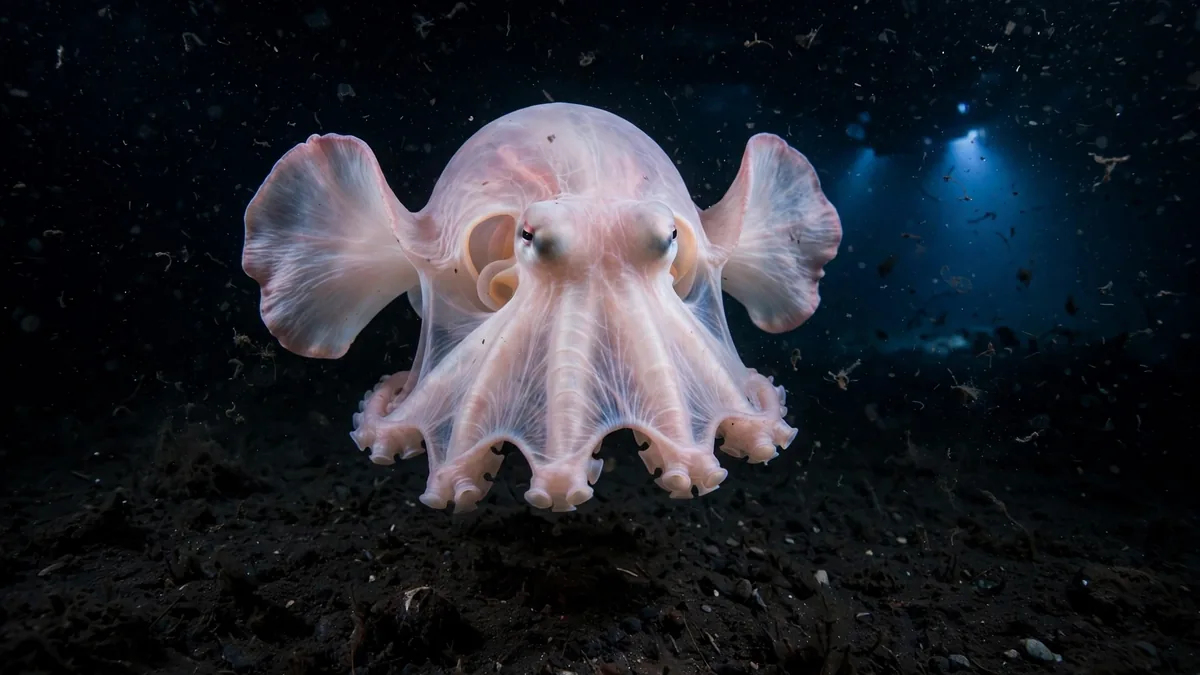
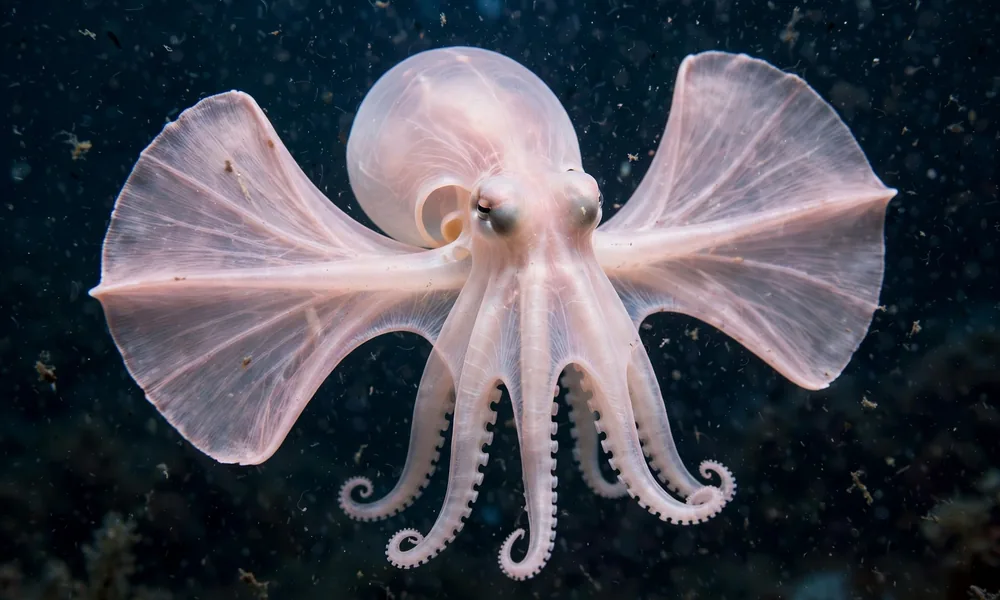
A dumbo octopus looks like a small, pale umbrella that has learned to swim. The body is short and bell-shaped, with a rounded mantle that holds the organs, and eight short arms joined for much of their length by a wide web of skin, so the animal spreads out like a parachute when it opens its arms and folds up like a closed umbrella when it rests. The two fins sit high on the mantle, one on either side, and they are broad, flat paddles that stick out like the ears of an elephant, which is where the common name comes from. The skin is smooth and gelatinous, almost jelly-like, and the colour is pale pink, white, reddish or brown, often semi-translucent.
The size of a dumbo octopus depends on the species, though most of them are small. A typical adult is 20 to 30 centimetres long from the tip of the mantle to the ends of the arms, about the length of a school ruler. The largest dumbo octopus ever recorded was a single specimen 1.8 metres long that weighed 5.9 kilogrammes, nearly six times the length of a typical adult, and it remains an outlier that no other specimen has matched. The young look like small copies of the adults, with the same bell-shaped mantle and the same fins, only smaller, and a newly hatched dumbo octopus is already a complete little octopus, with no larval stage. The eyes are large and dark, though nobody knows how well a dumbo octopus can see in water where there is no light at all.
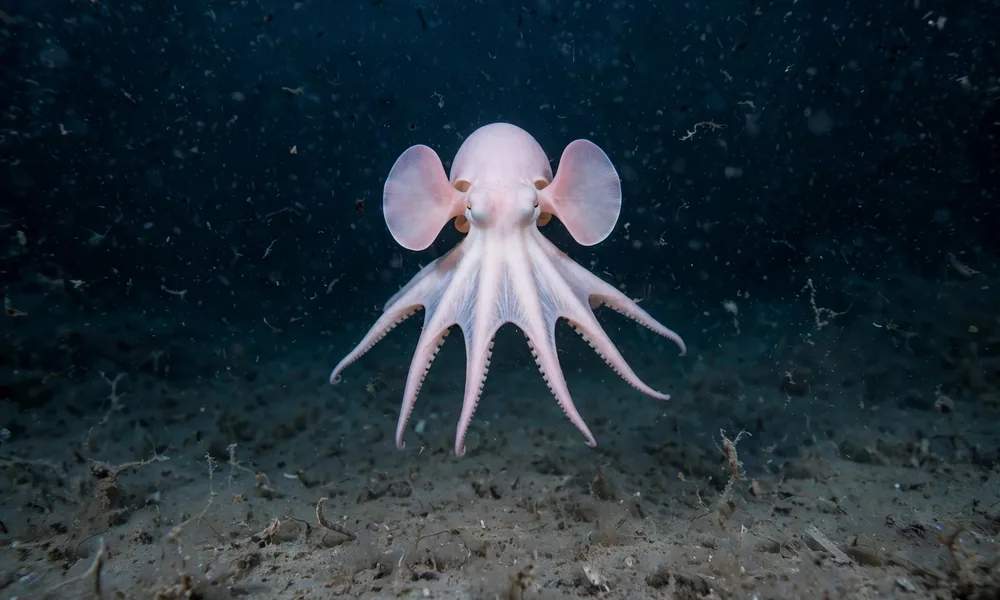
The details of the arms are what set the dumbo octopus apart from every shallow-water octopus. Each arm carries a single row of suckers, about 65 to 68 of them along each arm, far fewer than the two rows on the arms of a common octopus, and each sucker is flanked by slender, hair-like projections called cirri, which give the whole group its name, the cirrate octopuses. The cirri are thought to help the animal sense and waft food towards its mouth. Inside the mantle there is a U-shaped internal shell made of cartilage, which supports the fins and gives the soft body some stiffness. There is no ink sac, so a dumbo octopus cannot squirt a cloud of ink to escape a predator, and there is no need for one in a world where there is no light for the ink to hide in.
It is easy to see why the dumbo octopus has become the most loved of all deep-sea animals, and the affection is not just about the ears. The fins flap slowly, the body bobs gently as it hovers, and the whole animal moves with a calm that looks almost deliberate. National Geographic calls the dumbo octopus the cutest octopus in the world, and the description has stuck. The charm is real, but it hides a tough animal, one that lives under crushing pressure, in water barely above freezing, on food so scarce that every meal has to be earned slowly, and the dumbo octopus survives there not by being fierce, but by being patient and by spending almost no energy at all.
Where dumbo octopuses live
Dumbo octopuses live on the deep seafloor in every ocean, and their range is set by depth, not by geography. They are found in the Atlantic, the Pacific and the Indian Ocean, and in the Southern Ocean around Antarctica, from tropical waters to temperate seas, wherever the seafloor drops below about 1,000 metres. They have been recorded off New Zealand and Australia, off California and Oregon, off the Philippines and New Guinea, in the Gulf of Mexico, near the Azores, and in the Java Trench. The water they live in is cold, usually between 1 and 4 degrees Celsius, and completely dark, because sunlight cannot reach below about 1,000 metres, and the pressure at the depths they favour reaches around 700 times surface pressure at 7,000 metres.
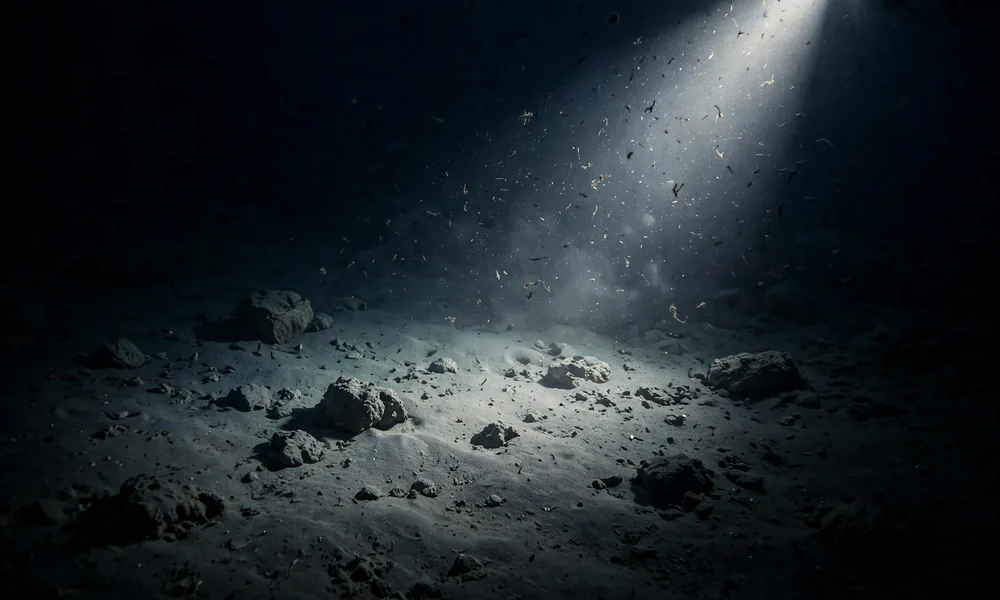
The habitat they choose is the seafloor itself and the water just above it. A dumbo octopus spends most of its life hovering a short distance above the mud, or resting on it, on abyssal plains, on the slopes of seamounts, in the deep basins between continents, and occasionally in the trenches that plunge deeper than 6,000 metres. The depths they occupy span the bathyal zone, from 1,000 to 3,000 metres, and the abyssal zone, from 3,000 to 6,000 metres, and the deepest confirmed sighting, a dumbo octopus filmed at 6,957 metres in the Java Trench in 2020, reaches into the hadal zone, the deepest part of the ocean, below 6,000 metres.

The range of the genus is so wide that individual species can be very local. Grimpoteuthis umbellata is a North Atlantic animal, first collected near the Azores, while Grimpoteuthis imperator is known only from the Emperor Seamounts in the North Pacific, and Grimpoteuthis abyssicola is known only from the Tasman Sea. The pattern is the same across the genus: a worldwide group made up of local species, each of them living on a particular stretch of deep seafloor, and each of them known from only a handful of specimens. The deep sea is the largest habitat on Earth and the least explored, so the true range of every dumbo octopus species is almost certainly larger than the records show.
What dumbo octopuses eat
Dumbo octopuses are carnivores, and their diet is written in the poverty of the deep sea. They eat the small animals that live on and just above the seafloor: copepods, amphipods and isopods, the tiny crustaceans that swarm in the water above the mud, bristle worms, the segmented polychaete worms that burrow in the sediment, and small molluscs, including bivalves and snails. They do not hunt large prey, and they cannot, because the food they can handle is limited to organisms only 1 to 2 millimetres across. The diet is humble, but it is also reliable, because the small crustaceans and worms of the deep seafloor are always there, feeding on the marine snow that rains down from the surface.
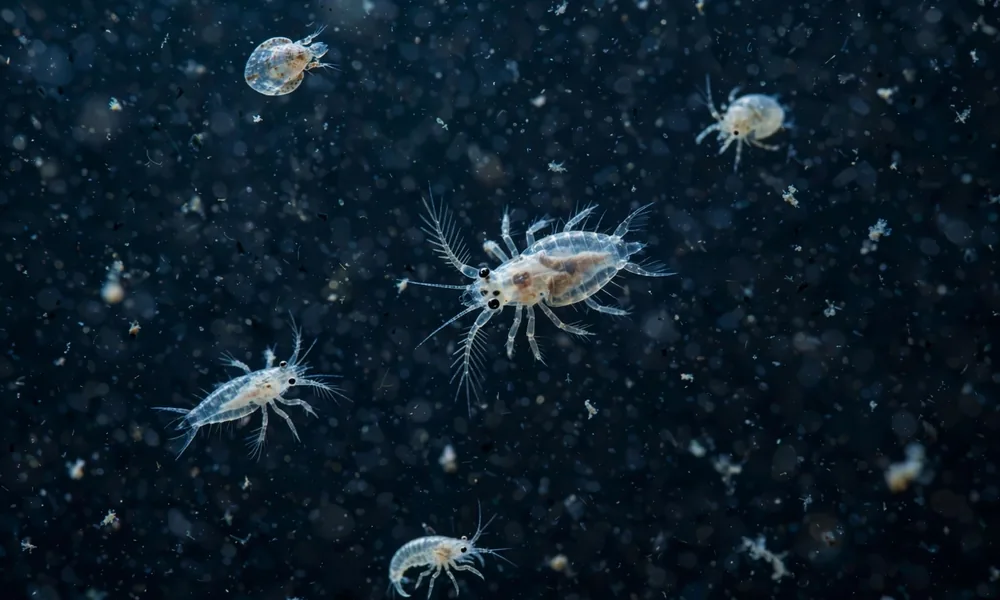
How a dumbo octopus eats is as strange as what it eats. It does not tear its food apart, and it does not crush shells, because the tooth-like ribbon in its mouth, the radula, has degenerated, and its beak is used to engulf prey rather than to bite it. Instead the animal drifts slowly just above the seafloor, or crawls along the bottom, and when it finds a patch of small prey it spreads its webbed arms over them like a net, collapsing the umbrella down onto the mud, and then it uses the cirri on its arms to waft the trapped animals towards its mouth, where they are swallowed whole. It is a quiet, unhurried way of feeding, and it fits an animal that cannot afford to chase anything, because in the deep sea food is scarce, and a burst of speed costs energy that may take days to replace.
How dumbo octopuses behave
Dumbo octopuses are slow, calm animals, and their behaviour is the behaviour of an animal that has nothing to prove and nowhere to be in a hurry. They move by flapping their ear-like fins in a slow, rhythmic beat, steering with their arms, and they can add a burst of speed by expelling water through their funnel or by suddenly contracting their webbed arms, but they rarely do, because speed is expensive in the deep sea. They are neutrally buoyant, which means they neither sink nor float, and they can hang suspended in the water without effort, drifting with the current or hovering just above the seafloor. They do not form groups, and they do not defend a territory, and each animal lives alone on its patch of seafloor, meeting another dumbo octopus only when it is time to mate.
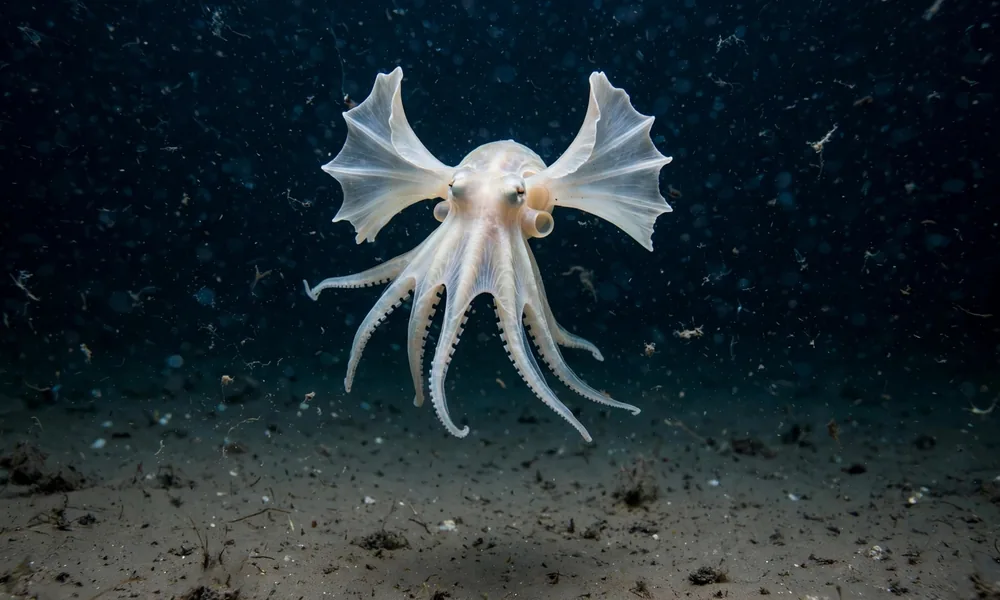
The most remarkable behaviour in a dumbo octopus is how little it does, and how much that restraint achieves. A shallow-water octopus is a restless animal, always exploring, always hunting, always changing colour, and it burns energy at a rate the deep sea cannot support. A dumbo octopus does the opposite: it drifts, it hovers, it rests on the mud with its arms curled beneath it, and it waits for food to come within reach. When it hunts, it crawls along the bottom or drifts just above it, spreading its web over a patch of sediment and wafting the small animals it traps towards its mouth, and when it is done it settles again, fins still, arms folded, waiting. The dumbo octopus is not lazy, it is efficient, and its whole life is a lesson in how to survive on very little.
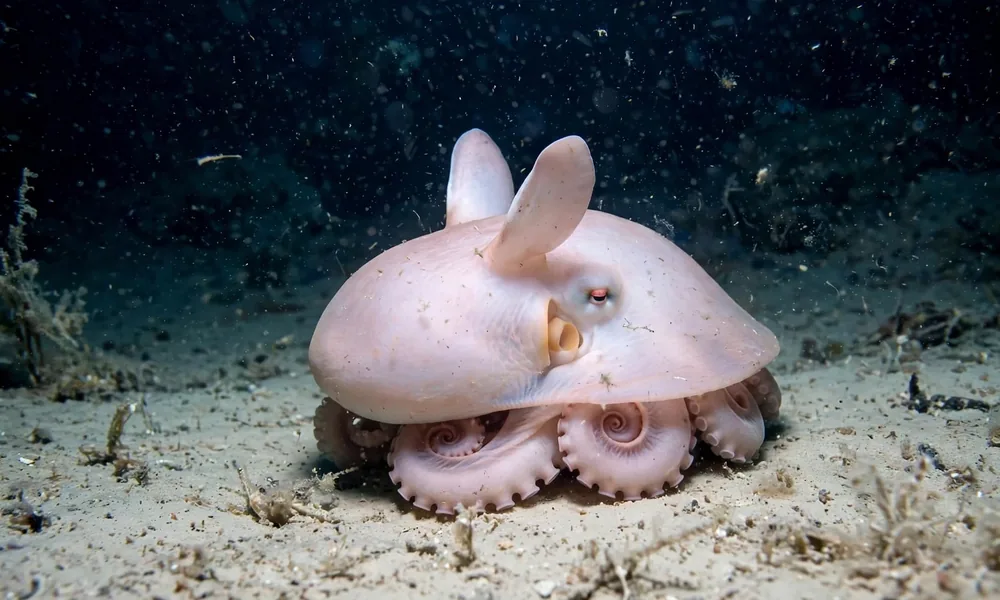
Predators are few at the depths where dumbo octopuses live, but they are not absent, and the animals have no ink and no speed to escape with. In the shallower parts of their depth range, dumbo octopuses are eaten by deep-diving fish such as tuna and by some sharks, and by mammals such as dolphins, and killer whales have been recorded with dumbo octopuses in their stomachs. In the deeper parts of their range there are fewer predators. The dumbo octopus defends itself by being hard to find, by living where few predators go, and by staying still in the dark, and when it is threatened it can flap its fins and jet away in a short burst, though it will not get far.
Breeding and life cycle
Dumbo octopuses breed all year round, because there are no seasons in the deep sea to breed in. A female does not wait for spring or for a particular temperature, and she does not release her eggs in a single great spawning event the way many shallow-water animals do. Instead she carries eggs at different stages of development inside her body, and she lays them one at a time, or a few at a time, over a long period, attaching each one to a rock, a piece of coral or another hard surface on the seafloor. The eggs are large for an octopus, because a large egg holds more yolk, and a hatchling that emerges from a large egg is better equipped to survive in a place where food is scarce. The female does not guard the eggs after she lays them.
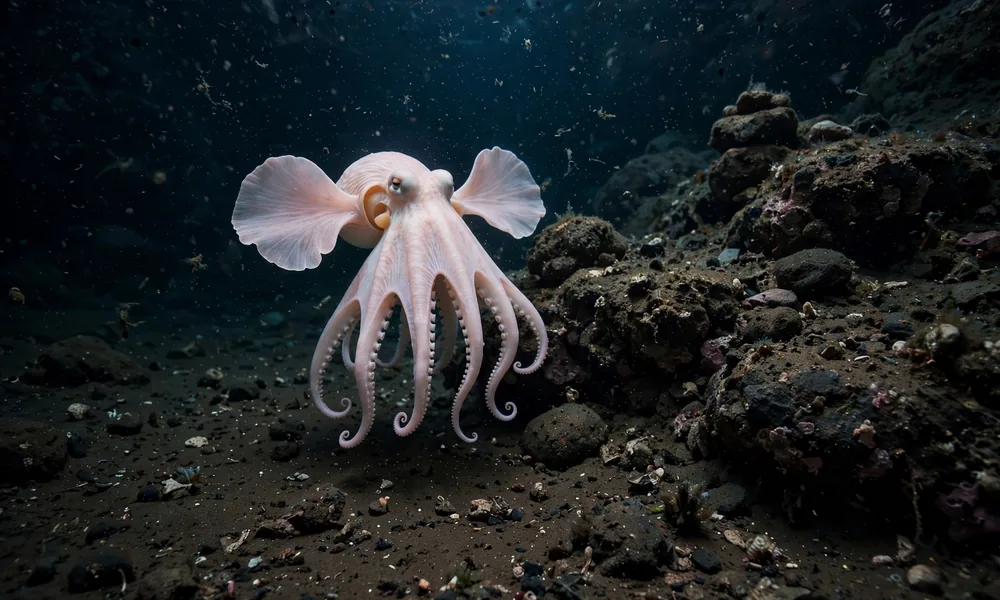
The young that hatch from those eggs are small copies of the adults, with the same bell-shaped mantle, the same fins and the same webbed arms, and they must fend for themselves from the day they hatch. There is no larval stage in which a dumbo octopus drifts in the plankton the way a young reef octopus does, and there is no parent to feed or protect them, and the young animals settle straight onto the seafloor and begin the same slow life as their parents, feeding on the smallest crustaceans and worms they can find. Very few young dumbo octopuses have ever been seen, and almost nothing is known about how fast they grow or how many of them survive their first year, because the deep sea hides its young as well as it hides its adults.
A dumbo octopus that survives its youth has a long life ahead of it by octopus standards. Most shallow-water octopuses live for only a year or two, and many of them die after breeding once, but the dumbo octopus is estimated to live for 3 to 5 years, a long life for an octopus, and one that fits the slow pace of the deep sea, where everything happens more slowly, from growth to breeding to death. No dumbo octopus has ever been kept alive in captivity for long, and their soft bodies do not survive the journey to the surface.
Conservation status
The conservation status of the dumbo octopus is, on paper, a blank. No Grimpoteuthis species has been formally assessed by the International Union for Conservation of Nature, and the population trend of every species in the genus is unknown, because the animals are so rarely seen that nobody can say whether their numbers are rising, falling or holding steady. That is not the same as saying they are safe, and it is not the same as saying they are in danger, and it is simply an honest statement of how little we know about an animal that lives beyond the reach of almost every survey.
The main pressure on the dumbo octopus is not hunting or collecting, because nobody fishes for dumbo octopuses and nobody keeps them as pets, and the animals are too deep and too scattered for any fishery to target them. The pressure is the slow damage being done to the deep seafloor itself. Deep-sea trawling drags heavy nets across the seabed and scrapes away the sediment and the animals that live in it, and a single trawl can destroy a patch of seafloor that took centuries to form. Deep-sea mining, now being planned for the mineral-rich crusts and nodules of the abyssal plains and seamounts, would strip the seafloor bare where it operates, and the sediment plumes it raises could smother animals far beyond the mined area.
The answer is not a single fix, and it is the slow work of protecting the deep seafloor before it is damaged, rather than trying to repair it afterwards. Marine protected areas that cover deep-sea habitats, limits on deep-sea trawling, and a pause on deep-sea mining until its effects are understood would all help the dumbo octopus, and they would help the thousands of other species that share its home. Research matters too, and every submersible dive that films a dumbo octopus adds to a record that is still almost empty. The dumbo octopus does not need a rescue, and it needs something quieter: to be left alone in a deep sea that is left alone too.
Best seasons for dumbo octopus watching
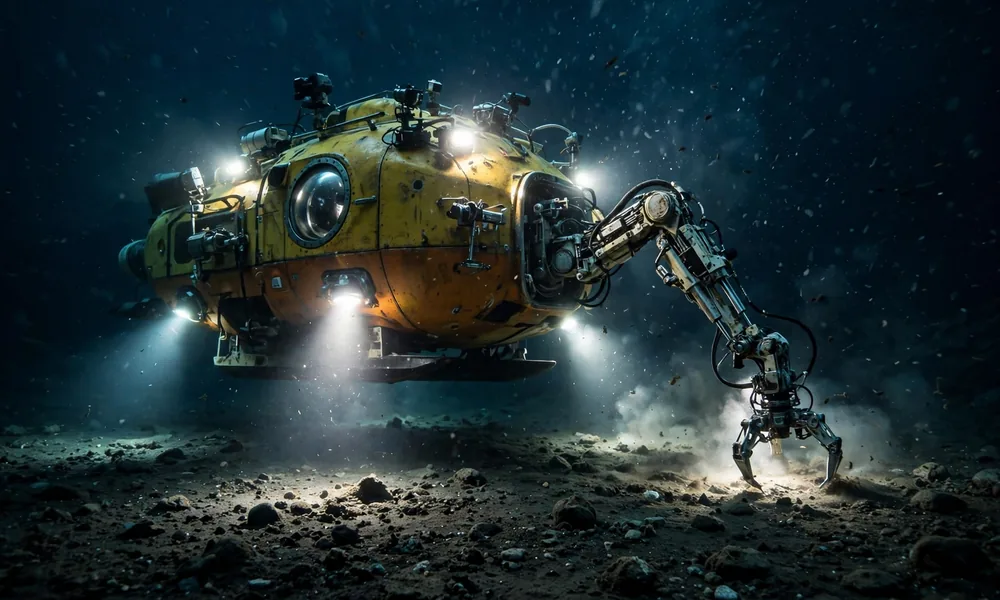
There is no season for watching a dumbo octopus, because there are no seasons in the deep sea and almost nobody ever sees one in person. The animals are present on the deep seafloor all year round, and they do not migrate, they do not gather in one place at one time of year, and they do not come to the surface, so a watcher cannot plan a trip around them the way a birdwatcher plans around a migration. The only people who see dumbo octopuses alive are the scientists and pilots of research submersibles and remotely operated vehicles, and their dives happen all year round, whenever a research ship is at sea and the weather allows a launch.
For everyone else, the best way to see a dumbo octopus is on film, and the footage is getting better every year. The deepest film of all, the dumbo octopus recorded at 6,957 metres in the Java Trench in 2020, was taken by the Five Deeps Expedition, and the clips released by the NOAA Okeanos Explorer and by other research programmes show the animals flapping their fins and hovering over the seafloor in a way that no photograph can match. The best hours are the hours when a research ship is streaming its dive live, and the best place is a screen, because a dumbo octopus lives deeper than any diver can go, and deeper than all but a handful of submersibles.
Staying safe around dumbo octopuses
A dumbo octopus is not dangerous to people, and there is no safety warning that belongs to the animal itself. It has no venom, it does not bite, it has no ink to squirt, and it is far too small and far too deep to threaten a person, and a diver will never meet one, because no diver can reach the depths where dumbo octopuses live. The danger in the dumbo octopus’s world belongs to the people who visit it, not to the animal, and it is the danger of the deep sea itself: crushing pressure, freezing water, and total darkness, all of which are handled by the submersible, not by the swimmer. The real safety rule is the one that protects the animal, not the person: do not touch it, do not try to bring it to the surface, and do not disturb the seafloor it lives on.
Dumbo octopus watching checklist
A little preparation turns a search for footage of the deep sea into a real chance of seeing a dumbo octopus at its best, fins flapping over the dark seafloor.
- Watch the live streams of research submersible dives, which are the only way most people will ever see a dumbo octopus alive.
- Look for footage from the Java Trench and the Emperor Seamounts, where the deepest and the newest dumbo octopuses have been filmed.
- Learn the shape before you watch, so you can tell a dumbo octopus from other deep-sea octopuses by its fins and its bell-shaped mantle.
- Watch in the calm-weather months, when research ships are most often at sea and streaming their dives.
- Follow the deep-sea research programmes that publish their footage, and check their archives for dives below 1,000 metres.
- Remember the depth, and that a dumbo octopus lives deeper than any diver can go, so a screen is the right place to look.
- Respect the deep seafloor, and support the protection of deep-sea habitats, because the animal you are watching has nowhere else to live.
Frequently asked questions
How big do dumbo octopuses get?
Most dumbo octopuses are only 20 to 30 centimetres long, about the length of a school ruler, and they weigh only a few hundred grammes. The largest dumbo octopus ever recorded was a single specimen 1.8 metres long that weighed 5.9 kilogrammes, nearly six times the length of a typical adult, and it remains an outlier that no other specimen has matched.
How deep do dumbo octopuses live?
Dumbo octopuses live on the deep seafloor worldwide, from about 1,000 to 7,000 metres down, in the bathyal and abyssal zones of the ocean, where no sunlight ever reaches. The deepest dumbo octopus ever filmed was recorded at 6,957 metres in the Java Trench in 2020, which makes the dumbo octopus the deepest-living octopus known. One older specimen was reported from a trawl at 7,279 metres near Grand Cayman, but that depth is uncertain, because the animal may have been caught while the net was on its way down.
What do dumbo octopuses eat?
A dumbo octopus eats the small animals that live on and just above the deep seafloor, mostly copepods, amphipods and isopods, the tiny crustaceans that drift above the mud, and bristle worms and small molluscs such as bivalves and snails. It swallows its prey whole, because the tooth-like radula in its mouth has degenerated, and it uses the hair-like cirri on its arms to waft food towards its mouth after spreading its webbed arms over a patch of sediment like a net.
Why are they called dumbo octopuses?
Dumbo octopuses are named for the pair of large, ear-like fins on either side of their bell-shaped mantle, which reminded the first scientists who saw one of Dumbo, the flying elephant from the 1941 Disney film, whose large ears let him fly. The fins are not ears at all, and they are used for swimming, flapping slowly to move the animal through the water, but the resemblance is strong enough that the name has stuck for the whole genus Grimpoteuthis, which was named in 1932 by the zoologist Guy Robson.
Can you keep a dumbo octopus as a pet?
No, and nobody should try. A dumbo octopus lives at depths of 1,000 to 7,000 metres, under crushing pressure, in water barely above freezing, and its soft, gelatinous body does not survive the journey to the surface, let alone life in a tank. No dumbo octopus has ever been kept alive in captivity for long, and there is no aquarium in the world that can recreate the pressure, the cold and the darkness of the deep seafloor. The only way to see one is on film from a research submersible.
How is this guide different from the dragonfly guide?
This guide covers the dumbo octopus, a soft-bodied deep-sea octopus of the genus Grimpoteuthis that lives on the cold, dark seafloor between 1,000 and 7,000 metres down, swims by flapping a pair of ear-like fins, and swallows tiny crustaceans and bristle worms whole, while our dragonfly guide covers a flying insect of ponds and streams that lives in the air and the shallow fresh water, hunts other insects on the wing in bright daylight, and spends its youth as an aquatic nymph. One is a slow, finned octopus that has never seen the sun; the other is a fast, winged insect that lives in the light, and the two animals could hardly be further apart in habitat, in movement, or in the way they find their food.
This guide also goes further than our general octopus guide, which covers the whole octopus family in a single broad sweep, from the reef octopuses that hide in dens and squirt ink to the open-water species that hunt in the shallows. That guide is the place to start if you want to know what an octopus is, while this guide stays with the dumbo octopus itself for its whole length, following Grimpoteuthis umbellata and its relatives through its abyssal habitat, its whole-prey diet, its slow behaviour and its year-round breeding to the unassessed status that leaves its deep-sea home as the thing most worth protecting.
Conclusion
The dumbo octopus species are a reminder that an animal does not need to be big, or fast, or fierce to be unforgettable. A small, pale octopus with ears like an elephant, a bell-shaped body and a slow, flapping swim has made its home in the coldest, darkest, highest-pressure place on Earth, and it survives there not by fighting the deep sea, but by spending almost nothing, eating almost nothing, and taking its time.
If you go looking for one, go to the footage, go to the live streams of the research submersibles, and watch for the pale shape hovering over the mud with its fins beating gently in the dark. Find the animal that lives deeper than any other octopus, deeper than any diver can go, and you will have met the dumbo octopus, the deepest octopus in the world, and one of the most quietly remarkable animals in the sea. Look, and leave the deep alone.