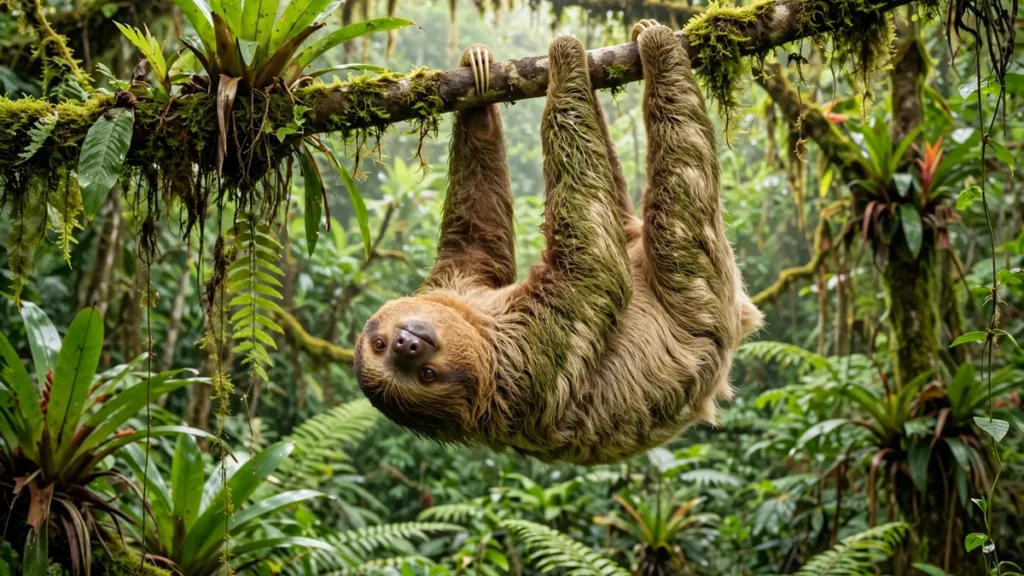
Sloth species are the slow-moving, upside-down mammals of the Central and South American rainforests, and there are six sloth species in the world: two two-toed sloths and four three-toed sloths. If you are wondering how many sloth species there are, the short answer is six, and every one of them spends almost its whole life hanging upside down from rainforest branches, eating leaves and moving so slowly that algae can grow in its fur.
Key takeaways
- There are six sloth species: two two-toed and four three-toed, and every one lives in the rainforests of Central and South America.
- The two-toed sloths are Linnaeus’s two-toed sloth and Hoffmann’s two-toed sloth, while the four three-toed sloths are the brown-throated, pale-throated, maned and pygmy three-toed sloths.
- Sloths are famously slow, they swim well, and they come down from the trees to defecate about once a week.
- The pygmy three-toed sloth lives only on Isla Escudo de Veraguas, a small island off Panama, and it is critically endangered.
- Sloths are not monkeys: they are xenarthrans, close relatives of anteaters and armadillos, surviving by being so slow and quiet that predators overlook them.
What makes a sloth a sloth
A sloth is a medium-sized tree mammal built for life upside down. Its body is about 50 to 70 centimetres long, with long, curved claws that hook over branches like grappling hooks, and its limbs are made for hanging rather than walking. Its fur is coarse and shaggy, grey-brown in colour, and in the damp rainforest it often turns green with algae, which helps the animal blend into the leaves.
Sloths move slowly because their whole way of life depends on saving energy. They eat leaves, which are low in food value and hard to digest, so they keep their body temperature low and move as little as possible. A sloth may travel only about 40 metres in a day, and it sleeps for much of that time, curled in the fork of a tree.
The sloths of the world
Linnaeus’s two-toed sloth lives across the rainforests of northern South America, from Venezuela and the Guianas through Brazil and Peru to Bolivia. It is the larger of the two two-toed sloths, about 60 to 70 centimetres long, with shaggy grey-brown fur and a pale face, and it is active at night, feeding on leaves, buds, fruit and the occasional insect. It has two claws on each front foot and three on each hind foot.
Hoffmann’s two-toed sloth lives in the rainforests of Central America and north-western South America, from Nicaragua and Costa Rica through Panama into Colombia and Ecuador. It is about 55 to 65 centimetres long, with long, coarse fur and a pale face, and it feeds mainly on leaves, buds and fruit. It is also nocturnal, and it spends nearly all its life in the trees.
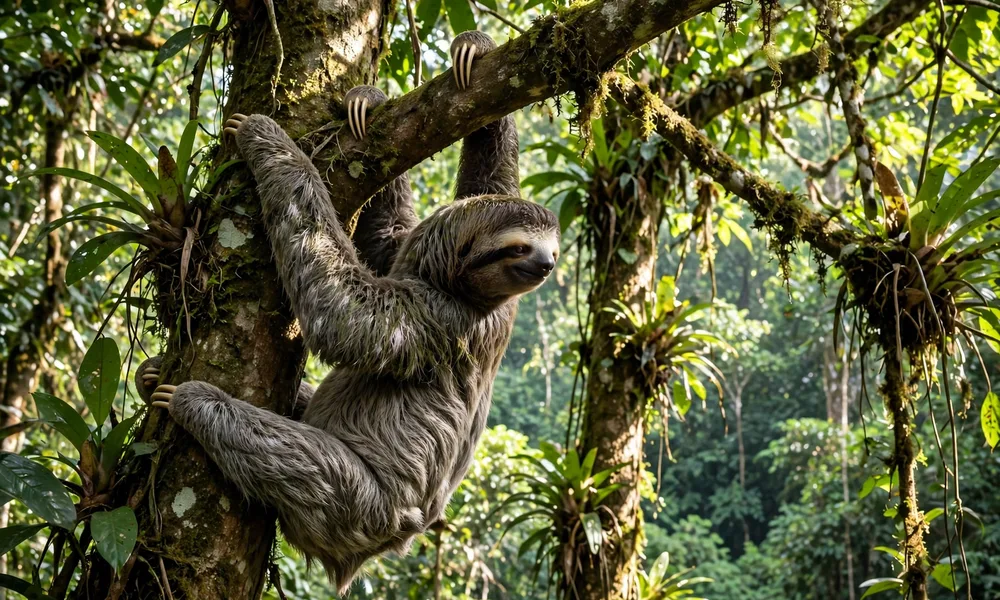
The brown-throated three-toed sloth is the most common sloth of all, living from Honduras through Central America to Brazil and Peru. It is about 50 to 60 centimetres long, with a brown throat patch that gives it its name, and the males carry a bright orange patch on their backs. It is active in the daytime as well as at night, and it is the sloth visitors are most likely to see.
The pale-throated three-toed sloth lives in the rainforests of northern South America, in Venezuela, the Guianas, Brazil and Colombia. It is about 50 to 60 centimetres long, with pale fur on its throat and face, and it feeds on leaves in the canopy. It looks very like the brown-throated sloth, and the two are told apart mainly by the colour of the throat.
The maned three-toed sloth lives only in the Atlantic forests of south-eastern Brazil. It is about 55 to 65 centimetres long, and the males grow a dark mane of long hair over their shoulders and neck, which gives the species its name. It is a shy animal of the high canopy, and it is threatened because so much of its Atlantic forest home has been cleared.
The pygmy three-toed sloth is the smallest and rarest sloth of all, and it lives only on Isla Escudo de Veraguas, a tiny island off the Caribbean coast of Panama. It is about 50 centimetres long, and it feeds on the leaves of the red mangrove trees that fringe the island. It is critically endangered, with only a few hundred animals left.
How sloths live: upside down, slow and swimming
A sloth spends almost its whole life upside down, hanging from branches by its long claws. It can even sleep upside down, curled into a ball in a tree fork. It eats, sleeps and raises its young in the canopy, and it comes down to the ground only about once a week, to defecate at the foot of a tree, a risky trip that takes it within reach of ground predators.
Slowness is the sloth’s main defence. A sloth moves so little, and so quietly, that eagles, ocelots and harpy eagles often pass it by, and the green algae in its fur breaks up its outline against the leaves. When a sloth does need to escape, it is not as helpless as it looks: it can swim well, crossing rivers and flooded forest with a slow but steady stroke, and it can move faster in water than it ever does on land. Its claws are sharp, and a cornered sloth will swipe at a predator, but its real safety lies in staying still and unseen.
Where sloths live
Sloths live only in the rainforests of Central and South America, from Honduras and Nicaragua in the north to Brazil, Peru and Bolivia in the south. They need warm, wet forest with tall trees and a steady supply of leaves, and they are found in lowland rainforest, cloud forest and mangrove swamp. The rainforest animals of the canopy include sloths alongside monkeys, toucans and tree frogs, and the forest animals of the wider region include sloths wherever the trees stay green all year.
Each sloth species has its own corner of the forest. The brown-throated three-toed sloth ranges widest, from Honduras to Brazil, while the pygmy sloth lives on one small island. The maned three-toed sloth is confined to the Atlantic forests of Brazil, and the pale-throated sloth keeps to northern South America. The two-toed sloths are creatures of the night, so the nocturnal animals of the rainforest include Linnaeus’s and Hoffmann’s two-toed sloths, moving through the dark canopy while the three-toed sloths rest.
| Name | Type | Where it lives | Best-known food | Length |
|---|---|---|---|---|
| Linnaeus’s two-toed sloth | Species | Northern South America | Leaves, buds, fruit | 0.60 to 0.70 metres |
| Hoffmann’s two-toed sloth | Species | Central America to north-western South America | Leaves, buds, fruit | 0.55 to 0.65 metres |
| Brown-throated three-toed sloth | Species | Honduras to Brazil and Peru | Leaves, buds, fruit | 0.50 to 0.60 metres |
| Pale-throated three-toed sloth | Species | Northern South America | Leaves | 0.50 to 0.60 metres |
| Maned three-toed sloth | Species | South-eastern Brazil | Leaves, buds, fruit | 0.55 to 0.65 metres |
| Pygmy three-toed sloth | Species | Isla Escudo de Veraguas only | Red mangrove leaves | About 0.50 metres |
| Silky anteater | Close relative | Central and South America | Ants and termites | About 0.40 metres |
| Giant anteater | Close relative | Central and South America | Ants and termites | About 1.80 metres |
Best seasons for sloth watching
The dry season is the finest time for sloth watching, from December to April in Central America and from June to September in much of the Amazon, when the rain eases, the forest paths are drier, and the animals are easier to find. In these months the sloths feed in the open canopy, and guides can spot them from the forest paths.
The wet season can also be rewarding, because the forest is greenest and the sloths are active, but heavy rain makes watching harder and the paths muddy. The best watching is in the early morning or late afternoon, when the light is soft and the sloths stir to feed. In the middle of the day they often sleep, curled in a tree fork, looking like a ball of moss.
Staying safe around sloths
Sloths are wild animals, and they deserve respect. Never try to touch a sloth, never pull one from a tree, and never handle one for a photograph. A sloth is slow, but it has long, sharp claws and strong arms, and it can bite or scratch if it feels trapped. Keep a sensible distance and use binoculars to watch up close.
Sloths can carry parasites, and their fur holds algae and insects. Do not touch a sloth, do not pick up a fallen baby sloth, and wash your hands after walking in the forest. If you find a sloth on the ground, leave it alone and tell a guide or a ranger, because its home tree is almost certainly nearby.
Sloth watching checklist
- Look up into the canopy for a grey-brown ball of fur hanging from a branch.
- Watch in the early morning or late afternoon, when sloths stir to feed, and scan slowly with binoculars.
- Listen for rustling leaves and look for fresh leaf litter below a tree.
- Keep a sensible distance, never touch a sloth, and never pull one from a tree for a photograph.
- Ask a local guide to help, because guides know which trees the sloths favour.
- Leave no trace: take your rubbish home, keep to marked paths, and do not disturb the forest.
Frequently asked questions
How many sloth species are there?
There are six sloth species: two two-toed, Linnaeus’s and Hoffmann’s, and four three-toed, the brown-throated, pale-throated, maned and pygmy sloths. All six live in the rainforests of Central and South America.
How is this guide different from the rainforest animals guide?
This guide covers only the six true sloth species, two-toed and three-toed, and how they live upside down, swim and survive in the trees. The rainforest animals guide covers the whole rainforest community, from monkeys and toucans to frogs and jaguars, so it covers the forest as a whole, while this guide goes deep on sloths alone.
Why are sloths so slow?
Sloths are slow because they eat leaves, which are low in food value and hard to digest, so they save energy by moving as little as possible. Their slowness also keeps them safe, because a still, quiet animal is hard for an eagle or an ocelot to spot.
Can sloths swim?
Yes, sloths swim well, and they can move faster in water than they ever do on land. They cross rivers and flooded forest with a slow, steady stroke.
Why do sloths come down from the trees?
Sloths come down from the trees to defecate, about once a week, at the foot of their home tree. It is a risky trip, because predators can reach them on the ground, but it is a habit every sloth keeps.
Which sloth species is the rarest?
The pygmy three-toed sloth is the rarest sloth species, and it is critically endangered. It lives only on Isla Escudo de Veraguas, off the Caribbean coast of Panama, and only a few hundred animals are left.
Conclusion
Sloth species, all six of them, are the slow, upside-down gardeners of the rainforests: brown-throated sloths hanging in the open canopy, two-toed sloths moving through the night, maned sloths in the Atlantic forests of Brazil, and pygmy sloths in the mangroves of one small island.
The next step is to walk a rainforest path, look up into the canopy for a grey-brown ball of fur with green in its coat, and watch it, remembering that the animal you are watching has spent its whole life upside down and in no hurry at all.














