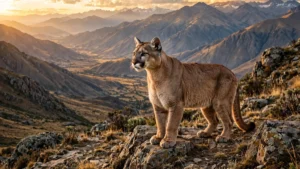
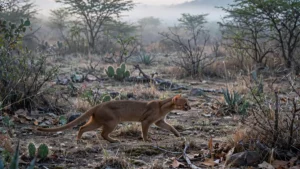
The caracal species is a single species, Caracal caracal, a medium-sized wild cat with long black ear tufts that hunts across Africa, the Middle East, Central Asia and India. If you are asking how many caracal species there are, the answer is one.
The caracal is a cat of dry, open country. It lives in savanna, scrub and semi-desert, hunts mostly at dawn and dusk, and is famous for leaping up to about three metres to catch birds in flight. It is often called the desert lynx, although it is not a true lynx.
Key takeaways
- There is only one caracal species, Caracal caracal, the only living member of its genus.
- Caracals are recognised by their long black ear tufts, short tail and plain reddish-tan coat.
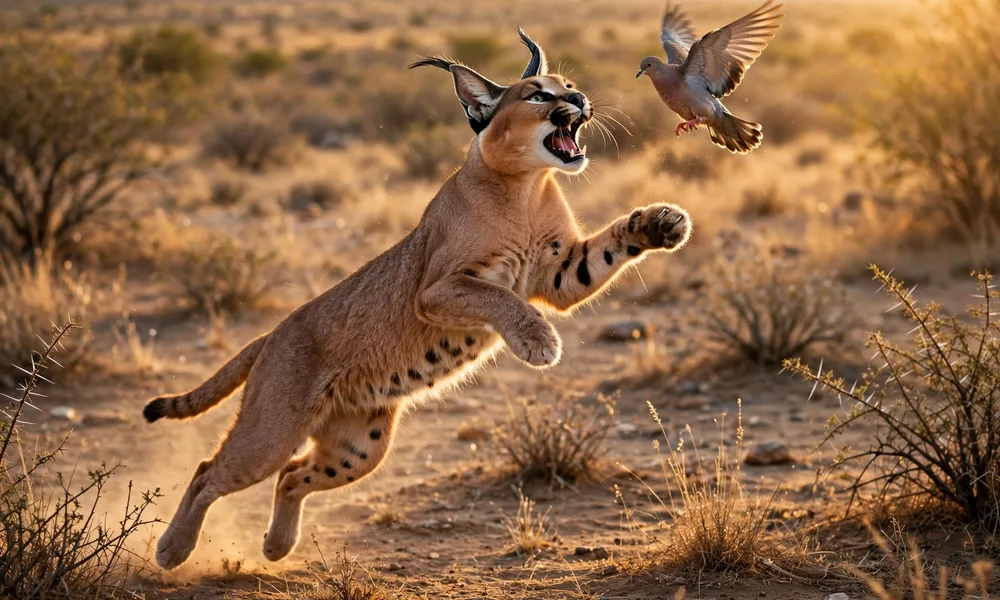
- A caracal can leap up to about three metres straight up to snatch a bird from the air.
- Caracals live across Africa, the Middle East, Central Asia and India, mostly in dry savanna and scrub.
- The caracal is listed as Least Concern, but it is declining as wild land is lost.
What makes a caracal a caracal
A caracal is a sleek, long-legged cat with a plain coat of reddish-tan or sandy brown, a pale belly, and no spots or stripes on the body of an adult. Its head is short and broad, with large ears set close together, each tipped with a tuft of long black hair. It measures roughly 60 to 92 centimetres, with a short tail, and usually weighs between 8 and 19 kilogrammes.
The ear tufts are the caracal’s signature. Nobody knows their purpose for certain, but they may help the cat sense the movement of prey, signal mood to other caracals, or break up the outline of the ears against the sky. The ears are large and mobile, swivelling to pick up faint sounds.
What sets the caracal apart is its power in the air. It is one of the strongest jumpers among cats for its size, able to leap up to about three metres vertically from a standing start, twisting in mid-air to catch a bird with both front paws.
The caracal species and its relatives
Caracal caracal is the only caracal species, and the only living member of the genus Caracal. A handful of subspecies have been described, but they are all the same species. It sits in the cat family, Felidae, alongside the serval and the African golden cat.
The serval is the caracal’s nearest lookalike in Africa, but it is slimmer, longer-legged and heavily spotted, and it hunts in wet grassland rather than dry scrub. The African golden cat hunts in forest, the jungle cat in Asian wetlands, and the ocelot in the Americas. The Eurasian lynx is a larger forest cat, and the cheetah and leopard share its African range.
| Type | Animal | Where it lives | Best-known food | Length |
|---|---|---|---|---|
| Species | Caracal (Caracal caracal) | Africa, Middle East, Central Asia and India | Birds, rodents and small antelope | 60 to 92 cm body |
| Close relative | Serval | African grassland and wetlands | Rodents, birds and frogs | 59 to 92 cm body |
| Close relative | African golden cat | Central and West African rainforests | Rodents, birds and small antelope | 61 to 101 cm body |
| Close relative | Jungle cat | Asia, from Egypt to South-east Asia | Rodents, birds and fish | 59 to 76 cm body |
| Close relative | Ocelot | Central and South America | Small mammals and birds | 55 to 100 cm body |
| Close relative | Eurasian lynx | Forests of Europe and Asia | Roe deer and hares | 76 to 106 cm body |
| Close relative | Cheetah | African savanna and Iran | Gazelles and small antelope | 112 to 150 cm body |
| Close relative | Leopard | Africa and Asia | Antelopes, monkeys and other mammals | 90 to 190 cm body |
How caracals live
Caracals are solitary cats. Each adult holds a home range, marked with scent and defended against other caracals of the same sex. They are most active at dawn and dusk, resting through the heat of the day in thick bush or a rocky hollow. Like other nocturnal animals, they use the dark for cover.
Birds are the caracal’s most famous prey. It stalks through tall grass until it is close, then springs straight up, sometimes as high as three metres, and bats the bird out of the air with both paws. Rodents, hares and rock hyraxes make up most of the rest of the diet, and a large caracal can take small antelope such as dik-dik.
Breeding can happen at any time of year, and after a gestation of about 69 to 81 days the female gives birth to one to four kittens in a sheltered den, often among rocks or in dense bush. The kittens are born spotted, open their eyes at about ten days, and start hunting with their mother at four or five months old.
Where caracals live
The caracal has one of the widest ranges of any medium-sized cat. It is found across most of sub-Saharan Africa, through the Arabian Peninsula and the Middle East, and eastwards across Central Asia into India. It is a cat of dry country, at home in savanna, open woodland, scrub and semi-desert, and one of the hardiest desert animals among the cats, able to live for long periods without drinking.
Within that range the caracal avoids the wettest places. It is rare in true rainforest and in the wettest lowland swamps, preferring open ground where it can see prey and use its speed and leaping power.
The species is listed as Least Concern, but its numbers are falling in many places. The main pressure is the loss of wild land to farming, fencing and settlement, which shrinks its hunting grounds and cuts off the routes between populations.
Best seasons for caracal watching
Caracals are active all year, so there is no closed season, but the dry season is usually the best time to look for them. Water is scarce, so prey gathers near the remaining waterholes, and caracals come to the same places to hunt. The grass is shorter and thinner too, which makes a tawny cat easier to spot.
The wet season has its own rewards. There is more prey about, and caracals are often bolder near the edges of the bush, but tall grass hides them well, and rain can cut a drive or a walk short. The best hours are the first two after sunrise and the last two before sunset.
Good places to try include the savanna reserves of southern and eastern Africa, such as the Kruger and the Serengeti, and the dry reserves of Namibia, where caracals are often seen on the roads at dawn. A local guide makes a real difference, because caracals are quiet and quick to vanish into cover.
Staying safe around caracals
A caracal is a wild cat with sharp teeth and strong claws, and although it is not a danger to people under normal conditions, it should always be treated with respect. Keep your distance, never approach one on foot, and never try to touch or feed it, because a cornered cat can bite hard. If one comes close, stay still and let it move away.
Caracals are sometimes seen near farms, where they may take lambs, goats or poultry, and farmers in some regions shoot or trap them for it. If you are staying on a farm or near a reserve boundary, keep small livestock and pets indoors at night and ask the local staff how caracals are managed in the area. Any bite or scratch should be washed at once and checked by a doctor without delay.
The other safety issue is the pet trade. Caracals are sometimes sold as exotic pets, but they make poor ones: they are active, strong and restless, need a large space to run and leap, and can injure a person badly when frightened. Keeping one is illegal in many places, and many pet caracals end up in rescue centres.
Caracal watching checklist
A little preparation turns a dawn or dusk drive into a real chance of seeing a caracal, so pack for dry country and long, quiet waits.
- Binoculars with good low-light performance, for picking a tawny caracal out of dry grass.
- A camera with a fast shutter speed, ready for a sudden leap or a short chase.
- Neutral-coloured clothing in tan, khaki or olive, which blends into dry savanna and scrub.
- Water, sun protection and a hat, because caracal country is hot and dry by day.
- A booked local guide who knows the waterholes, the tracks and the caracal territories.
- A plan to be out at dawn or dusk, when caracals leave cover to hunt.
- Patience and silence, because caracals are quiet, shy animals and a noisy group will send them away.
Frequently asked questions
How many caracal species are there?
There is one caracal species, Caracal caracal. It is the only living member of the genus Caracal, and although a handful of subspecies have been described, they are all the same species. No second caracal species is recognised.
Is a caracal a lynx?
No, although the caracal is often called the desert lynx. It is not a true lynx: true lynxes belong to the genus Lynx, while the caracal belongs to its own genus, Caracal. The two share ear tufts and a short tail, but the caracal is built for dry, open country rather than cold forest.
How high can a caracal jump?
A caracal can leap up to about three metres straight into the air from a standing start. It uses that leap to catch birds in flight, springing up as a bird takes off and striking it with both front paws. Few cats of its size can match that vertical jump.
What do caracals eat?
Caracals eat birds, rodents, hares, rock hyraxes and small antelope. Birds are the best-known prey, because of the caracal’s leaping catch, but rodents and hares make up more of the diet day to day. A large caracal can take prey as big as a young impala.
How is this guide different from the serval species guide?
This guide covers the single caracal species, a tufted-eared hunter of dry savanna, scrub and semi-desert across Africa and Asia, famous for leaping three metres to catch birds, while our serval species guide covers the serval, a slimmer, spotted cat of African grassland and wetlands that hunts rodents by listening for them in tall grass. The two are close relatives, but they live in different places and hunt in different ways.
Are caracals endangered?
Caracals are listed as Least Concern, so they are not classed as endangered, but their numbers are declining in many parts of their range. The loss of wild land to farming and settlement is the main pressure, along with killing by farmers who lose livestock to them. In parts of Asia the population is small and scattered.
Conclusion
The caracal species shows how much power one medium-sized cat can hold: Caracal caracal, with its black ear tufts, its long legs and its leap of up to three metres, a hunter built for the dry, open country of Africa and Asia. It catches birds from the air, runs down hares on the ground and lives where few other cats can.
If you go looking for one, go at dawn or dusk, go with a guide, and go quietly. Watch a caracal standing alert in the grass, ears swivelling, and you will understand why the desert lynx has earned its place in the savanna, and why keeping its wild, open country standing matters most.