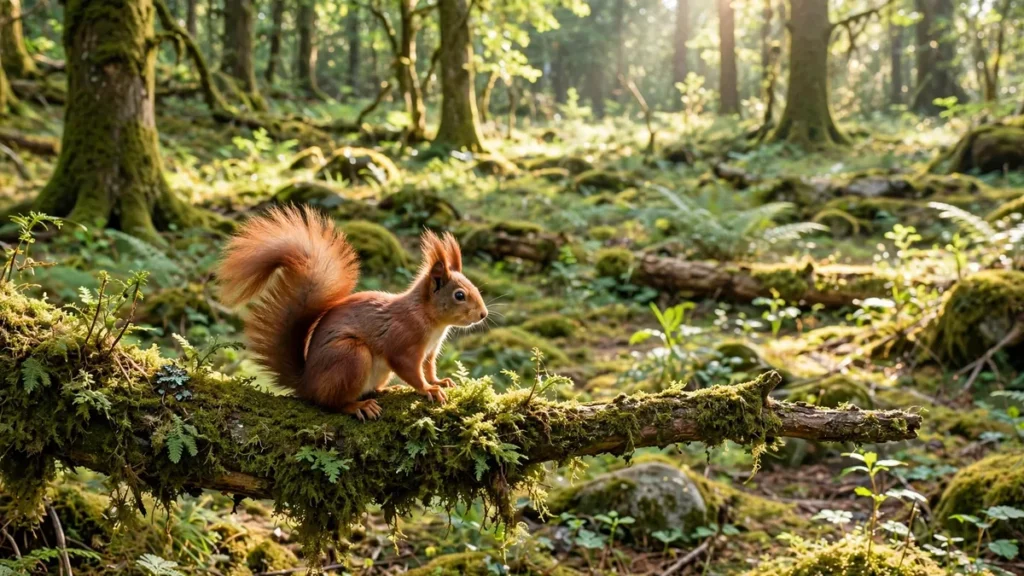
Squirrel species range from the red squirrel of northern pine forests to the grey squirrel of city parks, the flying squirrel that glides between trees at night and the ground squirrel that digs burrows in open grassland. If you are wondering which squirrel species exist and what makes a squirrel different from other small mammals, the short answer is this: squirrels are rodents with large eyes, strong hind legs and long bushy tails, among the most adaptable animals on Earth, living in trees, on the ground and in cities on every continent except Australia and Antarctica.
Key takeaways
- Squirrel species include tree squirrels, flying squirrels and ground squirrels, and this guide profiles eight of them.
- The red squirrel is the native squirrel of Europe and northern Asia, while the grey squirrel was introduced from North America.
- Flying squirrels do not truly fly: they glide between trees on a membrane of skin stretched between their legs.
- Grey squirrels bury thousands of nuts each autumn and find many of them again by smell and memory.
- Woodland edges, city parks and pine forests are the best places to see squirrels, in the morning and late afternoon.
What makes a squirrel a squirrel
A squirrel is a rodent with a long, bushy tail, large bright eyes and powerful hind legs built for climbing and leaping. Squirrels belong to the family Sciuridae, which holds more than 280 species worldwide, from the tiny African pygmy squirrel to the Indian giant squirrel, longer than a house cat including its tail.
The tail is the squirrel’s most useful tool: a rudder when leaping between branches, a blanket in winter and an umbrella in rain. Running headfirst down a trunk, a squirrel turns its back feet around so its claws point backwards, gripping the bark like a climber’s boots.
Squirrels have sharp, curved claws and strong jaws with front teeth that grow throughout their lives, so they must gnaw constantly to keep them worn down, chewing nuts, bark and pine cones. Their eyes sit high on the sides of the head, giving them a wide view of danger from above and behind.
The tree squirrels of the world
The red squirrel is the squirrel of the pine forests of Europe and northern Asia, a rich chestnut-red animal with a pale belly, winter ear tufts and a tail almost as long as its body. Red squirrels live mainly in conifer woodland, eating pine seeds, hazelnuts, berries and fungi, and they build nests of twigs and leaves, called dreys, high in the branches.
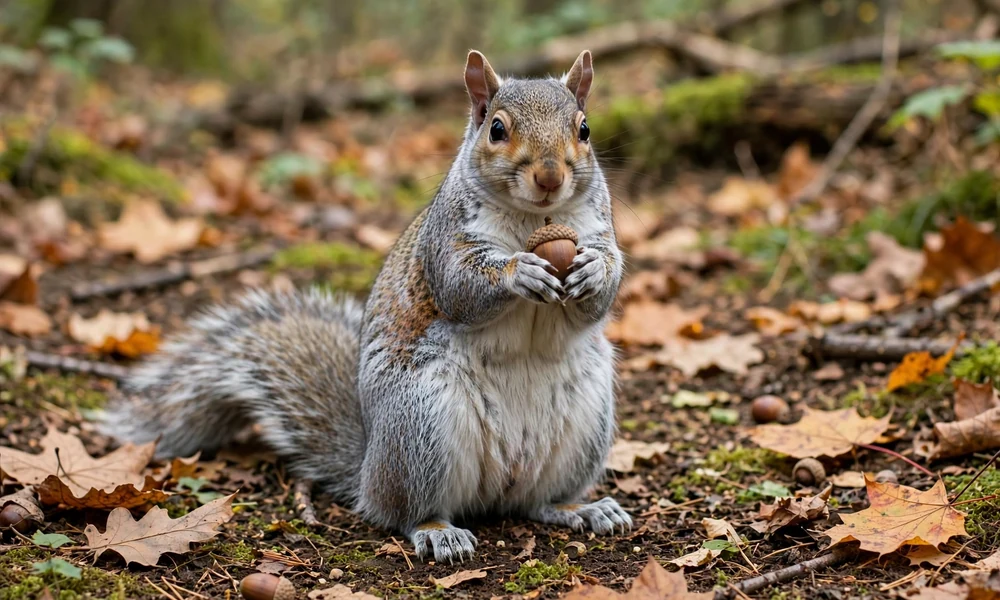
The grey squirrel is the squirrel most people in Britain and Ireland see first: larger than the red squirrel, with grey fur, a white belly and a broad, pale-fringed tail. Grey squirrels came from North America and were introduced to Britain in the nineteenth century; they have spread widely since then and now outnumber red squirrels across much of the country.
The fox squirrel is the largest tree squirrel in North America, a rusty-orange animal with a pale belly that lives in oak and hickory woodland across the eastern and central United States. It is a bold squirrel that often feeds on the forest floor and nests in tree holes rather than dreys.
The Douglas squirrel is a small, noisy squirrel of the conifer forests of western North America. It is dark brown above and orange below, with a loud, rattling call that gives it the nickname “chickaree”. Douglas squirrels feed on pine cones and store them in huge middens, piles of cone scales that can grow several metres across over many years.
The Indian giant squirrel is the showpiece of the family, a cat-sized squirrel with fur in shades of purple, orange, cream and black that lives high in the rainforests of India and can leap more than six metres between trees. The Prevost’s squirrel of South-East Asia is nearly as colourful, with black, orange and white fur, and it lives in the forests of Borneo, Sumatra and the Malay Peninsula.
Flying squirrels and ground squirrels
Flying squirrels are the night shift of the squirrel family. The southern flying squirrel of North America is a small, soft-furred animal with huge dark eyes and a fold of skin, called the patagium, stretched between its front and back legs. When it leaps from a tree, it spreads its legs and glides for up to 80 metres, steering with its tail. Flying squirrels are nocturnal, so they are rarely seen, though they are common in many forests.
Ground squirrels live very different lives. The California ground squirrel is a grey-brown animal that lives in burrows in grassland across the western United States. It stands upright to watch for hawks and coyotes, and it gives a sharp alarm call that warns every squirrel nearby. Ground squirrels hibernate for months in winter, sleeping in their burrows until spring.
Among the forest animals of the world, squirrels cover all three ways of life: tree squirrels in the canopy, flying squirrels gliding through it at night, and ground squirrels in burrows beneath it.
Climbing, gliding and storing food
Squirrels are among the best climbers in the animal world. A grey squirrel can leap more than two metres between branches, run headfirst down a tree trunk and cross a telephone wire without hesitation. Their ankle joints rotate through 180 degrees, letting their hind feet grip the bark while they descend, and their tails act as counterweights when they balance on thin branches.
Food storage gets squirrels through the winter. Grey squirrels bury thousands of nuts and acorns each autumn — a behaviour called scatter hoarding — and find many of them again by smell and memory. The nuts they never find can grow into new trees, making squirrels quiet forest gardeners. Red squirrels, by contrast, store food in a single place, often a tree hole or hollow log, and return to it through the winter.
Where squirrels live
Squirrels live in woodland, parkland, gardens and city streets across most of the world. Red squirrels favour conifer forests in northern Europe and Asia, grey squirrels broadleaf woodland, parks and gardens in North America and in the parts of Europe where they have been introduced, fox squirrels oak woodland, Douglas squirrels mountain conifer forest, and flying squirrels mature forest with old trees full of nesting holes.
The urban animals of city parks include the grey squirrel at the top of the list, and in many cities squirrels are bolder than their woodland cousins, taking food from hands and learning to open bird feeders. Among the predators that hunt squirrels are pine martens, goshawks, tawny owls and domestic cats, and squirrels are always alert, freezing at the first alarm call and flicking their tails in warning.
Squirrels and people
The grey squirrel’s spread has been harder for conservation: grey squirrels carry squirrelpox, harmless to them but usually fatal to red squirrels, and they compete with red squirrels for food and nesting places. In Britain, red squirrels now survive mainly in Scotland, parts of northern England, Wales, Ireland and on islands such as the Isle of Wight and Anglesey, where conservation projects protect them.
| Species | Where it lives | Best-known food | Tail length |
|---|---|---|---|
| Red squirrel | Conifer forests of Europe and northern Asia | Pine seeds, hazelnuts, fungi | About 20 centimetres |
| Grey squirrel | North America; introduced to Britain and Ireland | Acorns, nuts, seeds | About 25 centimetres |
| Fox squirrel | Oak and hickory woodland in eastern North America | Acorns, hickory nuts, seeds | About 30 centimetres |
| Douglas squirrel | Conifer forests of western North America | Pine cones, fungi, seeds | About 15 centimetres |
| Southern flying squirrel | Forests of eastern North America | Nuts, seeds, insects, fungi | About 10 centimetres |
| California ground squirrel | Grassland of western North America | Seeds, grasses, insects | About 20 centimetres |
| Prevost’s squirrel | Rainforests of Borneo, Sumatra and Malaysia | Fruit, seeds, insects | About 25 centimetres |
| Indian giant squirrel | Rainforests of India | Fruit, nuts, flowers, bark | About 60 centimetres |
Best seasons for squirrel watching
Autumn is the finest season for squirrels, when grey and red squirrels are busy gathering and burying nuts, and the woodland floor is covered in fallen leaves and acorns. Squirrels are active all day in autumn, storing food for the winter, and they are easy to watch in parks and gardens.
Spring is the best season for young squirrels leaving the drey, and in winter squirrels still come out on mild days — a red squirrel against snow is one of the prettiest sights in northern wildlife.
Staying safe around squirrels
Squirrels are wild animals, and they deserve respect. Never try to pick up a squirrel, never feed one by hand, and never leave food or rubbish where wild animals can reach it. Squirrels can bite if cornered, and their teeth are sharp — watch from a distance, sit quietly, and let the squirrels come to you.
Squirrel watching checklist
- Watch woodland edges and park trees in the morning and late afternoon, when squirrels are most active.
- Look for dreys, the round nests of twigs and leaves high in the branches, to find where squirrels live.
- Listen for rustling leaves and sharp alarm calls that warn of a hawk or a cat nearby.
- Scan pine forests in autumn for red squirrels gathering cones, and parks for grey squirrels burying nuts.
- Never feed a squirrel by hand, never chase one, and keep dogs on a lead near woodland.
- Leave no trace: take your rubbish home and keep to marked paths.
Frequently asked questions
How many squirrel species are there?
There are more than 280 squirrel species in the family Sciuridae, living on every continent except Australia and Antarctica. This guide profiles eight of them: the red, grey, fox, Douglas, southern flying, California ground, Prevost’s and Indian giant squirrels.
How is this guide different from the forest animals guide?
This guide covers squirrel species in detail, from tree squirrels and flying squirrels to ground squirrels, with their food, tails and watching seasons. The forest animals guide covers the whole community of the forest, from deer and woodpeckers to badgers and beetles, with squirrels as only one part of it.
Do flying squirrels really fly?
Flying squirrels do not truly fly like birds or bats. They glide, spreading a membrane of skin between their legs and steering with their tail, and the southern flying squirrel can glide for up to 80 metres between trees.
Why do squirrels bury nuts?
Squirrels bury nuts in autumn to store food for winter, when fresh food is scarce. Grey squirrels bury thousands of nuts in many different places, a habit called scatter hoarding, and they find many of them again by smell and memory.
Are red squirrels endangered?
Red squirrels are not endangered worldwide, but they have declined sharply in Britain and Ireland, where grey squirrels compete with them and spread squirrelpox. Red squirrels now survive mainly in Scotland, parts of northern England, Wales and Ireland, and on islands such as the Isle of Wight.
Where is the best place to see a red squirrel?
Red squirrels are best in conifer forests in Scotland, on the Isle of Wight, on Anglesey and in parts of northern England, in the morning and late afternoon. Look for pine cones stripped to their cores on the forest floor, a sure sign that red squirrels are feeding nearby.
Conclusion
Squirrel species are the acrobats of the mammal world: red squirrels in the pine forests, grey squirrels in the parks, flying squirrels gliding through the night forest and ground squirrels standing guard over their burrows in the grassland.
The next step is to pick one species and one season — an autumn morning in a park for grey squirrels burying acorns, or a spring visit to a pine forest for red squirrels — and plan your visit around it.














