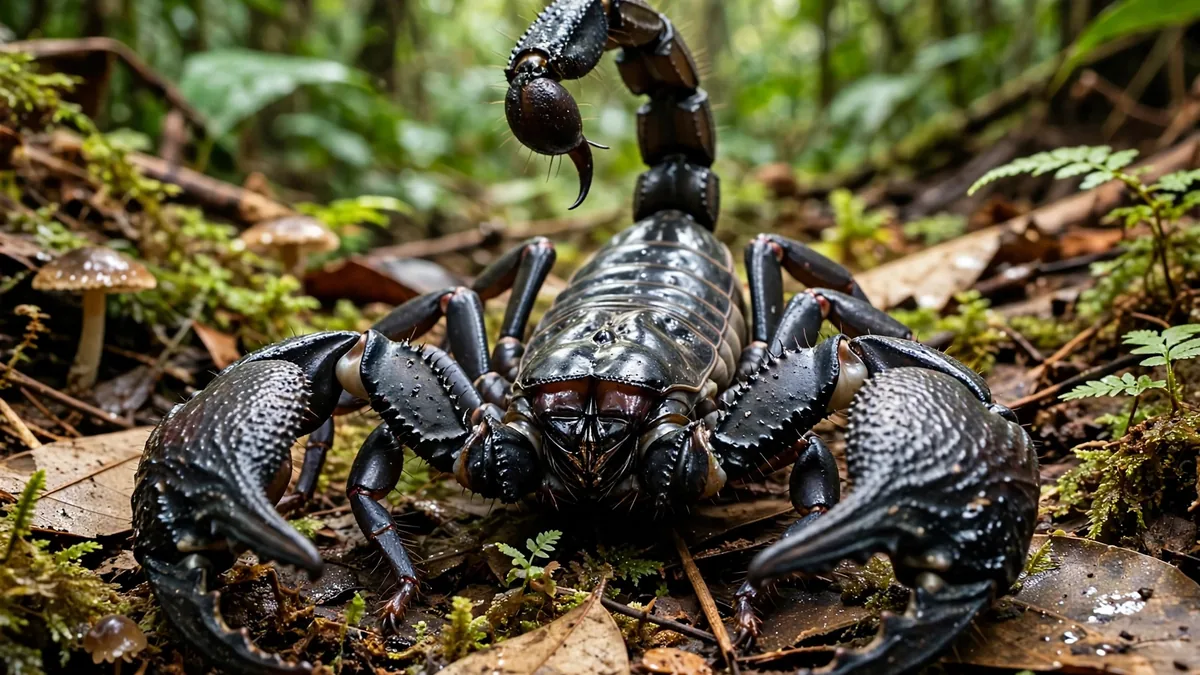
The emperor scorpion species is one of the largest scorpions in the world, a glossy black giant of the West African rainforest that grows to about 20 centimetres long and weighs about 30 grams. If you are asking what an emperor scorpion is, the short answer is a big, heavy, slow-moving scorpion, Pandinus imperator, that lives in burrows in humid forest soil, hunts insects and other small animals at night, and defends itself with enormous pincers rather than with its sting, because its venom is mild, roughly on a level with a bee sting. It looks fearsome, and it is, to a cricket, yet it is one of the calmest and least dangerous scorpions alive.
What makes the emperor scorpion so striking is the contrast between its size and its temper. Most scorpions are small, quick and ready to sting, but this one is as long as a hand, as heavy as a small mouse, and so docile that it has become the best-known scorpion in the pet trade, which has brought it both fame and trouble.
Key takeaways
- The emperor scorpion species is Pandinus imperator, one of the largest scorpions in the world, with adults averaging about 20 centimetres long and weighing about 30 grams.
- It lives in rainforests and savannas across West Africa, from Senegal and Guinea in the west to Nigeria, Gabon and the Democratic Republic of Congo, digging burrows in damp soil and often settling in and around termite mounds.
- It is nocturnal, hunting insects, spiders and other small animals at night, crushing prey with its huge pincers and using its sting only rarely, since its venom is mild and not medically significant for most people.
- Females give birth to live young, usually 9 to 35 pale scorplings, after a gestation of seven to nine months, and the babies ride on their mother’s back until their first moult.
- It is listed on CITES Appendix II because heavy collection for the pet trade threatened wild populations, and it has not been given an assessment on the IUCN Red List.
The emperor scorpion species and their relatives
Emperor scorpions belong to the order Scorpiones, the scorpions, a group of arachnids that has walked the Earth for more than 400 million years, far longer than the dinosaurs, and longer than almost any other land animal alive today. Scorpions sit in the class Arachnida, alongside the spiders, the harvestmen and the mites, and there are more than 2,500 described scorpion species, from tiny bark scorpions a few centimetres long to giants like the emperor. Within the order, the emperor scorpion sits in the family Scorpionidae, a family of large, heavy-bodied burrowing scorpions, and in the genus Pandinus, a small group of big African scorpions with thick pincers and relatively mild venom.
The emperor scorpion, Pandinus imperator, is the lead species of this guide, and it is the scorpion that defines its whole group, largely because it is so much larger and so much calmer than the scorpions most people picture. It lives in the rainforests and savannas of West Africa, from Senegal, Guinea-Bissau and Guinea in the west, through Sierra Leone, Ivory Coast and Ghana, to Togo, Nigeria, Gabon and the Democratic Republic of Congo, and it grows to about 20 centimetres long, with a weight of about 30 grams, which makes it one of the largest scorpions in the world. Like the centipede, the emperor scorpion is a nocturnal ground hunter of the forest floor, but the centipede is a fast, many-legged predator that runs its prey down in the open, while the emperor scorpion is a slow, armoured ambush hunter that waits in its burrow and crushes its prey with its pincers.
| Type | Animal | Where it lives | Best-known food | Length or Weight |
|---|---|---|---|---|
| Family | Scorpions (Scorpionidae) | Africa, Asia and the Americas | Insects and other small animals | About 5 cm to 23 cm long |
| Genus | Emperor scorpions (Pandinus) | West and Central Africa | Insects, spiders and small vertebrates | About 15 cm to 20 cm long |
| Species | Emperor scorpion (Pandinus imperator) | West Africa | Insects, spiders and small vertebrates | About 20 cm long, about 30 g |
| Species | Asian forest scorpion (Heterometrus swammerdami) | India and Sri Lanka | Insects and small vertebrates | About 23 cm long |
| Species | Flat rock scorpion (Hadogenes paucidens) | Southern Africa | Insects and spiders | About 15 cm to 21 cm long |
| Species | Deathstalker (Leiurus quinquestriatus) | North Africa and the Middle East | Insects and spiders | About 8 cm to 10 cm long |
The closest relatives of the emperor scorpion are the other big burrowing scorpions of the family Scorpionidae, a loose group of heavyweights that share its thick pincers, its burrowing habit and its mild venom. The Asian forest scorpion, Heterometrus swammerdami, is the only scorpion that grows longer, at about 23 centimetres, and it lives in India and Sri Lanka in much the same way, digging burrows in damp forest soil and hunting at night. The flat rock scorpion of southern Africa is nearly as long, at about 15 to 21 centimetres, but it is flat and wide, built for squeezing into cracks in rock rather than for digging, and it is far less often seen. The deathstalker, by contrast, is a small desert scorpion of North Africa and the Middle East, only about 8 to 10 centimetres long, with thin pincers and one of the most potent venoms of any scorpion, which shows how little size and danger have to do with each other.
What emperor scorpions look like
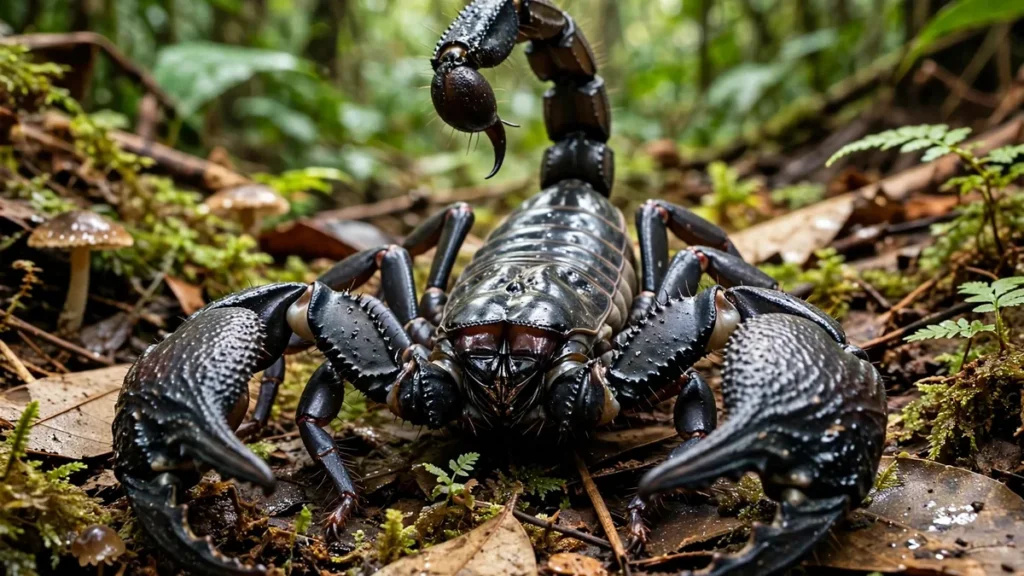
An emperor scorpion is unmistakable once you have seen one, and it is hard to mistake for anything else. The whole animal is a deep glossy black, sometimes with a faint green or blue sheen in bright light, and the body is thick, heavy and armoured, covered in a hard exoskeleton that looks polished, like black stone. Adults average about 20 centimetres from the tips of the pincers to the tip of the tail, and they weigh about 30 grams, which is about the weight of a small mouse, while pregnant females can weigh more than 28 grams and sometimes as much as 40 grams. Males and females look much alike, though females tend to be a little heavier and males a little longer in the tail, and the young are pale and soft when they are born, darkening as they grow.
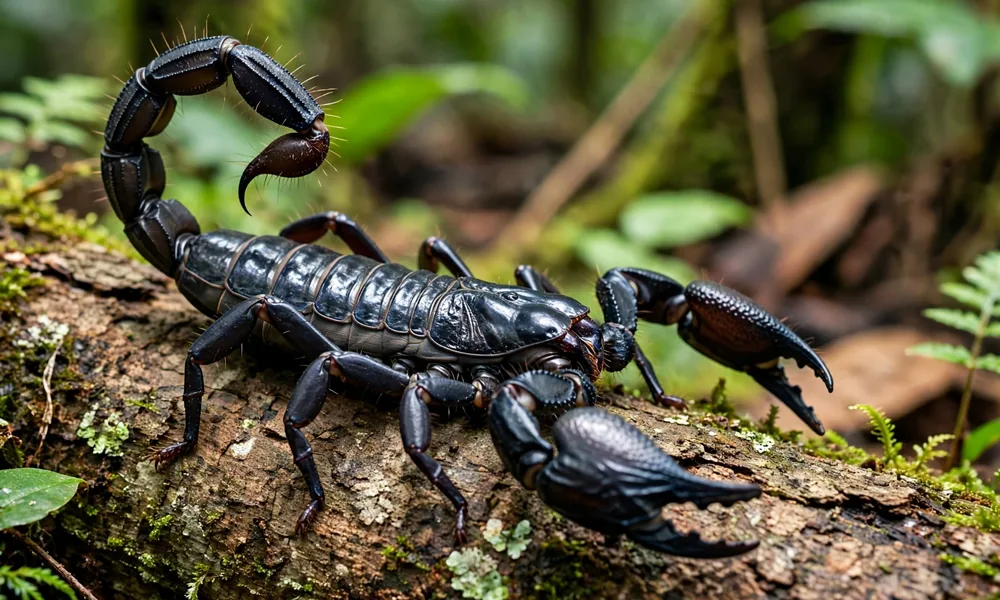
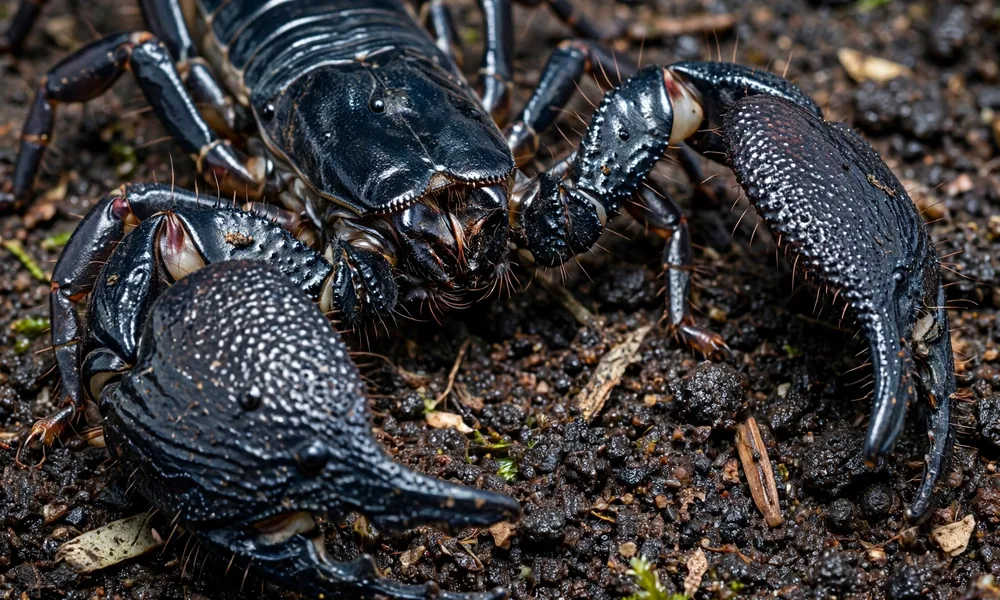
The pincers are the first thing anyone notices, and they are the animal’s real weapons. Each pincer, or pedipalp, is thick, rough and granular, with a heavy claw at the end, and together they are strong enough to crush a large cricket or to hold a struggling cockroach still while the scorpion feeds. The pincers are also sensitive, covered in fine hairs that pick up vibrations and smells, and the scorpion uses them to feel its way around its burrow in the dark, to dig, to carry its young, and to push rivals away. The tail, or metasoma, is long and segmented, ending in a stinger, but it is thin compared with the pincers, and it is usually carried curled over the back, out of the way.
Like all scorpions, the emperor has eight legs and two body parts, a front section that carries the legs and pincers, and a rear section that carries the tail. Underneath, on the belly, it has a pair of comb-like organs called pectines, which it drags along the ground to taste chemicals and feel vibrations in the soil, and these are one of the ways it finds its way home to its burrow in the dark. It has several pairs of eyes, but its eyesight is poor, and it hunts mostly by touch and by smell, which is why it is so at home in the darkness of the forest floor at night.
One of the strangest things about the emperor scorpion is that it glows under ultraviolet light. Like other scorpions, its exoskeleton contains substances that fluoresce, so under a UV torch the black body turns a bright pastel green or blue, shining out of the dark like a small lamp. Scientists still do not fully agree on why scorpions glow, though one idea is that the whole exoskeleton works as a light sensor, helping the animal judge how dark it is and when it is safe to come out, and another is that the glow helps scorpions find each other. Whatever the reason, the glow is one of the best ways to find an emperor scorpion at night, and researchers in West Africa often search with UV torches for exactly that reason.
Where emperor scorpions live
Emperor scorpions live in the rainforests and savannas of West and Central Africa, in a band of countries that runs from Senegal and Guinea-Bissau in the west, through Guinea, Sierra Leone, Ivory Coast and Ghana, to Togo, Nigeria, Gabon and the Democratic Republic of Congo. They are animals of warm, humid lowland forest, where the temperature stays high all year and the soil stays damp, though they also occur at the edges of savanna, where the forest thins out and the ground is drier. They are ground dwellers through and through, and they are almost never found up in trees, which sets them apart from many of the other animals that share their forest.
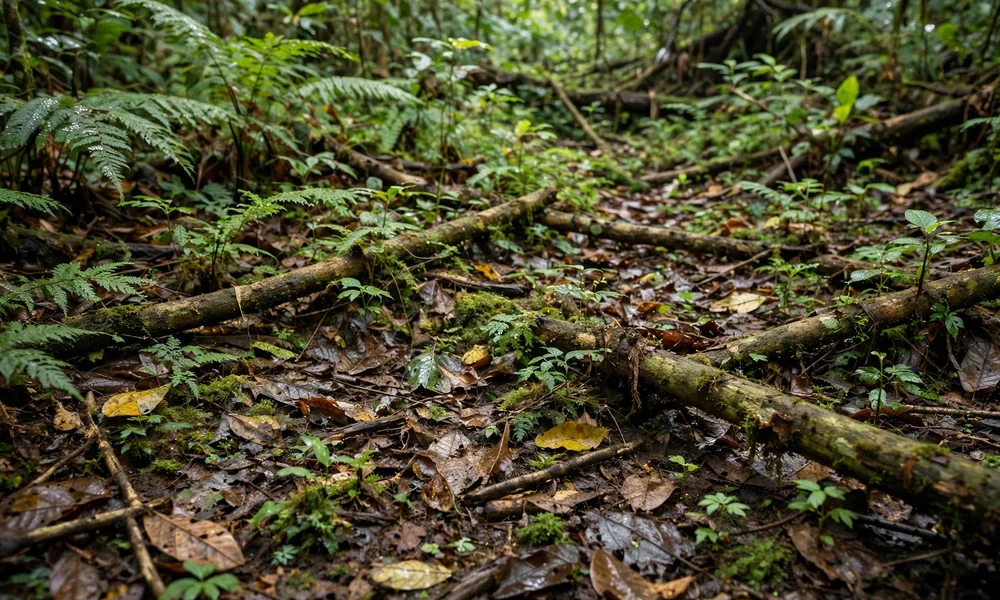
The home of an emperor scorpion is a burrow, and it is a serious piece of digging. The scorpion scrapes out a tunnel in soft, damp soil, often at the base of a tree or under a fallen log, and the burrow can run a metre or more into the ground, ending in a wider chamber where the animal rests during the day. Emperor scorpions are unusual among scorpions in that they often live in and around termite mounds, where the soil is soft and workable and prey is plentiful, and they have been known to dig into mounds to a depth of about 2 metres, following the termites down into the dark. They also use the burrows of other animals, cracks in the ground and hollows under stones, and they will take over any shelter that keeps them cool and damp through the heat of the day.
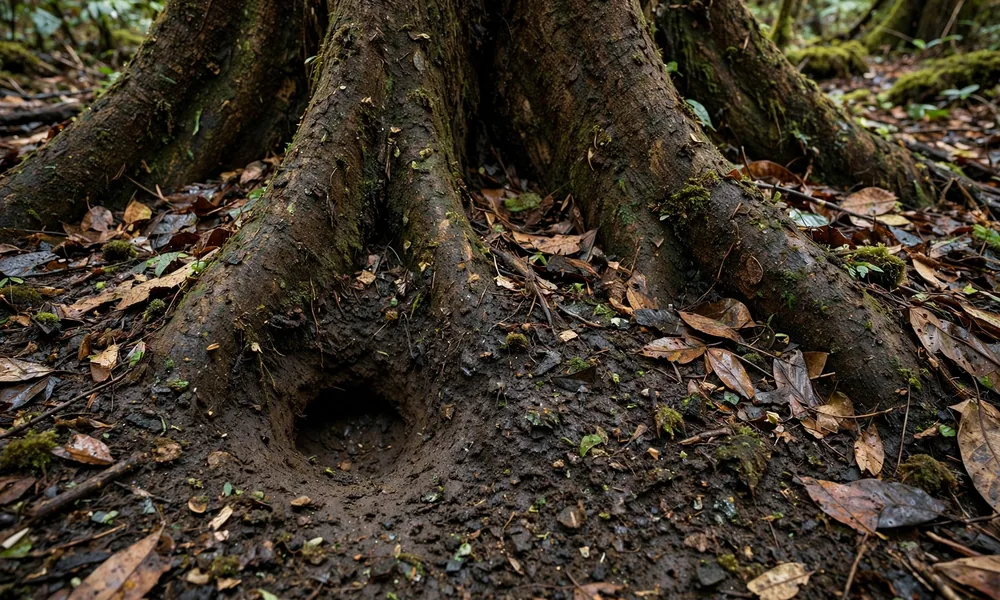
Emperor scorpions are unusual for scorpions in how social they can be. Most scorpions are solitary and will fight or eat each other if they meet, but emperor scorpions often tolerate each other, and several animals, especially mothers and their young, may share a burrow system or live in burrows close together without fighting. This tolerance is one of the reasons they do so well in captivity, where groups can be kept together in a large enclosure, and it may help them in the wild too, since a burrow shared by several animals is warmer and safer than a burrow dug alone. Even so, they are not truly social animals, and they hunt and feed alone.
What emperor scorpions eat
Emperor scorpions are hunters and scavengers, and they eat almost any small animal they can catch and crush. Their staple food is insects, and termites are often the largest single part of the diet, since the scorpions live in and around termite mounds and can pick off workers as they come and go. They also take crickets, cockroaches, beetles, grasshoppers and other ground insects, along with spiders, centipedes and worms, and they will scavenge dead animals they find on the forest floor. Like the ant, the emperor scorpion is a regular visitor to the insect highways of the forest floor, but where ants work in long trails and carry their food home in pieces, the emperor scorpion hunts alone and eats where it catches its prey.
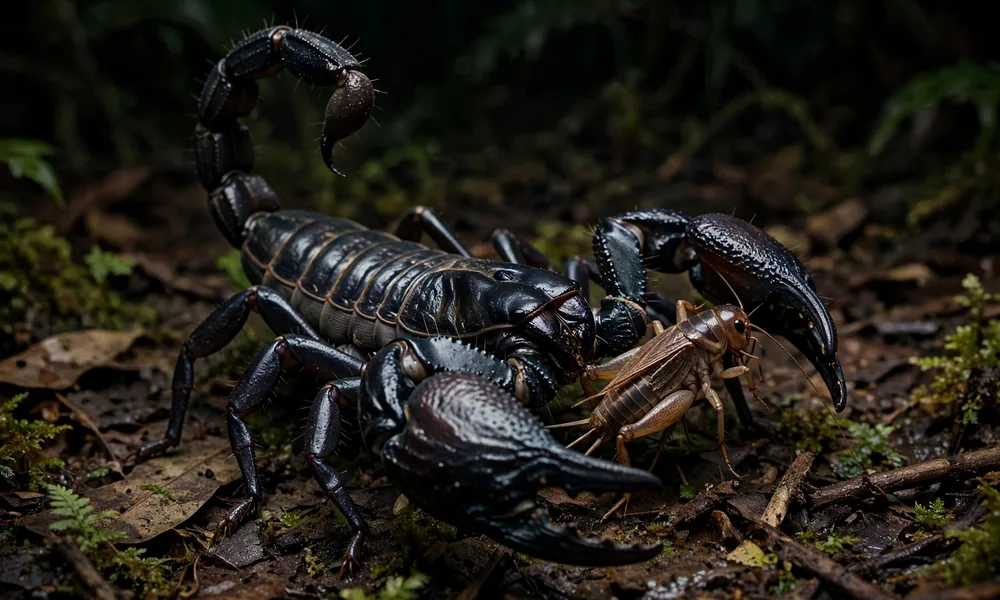
The hunt is a slow and patient business. The scorpion leaves its burrow after dark and walks the forest floor, feeling its way with its pincers and its pectines, and when it senses the vibrations of an insect nearby, it moves in slowly, raises its pincers and grabs. The prey is crushed and held, and the scorpion tears it apart with its small mouthparts, taking in the soft tissues and leaving the hard shell behind. The sting is used only when the prey is large or strong, or when the scorpion feels threatened, and many meals are finished without a single sting, which is why the venom matters so little to the animal’s daily life.
How emperor scorpions behave
Emperor scorpions are nocturnal, and their day is divided cleanly in two. By day they rest deep in their burrows, where the air is cool and damp and the light never reaches, and by night they come out to hunt, to dig, to mate and to explore. They are slow walkers, moving with a steady, deliberate gait that suits an animal that relies on armour rather than speed, and when they are disturbed they are more likely to freeze, to raise their pincers in a threat display, or to retreat into their burrow than to sting. They can move quickly in a short burst when they must, but they are not built for running, and they do not chase prey or people.
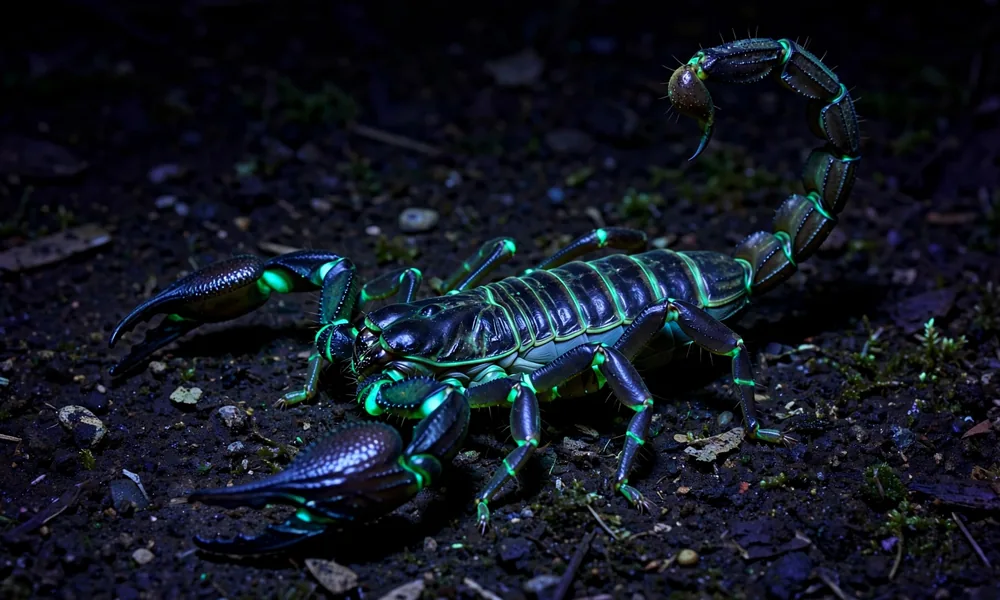
The threat display of an emperor scorpion is a fine piece of theatre. When it feels cornered, it raises its pincers high and wide, arches its tail over its back, and holds its ground, making itself look as large as possible. This is usually enough to send a predator away, since few animals want to tackle a creature that is all armour and pincers, and the display is also used between scorpions, when two animals meet at a burrow mouth or over a piece of food. Fights between emperor scorpions are usually settled by pushing and shoving with the pincers, and they rarely end in a sting, which is another sign of how mild-mannered this species is for a scorpion.
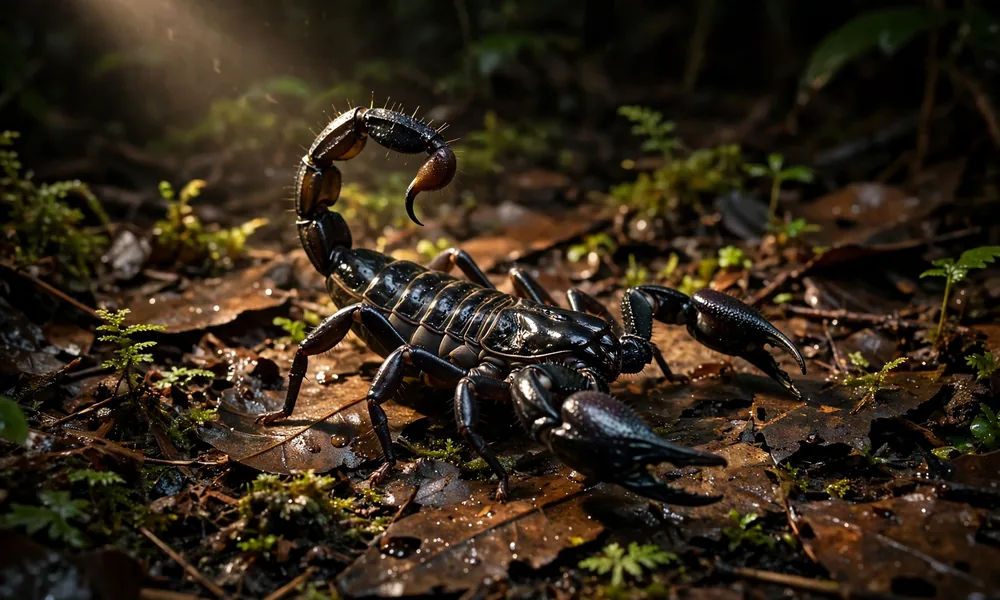
Communication between emperor scorpions is mostly silent and chemical. They lay down scent trails that other scorpions can follow, they feel each other’s vibrations through the ground, and they use their pectines to taste the soil for the chemical signs of a mate, a rival or a meal. Males looking for a mate will wander further than usual, following scent trails left by females, and when a male finds a female he performs a careful courtship dance, grasping her pincers and leading her back and forth across the ground in a movement that scorpion keepers call the promenade a deux. The dance can last for hours, and it ends when the male deposits a packet of sperm on the ground and guides the female over it.
Breeding and life cycle
Emperor scorpions breed slowly, and everything about their reproduction is measured in months and years rather than days. They reach sexual maturity at about four years of age, which is late for an animal of their size, and the females give birth to live young rather than laying eggs, which is the way of all scorpions. After mating, the female carries the young inside her body for seven to nine months, and then gives birth to a litter of usually 9 to 35 pale white scorplings, one after the other, over the course of a day or more.
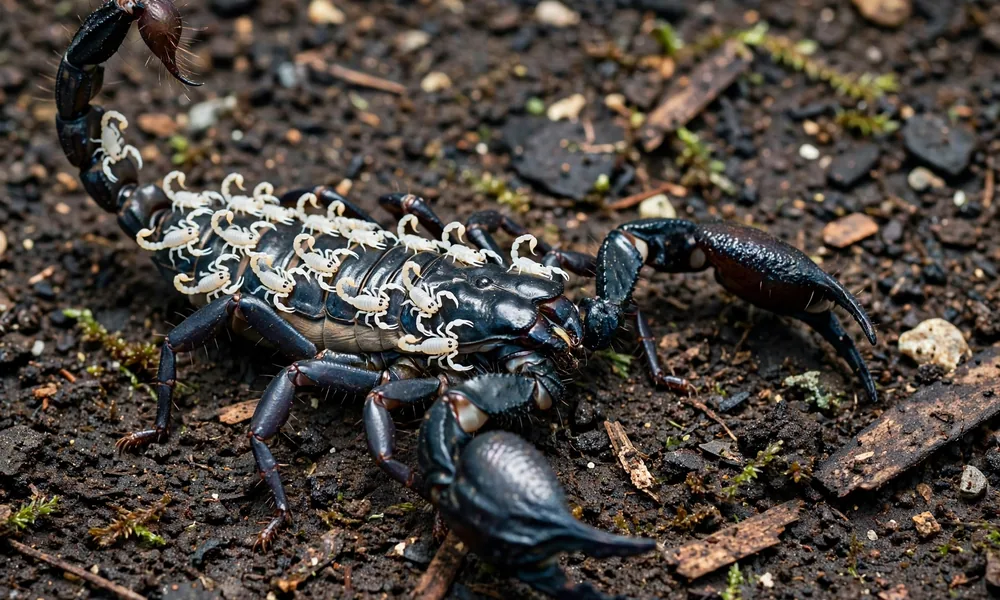
The scorplings are born pale, soft and helpless, and they climb straight onto their mother’s back, where they stay for the first days and weeks of their lives. The mother carries them everywhere, and she will not eat while they are on her back, since she cannot hunt without risking them, and she defends them fiercely, raising her pincers at anything that comes close. The babies feed on the reserves they were born with until their first moult, when their exoskeletons harden and darken, and then they climb down and begin to hunt for themselves, though they often stay close to the mother’s burrow for some time.
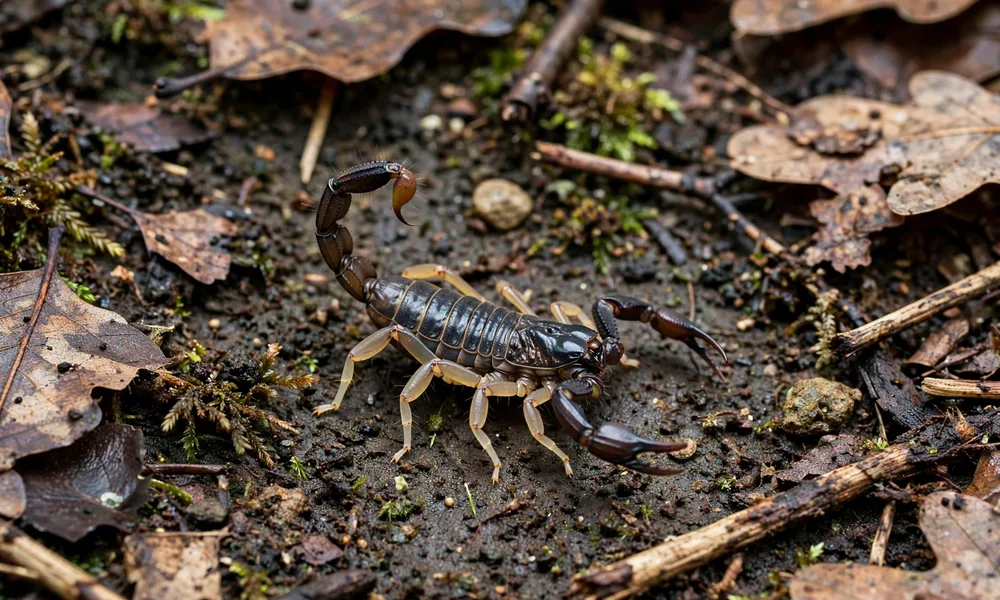
Growth is slow, and a young emperor scorpion will moult several times over its first years, growing a little larger each time, until it reaches its full size at about four years old. It sheds its old exoskeleton in one piece, stepping out of it soft and pale, and then hides in its burrow while the new shell hardens, since it is defenceless until the armour sets. The whole process, from birth to full size, takes years, and the animal may live for six to eight years in total, with some individuals living up to eight years in captivity, which is a long life for an arachnid.
Conservation status
The emperor scorpion has not been given an assessment on the IUCN Red List, so it has no formal Red List category, but it is protected internationally in another way. It is listed on Appendix II of CITES, the Convention on International Trade in Endangered Species of Wild Fauna and Flora, which means that international trade in the species is controlled and can only take place under permit. Appendix II is used for species that are not yet threatened with extinction but could become so if trade is not controlled, and the emperor scorpion was added because heavy collection for the pet trade was taking thousands of animals from the wild every year.

The pet trade is the best-known threat to the emperor scorpion, and it is the reason the species is so widely known outside Africa. Its size, its calm temper and its hardiness made it the most popular scorpion in the pet trade for many years, and wild animals were collected in large numbers to supply the demand, especially in Ghana and Togo. That collection has fallen as captive breeding has grown, and many of the emperor scorpions sold today are bred in captivity, but wild collection still happens, and it still takes animals that the slow-breeding wild population cannot quickly replace.
Habitat loss is the quieter threat, and in the long run it may matter more. The rainforests of West Africa are being cleared for farming, for timber and for mining, and every hectare of forest that is lost takes with it the damp soil, the burrows, the termite mounds and the insects that emperor scorpions depend on. A cleared patch of forest is not soon reoccupied, since the scorpions do not travel far. The scorpions are also sometimes killed out of fear by people who meet them, even though their sting is mild, and that fear is one more pressure on animals that are already slow to replace themselves.
Best seasons for emperor scorpion watching
The best time to look for emperor scorpions is the wet season, when the forest is at its dampest and the insects are at their most plentiful. In West Africa the rains run roughly from April to October, with the heaviest rain in the middle of the year, and this is when the soil is soft, the burrows are easy to dig, and the scorpions are out hunting most nights. In the dry season, from about November to March, the soil hardens, the forest thins and the scorpions stay underground longer, coming out less often and for shorter periods, so a night walk is less likely to find one.
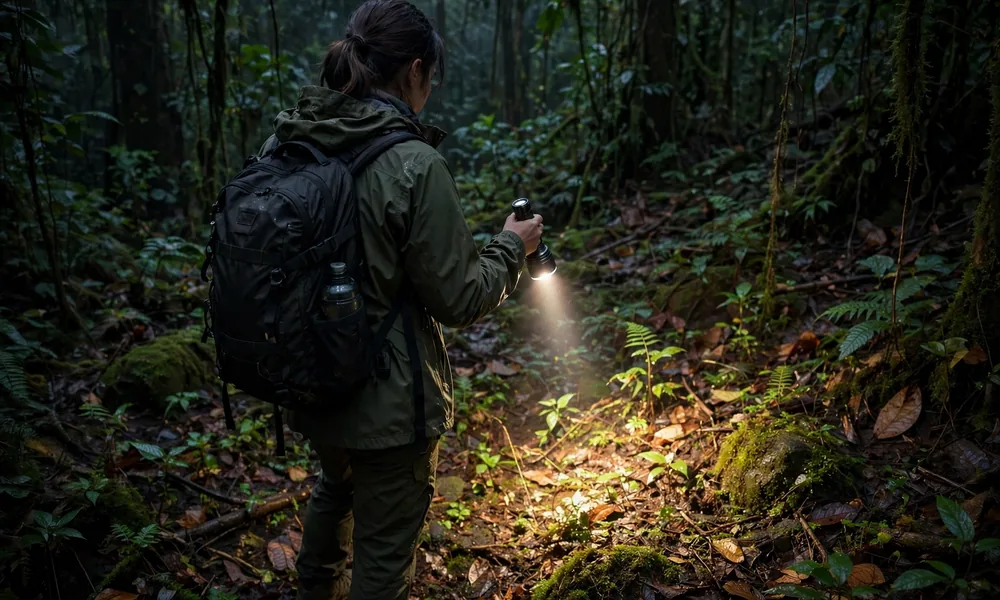
Night is the only time that matters. Emperor scorpions are strictly nocturnal, and they do not come out in daylight at all, so the best watching is done on a guided night walk, starting an hour or two after dark, when the forest floor has cooled and the scorpions are out hunting. A UV torch is the best tool for finding them, since the animals glow bright green or blue under ultraviolet light, and a good guide will know the burrows and the termite mounds to check. The hours just after dark and just before dawn are often the busiest, and a walk after rain is better than a walk in dry weather, since the damp brings the insects out and the scorpions follow.
The best places to look are the national parks and forest reserves of West Africa, where the forest is protected and the scorpion populations are at their healthiest. Ghana, with its rainforest reserves, is one of the best-known places to see them, and the forests of Sierra Leone, Ivory Coast and Nigeria hold good populations too. A local guide is essential, not only because the scorpions are hard to find, but because the forest at night is not a place to walk alone, and a guide will know which burrows are occupied, which termite mounds to check, and how to watch without disturbing the animals.
Staying safe around emperor scorpions
Emperor scorpions are among the least dangerous scorpions in the world, but they are still wild animals with a sting, and they deserve respect. Their venom is mild, roughly on a level with a bee sting, and a sting is painful but not medically significant for most people, though anyone who is allergic to bee stings should take extra care, since the reaction can be stronger. The scorpions are docile and slow to sting, and they will almost always warn you first, raising their pincers and arching their tail, and then retreating if they can, so a sting usually means the animal was trapped, cornered or handled.
The rules for staying safe are simple and they work. Wear strong boots and long trousers when you walk the forest floor at night, and watch where you put your hands, since a scorpion in a burrow or under a log will sting if a hand lands on it. Never put your hand into a burrow, a hollow log or a termite mound, and never pick up a scorpion, even one that looks calm, since a handled scorpion is a frightened scorpion. If you want a closer look, use a torch, and let the guide do the finding, since they know how to lift a log or a stone safely and put it back exactly as it was.
If you are stung, stay calm and get away from the animal first, since there may be more scorpions nearby. Wash the sting with soap and water, keep the limb still and raised, and watch for signs of an allergic reaction, such as swelling of the face or lips, difficulty breathing, or a spreading rash, which need medical help at once. For most people a sting will hurt for a few hours and then fade, much like a bee sting, and a cold cloth will help with the pain, but anyone who is unsure, or who feels unwell, should see a doctor. The best safety rule of all is the simplest: look, do not touch, and let the scorpion go about its night.
Emperor scorpion watching checklist
Use this checklist before a night walk in West African rainforest, and tick each item off as you pack and prepare.
- Book a local guide who knows the forest, the burrows and the termite mounds, and who can find scorpions without disturbing them.
- Pack a UV torch for finding glowing scorpions and a white-light torch for walking, with spare batteries for both.
- Wear strong closed boots, long trousers and long sleeves, and tuck your trousers into your boots before you step onto the forest floor.
- Carry drinking water, insect repellent and a small first aid kit, and tell someone where you are going and when you expect to be back.
- Walk slowly, watch the ground, and never put your hand into a burrow, a hollow log or a termite mound.
- Keep your distance when a scorpion is found, stay quiet, and let the guide decide how close the group should stand.
- Leave every burrow, log and stone exactly as you found it, and take nothing from the forest but photographs.
Frequently asked questions
How big do emperor scorpions get?
Adult emperor scorpions average about 20 centimetres long, from the tips of the pincers to the tip of the tail, and they weigh about 30 grams, which makes them one of the largest scorpions in the world. Pregnant females can weigh more than 28 grams and sometimes as much as 40 grams, and the only scorpion that grows longer is the Asian forest scorpion, at about 23 centimetres. Young scorpions are much smaller, and they grow slowly, taking about four years to reach their full size.
What do emperor scorpions eat?
Emperor scorpions eat insects, spiders, centipedes and worms, with termites often making up a large share of the diet, since the scorpions live in and around termite mounds. They also take crickets, cockroaches, beetles and grasshoppers, and they will scavenge dead animals and occasionally take small vertebrates such as lizards and mice. They hunt at night, crushing their prey with their huge pincers, and they often finish a meal without using their sting at all.
How dangerous is an emperor scorpion sting?
An emperor scorpion sting is not very dangerous for most people. The venom is mild, roughly on a level with a bee sting, and a sting is painful for a few hours but not medically significant for most healthy adults. Anyone who is allergic to bee stings should take extra care, since the reaction can be stronger, and anyone who feels unwell after a sting should see a doctor. The scorpions are docile and slow to sting, and they will warn you first with a raised-pincer display and a retreat if they can.
Where do emperor scorpions live?
Emperor scorpions live in the rainforests and savannas of West and Central Africa, from Senegal and Guinea-Bissau in the west, through Sierra Leone, Ivory Coast, Ghana, Togo and Nigeria, to Gabon and the Democratic Republic of Congo. They are ground dwellers that dig burrows in damp soil, often at the base of trees or under fallen logs, and they often live in and around termite mounds, where the soil is soft and prey is plentiful. They do not travel far, and an individual may spend its whole life within a few metres of its burrow.
Can you keep an emperor scorpion as a pet?
You can, and emperor scorpions are the most popular scorpions in the pet trade, because they are large, calm and hardy, but they are not animals to take on lightly. They need a warm, humid enclosure with deep soil for burrowing, they live for six to eight years, and they are protected under CITES Appendix II, so any animal you buy should be captive-bred and legally sourced. They are look-but-do-not-touch animals, and they should never be handled, since a handled scorpion is a frightened scorpion and a sting, however mild, is never pleasant.
How is this guide different from the earthworm guide?
This guide covers the emperor scorpion, a single species, Pandinus imperator, a large glossy black scorpion of West African rainforests that grows to about 20 centimetres long, digs burrows in damp soil, hunts insects at night with its huge pincers, and carries its live-born young on its back, while our earthworm guide covers a soft-bodied burrowing worm that lives in soil and leaf litter, eats decaying plant matter, and has no pincers, no tail and no sting at all. One is a heavily armoured nocturnal hunter you meet on the rainforest floor after dark; the other is a quiet gardener of the soil you meet by turning over a spadeful of earth.
Conclusion
The emperor scorpion species is a reminder that the most fearsome-looking animal in the forest is often the gentlest. A glossy black giant of about 20 centimetres and 30 grams, with pincers like a small lobster and a sting it almost never uses, it spends its long life in a burrow in the damp soil of West Africa, hunting termites and crickets by night, carrying its babies on its back, and glowing green under ultraviolet light, asking for nothing more than to be left alone.
If you walk in its forest, give it that room: wear your boots, watch the ground, bring a UV torch and a good guide, and let the scorpion do its night work while you watch from a safe distance. Do that, and the emperor scorpion will stay what it has always been, a great armoured hunter of the rainforest floor, doing its slow and patient work in the dark while the forest sleeps around it.