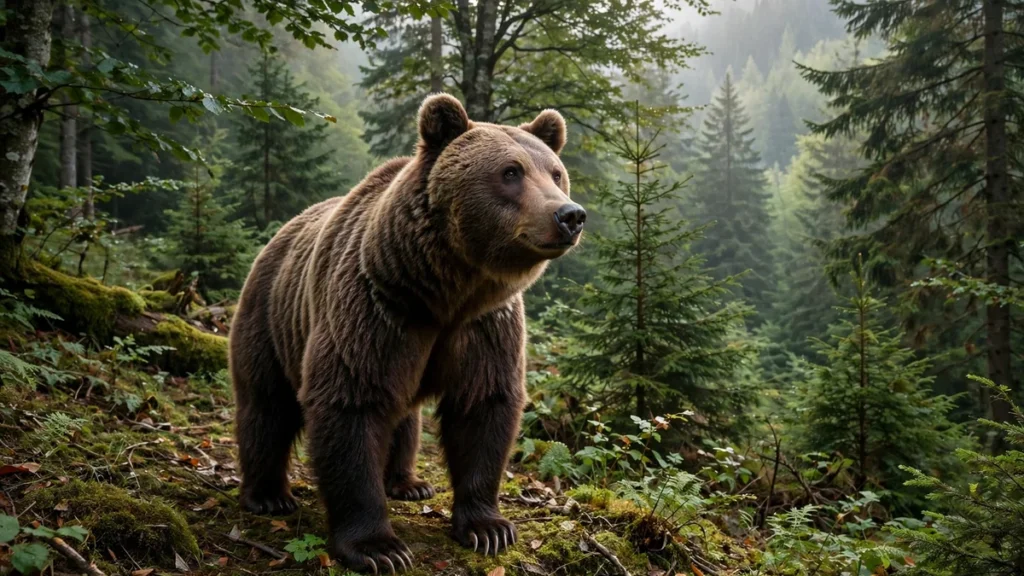
Bosnia animals include brown bears roaming the forests of the Dinaric Alps, wolves and lynx hunting in the mountain valleys, chamois on the high ridges, and griffon vultures circling over the canyons of the Una River. If you are wondering which animals live in Bosnia and Herzegovina and where to see them, the short answer is this: the Dinaric Alps hold bears, wolves, lynx and chamois, the Una National Park holds vultures, otters and trout, and the forests of the interior hold deer, boar and foxes.
Bosnia and Herzegovina is one of the wildest corners of Europe, with steep limestone mountains, deep river canyons and forests that still cover much of the country. This guide covers the species you are most likely to meet, where each one lives and the best seasons to see them.
Key takeaways
- Bosnia holds one of the largest brown bear populations in the western Balkans, and the forests of the Dinaric Alps are among the best places in the region to see bears, wolves and lynx.
- Griffon vultures nest on the cliffs of the Una River canyon, and Una National Park is one of the best places in the Balkans to watch them soar.
- Chamois live on the high ridges of the Dinaric Alps, and the mountain meadows above the treeline hold marmots and golden eagles.
- Otters hunt in the clear rivers of Bosnia, and the beaver has returned to the country’s waterways.
- Dawn and dusk are best for mammals, spring and early summer for the birds of the canyons, and autumn for the deer rut in the mountain forests.
What makes Bosnia’s wildlife special
Bosnia and Herzegovina is a small country where wild land still covers much of the map, from the Dinaric Alps in the west to the deep canyons of the Una, Neretva and Drina rivers. Few countries in Europe hold so many large mammals in such a compact area, and fewer still let you watch them in forests and mountains that have barely been touched.
Bosnia has no endemic land mammal, and that honesty matters: no mammal lives only in Bosnia and Herzegovina. What it has instead is abundance and variety. The Dinaric Alps hold one of the largest populations of brown bears, wolves and lynx in the western Balkans, and the Una River canyon is one of the finest places in the region to watch griffon vultures, which nest on its limestone cliffs.
The beaver, once gone from Bosnian rivers, has returned to the waterways of the north, and the griffon vulture has been helped back to the cliffs of the Una.
The great mammals of Bosnia
The brown bear is Bosnia’s most famous animal and the largest land predator in the country, living in the forests of the Dinaric Alps from the mountains of the west to the high ranges of the east. Bears are most often seen at dawn and dusk in spring and summer, when they feed in forest clearings and along the edges of mountain meadows.
Among the predators, the grey wolf hunts in packs through the Dinaric forests, and the Eurasian lynx lives quietly in the same woods, most often glimpsed at dawn on a forest track. Both are shy and hard to see, and a sighting is a matter of patience and luck.
Red deer are widespread in the mountain forests, and the autumn rut fills the valleys with the roaring of stags. Roe deer live in the meadows and forest edges, wild boar root through the oak and beech woods, and the chamois climbs the high ridges of the Dinaric Alps, most often seen in the mountains of the south and east.
The brown bear is not the only large mammal to look for. The red fox is common in farmland and forest edges, badgers and pine martens live in the woods, and otters hunt in the rivers of the mountains and the canyons of the Una.
Birds of the Dinaric Alps and the Una canyon
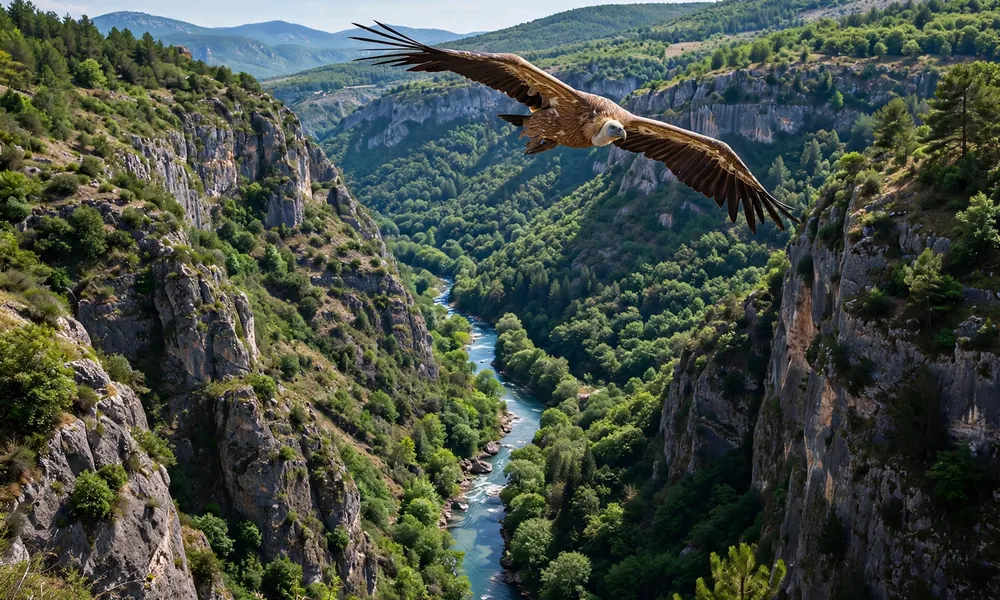
The Una River canyon is the birdwatching heart of Bosnia. Griffon vultures nest on its limestone cliffs and circle over the canyon on rising warm air, and the river below holds grey herons, kingfishers and dippers. White-tailed eagles hunt along the wider rivers of the north, and the canyon in spring is one of the most dramatic places for birds in the Balkans.
In the mountains, the golden eagle circles over the high ridges of the Dinaric Alps, and the wallcreeper, a small grey and crimson bird, flutters over cliff faces in the gorges. Capercaillie live in the old conifer forests, and the owls of Bosnia include the tawny owl of the woodlands and the Ural owl of the mountain forests.
In winter, the rivers and lakes of the lowlands hold great flocks of ducks, geese and swans from the north.
Otters, beavers and life in the rivers and canyons
The Una is a world of clear water, and its channels hold otters, trout and a wealth of fish. The otter is most active at dawn, when it hunts along the quiet edges of the river, and the beaver has returned to Bosnian waterways, where its dams and gnawed trees are easy signs of its presence.
The rivers of Bosnia are clean and cold, and they hold dippers, grey wagtails and kingfishers, along with trout in their upper reaches. Herons and egrets wade in the slow lowland rivers, and the marshes of the northern plains hold bitterns and marsh harriers.
The caves of the Dinaric Alps hold bats and the olm, a pale cave salamander that lives only in the underground waters of the Dinaric karst.
Smaller animals and the wildlife of the high mountains
Not all of Bosnia’s wildlife is large. Alpine marmots whistle from the meadows above the treeline in the Dinaric Alps. Adders bask on sunny slopes, and the meadow viper lives in the grasslands of the karst fields.
The forests hold red squirrels, dormice and pine martens, and the meadows are rich in butterflies and wild bees. Bats roost in the caves of the Dinaric karst, and the fire salamander lives in the damp mountain forests after rain.
Where to see Bosnia’s wildlife
Brown bears are easiest in the forests of the Dinaric Alps, where guided bear-watching hides give the best views at dusk. Wolves and lynx are far harder to see, and the forests of the central Dinaric ranges are the best places to try, with a local guide and plenty of patience.
Griffon vultures are best in Una National Park, where the birds circle over the canyon of the Una River. Chamois are easiest on the high ridges of the Dinaric Alps in summer, and otters are best looked for at dawn along the quiet stretches of the Una.
| Species | Where to look | Best season | How likely is a sighting |
|---|---|---|---|
| Brown bear | Forests of the Dinaric Alps | Spring to autumn, at dusk | Good from a hide |
| Grey wolf | Forests of the central Dinaric ranges | Winter, at dawn | Low, needs a guide |
| Eurasian lynx | Dinaric forests | All year, at dawn | Low, needs patience |
| Chamois | High ridges of the Dinaric Alps | Summer | Good with binoculars |
| Griffon vulture | Una River canyon, Una National Park | April to September | Good from the canyon rim |
| Golden eagle | High ridges of the Dinaric Alps | All year | Fair on a clear day |
| Otter | Quiet stretches of the Una River | All year, at dawn | Fair with patience |
Best seasons for wildlife watching
Spring is the finest season. The griffon vultures return to the cliffs of the Una, the mountain meadows fill with flowers and butterflies, and bears come out of their winter dens with cubs. It is also the most sensitive season, so keep to paths, keep dogs on a lead and give every animal more space than you think it needs.
Summer is the easiest season for the canyon, with long days and the vultures soaring on warm air. Autumn brings the deer rut in the mountain forests and the bird migration along the river valleys.
Winter is the quiet season, and the hardest for watching, but wolf tracks are easiest to find in the snow of the Dinaric forests, and the lowland rivers hold great flocks of ducks, geese and swans from the north.
Staying safe around Bosnia’s wildlife
Bosnia’s wild animals are usually calm, but they deserve respect, and the brown bear most of all. Never approach a bear, never walk between a mother and her cubs, and never leave food or rubbish where bears can reach it. Make noise on forest paths, carry bear spray where it is advised, and walk with a local guide in bear country.
Bosnia wildlife watching checklist
- Book a guided bear-watching hide in the Dinaric Alps in spring or summer, and go at dusk for the best chance of a sighting.
- Visit Una National Park for griffon vultures circling over the canyon of the Una River.
- Walk the high ridges of the Dinaric Alps in summer with binoculars for chamois and marmots.
- Look for otters at dawn along the quiet stretches of the Una River, and keep a respectful distance.
- Never feed wild animals, and never use food or calls to lure them closer for a photograph.
- Leave no trace: take your rubbish home and keep to marked paths in the forests and the mountains.
Frequently asked questions
What is the most famous animal in Bosnia?
The brown bear is the most famous, and Bosnia is one of the best places in the western Balkans to see it. The griffon vulture is the best-loved bird of the Una River canyon.
Are there wolves and bears in Bosnia?
Yes. Bosnia holds one of the largest populations of brown bears and wolves in the western Balkans, and both live in the forests of the Dinaric Alps. They are wild and shy, and they are best watched with a local guide.
What animal lives only in Bosnia?
No land mammal lives only in Bosnia and Herzegovina. The country holds no endemic land mammal, but it does hold one of the largest populations of bears, wolves and lynx in the western Balkans, and the Una River canyon is one of the great places in the region to watch griffon vultures.
When is the best time to see griffon vultures in Bosnia?
Griffon vultures are best in Una National Park from April to September, when the birds soar over the canyon on warm air. The birds are most active in the late morning, when the rising air lifts them above the cliffs.
Can I see chamois in Bosnia?
Yes. Chamois live on the high ridges of the Dinaric Alps, above the treeline. They are easiest to spot in summer, with binoculars, from a mountain path early in the morning.
Where can I see brown bears in Bosnia?
Brown bears live in the forests of the Dinaric Alps, and the best way to see them is from a guided bear-watching hide at dusk in spring or summer. Never approach a bear on your own, and always go with a local guide.
Conclusion
Bosnia’s wildlife rewards patience: brown bears in the forests of the Dinaric Alps, griffon vultures over the canyon of the Una, chamois on the high ridges and otters in the clear rivers are all within reach if you plan around the seasons and go with a local guide.
The next step is to pick one species and one season — a spring visit to Una National Park for the vultures, a summer bear watch in the Dinaric Alps, or an autumn walk in the mountain forests for the deer rut — and plan your visit around it.














