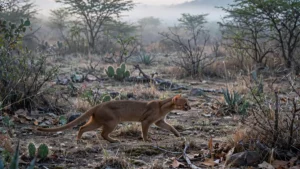
Cyprus animals include the mouflon, a wild sheep with great curling horns, roaming the pine forests of the Troodos mountains, loggerhead turtles nesting on the beaches of the Akamas Peninsula, flamingos wintering on the salt lakes of Larnaca, and griffon vultures circling over the mountain gorges. If you are wondering which animals live in Cyprus and where to see them, the short answer is this: the Troodos mountains hold mouflon, foxes and chameleons, the Akamas Peninsula holds turtles and rare birds, and the salt lakes hold flamingos in winter.
Cyprus is a small island with a surprising range of wildlife, from mountain forests to sandy beaches and salt lakes. This guide covers the species you are most likely to meet, where each one lives and the best seasons to see them.
Key takeaways
- Cyprus holds the mouflon, a wild sheep that lives in the pine forests of the Troodos mountains and the Paphos forest, and it is the island’s most famous animal.
- Loggerhead and green turtles nest on the beaches of the Akamas Peninsula and Lara Bay in summer, and the nests are guarded by conservation teams.
- Flamingos gather in large flocks on the salt lakes of Larnaca and Akrotiri in winter, and the lakes are among the best places in the Mediterranean to see them.
- Griffon vultures, Bonelli’s eagles and the Cyprus wheatear live in the mountains and gorges, and the island is one of the best places in Europe for spring bird migration.
- Dawn and dusk are best for mouflon and foxes, summer nights for nesting turtles, and winter for flamingos on the salt lakes.
What makes Cyprus’s wildlife special
Cyprus is an island where Europe, Asia and Africa meet, and its wildlife shows it: the pine forests of the Troodos, the wild beaches of the Akamas and the salt lakes of the coast all sit within a short drive of each other.
Cyprus has no endemic land mammal, and that honesty matters: the mouflon is often called the island’s own animal, but strictly it is a subspecies of the wild sheep rather than a species found only in Cyprus. What the island does hold is birds found nowhere else: the Cyprus warbler and the Cyprus wheatear live only here.
The island also sits on one of the great bird migration routes of the Mediterranean, and in spring and autumn birds travelling between Europe and Africa stop to rest in its wetlands and valleys.
The mouflon and the mammals of the Troodos mountains
The Cyprus mouflon is the island’s most famous animal, a wild sheep with heavy curling horns that lives in the pine forests of the Troodos mountains and the Paphos forest. Mouflon are shy and most often seen at dawn and dusk, when small groups graze in forest clearings and on the edges of mountain roads.

Among the predators, the red fox is the largest wild hunter on the island, living in the forests, farmland and rocky hills, and it is most often seen at dusk along quiet country roads. The mountain forests also hold hares and hedgehogs, and bats roost in the caves of the Troodos villages.
The island’s smaller mammals are easy to overlook. The Cyprus spiny mouse lives in the rocky hills of the Akamas and the Troodos foothills, and seals are rare visitors to the rocky coves of the peninsula, where dolphins can sometimes be seen in summer.
Turtles of the Akamas Peninsula and Lara Bay
The beaches of the Akamas Peninsula and Lara Bay are among the most important turtle nesting grounds in the Mediterranean. Loggerhead turtles come ashore on summer nights to lay their eggs in the sand, and green turtles nest on the same beaches in smaller numbers.
The nests are guarded by conservation teams, who mark each one and protect it from foxes and disturbance. The eggs hatch after about two months, and the tiny turtles make their way down the beach to the sea at night. Guided turtle watches run through the summer.
In the water, ocean animals around Cyprus include the loggerhead turtle, which can be seen swimming in the clear bays of the Akamas, and the green turtle, which feeds on the seagrass meadows off the coast.
Birds of Cyprus: flamingos, vultures and endemic warblers
The salt lakes of Larnaca and Akrotiri are the winter home of the flamingo in Cyprus. Great flocks of pink birds gather on the shallow water from late autumn to early spring, and the Larnaca salt lake is one of the easiest places in Europe to watch them.
In the mountains, the griffon vulture circles over the gorges of the Troodos and the Paphos forest, and Bonelli’s eagles hunt over the rocky hills. The Cyprus wheatear sings from the stone walls of mountain villages in spring, and the Cyprus warbler hides in the scrub of the foothills.
The island is also a stopover for migrating birds, and in spring the wetlands of Akrotiri fill with warblers, flycatchers and shrikes on their way north. Nocturnal birds include the barn owl of the farmland and the scops owl, whose soft call sounds through the pine forests on summer nights.
Chameleons, snakes and the smaller wildlife of Cyprus
The common chameleon is one of the most surprising animals in Cyprus. It lives in the bushes and low trees of the Akamas and the Troodos foothills, changing colour to match its surroundings and catching insects with its long tongue. Chameleons are hard to spot, and the best way to find one is to walk slowly through the scrub in the morning.
Snakes live all over the island, and most are harmless. The Montpellier snake and the large whip snake hunt lizards in the dry hills, and the blunt-nosed viper, the only venomous snake in Cyprus, lives in rocky ground and is best left alone. Lizards are everywhere in summer.
The rivers of the Troodos hold frogs, and the damp valleys hold fire salamanders after rain. Butterflies fill the meadows of the Troodos in spring, and the wildflowers draw bees and other insects in great numbers.
Where to see Cyprus’s wildlife
Mouflon are easiest in the Troodos mountains, where forest roads through the Paphos forest give the best views at dawn and dusk. A quiet drive at first light, with binoculars, is the best way to find them.
Turtles are best on the beaches of Lara Bay and the Akamas in summer, when the nests are marked and guided watches run at night. Flamingos are best on the Larnaca salt lake in winter, when the flocks are at their largest.
| Species | Where to look | Best season | How likely is a sighting |
|---|---|---|---|
| Cyprus mouflon | Paphos forest and the Troodos mountains | All year, at dawn and dusk | Fair with patience |
| Loggerhead turtle | Beaches of Lara Bay and the Akamas | June to August, at night | Good on a guided watch |
| Greater flamingo | Larnaca and Akrotiri salt lakes | November to March | Good in winter |
| Griffon vulture | Gorges of the Troodos and Paphos forest | All year | Fair on a clear day |
| Cyprus wheatear | Stone walls and rooftops of Troodos villages | Spring and summer | Good in spring |
| Common chameleon | Scrub of the Akamas and Troodos foothills | Spring to autumn | Low, needs a slow walk |
| Red fox | Forest edges and quiet country roads | All year, at dusk | Fair at dusk |
Best seasons for wildlife watching
Spring is the finest season. The Cyprus wheatear returns to the mountain villages, the warblers sing in the scrub, and the meadows of the Troodos fill with flowers and butterflies, while migrating birds pass through in great numbers.
Summer is the season for turtles, with nesting on the beaches of Lara Bay and the Akamas and hatchlings making their way to the sea at night. Autumn brings the second wave of migration.
Winter is the season for flamingos, when the salt lakes of Larnaca and Akrotiri hold their great pink flocks, and the quietest season in the mountains, when mouflon come down to lower slopes.
Staying safe around Cyprus’s wildlife
Cyprus’s wild animals are usually calm, but they deserve respect, and the blunt-nosed viper most of all. Never put a hand into a rock crevice or under a stone, wear closed shoes when walking in rocky ground, and give every snake a wide berth. On the turtle beaches, never use a torch on the sand at night, never touch a nest, and keep a respectful distance from any turtle coming ashore.
Cyprus wildlife watching checklist
- Drive the forest roads of the Paphos forest and the high Troodos at dawn for mouflon, and bring binoculars for the best views.
- Join a guided turtle watch at Lara Bay in summer, and watch the nests from a distance without using a torch on the sand.
- Visit the Larnaca salt lake in winter for flamingos, and go early in the morning when the birds feed close to the shore.
- Walk the scrub of the Akamas Peninsula slowly in spring for chameleons, warblers and migrating birds.
- Never feed wild animals, and never use food or calls to lure them closer for a photograph.
- Leave no trace: take your rubbish home and keep to marked paths in the forests and on the beaches.
Frequently asked questions
What is the most famous animal in Cyprus?
The Cyprus mouflon is the most famous, and the Troodos mountains are the best place to see it. The loggerhead turtle is the best-loved animal of the Akamas beaches.
Are there turtles in Cyprus?
Yes. Loggerhead and green turtles nest on the beaches of the Akamas Peninsula and Lara Bay in summer, and the nests are guarded by conservation teams.
What animal lives only in Cyprus?
No land mammal lives only in Cyprus: the mouflon is a subspecies of the wild sheep, not a species found only here. The Cyprus warbler and the Cyprus wheatear are birds that live only in Cyprus, and both are found in the Troodos foothills and the mountain villages.
When is the best time to see flamingos in Cyprus?
Flamingos are best on the salt lakes of Larnaca and Akrotiri from November to March, when the flocks are at their largest and the birds feed close to the shore in the early morning.
Can I see mouflon in Cyprus?
Yes. Mouflon live in the pine forests of the Troodos mountains and the Paphos forest, and they are most often seen at dawn and dusk in forest clearings. A slow drive at first light with binoculars gives the best chance.
Where can I see griffon vultures in Cyprus?
Griffon vultures circle over the gorges of the Troodos mountains and the Paphos forest, and they are easiest to spot on a clear day from a high viewpoint.
Conclusion
Cyprus’s wildlife rewards patience: mouflon in the pine forests of the Troodos, loggerhead turtles on the beaches of the Akamas, flamingos on the salt lakes of Larnaca and griffon vultures over the mountain gorges are all within reach if you plan around the seasons and go early in the day.
The next step is to pick one species and one season — a summer turtle watch at Lara Bay, a winter morning at the Larnaca salt lake, or a dawn drive through the Paphos forest for mouflon — and plan your visit around it.