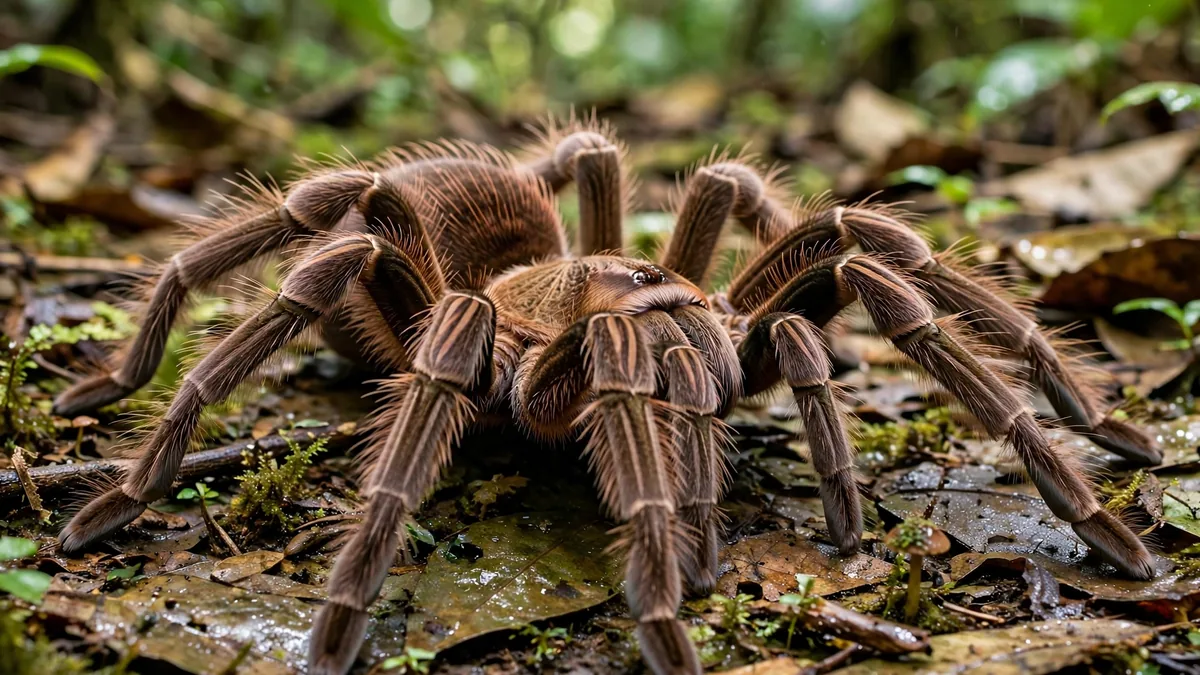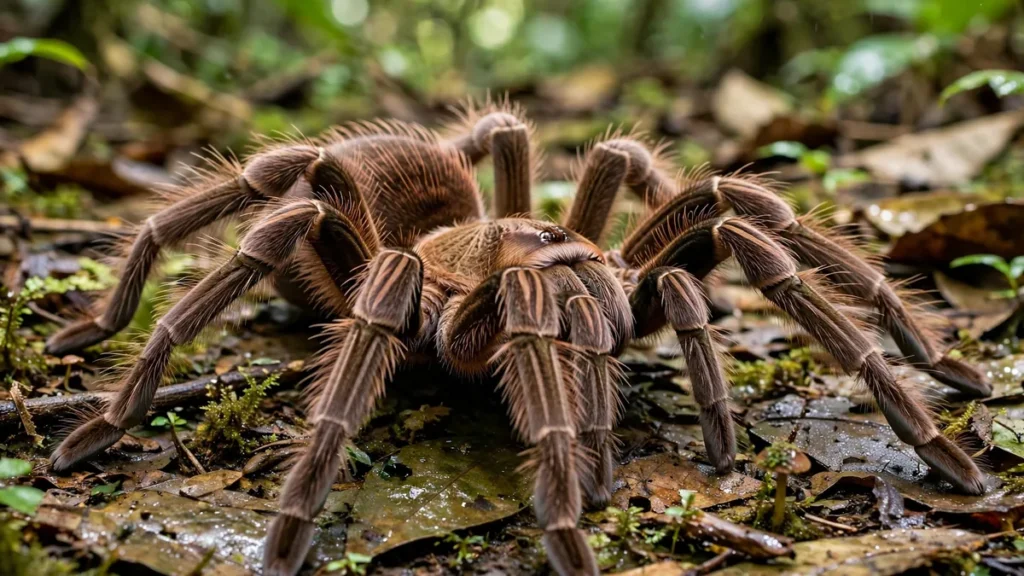
The goliath birdeater species is the heaviest spider in the world, a huge brown tarantula of the Amazon rainforest that can weigh up to 175 grams and stretch its legs across 30 centimetres, about the width of a dinner plate. If you are asking what a goliath birdeater is, the short answer is a giant ground-dwelling tarantula, Theraphosa blondi, that lives in a silk-lined burrow in the rainforests of northern South America, hunts earthworms, insects and frogs at night, and almost never eats a bird, despite a name that has promised otherwise for three hundred years. It is a shy and solitary animal, and it is far more interested in staying hidden in its burrow than in meeting you.
What makes the goliath birdeater so famous is the sheer gap between its reputation and its real life. The name calls up a monster that snatches birds from the trees, but the truth is a shy burrower that spends its days underground, comes out after dark to feel its way across the leaf litter, and defends itself not with a deadly bite but with a cloud of itchy hairs and a hiss you can hear from several metres away.
Key takeaways
- The goliath birdeater species is Theraphosa blondi, the heaviest spider known, with adults weighing up to 175 grams, a body up to 13 centimetres long and a leg span of up to 30 centimetres.
- It lives in the rainforests of northern South America, in Suriname, Guyana, French Guiana, northern Brazil, southern Venezuela and eastern Colombia, in deep silk-lined burrows in damp ground, often in marshy or swampy areas.
- It is nocturnal and hunts by ambush, eating mainly earthworms, insects, frogs and toads, and only rarely taking small rodents, lizards, snakes or birds.
- Females lay 50 to 200 eggs in a tennis-ball-sized silk sac, guard it until the spiderlings hatch after six to eight weeks, and can live for 15 to 25 years, while males live for only three to six years.
- It has not been assessed on the IUCN Red List and is not listed under CITES, but its rainforest home is being cleared for farming, mining and timber, and wild animals are still collected for the pet trade.
The goliath birdeater species and their relatives
Goliath birdeaters belong to the order Araneae, the spiders, and to the family Theraphosidae, the tarantulas, a family of large, hairy, ground-dwelling spiders that live mostly in the warm parts of the world. Tarantulas are the best-known mygalomorphs, and there are more than a thousand described tarantula species, from the small pink-toed spiders of the treetops to the giants of this guide. Within the family, the goliath birdeater sits in the genus Theraphosa, a small genus of enormous South American tarantulas that holds the heaviest spiders ever weighed.
The goliath birdeater, Theraphosa blondi, is the lead species of this guide, and it is the spider that defines its whole group, largely because it is so much heavier than any other spider alive. It lives in the rainforests of northern South America, from southern Venezuela and eastern Colombia in the west, through Guyana, Suriname and French Guiana, to northern Brazil, and it grows to a body length of up to 13 centimetres, with a leg span of up to 30 centimetres and a weight of up to 175 grams, which is about the weight of a small puppy. Like the spider of our general guide, the goliath birdeater has eight legs, two body parts and fangs that inject venom, but where most spiders are small animals that spin webs or hide in corners, this one is the size of a human fist and digs a burrow in the forest floor that it defends for years.
| Type | Animal | Where it lives | Best-known food | Length or Weight |
|---|---|---|---|---|
| Family | Tarantulas (Theraphosidae) | Tropics and subtropics worldwide | Insects and other small animals | About 2 cm to 13 cm body length |
| Genus | Goliath tarantulas (Theraphosa) | Northern South America | Earthworms, insects and frogs | Up to 13 cm long, up to 175 g |
| Species | Goliath birdeater (Theraphosa blondi) | Guianas, Venezuela, Colombia and northern Brazil | Earthworms, insects, frogs and toads | Up to 13 cm long, up to 175 g |
| Species | Pinkfoot goliath (Theraphosa apophysis) | Southern Venezuela and nearby Colombia and Brazil | Earthworms, insects and frogs | Leg span up to 30 cm |
| Species | Burgundy goliath (Theraphosa stirmi) | Guyana and nearby Brazil | Earthworms, insects and frogs | Leg span up to 28 cm |
| Species | Giant huntsman (Heteropoda maxima) | Caves in Laos | Insects and small cave animals | Leg span up to 30 cm, only about 15 g |
The closest relatives of the goliath birdeater are the other two species of its own genus, and the three of them were long lumped together under one name. The pinkfoot goliath, Theraphosa apophysis, was described in 1991 and lives in southern Venezuela and nearby parts of Colombia and Brazil, and it is named for the pink feet of its young spiders, which fade as the animals grow up, while the males carry a small spur on the front legs that the other two species lack. The burgundy goliath, Theraphosa stirmi, was recognised as a separate species only in recent decades, and it lives in Guyana and nearby Brazil, with a warmer burgundy-brown colour that sets it apart from the golden brown of the goliath birdeater. All three are giants, all three live in burrows in the rainforest, and all three defend themselves with the same itchy hairs and the same loud hiss.
What goliath birdeaters look like
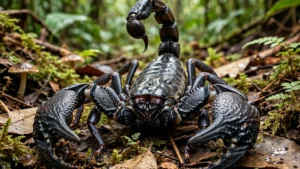
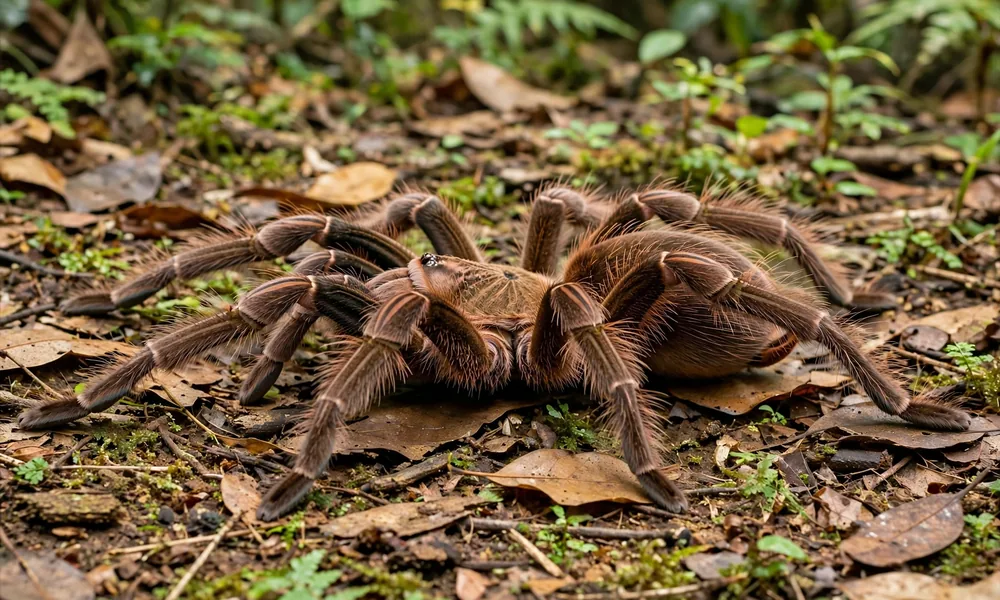
A goliath birdeater is unmistakable once you have seen one, and it is hard to mistake for anything else. The whole animal is covered in dense brown hair, running from dark chocolate brown to a lighter golden brown, with faint pale markings on the legs, and the body is thick, heavy and solid, built like a small furry fist. Adults reach a body length of up to 13 centimetres, not counting the legs, and the legs themselves stretch to a span of up to 30 centimetres, so a large female sitting on the leaf litter can cover a dinner plate. The weight is what sets it apart from every other spider, and a big female can weigh up to 175 grams, which is about the weight of a billiard ball, while males are smaller and lighter, with longer legs and a slimmer body.
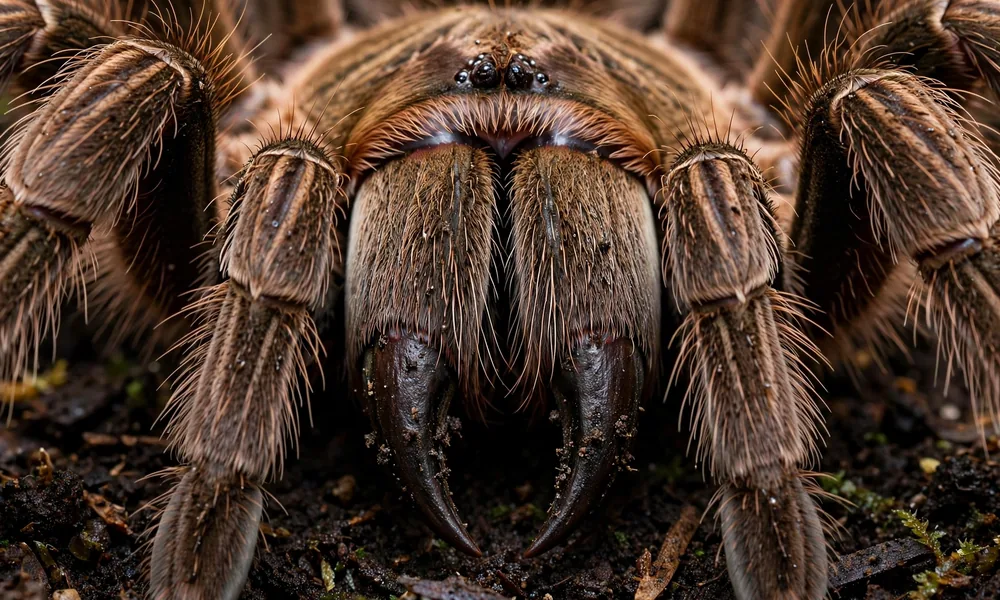
Like all spiders, the goliath birdeater has two body parts and eight legs. The front part, the cephalothorax, carries the legs, the eyes and the mouthparts, while the back part, the abdomen, is large, round and covered in the dense hairs that are the animal’s real weapon. The fangs sit at the front of the mouth, and they are enormous for a spider, reaching about 2.5 centimetres long, which is about an inch, and they strike downwards like the fangs of the ancient spiders from which tarantulas are descended. Beside the fangs sit the pedipalps, leglike feelers that the spider uses to touch and taste its food, and that the male uses to carry sperm when he mates.
The hairs are worth a closer look, because they do more than keep the spider warm. The hairs on the legs are sensitive to the smallest vibrations, and they let the spider feel a worm moving in the soil or an insect walking across the leaf litter in the dark, which is how a nearly blind animal hunts so well. The hairs on the abdomen are different, and they are the ones that give the spider its bite-free defence. They are stiff, barbed and easily broken off, and when the spider is threatened it kicks them into the air with its hind legs, where they drift into the eyes, nose and skin of the attacker and cause an itching rash that can last for days.
Where goliath birdeaters live
Goliath birdeaters live in the upland rainforests of northern South America, in a band of countries that runs from eastern Colombia and southern Venezuela in the west, through Guyana, Suriname and French Guiana, to northern Brazil in the east. They are animals of warm, wet lowland forest, where the air stays humid all year and the ground stays damp, and they are found most often in marshy or swampy areas, near streams and riverbanks, where the soil is soft enough to dig and the air is wet enough to keep a big spider from drying out. They are ground dwellers through and through, and they are almost never found up in trees, which sets them apart from many of the other tarantulas that share their forest.
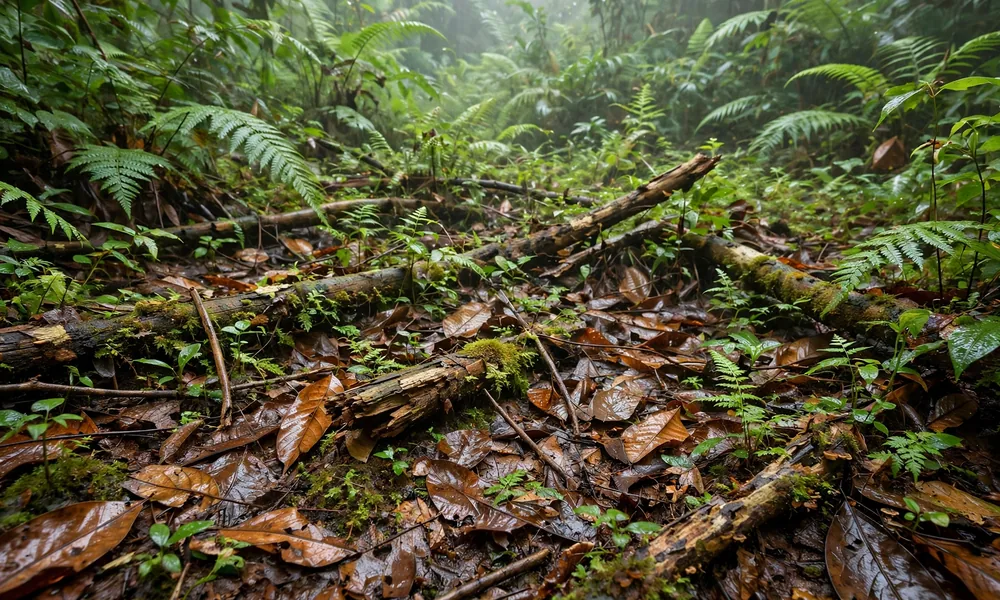
The home of a goliath birdeater is a burrow, and it is a serious piece of digging. The spider scrapes out a tunnel in soft, damp soil, often under a rock, under the roots of a tree, or in an abandoned rodent burrow that it takes over and enlarges, and it lines the walls with silk, which keeps the tunnel from collapsing and keeps the air inside humid. The burrow can run deep into the ground, and the spider sits at its mouth after dark, waiting for something to walk past, with trip lines of silk spread across the entrance that tremble at the touch of a passing animal.
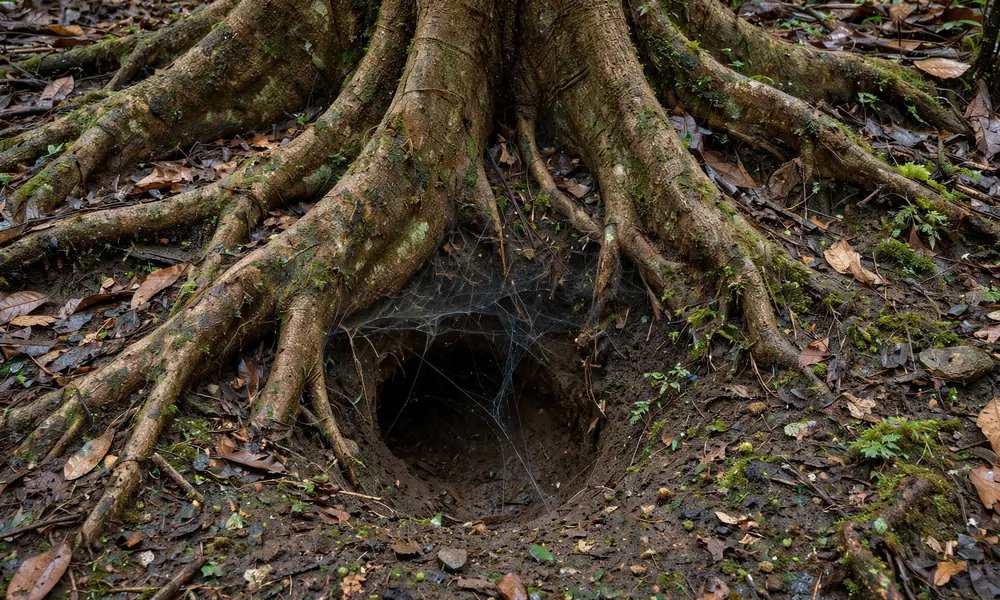
Goliath birdeaters are solitary animals, and each spider keeps to its own burrow. They meet only to mate, and a female will defend her burrow fiercely against another spider, since a good burrow in damp soil is hard to dig and harder to replace.
What goliath birdeaters eat
Goliath birdeaters are ambush predators and opportunists, and they eat almost any animal they can catch and overpower. Their staple food is earthworms, which are plentiful in the damp soil around their burrows, along with large insects such as crickets, beetles, grasshoppers and cockroaches, and they also take frogs and toads, which are common in the marshy ground they favour. They are big enough to take larger prey when the chance comes, and wild spiders have been seen eating rodents, lizards and snakes, and very occasionally a small bird or a bird’s egg. Like the ant of the forest floor, the goliath birdeater hunts alone and drags its whole meal back to its burrow.
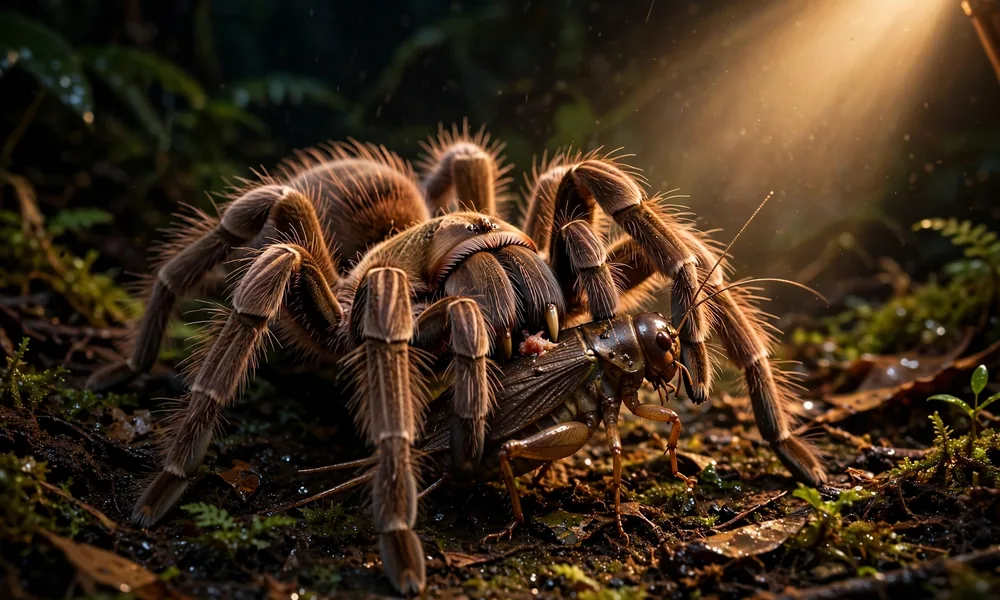
The hunt is a short, violent rush followed by a long, slow meal. The spider waits at the mouth of its burrow after dark, feeling the ground with its legs, and when it senses the vibrations of an animal nearby, it rushes out, grabs the prey with its front legs and bites, pumping venom through its long fangs. The venom is not lethal to people, and a bite hurts about as much as a wasp sting, but to a frog or a mouse it is a fast and certain end. The spider then drags the dead animal back into its burrow, where it spits digestive juices onto the body to liquefy the soft tissues, and sucks up the liquid that remains, leaving behind only fur and feathers, skin and skeleton.
The name is the famous part, and it is mostly wrong. It comes from an engraving made in the early 1700s by the naturalist Maria Sibylla Merian, who showed a huge tarantula eating a hummingbird, and the picture stuck in the public mind for three hundred years. Birds are in fact a rare meal, and the spider is a ground hunter that almost never climbs into the trees where birds nest. It can kill a small bird that strays onto the forest floor, and it is big enough to do so, but its daily food is worms, insects and frogs, and the name says far more about the shock of that old engraving than about what the spider actually eats.
How goliath birdeaters behave
Goliath birdeaters are nocturnal, and their day is divided cleanly in two. By day they rest deep in their burrows, where the air is cool and damp and the light never reaches, and by night they come out to hunt, to dig, to mate and to explore. They are slow walkers, moving with a steady, deliberate gait that suits an animal that relies on size and armour rather than speed, and when they are disturbed they are more likely to freeze, to raise their front legs in a threat display, or to retreat into their burrow than to bite. They can move quickly in a short burst when they must, but they are not built for running, and they do not chase prey or people.
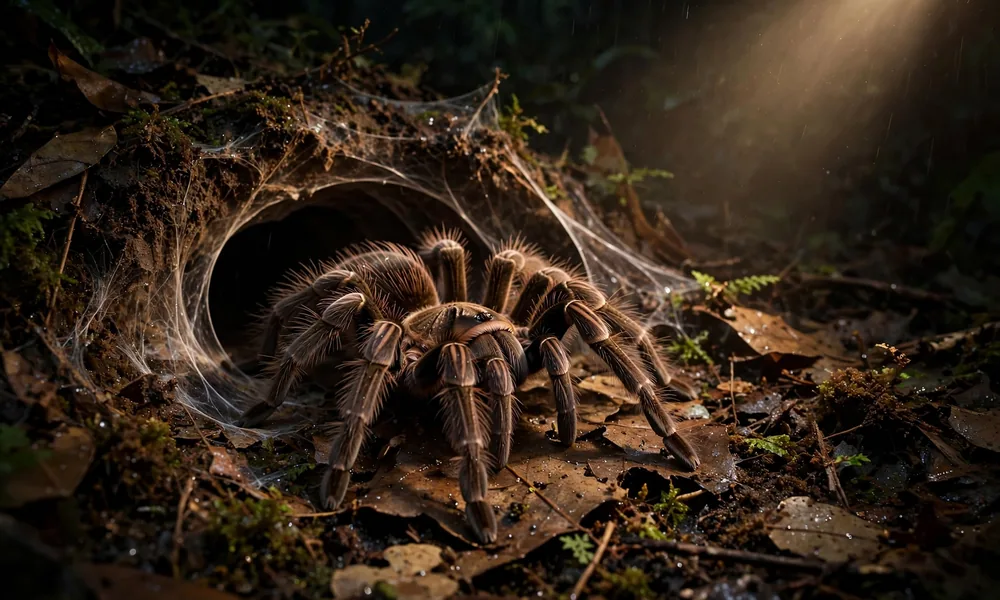
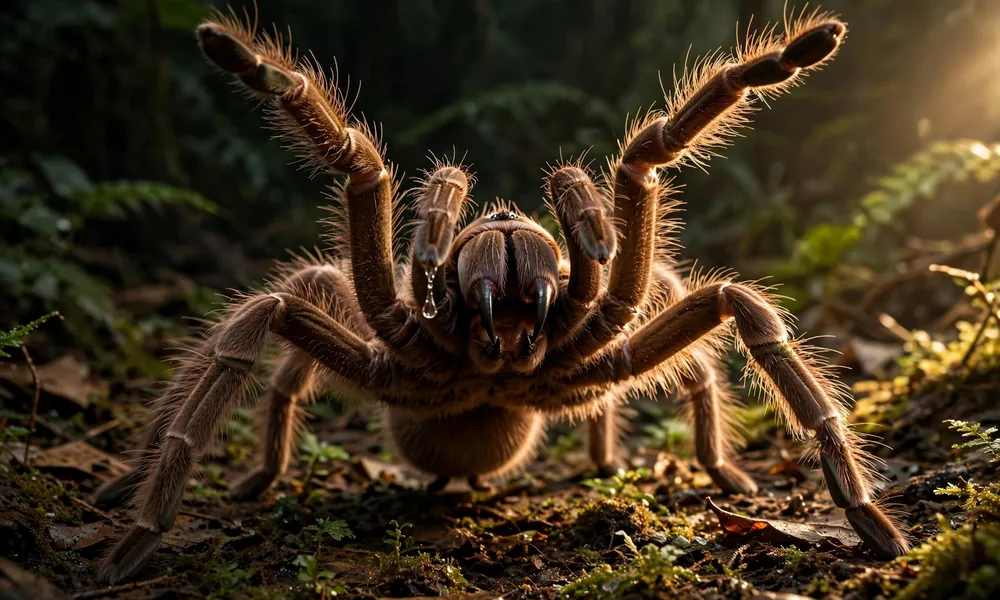
The defence of a goliath birdeater comes in stages, and the bite is the last of them. A cornered spider first tries to retreat into its burrow, and if it cannot, it rubs the bristles on its legs and pedipalps together to make a dry hissing sound, a behaviour called stridulation, that can be heard from almost 5 metres away. If the threat comes closer, the spider rears up, raises its front legs high and shows its fangs, making itself look as large as possible. Only if the attacker still presses on does the spider kick a cloud of urticating hairs from its abdomen with its hind legs. The bite is the final step, and it is rarely reached, since most animals have left by then.
Breeding and life cycle
Goliath birdeaters breed slowly, and everything about their reproduction is measured in months and years rather than days. They reach sexual maturity in two to three years, which is slow for a spider, and the females then live on for many years, moulting and breeding again and again, while the males die within a few months of mating. Mating takes place soon after the female has moulted, when her skin is still soft, and the male uses a hook on the underside of his front leg to hold her fangs still while he passes her a packet of sperm with his pedipalps. He then leaves at once, and if he lingers he may be eaten.
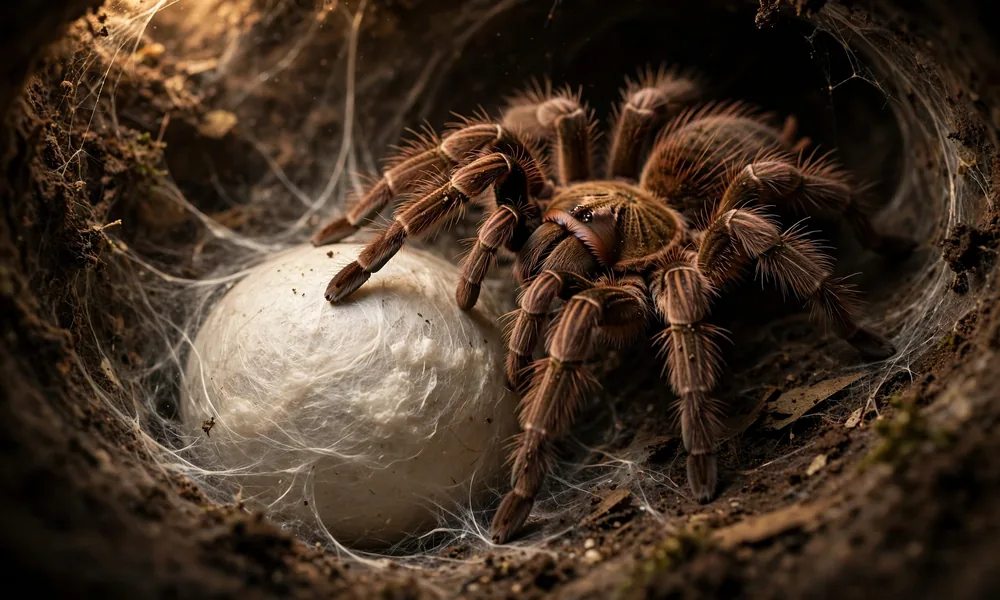
After mating, the female spins a sheet of silk on the floor of her burrow and lays 50 to 200 eggs on it, and then she wraps the eggs into a ball the size of a tennis ball, covering the silk with some of her own urticating hairs to protect it. She guards the sac fiercely, turning it and keeping it damp, and she will not leave the burrow while it is in her care. The spiderlings hatch after six to eight weeks, and they are pale and soft at first, already large by spider standards, and they stay in the mother’s burrow for several weeks until they are big enough to defend themselves, and some stay close to the burrow for much longer.
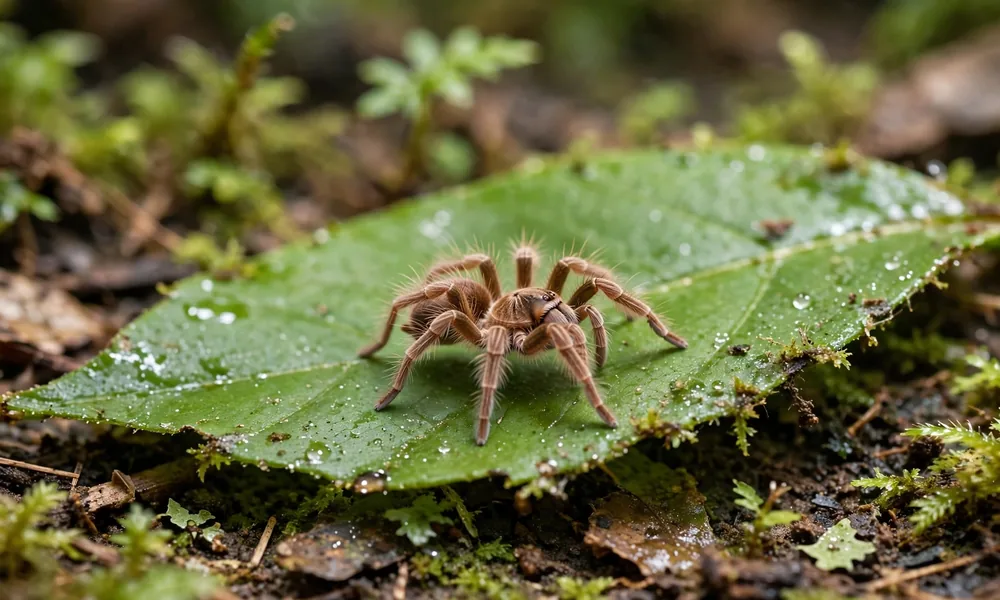
Growth is slow, and a young goliath birdeater will moult five or six times in its first year, growing a little larger each time, until it reaches its full size after two to three years. It sheds its old exoskeleton in one piece, stepping out of it soft and pale, and then hides in its burrow while the new skin hardens, since it is defenceless until the armour sets. The whole process, from egg to full size, takes years, and the animal may live for 15 to 25 years in total if it is a female, while males live for only three to six years, which is a long life for a spider, and one of the longest of any spider in the world.
Conservation status
The goliath birdeater has not been assessed on the IUCN Red List, so it has no formal Red List category, and it is not listed under CITES, which means that international trade in the species is not controlled by that treaty. That is the position of most of the world’s invertebrates, and it does not mean the spider is safe. Field reports suggest the spider stays locally common in intact rainforest, yet the threats to that forest are growing year by year, and a slow-breeding animal that lives for decades and stays in one burrow is slow to recover when its home is destroyed.
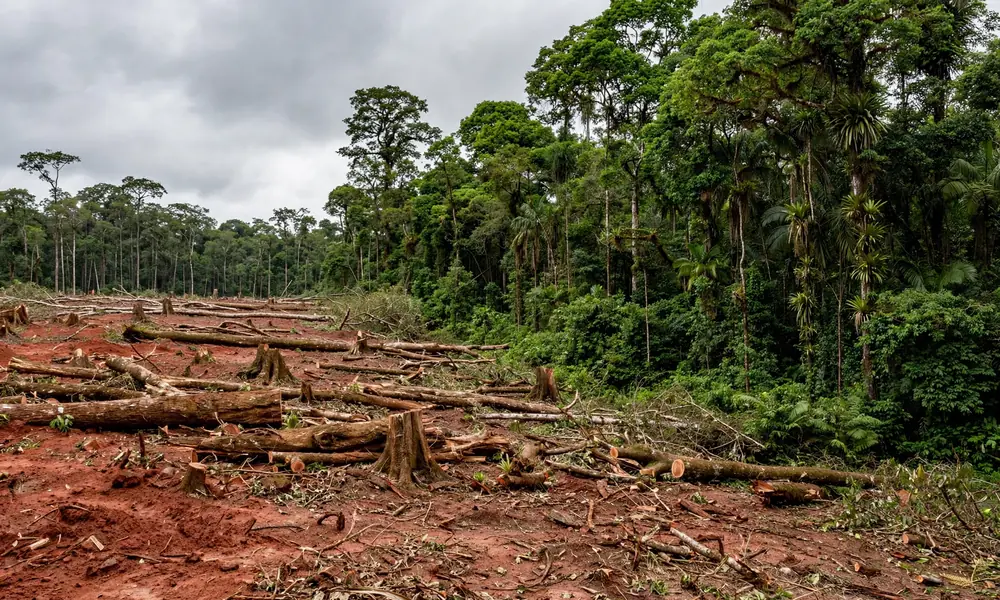
Habitat loss is the biggest threat, and it is the one that matters most in the long run. The rainforests of northern South America are being cleared for cattle pasture, for farms, for timber and for gold mining, and every hectare of forest that is lost takes with it the damp soil, the burrows and the earthworms and frogs that goliath birdeaters depend on. A cleared patch of forest is not soon reoccupied, since the spiders do not travel far, and the small-scale gold mining that scars the Guianas and northern Brazil tears up the forest floor itself, which is the very ground the spiders live in.
The pet trade is the other pressure, and it is the reason the species is so widely known outside South America. Its size and its fame made it one of the most wanted tarantulas in the pet trade for many years, and wild adults were collected in large numbers to supply the demand. Captive breeding has grown, yet wild collection still happens, and it still takes animals that the slow-breeding wild population cannot quickly replace. In parts of north-eastern South America the spider is also eaten, with its urticating hairs singed off before it is roasted in banana leaves, though that harvest is small beside the loss of the forest itself.
Best seasons for goliath birdeater watching
The best time to look for goliath birdeaters is the wet season, when the forest is at its dampest and the prey is at its most plentiful. In the Amazon the rains run roughly from December to May, with the heaviest rain in the early months of the year, and this is when the soil is soft, the burrows are easy to dig, and the spiders are out hunting most nights. In the dry season, from about June to November, the soil hardens, the forest thins and the spiders stay underground longer, coming out less often and for shorter periods, so a night walk is less likely to find one.
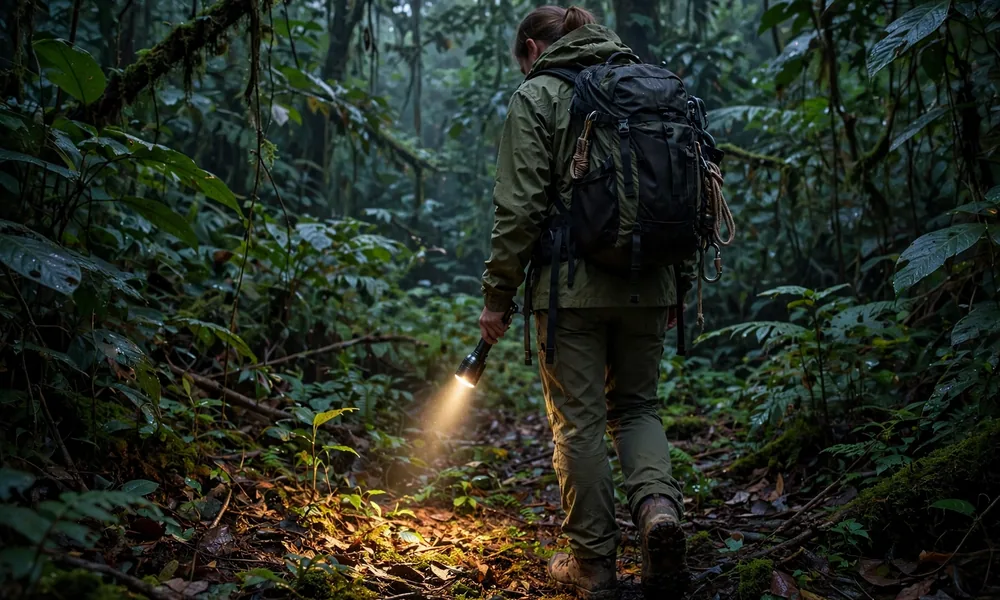
Night is the only time that matters. Goliath birdeaters are strictly nocturnal, and they do not come out in daylight at all, so the best watching is done on a guided night walk, starting an hour or two after dark, when the forest floor has cooled and the spiders are out hunting. A good guide will know the burrows to check, and will know how to find a spider at the mouth of its burrow without disturbing it. The hours just after dark are often the busiest, and a walk after rain is better than a walk in dry weather, since the damp brings the earthworms and frogs out and the spiders follow.
Staying safe around goliath birdeaters
Goliath birdeaters are not dangerous to people in the way their name suggests, but they are wild animals with a bite and a cloud of itchy hairs, and they deserve respect. Their venom is not lethal to humans, and a bite hurts about as much as a wasp sting, though the fangs are long enough to make two deep puncture wounds, and a bite can be painful for hours. The urticating hairs are the real hazard, and they are far worse than the bite. The hairs are stiff and barbed, and they lodge in skin, eyes and airways, where they cause an itching rash that can last for days, and in the eye they can cause a serious irritation that needs a doctor. Keepers who handle these spiders wear gloves and eye protection for exactly this reason.
The rules for staying safe are simple and they work. Wear strong boots and long trousers when you walk the forest floor at night, and watch where you put your hands, since a spider in a burrow or under a log will bite if a hand lands on it. Never put your hand into a burrow, a hollow log or a hole in the ground, and never pick up a tarantula, even one that looks calm. If a spider rears up and hisses, back away at once, and keep your face well clear, since the next step is a cloud of hairs.
If you are bitten, stay calm and get away from the animal first, since there may be more spiders nearby. Wash the bite with soap and water, keep the limb still and raised, and watch for signs of an allergic reaction, such as swelling of the face or lips, difficulty breathing, or a spreading rash, which need medical help at once. If hairs get into your eyes, do not rub them, and rinse the eyes with clean water for a long time, and see a doctor, since the hairs can lodge in the cornea. For most people a bite will hurt for a few hours and then fade, much like a wasp sting, and a cold cloth will help with the pain, but anyone who is unsure, or who feels unwell, should see a doctor. The best safety rule of all is the simplest: look, do not touch, and let the spider go about its night.
Goliath birdeater watching checklist
Use this checklist before a night walk in the Amazon rainforest, and tick each item off as you pack and prepare.
- Book a local guide who knows the forest, the burrows and the marshy ground, and who can find spiders without disturbing them.
- Pack a white-light torch for walking and finding spiders, with spare batteries, and a red-light torch for watching without startling them.
- Wear strong closed boots, long trousers and long sleeves, and tuck your trousers into your boots before you step onto the forest floor.
- Carry drinking water, insect repellent and a small first aid kit, and tell someone where you are going and when you expect to be back.
- Walk slowly, watch the ground, and never put your hand into a burrow, a hollow log or a hole in the ground.
- Keep your distance when a spider is found, stay quiet, keep your face clear of the abdomen, and let the guide decide how close the group should stand.
- Leave every burrow, log and stone exactly as you found it, and take nothing from the forest but photographs.
Frequently asked questions
How big do goliath birdeaters get?
Adult goliath birdeaters reach a body length of up to 13 centimetres, not counting the legs, and their legs stretch to a span of up to 30 centimetres, which is about the width of a dinner plate. They are the heaviest spiders known, and a big female can weigh up to 175 grams, which is about the weight of a billiard ball.
What do goliath birdeaters eat?
Goliath birdeaters eat earthworms, insects, frogs and toads for the most part, with earthworms often making up the largest share of the diet, since the spiders live in damp soil where worms are plentiful. They also take crickets, beetles, grasshoppers and cockroaches, and they are big enough to take larger prey when the chance comes, including rodents, lizards and snakes, and very occasionally a small bird or a bird’s egg. They hunt at night, waiting at the mouth of the burrow and rushing out to grab prey that walks past, and they drag the meal back into the burrow, where they liquefy it with digestive juices and suck up the liquid that remains. Despite the name, birds are a rare meal, and the spider is a ground hunter that almost never climbs into the trees.
How dangerous is a goliath birdeater bite?
A goliath birdeater bite is not very dangerous for most people. The venom is not lethal to humans, and a bite hurts about as much as a wasp sting, though the fangs are about 2.5 centimetres long, so the puncture wounds can be deep and painful for hours. The urticating hairs are the greater hazard, since they are stiff and barbed, and they lodge in skin, eyes and airways, where they cause an itching rash that can last for days, and in the eye they can cause a serious irritation that needs a doctor. The spiders are shy and slow to bite, and they will warn you first with a hiss, a rearing threat display and a cloud of hairs, and a bite usually means the animal was trapped, cornered or handled.
Where do goliath birdeaters live?
Goliath birdeaters live in the upland rainforests of northern South America, from eastern Colombia and southern Venezuela in the west, through Guyana, Suriname and French Guiana, to northern Brazil in the east. They are ground dwellers that dig deep burrows in damp soil, often under rocks or tree roots, or in abandoned rodent burrows, and they line the tunnels with silk, which keeps the burrow from collapsing and keeps the air inside humid. They are found most often in marshy or swampy areas, near streams and riverbanks, where the soil is soft and the air is wet.
Why are they called birdeaters if they rarely eat birds?
The name comes from an engraving made in the early 1700s by the naturalist Maria Sibylla Merian, who showed a huge tarantula eating a hummingbird, and the picture stuck in the public mind for three hundred years. Birds are in fact a rare meal, and the spider is a ground hunter that almost never climbs into the trees where birds nest. It can kill a small bird that strays onto the forest floor, and it is big enough to do so, but its daily food is earthworms, insects and frogs. National Geographic gives the same picture in its profile of the species, calling the goliath birdeater the king of spiders and noting that it does not usually eat birds, but is big enough to be able to, and occasionally does. The name is a piece of history, not a menu.
How is this guide different from the giant squid guide?
This guide covers the goliath birdeater, a single species, Theraphosa blondi, a huge brown tarantula of the Amazon rainforest that weighs up to 175 grams, digs a silk-lined burrow in damp soil, hunts earthworms and frogs at night on foot, and carries no shell and spins no web, while our giant squid guide covers a deep-sea cephalopod that lives in the dark open ocean, swims with fins and a jet of water, hunts with long tentacles, and grows far longer than any spider. One is a land animal you meet on the forest floor after dark, with eight legs, fangs and a burrow to defend; the other is a creature of the deep sea you will almost never see alive, with ten arms, a beak and eyes the size of dinner plates.
Our spider guide covers spiders as a whole, from tiny house spiders to orb weavers, wolf spiders and jumping spiders, and it explains how spiders in general live, hunt and breed. This guide goes much further for one animal, with the full life of Theraphosa blondi in one place: the exact size and weight, the three species of its genus, the silk-lined burrow and the marshy ground it needs, the earthworm diet and the old engraving behind the name, the hiss and the urticating hairs, the tennis-ball egg sac and the slow road to maturity, the wet-season watching and the safety rules for a night walk in the Amazon.
Conclusion
The goliath birdeater species is a reminder that the most fearsome-looking animal in the forest is often the shyest. A huge brown tarantula of up to 175 grams and a 30-centimetre leg span, with fangs as long as a fingernail and a hiss you can hear from 5 metres away, it spends its long life in a burrow in the damp soil of the Amazon, hunting earthworms and frogs by night, guarding a tennis-ball egg sac, and asking for nothing more than to be left alone.
If you walk in its forest, give it that room: wear your boots, watch the ground, bring a torch and a good guide, and let the spider do its night work while you watch from a safe distance.