Animals that start with C include some of the fastest, cleverest and most colourful species on earth, from the cheetah and the camel to the cardinal, the cobra and the crocodile. If you are wondering which animals start with C, the short answer is this: the list runs from cats and camels to crabs, crows and cuttlefish, and it covers mammals, birds, fish, reptiles and insects from every continent.
This guide lists the best-known C animals, with a fact about each one, grouped so you can find what you need — for a quiz, for school or just out of curiosity.
Key takeaways
- The best-known C animals are the cheetah, camel, cougar, crow, cardinal, cobra and crocodile.
- They live on every continent, from the African savanna to the Arctic tundra and the open ocean.
- The cheetah is the fastest land animal, and the saltwater crocodile is the largest living reptile.
- Crows use tools, chimpanzees make them, and cuttlefish change colour in a fraction of a second.
- Mammals, birds, fish, reptiles and insects are all covered, with a fact about each species.
Big mammals that start with C
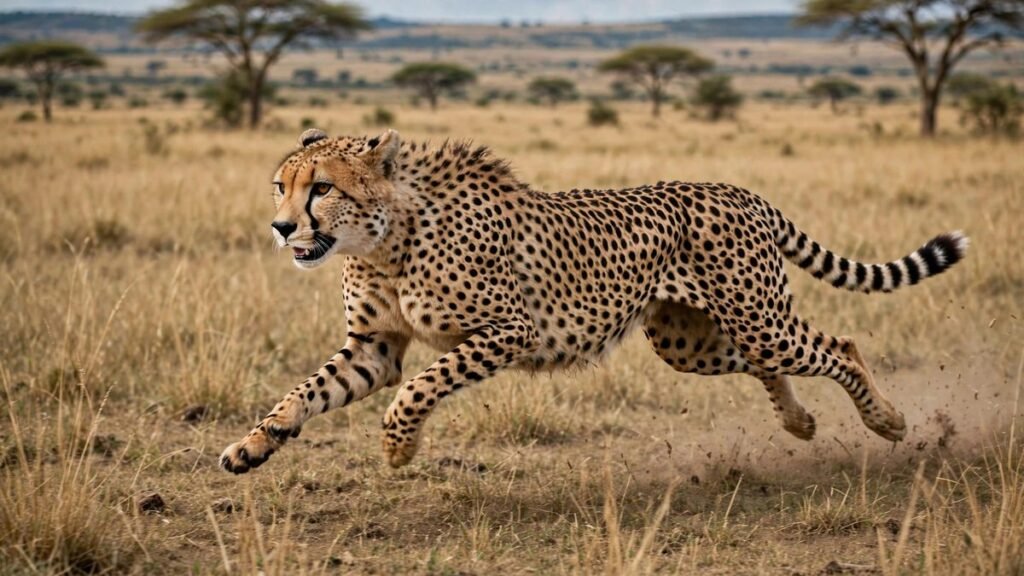
The cheetah is the most famous C mammal, and the fastest land animal in the world, reaching about 100 km/h in short bursts. Its spotted coat, slim body and long legs are built for speed, and the black tear lines on its face help cut glare while it hunts. Unlike most big cats, it hunts by day and relies on a short, explosive chase, going from standing still to 60 km/h in three seconds. Like other savanna animals, it depends on open grassland, and it is now listed as vulnerable.
The camel is another famous C mammal, and it is the ship of the desert. The dromedary camel of Arabia and North Africa has one hump, while the Bactrian camel of Central Asia has two, and the humps store fat, not water, which the camel turns into energy when food is scarce. A thirsty camel can drink around 100 litres of water in ten minutes, and its thick eyelashes, closable nostrils and wide feet protect it from sand and heat.
The cougar is the third great C cat, also known as the mountain lion or the puma. It is the second-largest cat in the Americas after the jaguar, ranges from Canada to Patagonia, and can leap more than five metres up and around twelve metres across. The caribou is the North American name for the wild reindeer, and it is the only deer in which both males and females grow antlers. The capybara, the world’s largest rodent, lives in South American wetlands and weighs up to 65 kg, while the chimpanzee, our closest living relative, shares about 98.8 percent of our DNA and is famous for using tools.
Other big C mammals include the coyote, the clever canine of North America, known for its yipping howl at dusk, and the coati, a long-nosed relative of the raccoon from the forests of Central and South America. The civet, a cat-like mammal of Africa and Asia, is best known for the palm civet, whose beans are collected to make kopi luwak coffee. Like other forest animals, many C mammals depend on old forest and quiet ground.
Birds that start with C
The cardinal is one of the best-known C birds, and the male northern cardinal is bright red, with a black mask and a crest, while the female is a brown with red touches. Cardinals do not migrate, so their red feathers stand out against the snow in winter, and they sing all year. The cardinal is the state bird of seven American states.
The crow is the cleverest C bird, and the New Caledonian crow is famous for making tools from sticks and leaves, bending them into hooks to fish insects out of holes. Crows can recognise human faces and remember people. The cuckoo is another famous C bird, and the common cuckoo lays its eggs in the nests of other birds, leaving them to raise a chick that often grows larger than its foster parents. The crane is a tall bird, and the common crane of Norway is famous for its trumpeting call and its dancing displays.
Other C birds include the condor, whose Andean species has a wingspan of up to 3.2 metres, and the canary, the yellow songbird from the Canary Islands, bred for its voice. The cockatoo is the crested parrot of Australia, the cassowary is a flightless bird of Australia and New Guinea with a dagger-like claw, and the capercaillie, the largest grouse, lives in the pine forests of Norway. The cormorant dives for fish along the Norwegian coast, and the chickadee is named after its own call, chick-a-dee-dee.
Small animals that start with C
The caterpillar is a familiar C insect, and it is the larval stage of a butterfly or a moth. Some caterpillars travel thousands of kilometres as adults after their transformation, and others protect themselves with bright colours that warn predators they are poisonous. The cricket is the musician of the list, and the male chirps by rubbing its wings together, a sound called stridulation, to attract a mate. The cicada is louder, and the periodical cicadas of North America spend 13 or 17 years underground before emerging to sing and mate.
The cockroach is one of the oldest C animals, and cockroaches have existed for more than 300 million years. They can survive for weeks without food, though most species live outdoors. The centipede is another ancient C animal, and it has one pair of legs per body segment, unlike a millipede, which has two. The caddisfly is a less famous C insect, and its larvae build protective cases from sand, shells and tiny stones, which they carry around.
Other small C animals include the chipmunk, the striped squirrel of North America that stuffs seeds into its cheek pouches and stores them in burrows, and the chinchilla, a small rodent of the Andes whose fur is among the densest of any land mammal, with 20,000 hairs per square centimetre. Like other small animals, size is no measure of importance.
Sea animals that start with C
The saltwater crocodile is the largest living reptile, and males can grow to more than six metres long and weigh over 1,000 kg. It lives in the coastal waters and rivers of Australia and South-East Asia. The Nile crocodile is almost as large, and the caiman, its smaller relative from Central and South America, rarely grows longer than two metres.
The cuttlefish is a remarkable C sea animal, and it can change the colour of its skin in a fraction of a second. It has three hearts, blue blood and W-shaped pupils, and it squirts ink to escape predators. The clownfish lives among the stinging tentacles of sea anemones and never strays far from its home anemone. The catfish is named for the whisker-like barbels around its mouth, and the wels catfish can grow to more than two metres long.
The crab is a famous C sea animal, and the coconut crab of the Indian and Pacific Oceans is the largest land arthropod in the world. The hermit crab does not grow its own shell, and borrows empty shells instead. Coral looks like a rock, but it is an animal, and each coral is made of thousands of tiny polyps that build reefs. The Atlantic cod is one of the most important fish in Norway, and the Lofoten fishery has supplied dried cod for centuries, while the red king crab of the Barents Sea is now caught in the waters off Finnmark.

Reptiles, amphibians and more C animals
The cobra is one of the best-known C reptiles, and the king cobra is the longest venomous snake, growing up to 5.5 metres. It lives in the forests of Asia, eats other snakes, and builds a nest for its eggs. The spectacled cobra is named for the glasses-shaped mark on its hood, and the coral snake, a brightly banded snake of the Americas, is one of the most venomous snakes in the world.
The chameleon is an unusual C reptile, and its eyes can move independently, while its tongue can shoot out to twice the length of its body to catch insects. Chameleons do change colour, but to control their temperature and to communicate, not simply to match their background. The copperhead is a venomous pit viper of North America, and the common frog and the common toad are C amphibians that live across Europe, including Norway.
Other C animals include the camel spider, which is not a true spider at all but a solifuge, a fast-running desert hunter, and the coquí, a tiny tree frog of Puerto Rico named after its loud two-note call, co-kee. Much of the C list lives in or near water, and much of it is built for hunting. Like the predator animals of every letter, these species are hunters that control the animals they eat, just as the animals that start with B include hunters of their own.
| Animal | Type | Where it lives | Best-known fact |
|---|---|---|---|
| Cheetah | Mammal | African savannas | Fastest land animal, about 100 km/h |
| Camel | Mammal | Deserts of Africa and Asia | Humps store fat |
| Cardinal | Bird | North America | Bright red male, does not migrate |
| Cobra | Reptile | Asia, Africa, the Americas | Longest venomous snake |
| Crocodile | Reptile | Tropical rivers and coasts | Largest living reptile |
| Cuttlefish | Sea animal | Oceans worldwide | Changes colour in a fraction of a second |
| Capybara | Mammal | Wetlands of South America | World’s largest rodent |
| Crow | Bird | Worldwide | Makes tools and recognises faces |
Animals that start with C checklist
- Start with the big names: cheetah, camel, cougar, crow, cardinal, cobra, crocodile, capybara and chimpanzee.
- Remember the birds: cardinal, crow, cuckoo, crane, condor, canary, cockatoo and cassowary.
- Do not forget the sea: crocodile, cuttlefish, clownfish, catfish, crab, coral and cod.
- Add the small ones: caterpillar, cricket, cicada, cockroach, centipede, chipmunk and chinchilla.
- Check the spelling: a cougar is also a puma, and a caiman is not a crocodile.
- Use this list for quizzes, school projects and games.
Frequently asked questions
What is the most famous animal that starts with C?
The cheetah is probably the most famous, as the fastest land animal in the world, along with the camel, the ship of the desert. The cardinal, the cobra and the crocodile are also well known.
How many animals start with C?
There are hundreds of animals that start with C, from cheetahs and camels to crickets and cuttlefish. This guide lists the best-known species, but the full list includes many more.
What is the largest animal that starts with C?
The saltwater crocodile is the largest animal that starts with C, and the largest living reptile. Males can grow to more than six metres long and weigh over 1,000 kg.
What is the fastest animal that starts with C?
The cheetah is the fastest animal that starts with C, and the fastest land animal in the world. It can reach about 100 km/h in short bursts.
Are cheetahs and leopards the same animal?
No. Cheetahs and leopards are different species, though both are spotted big cats. Cheetahs are slimmer and faster, with black tear lines on their faces, while leopards are heavier, stronger climbers and hunt by ambush.
Do chameleons really change colour to match their background?
Not exactly. Chameleons do change colour, but they mainly do it to control their body temperature and to communicate with other chameleons. Matching the background is only part of the story.
Conclusion
From cheetahs and camels to crows, cobras and cuttlefish, the C list covers speed, colour and cunning on every continent. Pick a favourite, learn its story, and move on to the next letter.