The ladybug species is a small domed beetle with a bright red or orange back marked with black spots, and its family is the Coccinellidae. If you are asking what a ladybug is, the short answer is a beetle, not a true bug, that lives in gardens and fields across much of the world, eats aphids and other small pests, and defends itself with a bitter yellow fluid that tastes so bad that most birds learn to leave it alone. The best-known kind in Europe and North America is the seven-spot ladybug, Coccinella septempunctata, a red beetle about 6.5 to 7.8 millimetres long with seven black spots. It is loved by gardeners, trusted by farmers, and recognised by almost everyone who has ever turned over a leaf.
What makes the ladybug so remarkable is that one small beetle can eat thousands of aphids in its lifetime, and a single larva can eat hundreds more before it even grows wings. Ladybugs are not all red, and they are not all spotted, because the family holds about 6,000 described species in about 360 genera, in colours from yellow and orange to black and brown, with spots, stripes or no markings at all. They gather in great crowds to spend the winter, they fly to new hunting grounds when the aphids run out, and they have been carried around the world by people who wanted their help in the garden. Some of those introductions have gone wrong, and the harlequin ladybird is now one of the most invasive insects on the planet.
Key takeaways
- The ladybug species in this guide is the seven-spot ladybug, Coccinella septempunctata, a red beetle about 6.5 to 7.8 millimetres long with three black spots on each wing case and one shared spot in the middle.
- Ladybugs belong to the family Coccinellidae, which holds about 6,000 described species in about 360 genera, and most of them are predators of aphids and scale insects.
- One ladybug can eat up to about 5,000 insects in its lifetime, and a single adult can eat up to about 150 aphids in a day when food is plentiful.
- Ladybugs defend themselves with bright warning colours, by playing dead, and by reflex bleeding, which releases a bitter yellow fluid rich in alkaloids from the leg joints.
- Seven-spot ladybugs live for about one to two years, lay about 250 to 500 eggs in a lifetime, and spend the winter in sheltered gatherings before breeding again in spring.
The ladybug species and their relatives
Ladybugs belong to the order Coleoptera, the beetles, which is the largest order of insects on Earth. Within that order they sit in the suborder Polyphaga, and in the family Coccinellidae, a family of small round beetles that was named by Latreille in 1807. The name comes from the Latin word coccinella, a diminutive of coccinus, which means scarlet, and it fits the red beetles that most people know best. The family is divided into seven subfamilies, and it holds about 6,000 described species in about 360 genera, from tiny beetles less than a millimetre long to large species about 18 millimetres long.
| Type | Animal | Where it lives | Best-known food | Length or Weight |
|---|---|---|---|---|
| Family | Ladybugs (Coccinellidae) | Worldwide, on every continent except Antarctica | Aphids and scale insects | About 0.8 mm to 18 mm long |
| Genus | Coccinella ladybugs | Europe, Asia and North Africa, now North America | Aphids | About 5 mm to 8 mm long |
| Genus | Harmonia ladybugs | East Asia, now worldwide | Aphids and other insects | About 5.5 mm to 8.5 mm long |
| Species | Seven-spot ladybug (Coccinella septempunctata) | Europe, Asia and North Africa, now North America | Aphids | About 6.5 mm to 7.8 mm long |
| Species | Harlequin ladybird (Harmonia axyridis) | East Asia, now North America and Europe | Aphids, eggs and larvae | About 5.5 mm to 8.5 mm long |
| Species | Convergent lady beetle (Hippodamia convergens) | North America | Aphids | About 4 mm to 7 mm long |
The seven-spot ladybug is the lead species of this guide, and it is the ladybug that most people in Europe picture when they hear the name. It is native to Europe, most of Asia and North Africa, and it was brought to North America in the mid-1900s to control aphid populations, where it is now widespread. Its name comes from the Latin words septem, which means seven, and punctata, which means dotted, and the seven spots are three on each wing case and one shared spot where the two wing cases meet. The number of spots can vary in some individuals, from zero to nine, but the usual pattern is seven, and it is the pattern that gives the beetle its name.
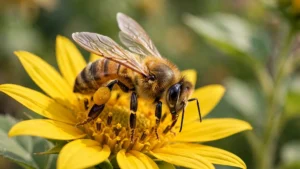
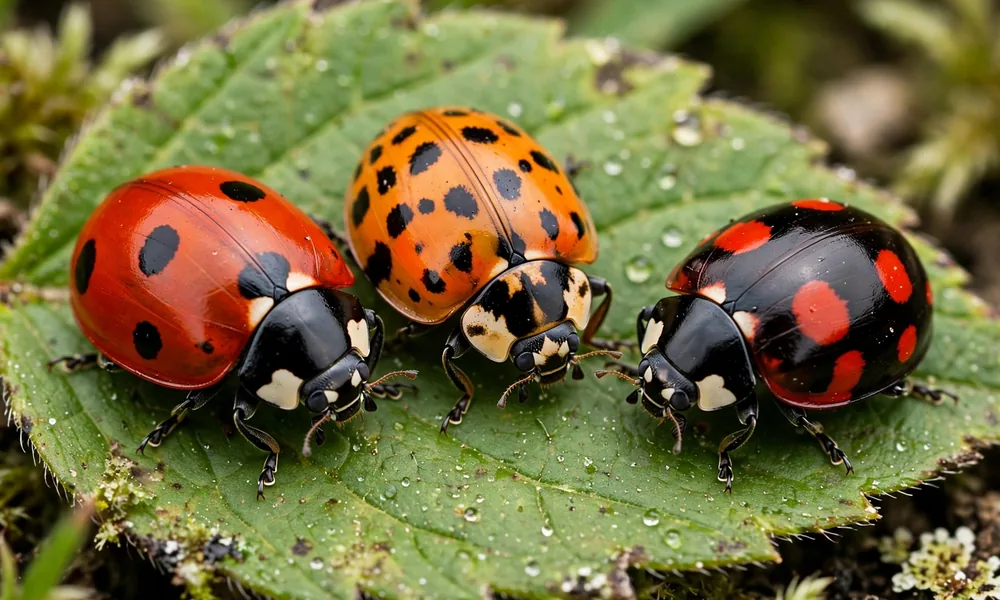
The closest relatives show how varied the family is. The two-spot ladybug, Adalia bipunctata, is a smaller red beetle with two spots, and it is common on trees and shrubs in Europe and North America. The convergent lady beetle, Hippodamia convergens, is a native North American species with a black shield behind its head marked with two converging white lines, and it is the ladybug most often sold in garden centres. The harlequin ladybird, Harmonia axyridis, is larger and far more variable, with anywhere from zero to 22 spots, and it is the species that has spread furthest and caused the most trouble. Like the bee, the ladybug is a familiar garden insect that people welcome, but where the bee is a pollinator that gathers nectar and pollen, the ladybug is a hunter that gathers aphids.
The name ladybug is North American, and the name ladybird is British, and both names are said to come from Our Lady, the Virgin Mary, whose red cloak the beetle’s back was thought to resemble. Entomologists prefer the names ladybird beetle or lady beetle, because the animal is a beetle and not a true bug, but the old names have stuck, and they are the names that most people use. In some cultures the ladybug is a sign of good luck, and in others it is a sign that the garden is healthy, and both ideas have a grain of truth in them.
What ladybugs look like
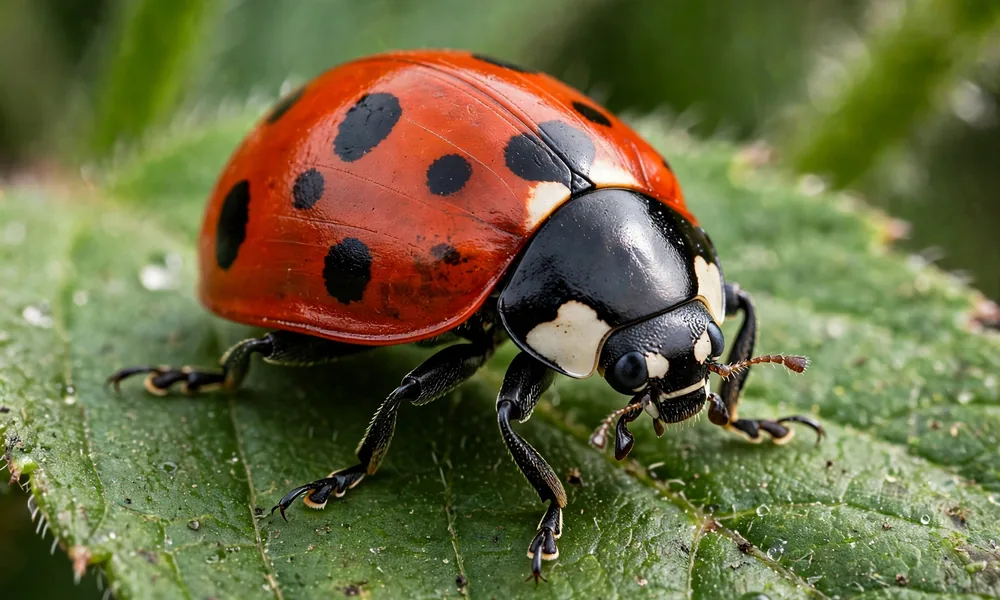
A ladybug is a small oval beetle with a domed back and a flat underside, and it is built like a tiny shield. The seven-spot ladybug is about 6.5 to 7.8 millimetres long and about 4 millimetres wide, with orange-red wing cases, which are called elytra, and seven black spots on them. The head is black with white patches on either side, and the shield behind the head, which is called the pronotum, is black with white marks at the front corners. The beetle has six short legs, short antennae, and a pair of thin hind wings folded neatly beneath the hard wing cases.
The colours are not decoration, and they are a warning. The bright red and black pattern is called aposematic colouration, and it tells a predator that the beetle tastes bad before the predator has even taken a bite. A bird that has tried a ladybug once will remember the pattern and leave the next one alone, and that lesson protects the whole family, not just the one beetle that was tasted. The spots do not tell you the age of the ladybug, which is a common myth, and the number of spots tells you the species, not how old the beetle is.
Ladybugs vary far more than the seven-spot suggests. The two-spot ladybug is red with two spots, the ten-spot ladybug is brown with ten spots, the twenty-two spot ladybug is yellow with twenty-two spots, and the harlequin ladybird can be red, orange or black, with anywhere from zero to 22 spots, or with two or four red spots on a black back. Some ladybugs have stripes, some have no markings at all, and some are covered in fine hairs. The family ranges from less than a millimetre to about 18 millimetres in length, and the smallest species are easy to overlook entirely.
Where ladybugs live
Ladybugs live almost everywhere that plants grow, and they are found on every continent except Antarctica. They live in grasslands, forests, gardens, cities and suburbs, and along rivers, and they are happy wherever aphids are plentiful. The seven-spot ladybug is a beetle of open country, and it is found on nettles, thistles, roses, beans and other plants that carry aphids, and it is common in gardens and on farmland across Europe, Asia and North Africa. It was brought to North America to eat aphids, and it is now one of the commonest ladybugs there.

The habitat is really the food, and the ladybug follows the aphids from plant to plant. In spring the beetles gather on nettles and other early plants that are covered in aphids, and in summer they spread out across gardens and fields, hunting on roses, beans, cabbages and fruit trees. They are most active from spring until autumn, and they fly to new hunting grounds when the aphids on one plant run out. A ladybug can fly at about 15 kilometres per hour, which is fast for a beetle of its size, and it can cover a long distance in a day.
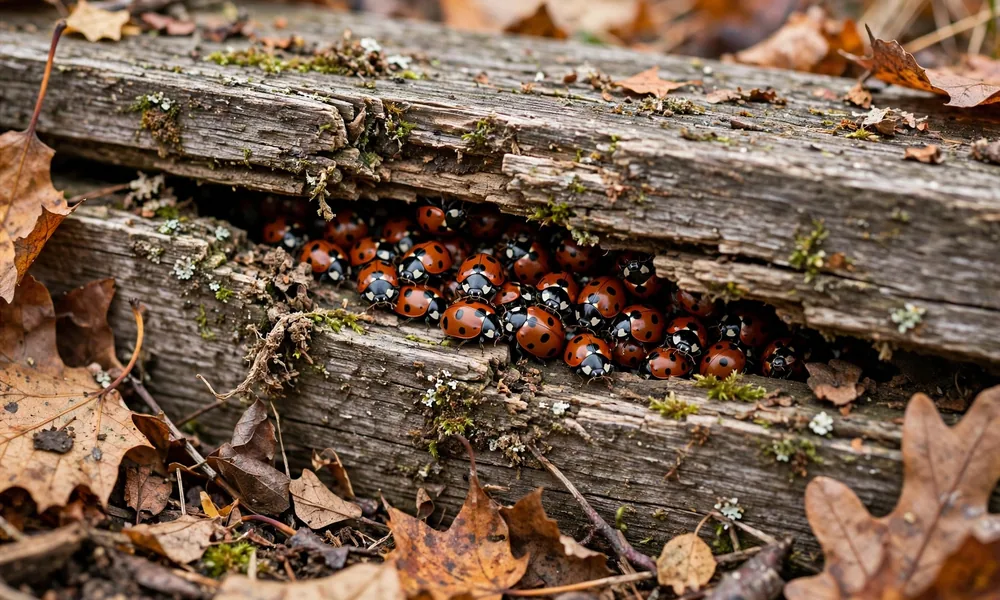
In autumn the ladybugs look for a place to spend the winter, and they gather in sheltered spots in large numbers. They tuck themselves into leaf litter, hollow stems, dead seed heads, cracks in fences and walls, and the corners of window frames, and they often gather in groups for warmth and protection. The gathering also means that when they wake in spring, they are already close to potential mates. Some species gather in the thousands on hillsides and in mountain passes, and those gatherings are one of the great sights of the insect world, though they can also be a nuisance when the beetles choose a house instead of a hillside.
What ladybugs eat
Ladybugs are predators, and their main food is aphids, the small green insects that suck the sap from plants and gather in clusters on stems and leaves. A single adult seven-spot ladybug can eat up to about 150 aphids in a day when food is plentiful, and one ladybug can eat up to about 5,000 insects in its lifetime. The larvae are even hungrier for their size, and a single larva can eat more than 1,000 aphids during its development. That appetite is why farmers and gardeners love ladybugs, and why they have been used as biological pest control for more than a century.
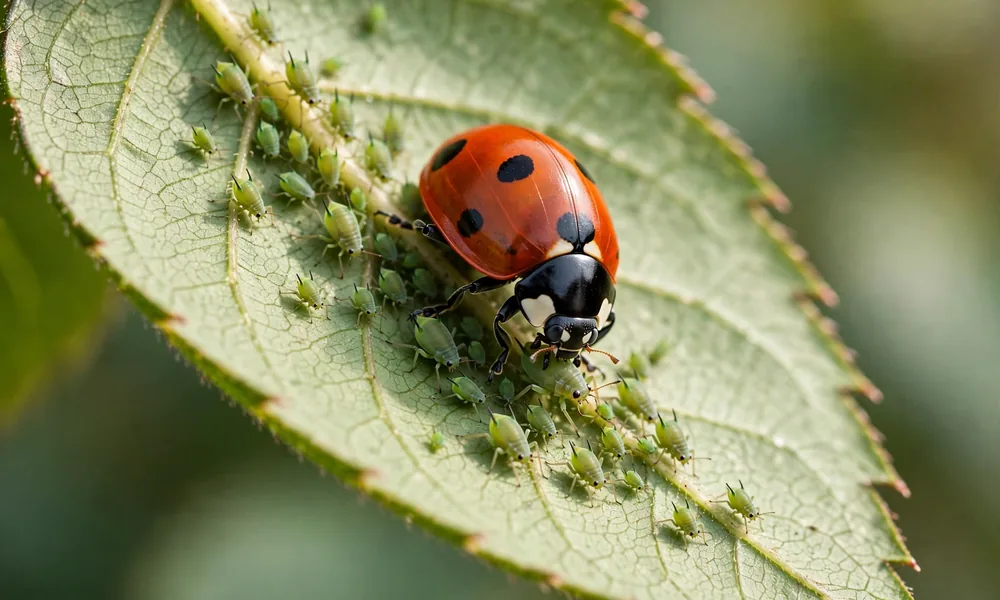
The diet is wider than aphids alone. Ladybugs also eat scale insects, whitefly, thrips, mites, the eggs of moths and beetles, and the larvae of other small insects, and they will eat pollen and nectar when prey is scarce. When aphids are scarce, seven-spot ladybugs can survive on those other foods, but they cannot reproduce without aphids, and the females need a rich supply of them to lay eggs. The larvae are not fussy either, and they will eat unhatched eggs, including the eggs of their own species, when food is short, which is a harsh habit that helps the strongest larvae survive.
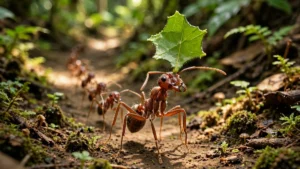
Ants and ladybugs have a complicated relationship, because ants farm aphids for their sweet honeydew, and they will defend their aphids from ladybugs. Like the ant, the ladybug is an insect that lives close to aphids, but where the ant lives in a colony and tends its aphids like cattle, the ladybug lives alone and hunts the aphids like a wolf. An ant that finds a ladybug on its aphid colony will bite and chase it, and the ladybug will often give up and move to another plant, where the ants are fewer and the hunting is easier.
How ladybugs behave
Ladybugs are active in the daytime, and they spend their days walking over leaves and stems, searching for aphids by sight and by smell. When a ladybug finds a cluster of aphids, it feeds steadily, eating one after another, and it will stay on that plant until the aphids are gone. When the food runs out, it opens its wing cases, spreads its thin hind wings, and flies to a new plant, sometimes for many kilometres. The flight is strong for so small a beetle, and it is how the ladybug finds new hunting grounds and new mates.
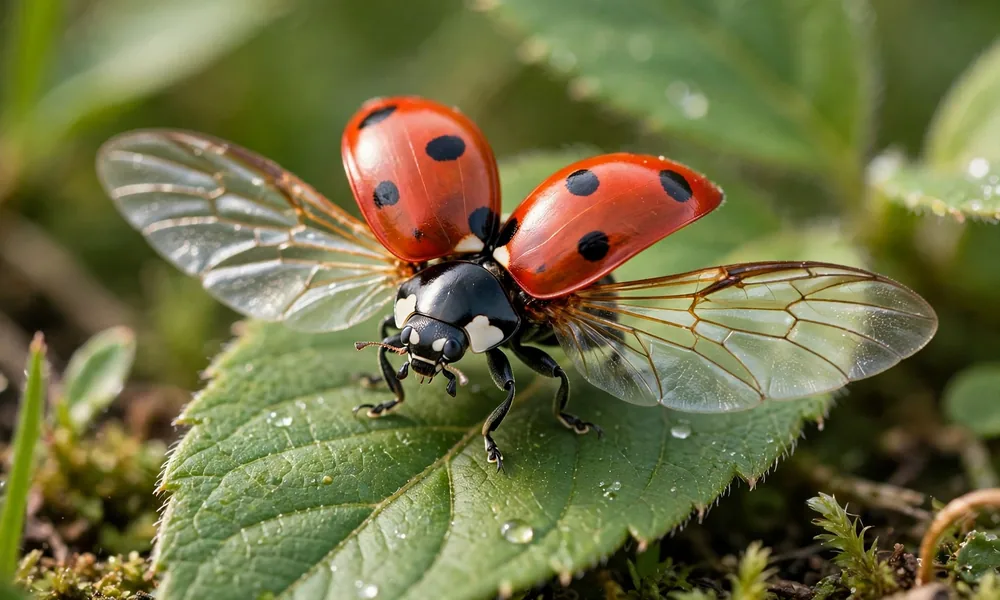
The defence is layered, and it works in order. First comes the warning colour, which tells a predator to think twice. Then comes playing dead, which is called thanatosis, and the beetle tucks its legs in and drops to the ground, where it lies still until the danger has passed. Then comes reflex bleeding, which is the real chemical defence, and the beetle releases a yellow-orange fluid from the joints of its legs. The fluid is hemolymph, the insect equivalent of blood, and it is loaded with bitter alkaloids, including coccinelline in the seven-spot ladybug and adaline in the two-spot ladybug. The fluid tastes so bad that a bird will spit the beetle out at once, and it will remember the red and black pattern for a long time.
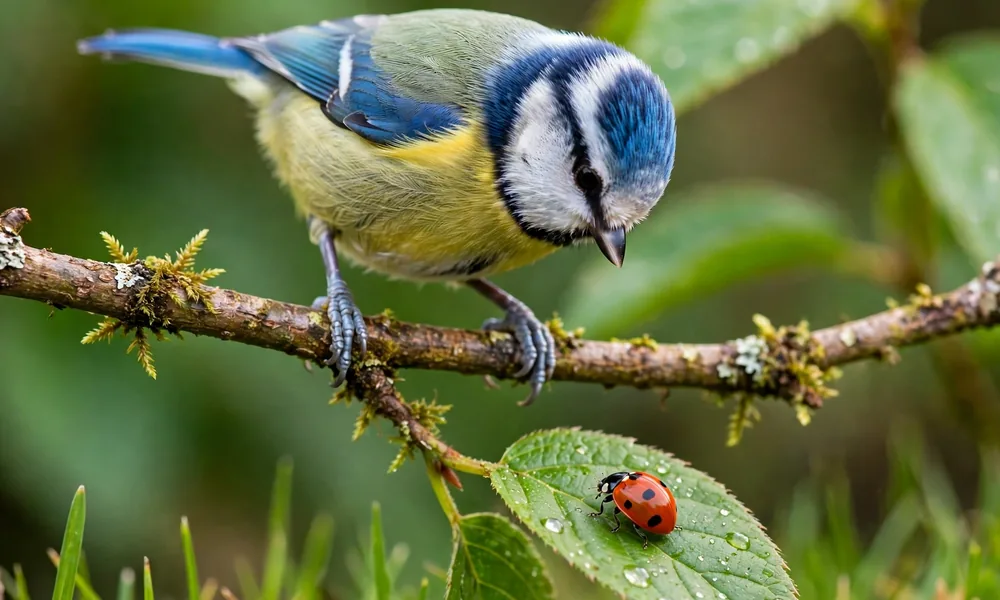
The defence does not make the ladybug safe from everything. Birds are the main predators, but ladybugs also fall victim to frogs, wasps, spiders and dragonflies, and to a small parasitoid wasp, Dinocampus coccinellae, which lays its egg inside an adult ladybug and whose larva develops within the living beetle. Like the spider, the ladybug is a hunter, but where the spider catches its prey in a web or by ambush, the ladybug hunts in the open, walking over leaves in daylight. Fungal disease can also kill ladybugs that are crowded together in winter, and a wet winter can be worse for them than a cold one.
Ladybugs also use scent to find each other. The harlequin ladybird produces pyrazines, which are strong-smelling chemicals that work as a defence and as a signal that draws other harlequins to a winter gathering. The smell is the reason that a house full of harlequins in autumn can smell unpleasant, and it is also the reason that the beetles can find the same shelter year after year. The seven-spot ladybug is quieter, but it too gathers in groups, and the groups are held together by scent and by the shelter itself.
Breeding and life cycle
Ladybugs have four stages in their life, and they are egg, larva, pupa and adult. The female lays her eggs in clusters or rows on the underside of a leaf, usually where aphids have gathered, so that the young will have food as soon as they hatch. The eggs are small and oval, about 1 millimetre long, and yellow-orange in colour, and they are laid in groups of 10 to 30, with a female laying about 250 to 500 eggs in her lifetime. Some females lay far more when food is plentiful, and the seven-spot ladybug has been recorded laying up to about 2,000 eggs in a lifetime.
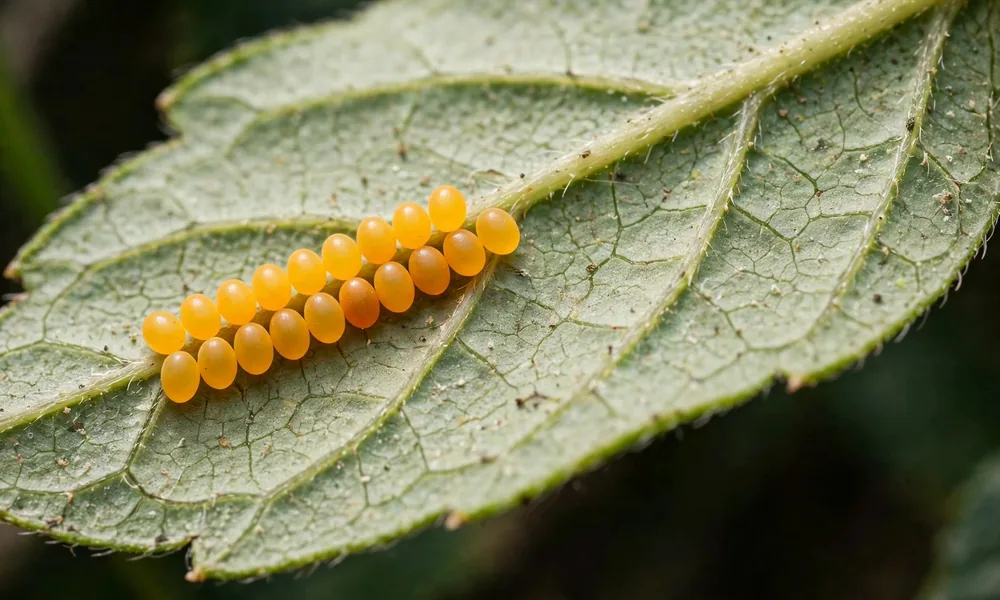
The eggs hatch after about four to ten days, depending on the temperature, and the larvae that emerge look nothing like the adults. Seven-spot larvae are long and black, with orange or yellow spots and small spines, and they look like tiny alligators. They grow quickly, and they shed their skin several times, passing through four larval stages over three to four weeks. A larva can eat more than 1,000 aphids during its development, and it grows to about 10 millimetres long in its final stage, which is longer than the adult it will become.
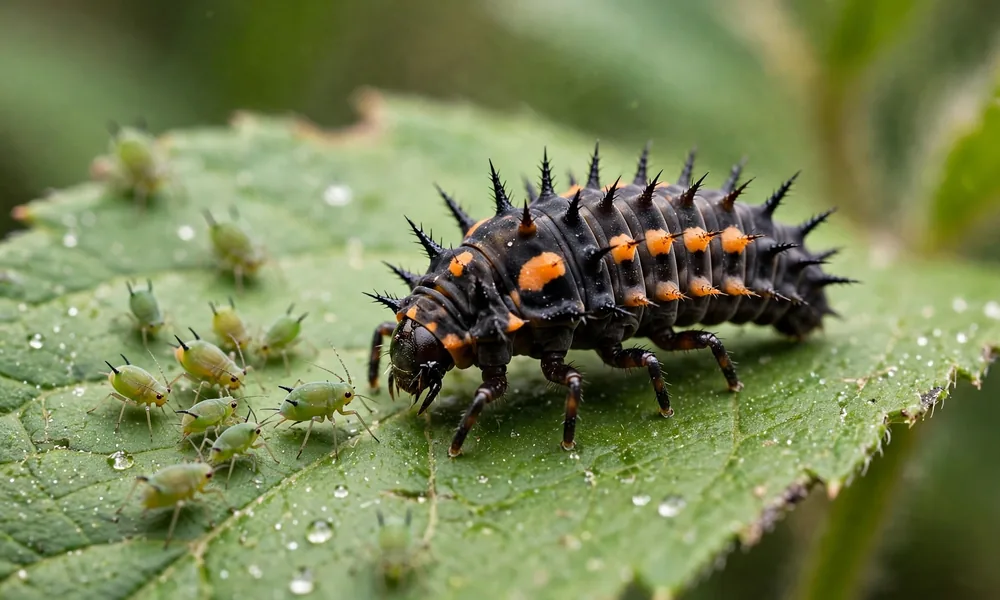
When the larva is fully grown, it attaches itself to a leaf by its tail, and a pupa is formed. The pupa is orange and black, and it sits still for about a week, while the body inside is rebuilt into an adult. Within a week or two, the pupa splits, and the adult ladybug emerges, soft and pale at first, with its spots still faint. The colour deepens over a few hours, and the beetle is ready to fly and to hunt. The whole cycle from egg to adult takes about six weeks in the growing season, and the seven-spot ladybug can breed up to five generations in a year in warm places, though one or two generations is more usual in Britain and northern Europe.
Adult seven-spot ladybugs live for about one to two years, depending on whether they survive the winter, and they spend that winter in a sheltered gathering, resting in a state called diapause. They wake in March or April, feed on the first aphids, and mate, and the females lay their eggs in spring and summer. A ladybug that survives its first winter will breed, and then it will die in the following spring or summer, after a life that has taken it from a leaf to a fence crack and back to a leaf again.
Conservation status
Most ladybug species have not been given an IUCN Red List assessment, and the seven-spot ladybug is listed as Not Evaluated, which means that no one has yet made a formal judgement on its global status. That is not the same as saying that it is safe, because ladybugs are declining in some places, and the reasons are clear. The harlequin ladybird, which was introduced to North America in the 1970s and to Europe from the 1990s onwards to control aphids, has spread across North America, Europe, South America and parts of Africa, and it is now one of the most invasive insects on the planet.
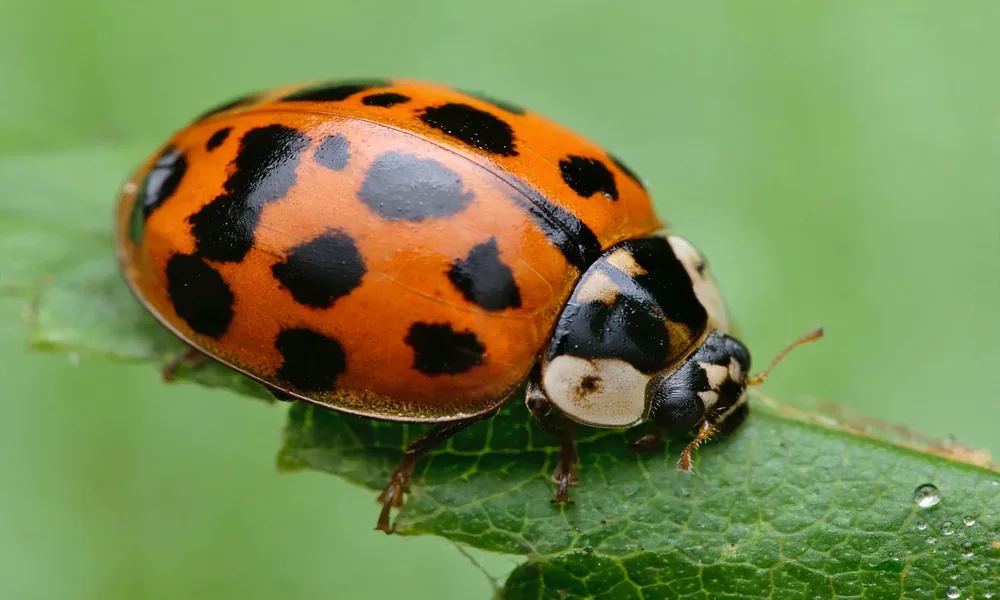
The harlequin is a voracious predator, and it does not stop at aphids. It eats the eggs and larvae of other ladybugs, and the eggs and caterpillars of moths and butterflies, and it outcompetes native ladybugs for food. In Britain, the formerly common two-spot ladybug fell by 44 per cent within five years of the harlequin’s arrival, and native ladybugs now make up a far smaller share of the ladybugs found in gardens. The harlequin also gathers in houses in autumn, bites people when it is handled, and can taint wine when it is crushed with grapes, which has made it unpopular with wine growers as well as with gardeners.
The threats to native ladybugs are not only the harlequin. Pesticides kill ladybugs as surely as they kill aphids, and a garden that is sprayed will lose its ladybugs first, because they eat the poisoned aphids and because the spray kills them directly. The loss of wildflower meadows, hedgerows and old grassland has also taken away the plants that carry aphids and the shelters where ladybugs spend the winter. The best way to help ladybugs is to stop spraying, to leave some wild corners in the garden, and to let the aphids bring the ladybugs to you.
Best seasons for ladybug watching
Ladybugs are most active from spring until autumn, and the best time to watch them is late spring and summer, when the aphids are plentiful and the beetles are breeding. In March and April the adults wake from their winter rest and gather on nettles and other early plants, and they are easy to find because they are hungry and they are out in the open. In May and June the females lay their eggs, and the larvae can be found hunting on the same plants, and in July and August the new adults emerge and spread across the garden.

The time of day matters as well. Ladybugs are daytime hunters, and they are at their busiest in the late morning and the early afternoon, when the sun has warmed the leaves and the aphids are feeding. On a cool morning they are slow, and on a hot afternoon they may hide in the shade, so the best watching is done on a warm and still day, when the beetles are walking openly over the leaves. After rain, the aphids are out in force, and the ladybugs follow them, so a garden after a shower can be a good place to look.
Autumn is the season for gatherings, and it is the best time to see ladybugs in large numbers. In September and October the beetles look for winter shelter, and they gather on fences, walls and window frames, and in leaf litter and hollow stems. The harlequin ladybird is the species most often found in houses at this time of year, and a house with a sunny south-facing wall may hold hundreds of them. The native seven-spot ladybug is more likely to be found in a garden, in a pile of leaves or in a hollow stem, where it will rest until spring.
Staying safe around ladybugs
Ladybugs are harmless to people, and they do not bite, sting or spread disease. A harlequin ladybird can give a small nip if it is trapped against the skin, and the bite is no worse than a pinprick, but the native seven-spot ladybug does not bite at all. The yellow fluid that the beetle releases when it is squeezed can stain the skin and can irritate the eyes, so the rule is to handle ladybugs gently, with clean hands, and to wash your hands afterwards. Children should be taught to let the ladybug walk onto a finger, rather than to grab it.
The safety issue is really about the ladybug, not about you. A ladybug that is picked up roughly can lose a leg, and a ladybug that is kept in a jar without food will die, so the best way to watch one is to leave it where it is and to watch it on its leaf. If you find a ladybug indoors in winter, you should put it in a cool shed or a garage, in a box with some leaves, rather than in a warm room, where it will wake up, burn its energy and die before spring.
Ladybugs are also a reminder to be careful with chemicals in the garden. Pesticides that kill aphids will also kill ladybugs, and they will kill the bees and the butterflies too, so the safest garden is one that is not sprayed at all. If you must control aphids, a strong jet of water will knock them off the plant, and the ladybugs will do the rest. A garden with ladybugs is a garden that is working as it should, and it is worth protecting.
Ladybug watching checklist
Use this checklist before you go looking for ladybugs in a garden or a park, and tick each item off as you prepare.
- Go in late spring or summer, on a warm and still day, when the ladybugs are out hunting on the leaves.
- Look on nettles, roses, beans and cabbages, where aphids gather in clusters on stems and leaves.
- Take a magnifying glass, so you can count the spots and look at the shield behind the head.
- Note the colour, the spot count and the pronotum pattern, and use them to tell the seven-spot from the harlequin.
- Handle ladybugs gently, let them walk onto your finger, and wash your hands after you have held one.
- Leave every ladybug where you found it, and never take one home in a jar without food and air.
- Record what you saw, and report a harlequin ladybird to the local ladybird survey if you find one.
Frequently asked questions
How many spots does a ladybug have?
It depends on the species, and the spots are a clue to the species rather than to the age of the beetle. The seven-spot ladybug has seven black spots, with three on each wing case and one shared spot in the middle, though some individuals have from zero to nine spots. The two-spot ladybug has two spots, the ten-spot ladybug has ten spots, and the harlequin ladybird can have anywhere from zero to 22 spots. Counting spots alone will not always tell you the species, and the pattern on the shield behind the head is often a better guide.
What do ladybugs eat?
Ladybugs eat aphids above all, and a single adult can eat up to about 150 aphids in a day, while one ladybug can eat up to about 5,000 insects in its lifetime. They also eat scale insects, whitefly, thrips, mites, the eggs of moths and beetles, and the larvae of other small insects, and they will eat pollen and nectar when prey is scarce. The larvae are hungry too, and a single larva can eat more than 1,000 aphids during its development. When aphids are scarce, seven-spot ladybugs can survive on other foods, but they cannot reproduce without aphids.
How long do ladybugs live?
Seven-spot ladybugs live for about one to two years, depending on whether they survive the winter, and National Geographic Kids puts the average life span of ladybugs in the wild at two to three years. The difference is a matter of species and of place, because some ladybugs live for only a few months, while others survive two winters. The adult that wakes in spring will breed in summer, and it will usually die in the following spring or summer, after a life that has taken it from a leaf to a winter shelter and back again.
Where do ladybugs live?
Ladybugs live in gardens, fields, forests, grasslands and cities, on every continent except Antarctica, wherever plants grow and aphids are plentiful. The seven-spot ladybug is native to Europe, most of Asia and North Africa, and it was brought to North America in the mid-1900s to control aphids, where it is now widespread. They live on nettles, roses, beans, cabbages and fruit trees in summer, and they spend the winter in leaf litter, hollow stems, cracks in fences and walls, and the corners of window frames.
Are ladybugs good for the garden?
Ladybugs are very good for the garden, because they eat the aphids that damage roses, beans, cabbages and fruit trees, and they do it without chemicals. A single ladybug can eat thousands of aphids in its lifetime, and a garden with ladybugs will have fewer aphids and healthier plants. The best way to keep ladybugs in the garden is to stop spraying pesticides, to leave some wild corners with nettles and long grass, and to let the aphids bring the ladybugs to you. The harlequin ladybird is the exception, because it eats native ladybugs as well as aphids.
How is this guide different from the Japanese spider crab guide?
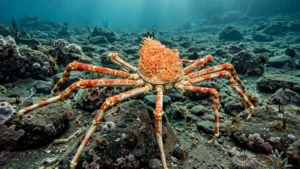
This guide covers the ladybug, a tiny garden beetle of about 6.5 to 7.8 millimetres that lives on leaves in gardens and fields, hunts aphids by day, defends itself with bitter yellow fluid, and lives for about one to two years, while our Japanese spider crab guide covers a giant deep-sea crab of the Pacific slope that grows to a leg span of about 3.7 metres, lives at depths of 50 to 600 metres, feeds mostly on dead animals and plants, and can live for up to about 100 years. One is a beetle you can hold on your fingertip in a sunny garden, and the other is a crab you can only see in a huge aquarium tank or by submersible, and the two animals could hardly be more different in size, in home, in food and in life.
Conclusion
The ladybug species is a reminder that the smallest animals can do the most useful work. A beetle no bigger than a fingernail, with a red back and seven black spots, it walks the leaves of a garden all summer, eating the aphids that would eat the roses, and it does it without fuss, without chemicals, and without asking for anything in return.
If you find one on a leaf, take a moment to look at it. Count the spots, look at the shield behind its head, and let it walk onto your finger before you set it back where you found it. A garden with ladybugs is a garden that is alive, and the ladybug is one of the best signs that it is working as it should.