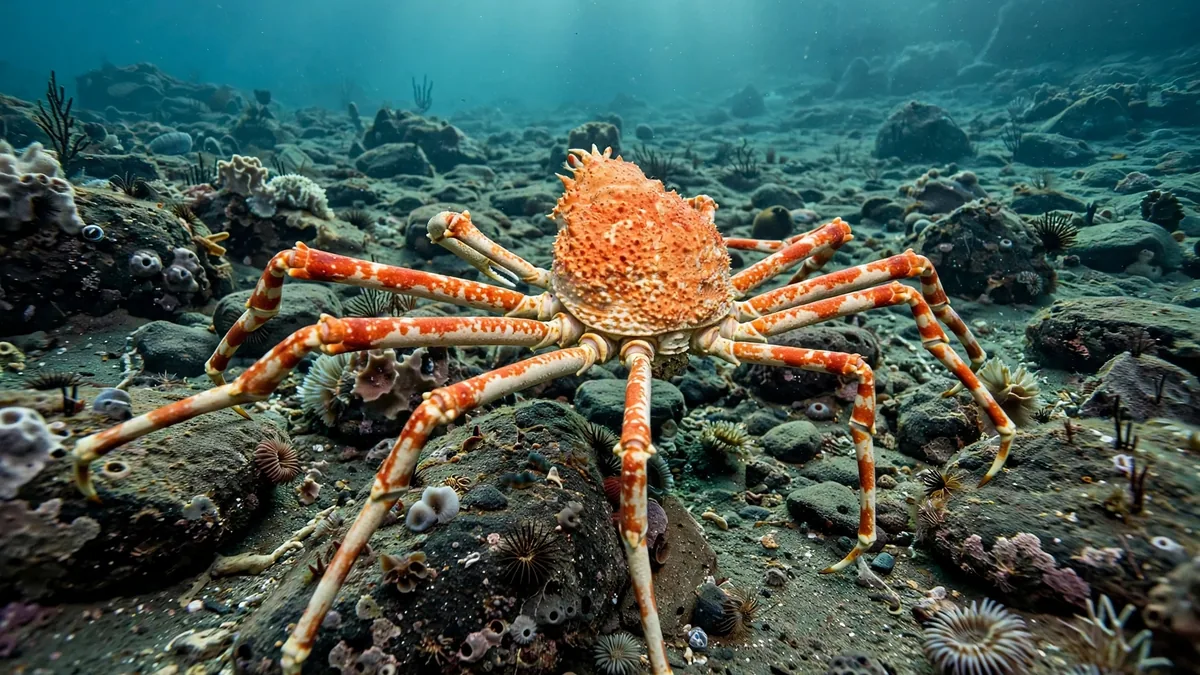
The Japanese spider crab species is a deep-sea crab with the largest leg span of any arthropod alive today, and its scientific name is Macrocheira kaempferi. If you are asking what a Japanese spider crab is, the short answer is a slow-moving orange crab from the cold Pacific waters off Japan whose legs can stretch about 3.7 metres from claw tip to claw tip, while its body is only about 40 centimetres across. It lives far below the surface, feeds mostly on dead animals and plants, and can live for many decades. It looks like a creature from another world, yet it is a real crab, and it is gentle rather than dangerous.
What makes this crab so striking is the gap between its body and its legs. The body is the size of a dinner plate, but the legs are so long and thin that the whole animal can cover a patch of seabed wider than a family car. Males grow larger than females, and their front claws can be longer than the body itself. The crab walks slowly across rocky ground, decorates its shell with sponges and seaweed, and sheds its hard shell as it grows. It has been fished for food in Japan for many years, and its numbers fell sharply in the late twentieth century, which is why fishing is now banned during the breeding season.
Key takeaways
- The Japanese spider crab species is Macrocheira kaempferi, the largest arthropod by leg span, with a span of up to about 3.7 metres, a carapace up to about 40 centimetres wide, and a weight of up to about 19 kilograms.
- It lives off the Pacific coast of Japan, from Tokyo Bay to Kagoshima Prefecture, with outlying records off Iwate Prefecture and Taiwan, at depths of about 50 to 600 metres.
- It is an omnivore and a scavenger, eating dead fish, molluscs, algae and kelp, and it pries open shells with its long claws.
- Females can carry up to about 1.5 million eggs, which hatch after about 10 days into tiny larvae that drift near the surface before settling on the seabed.
- Its lifespan is estimated at up to about 100 years, and fishing is banned from January to April, when the crabs move into shallower water to breed.
The Japanese spider crab species and their relatives
Japanese spider crabs belong to the order Decapoda, the great order of ten-legged crustaceans that includes the true crabs, the lobsters, the prawns and the shrimps. Within that order they sit in the infraorder Brachyura, the true crabs, whose short tails are folded flat beneath the body. Their family has been argued over for many years. Older books place them in the family Inachidae, the spider crab family, but many modern authorities place Macrocheira in its own family, the Macrocheiridae, because the genus does not fit neatly with its supposed cousins. The genus Macrocheira holds only one living species, and that species is the subject of this guide.

| Type | Animal | Where it lives | Best-known food | Length or Weight |
|---|---|---|---|---|
| Family | Spider crabs (Macrocheiridae) | Pacific waters off Japan | Dead animals, molluscs and algae | Leg span up to about 3.7 m |
| Genus | Macrocheira spider crabs | Pacific waters off Japan | Dead animals, molluscs and algae | Leg span up to about 3.7 m |
| Species | Japanese spider crab (Macrocheira kaempferi) | Pacific coast of Japan and Taiwan | Dead fish, molluscs and kelp | Up to about 19 kg in weight |
| Species | European spider crab (Maja squinado) | North-east Atlantic and Mediterranean | Molluscs, algae and dead animals | Carapace up to about 18 cm wide |
| Species | Leach’s spider crab (Inachus phalangium) | North-east Atlantic coasts | Small animals and dead matter | Carapace about 2 cm long |
| Species | Long-legged spider crab (Macropodia rostrata) | North-east Atlantic coasts | Small animals and dead matter | Carapace about 2 cm long |
The closest lookalike is the European spider crab, Maja squinado, which shares the long legs and the pear-shaped shell but belongs to a different family, the Majidae, and is far smaller, with a carapace up to about 18 centimetres wide. The small spider crabs of the north-east Atlantic, such as Leach’s spider crab and the long-legged spider crab, show the family pattern in miniature, with thin legs and a small triangular shell only about 2 centimetres long. None of them comes close to the Japanese species in size. Like the crab in general, the Japanese spider crab is a true crab with ten legs and a hard shell, but most crabs are animals of the shore and the shallows, while this one is a giant of the deep slope, and it is the only living member of its genus.
The name honours Engelbert Kaempfer, a German naturalist who lived in Japan from 1690 to 1692. Western science first described the species in 1836 as Maja kaempferi, based on material collected by Philipp Franz von Siebold near Dejima, the small artificial island in Nagasaki Bay that served as the Dutch trading post. It was later moved to the genus Inachus, then to its own subgenus Macrocheira, which was raised to full genus rank in 1886. Fossil relatives are known from the Miocene of Japan and the Oligocene of Washington State, which shows that the lineage once had a much wider range than it does today.
What Japanese spider crabs look like
A Japanese spider crab is unmistakable once you have seen one, and the first thing you notice is the legs. There are ten of them in all, counting the two front legs that carry the claws, and the walking legs are so long and thin that the animal looks like a spider that has been scaled up to the size of a table. The legs are orange with white spots, and they are jointed in a way that lets the crab step carefully across uneven rock. The front claws are long and slender in the male, and they can be longer than the body itself, while the female has shorter claws and a wider abdomen for carrying eggs.

The body, or carapace, is pear-shaped and narrows towards the head, and it is covered in small bumps and short spikes that give it a rough, armoured look. It is orange on top, with a cream-coloured underside, and the mottled colouring blends well with the rocks and sand of the seabed. The largest recorded leg span is about 3.7 metres, or about 12 feet, and the largest crabs weigh up to about 19 kilograms, or about 42 pounds. National Geographic gives its leg span as 12.5 feet and its weight as 42 pounds, which matches the same record in round numbers. Most crabs caught by fishermen are far smaller, with a leg span of about 1.0 to 1.2 metres, and the average adult is closer to that size than to the record.
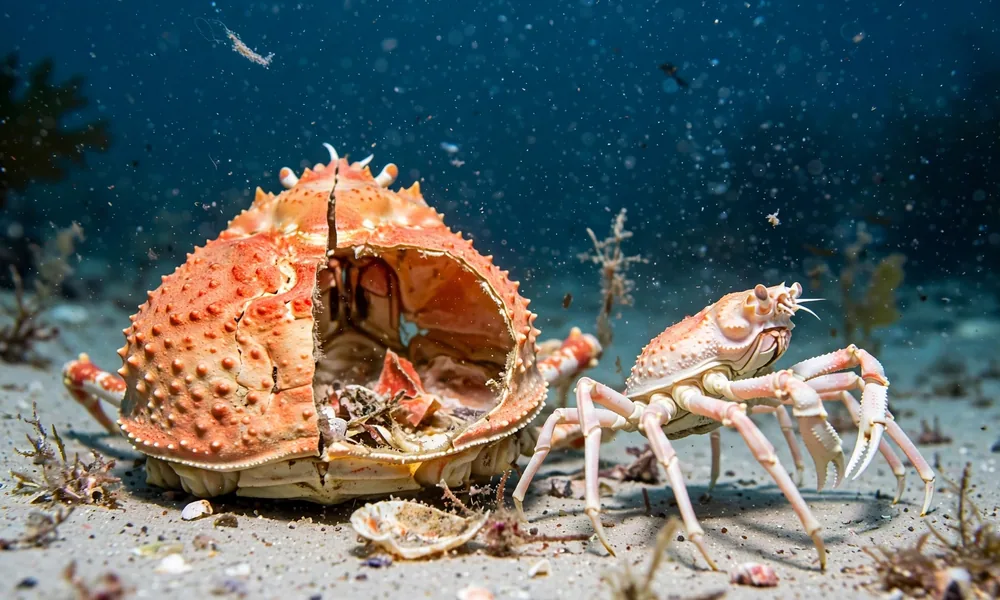
The eyes sit on short stalks at the front of the shell, and the antennae are short. The shell is hard, but it is not the whole story, because the crab grows by moulting, and the moult is a strange and vulnerable event. A single moult in captivity was observed to take about 103 minutes, during which the crab lost its mobility and shed its shell from the rear first, then its walking legs, and its growth rate after that moult was nearly 22 per cent. Young crabs decorate their shells with sponges, sea anemones and seaweed, attaching the pieces with hooked hairs so that the living material keeps growing on the shell. Adults decorate less, because their size alone deters most attackers.
Where Japanese spider crabs live
Japanese spider crabs live almost entirely off the Pacific side of Japan, and that narrow range is part of what makes them special. They are found off the southern coasts of Honshu, from Tokyo Bay to Kagoshima Prefecture, and they are most often recorded in Sagami Bay, Suruga Bay and Tosa Bay, and off the Kii Peninsula. Outlying populations have been found off Iwate Prefecture in the north and off Su-ao in Taiwan, but the species is essentially a Japanese endemic, and it does not occur in the Atlantic or in other oceans.
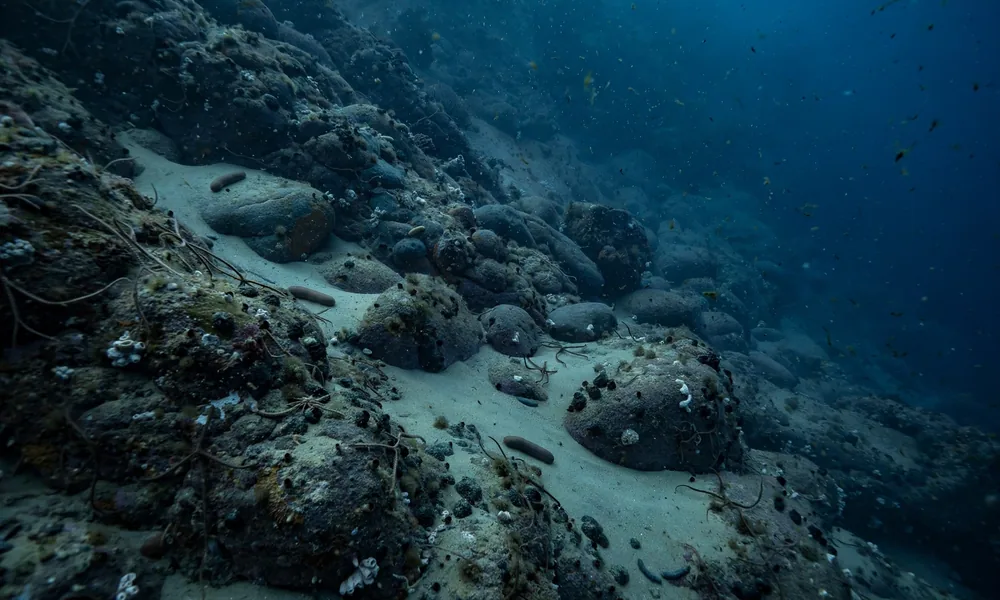
Adults live at depths of about 50 to 600 metres, and they are most often found at about 150 to 300 metres, where the water is cold and dark. They like rocky ground with vents and holes in the seabed, and they shelter in crevices and hollows between boulders. In Suruga Bay they are regular at a depth of about 300 metres, where the water is generally about 10 degrees Celsius. In public aquaria they tolerate temperatures between about 6 and 16 degrees Celsius, but they are usually kept at about 10 to 13 degrees Celsius, which matches the water they know in the wild.
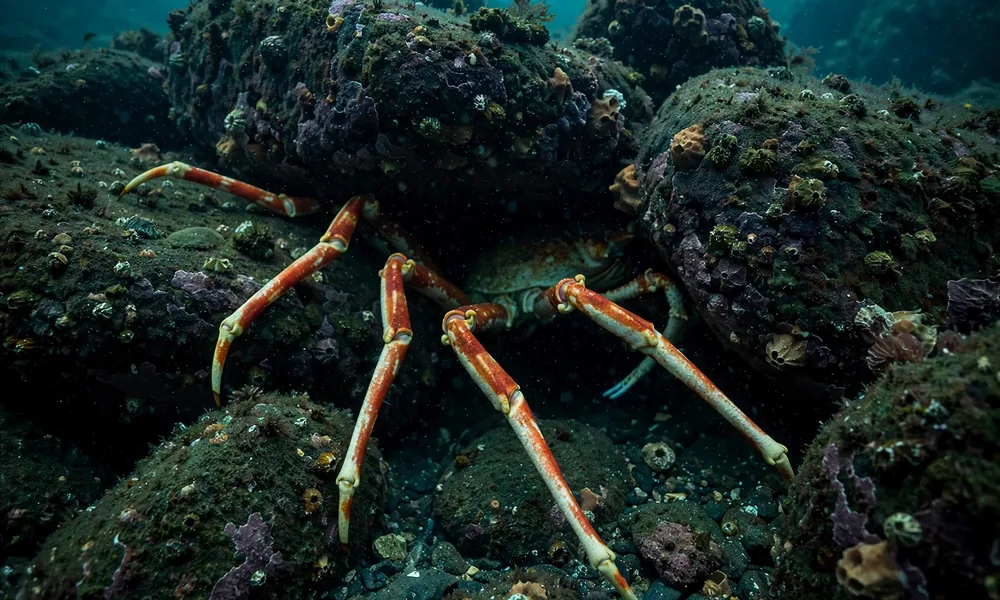
Young crabs live in shallower, warmer water than adults, and they move deeper as they grow. The adults move in the other direction for breeding, rising to a depth of about 50 metres in spring, when the water is warmer and the eggs can hatch near the surface. The temperature at that depth is warmer too, and the change matters, because the larvae need warmer water than the adults. The crab is slow, and it does not travel far in a day, so its life is spent within a small patch of seabed, walking from rock to rock and feeding as it goes.
What Japanese spider crabs eat
Japanese spider crabs are omnivores, and they are scavengers first and hunters second. They eat dead fish and other dead animals that sink to the seabed, and they scrape algae and kelp from the rocks with their claws. They also pry open the shells of molluscs and small marine invertebrates, and they will take living shellfish and small crustaceans when they can catch them. They do not chase prey, and they do not need to, because the seabed brings them a steady supply of food that has fallen from above.
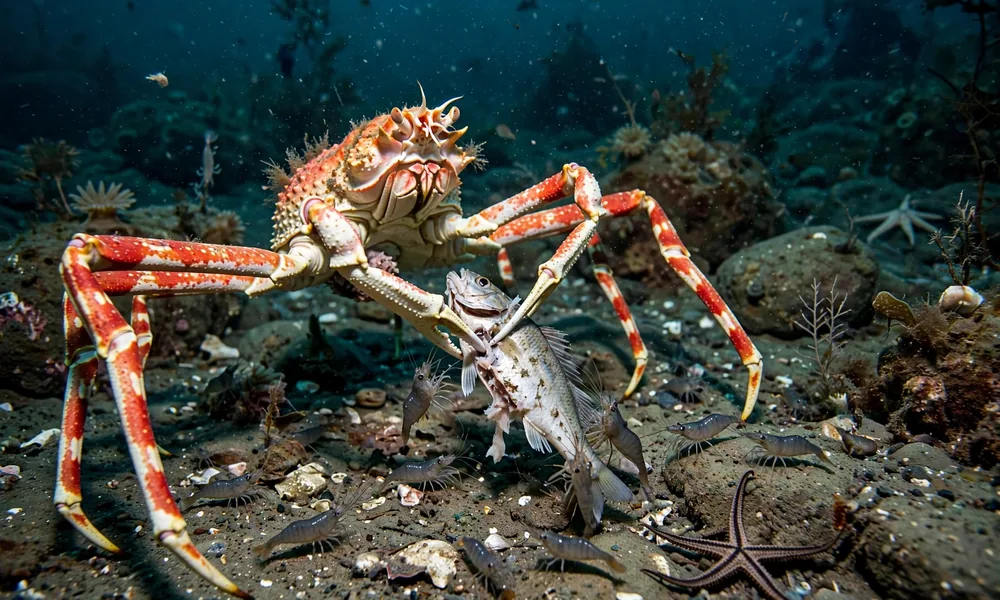
The long legs are useful at feeding time, because they let the crab reach into crevices and across uneven ground that a shorter-legged crab could not cross. The claws are slender rather than crushing, so the crab works at a shell patiently, prying it open rather than smashing it. After moulting, a crab will eat its own shed shell, which returns calcium and other nutrients to its body at a time when the new shell is still soft. That habit is common in crabs, and it makes sense for an animal that must build a whole new suit of armour from scratch.
The diet changes a little with age and with depth. Young crabs in shallower water eat more algae and small animals, while adults in deeper water eat more carrion and shellfish. The crab is not fussy, and that flexibility helps it survive in a place where food arrives in patches and seasons. It feeds slowly, and it can go without food for a while, which suits a cold-water animal with a slow metabolism and a life measured in decades rather than years.
How Japanese spider crabs behave
Japanese spider crabs are slow and gentle, and they spend their lives walking rather than swimming. They move across the seabed on their long legs, stepping carefully from rock to rock, and they can lose a leg to a predator and keep going, because the leg grows back at the next moult. They are not aggressive, and they do not hunt in the way a shark or an octopus hunts. When they are disturbed they freeze, or they walk away slowly, and their size and their camouflage do most of the work of keeping them safe.
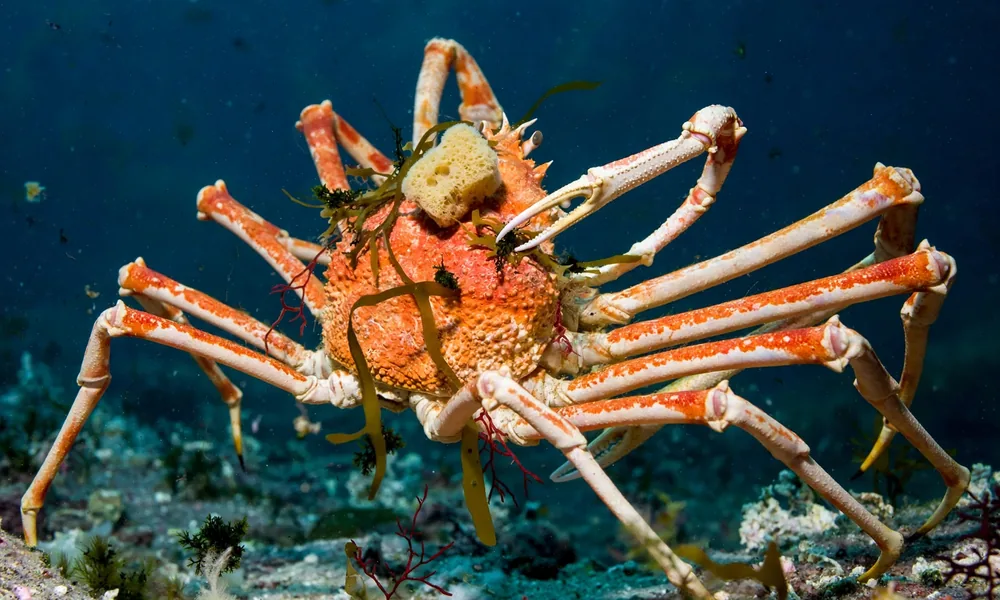
Decoration is the most charming behaviour in the crab’s life, and it is mostly a habit of the young. The crab tears a piece of sponge, seaweed or worm tube from the seabed, turns it in its claws, and fastens it to its shell with hooked hairs, where the material keeps growing. The result is a crab that looks less like a crab and more like a lump of reef, which is exactly the point. Adults decorate less, because few predators can tackle a crab of that size, but the habit shows how much of the crab’s defence is about not being noticed in the first place.

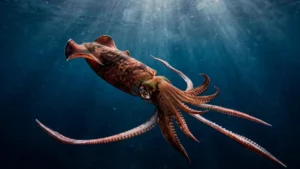
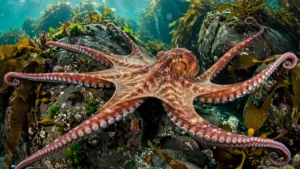
The main predators are octopuses, which are strong enough to pull a crab from its crevice and clever enough to work at its shell, and large fish that can take a young crab before its shell has hardened. Like the octopus, the spider crab is a creature of the deep slope, but where the octopus is fast and soft-bodied and hunts with its arms, the spider crab is slow and armoured and feeds on what it finds. The crab’s shell is its best defence, and its long legs keep its body clear of the seabed, so a predator must reach up and over the legs to get at it.
Moulting is the most dangerous time in the crab’s year. The old shell splits, the crab pulls itself out, and for a while the new shell is soft and the crab can barely move. It hides in a crevice until the shell hardens, and it eats the old shell to reclaim its minerals. The moult takes about 103 minutes in the case that was timed in captivity, and it is a slow and careful process, not a sudden burst. A crab that survives its moults grows steadily, and it may keep growing for decades.
Breeding and life cycle
Japanese spider crabs breed in spring, and the breeding season runs from January to April. The adults move from their deep home into shallower water, at a depth of about 50 metres, where the water is warmer and the eggs can hatch near the surface. Mating is internal, and the male passes a packet of sperm to the female as their undersides press together. The female then carries the fertilised eggs on the appendages beneath her broad abdomen, where she keeps them clean and aerated until they hatch.
A single female can produce up to about 1.5 million eggs in a season, and each egg is only about 0.8 millimetres across. The eggs hatch after about 10 days, and the larvae that emerge look nothing like the adults. They are tiny and transparent, with round legless bodies, and they drift as plankton near the surface, where the water is about 12 to 15 degrees Celsius. The first larval stage lasts only a few minutes, and then the larva moults into its first zoea stage. There are two zoeal stages, each lasting about 7 to 18 days, and then a megalopa stage of about 25 to 45 days, before the young crab settles to the bottom.
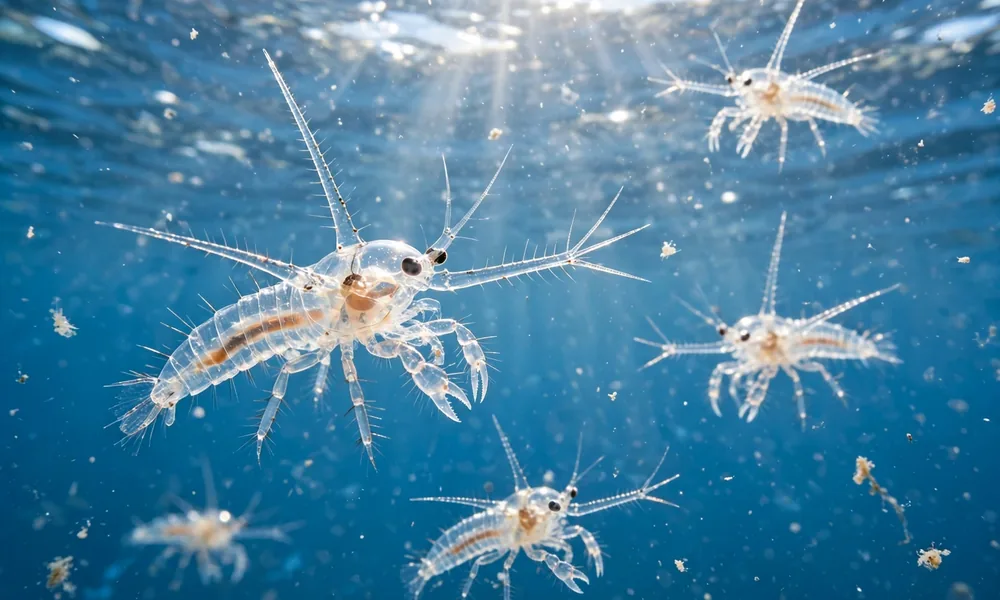
Very few of those million eggs survive to adulthood, and that is why the female lays so many. The larvae are eaten by fish and by other plankton feeders, and only a small number reach the seabed and grow into juvenile crabs. The juveniles live in shallower water than the adults, and they decorate their shells and hide among rocks and sponges. They grow by moulting, and they move deeper as they get larger. The crab grows slowly, and it takes years to reach the size of the great adults that fishermen catch.
The lifespan is one of the most remarkable facts about this crab. It is estimated to live for up to about 100 years, which would make it one of the longest-lived crabs on Earth, and some reports put the usual lifespan at more than 50 years. The estimate is based on growth rates rather than on a crab that has been followed for a century, so it is an estimate and not a certainty, but it fits with the slow growth and the cold water. A crab that lives that long must survive many moults, many winters and many fishing seasons.
Conservation status
The Japanese spider crab has not been given an IUCN Red List assessment, and there is not enough data for a firm verdict on its global status. That does not mean it is safe. It is a prized delicacy in Japan, and it is fished mainly in Suruga Bay with small trawling nets, and the catch fell from 24.7 tonnes in 1976 to only 3.2 tonnes in 1985. That is a fall of nearly nine tenths in nine years, and it forced fishermen to work in deeper water for smaller crabs, which is a clear sign that the stock was under pressure.
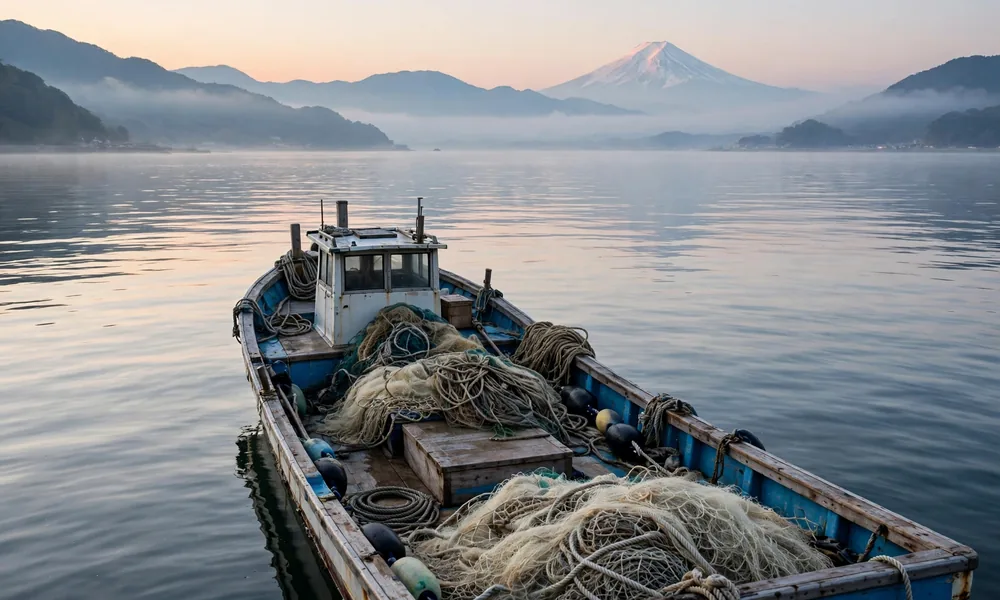
Japan now protects the crab during the breeding season. Fishing is banned from January to April, when the crabs move into shallower water to mate and lay their eggs, and the ban gives the females a chance to spawn before they are caught. Hatcheries also raise young crabs and release them into the wild, so that the stock can be rebuilt. The average crab caught today is smaller than the average crab caught fifty years ago, with a leg span of about 1.0 to 1.2 metres, and that change shows that the largest crabs are rarer than they were.
The threats are not only fishing. Trawling damages the seabed where the crabs live, and warming water may change the cold habitat that the adults need. The crab lives in a narrow range, so a change in one bay can matter for the whole species. The best hope for the crab is the combination of a seasonal ban, hatchery releases and careful fishing, and the fact that the crab is famous enough for people to care about it. A giant that lives for a century cannot be replaced in a single season.
Best seasons for Japanese spider crab watching
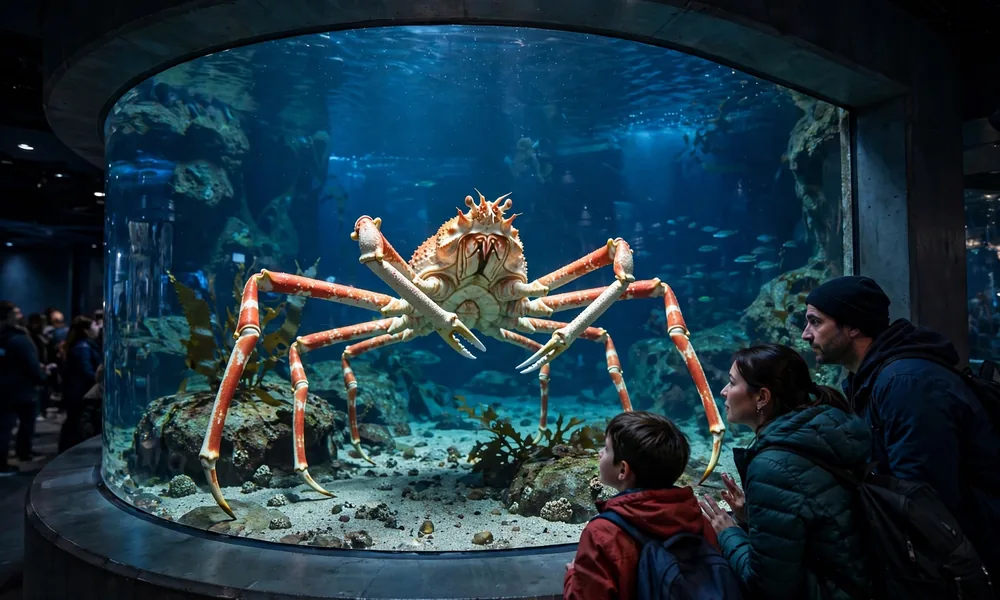
You cannot watch a Japanese spider crab in the wild without a submersible or a deep-diving expedition, because the adults live at depths of 50 to 600 metres, and most of them are at 150 to 300 metres. The best way to see one is in a public aquarium, where the crabs are kept in large cold-water tanks and their long legs can be seen at close range. The crabs are on show all year, and they are most active when they are feeding, which is often in the morning, when keepers put food into the tank.
Spring is the most interesting season, because that is when the crabs move into shallower water to breed, and it is when fishermen catch them and when aquaria often have new arrivals. The breeding season runs from January to April, and the crabs are most commonly caught in that period, which is also why fishing is banned then. If you visit Japan in spring, you may see the crab on a menu, but you should also know that the season is closed, and that the crabs on sale were caught before the ban or raised in a hatchery.
The crab is also a familiar sight in Japanese aquaria outside the breeding season, and it is worth visiting in any month. The tanks are kept at about 10 to 13 degrees Celsius, and the crabs move slowly across the floor, which makes them easy to watch for a long time. Look for the decoration on the young crabs, and for the way the legs fold when the crab rests. A crab that is feeding will hold its food in its claws and pick at it patiently, and that is the best moment to watch it.
Staying safe around Japanese spider crabs
Japanese spider crabs are not dangerous to people, and they have no venom and no bite that can hurt a human. Their claws are long and slender, and they are used for prying open shells and holding food, not for attacking. A crab that is handled roughly can pinch, and a large male has enough strength to give a painful nip, so the rule is simple, and it is to leave the crab alone and to let a keeper handle it. In an aquarium, you should keep your hands out of the tank and watch from behind the glass.
The real safety issue is the depth at which the crab lives. No one should try to dive to 300 metres to see one, and no recreational diver can reach that depth safely. The crabs are seen by submersible, by remote camera, or in an aquarium, and those are the safe ways to watch them. If you are on a fishing boat in Suruga Bay, you should stay clear of the trawling gear and the winches, and you should let the crew handle any crab that comes up in the net.
The crab itself needs protection from people, and that is the other side of safety. A crab that has just moulted is soft and fragile, and it should never be picked up or moved. A crab that is carrying eggs should be returned to the water at once, and a crab that is caught during the closed season must not be kept. The best way to stay safe around a Japanese spider crab is to watch it with respect, and to remember that you are looking at an animal that may be older than you are.
Japanese spider crab watching checklist
Use this checklist before you go to see a Japanese spider crab in an aquarium, and tick each item off as you prepare.
- Choose a large public aquarium with a cold-water deep-sea tank, and check its opening times before you travel.
- Go in the morning, when the keepers feed the crabs and the animals are at their most active.
- Take binoculars or a camera with a good zoom, so you can study the shell and the legs through the glass.
- Look for the decoration on young crabs, and for the long front claws on the males.
- Keep your hands out of the tank, and never tap on the glass, since the sound travels through the water.
- Read the tank label, and note the depth, the temperature and the breeding season for the crab.
- Leave the crab in peace, and report any crab for sale in the closed season to the local fisheries office.
Frequently asked questions
How big do Japanese spider crabs get?
Japanese spider crabs have the largest leg span of any arthropod, reaching up to about 3.7 metres from claw tip to claw tip, which is about 12 feet. The body is far smaller, with a carapace up to about 40 centimetres wide, and the whole crab can weigh up to about 19 kilograms, or about 42 pounds. Most crabs caught by fishermen are much smaller, with a leg span of about 1.0 to 1.2 metres, and the average adult is closer to that size than to the record.
How long do Japanese spider crabs live?
Japanese spider crabs are estimated to live for up to about 100 years, which would make them one of the longest-lived crabs on Earth. The estimate is based on growth rates, and it is not a direct observation of a single crab over a century, so it should be read as an estimate rather than a certainty. Other reports put the usual lifespan at more than 50 years, and both figures agree that this is a slow-growing animal with a life measured in decades.
What do Japanese spider crabs eat?
Japanese spider crabs are omnivores and scavengers, and they eat dead fish, molluscs, small crustaceans, algae and kelp. They scrape plant matter from the rocks, pry open shells with their long claws, and feed on carrion that sinks to the seabed. They do not chase prey, and they feed slowly, which suits a cold-water animal with a slow metabolism. After moulting, a crab will eat its own shed shell to reclaim its minerals.
Where do Japanese spider crabs live?
Japanese spider crabs live off the Pacific coast of Japan, from Tokyo Bay to Kagoshima Prefecture, with outlying records off Iwate Prefecture and Taiwan. Adults live at depths of about 50 to 600 metres, and they are most often found at about 150 to 300 metres, on rocky ground with crevices and holes. In Suruga Bay they are regular at about 300 metres, where the water is about 10 degrees Celsius. Young crabs live in shallower, warmer water than the adults.
Are Japanese spider crabs dangerous?
Japanese spider crabs are not dangerous to people, and they have no venom. Their claws are long and slender, and they are used for feeding rather than for attack, though a large male can give a painful pinch if it is handled roughly. The real danger is the depth at which they live, and no one should try to dive to 300 metres to see one. The safe way to watch them is in a public aquarium, behind glass, or by submersible and remote camera.
How is this guide different from the Humboldt squid guide?
This guide covers the Japanese spider crab, a slow-moving bottom-dwelling crab of the deep Pacific slope that grows to a leg span of about 3.7 metres, lives at depths of 50 to 600 metres, feeds mostly on dead animals and plants, and can live for up to about 100 years, while our Humboldt squid guide covers a fast-swimming predatory squid of the eastern Pacific that hunts in shoals, changes colour in seconds, and lives for only a year or two. One is a giant armoured scavenger that walks the seabed for decades, and the other is a swift soft-bodied hunter that chases its prey through open water and dies young.
This guide also goes further than our general crab guide, which covers crabs as a whole, from shore crabs to hermit crabs to coconut crabs. That guide is the place to start if you want to know what a crab is, while this guide stays with one species for its whole length, following the Japanese spider crab from its place among the spider crabs and its narrow Japanese range through its moulting and its decoration, its million eggs and its drifting larvae, its long life and its falling fishery, to the seasons and the checklist that will help you watch it safely in an aquarium.
Conclusion
The Japanese spider crab species is a reminder that the largest animals are not always the fastest or the fiercest. A slow crab with legs like stilts, a body the size of a dinner plate, and a life that may stretch for a century, it walks the cold rocky slope off Japan, feeding on what the sea brings down to it, decorating its shell when it is young, and shedding that shell again and again as it grows.
If you ever see one in an aquarium, take your time with it. Look at the legs, look at the shell, and remember that you are looking at the largest arthropod on Earth, an animal that has survived a century of fishing and a falling catch, and that still walks the deep water off Japan, slow and patient and entirely itself.