Denmark animals range from red deer on the heaths of Jutland to grey seals on the sandbanks of the Wadden Sea, and the country holds some of Europe’s best coastal wildlife. If you are wondering which animals live in Denmark and where to see them, the short answer is this: red deer, roe deer and fallow deer roam the forests, heaths and parklands, grey seals and harbour seals haul out on the coasts, harbour porpoises swim in the surrounding seas, and white-tailed sea eagles, mute swans and cranes fill the skies over the lakes and wetlands.
Denmark is a small, low country of farmland, beech forest, heath, dunes and coast, and that mix supports a surprising range of wildlife. This guide covers the species you are most likely to meet, where each one lives and the best seasons to see them.
Key takeaways
- Denmark’s most iconic land animals are the red deer, roe deer, fallow deer, red fox, badger and hare.
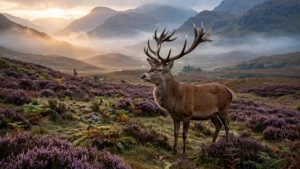
- The red deer is Denmark’s largest land mammal, and the heaths and forests of Jutland are the best places to see it.
- Grey seals and harbour seals haul out on the sandbanks of the Wadden Sea, and harbour porpoises swim in Danish waters all year.
- The white-tailed sea eagle is Denmark’s largest bird of prey, and the mute swan is the national bird.
- Early morning and late evening are the best times to spot deer, and spring and autumn are the best seasons for migrating birds.
What makes Denmark’s wildlife special
Denmark is made of the Jutland peninsula and hundreds of islands, with a long coastline for its size. That geography gives the country temperate forest, heath, meadow, dune and wetland, and seas on every side, so land animals, seabirds and marine mammals all live close together.
Much of Denmark is farmland, and the wild places are smaller and more scattered than in the Nordic countries to the north. Even so, the coasts, the Wadden Sea and the larger forests hold rich wildlife, and several species that were once lost, including the white-tailed sea eagle, the beaver and the wolf, have returned.
The great mammals of Denmark
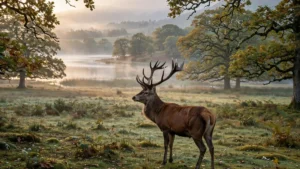
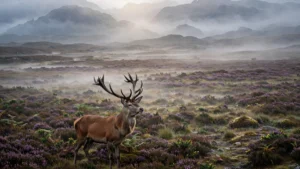
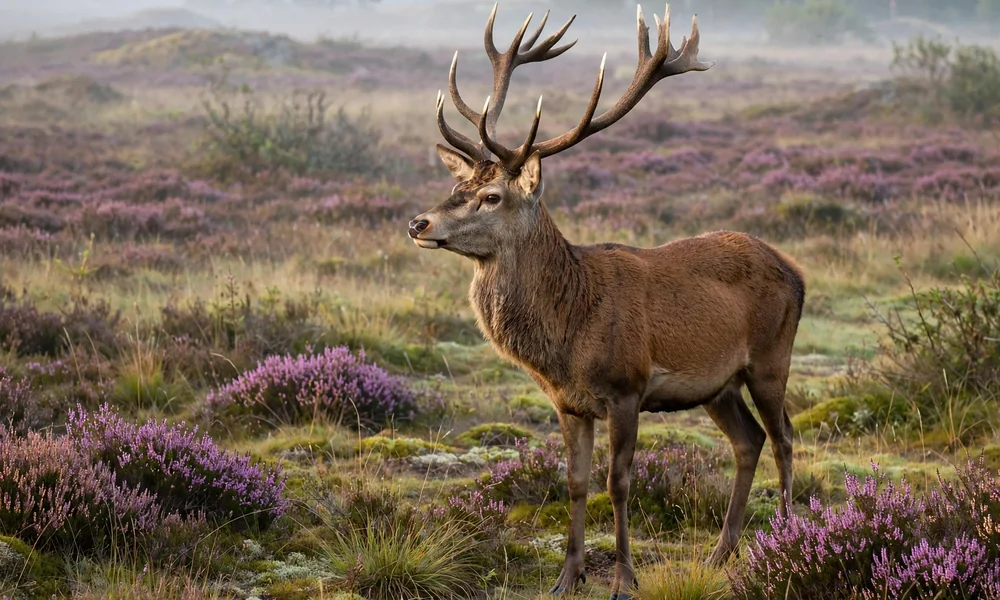
The red deer is Denmark’s largest land mammal and the animal most visitors hope to see. Red deer are most numerous in the forests and heaths of Jutland, and they are also found on some of the islands. Stags carry large antlers, and in the autumn rut they roar across the heath at dawn and dusk. Look for them in the forests of central Jutland and around the large heaths of the west.
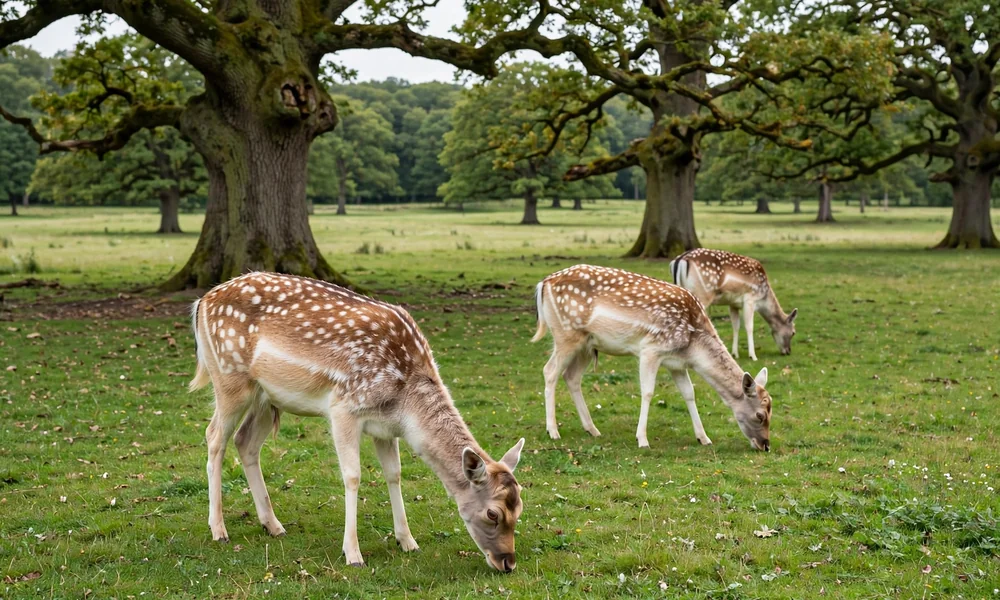
Roe deer are smaller and far more widespread, living in farmland, forest edges and gardens across the whole country. They are the deer most people see, often at the edge of a field in the early morning. Fallow deer are found in parklands and in some forests, including the deer park north of Copenhagen, where large herds graze the open grassland and visitors can walk among them.
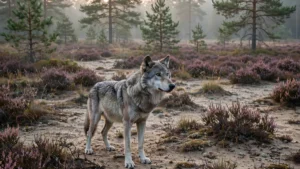
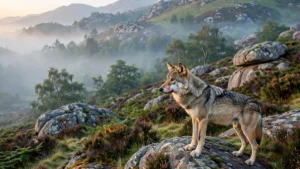
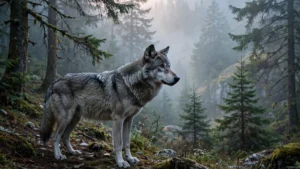
Among the predators, the red fox is the most common, hunting mice, voles and rabbits in fields and forests across the country. Badgers live in the larger forests, mostly active at night. The wolf has returned to Jutland in small numbers in recent years, after an absence of about two centuries, but wolves are shy, rarely seen, and avoid people.
Beavers were also brought back. After being lost for centuries, beavers were released in western Jutland, where they now live along rivers and streams, building dams that shape wetlands for frogs, dragonflies and water birds.
Birds of the Danish coasts, lakes and forests
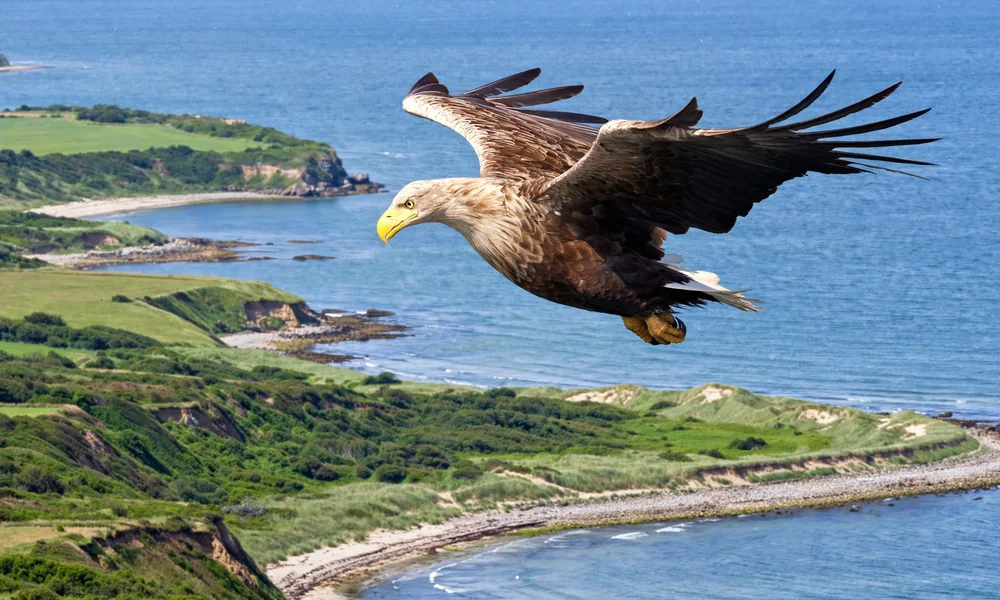
The white-tailed sea eagle is Denmark’s largest bird of prey, with a wingspan of well over two metres. Eagles were lost from Denmark for decades and have returned to breed around the lakes and coasts, and the large lakes of Zealand and the coasts of Jutland are among the best places to see them, often from a boat or a lakeside hide.
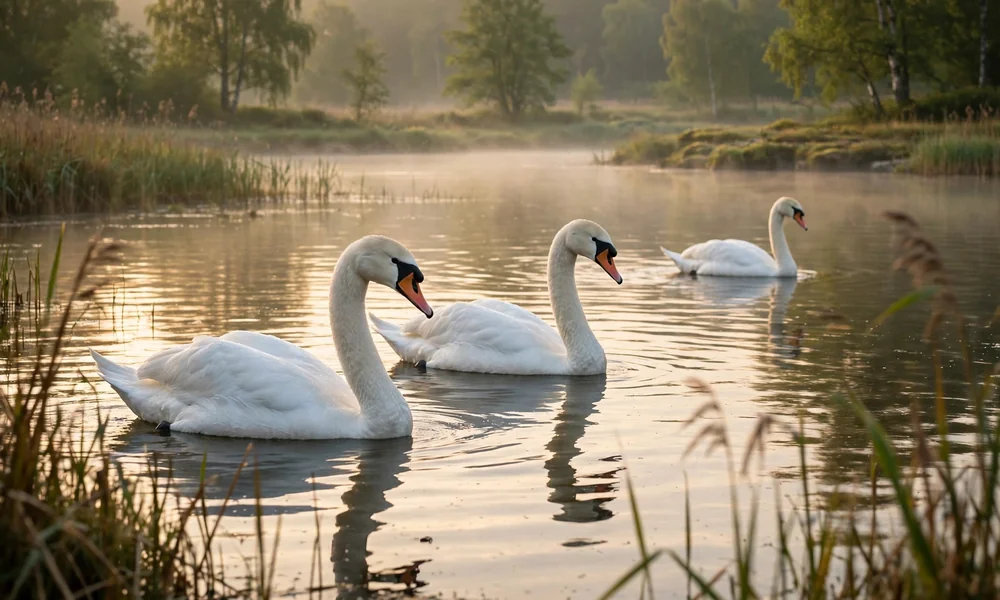
The mute swan is Denmark’s national bird, and it is found on lakes, ponds and sheltered coasts across the country. Mute swans are large, graceful birds with curved necks and orange bills, and they stay in Denmark all year. Whooper swans visit in winter, gathering on the lakes and flooded fields of the north and west.
Each spring and autumn, cranes pass through Denmark on their migration between wintering grounds and breeding grounds in the north. Cranes also breed in a few wetlands in Jutland. Geese gather in huge flocks on the fields and wetlands of the west in winter, and the Wadden Sea is one of the great gathering places for wading birds in Europe.
Seals, porpoises and life in the sea
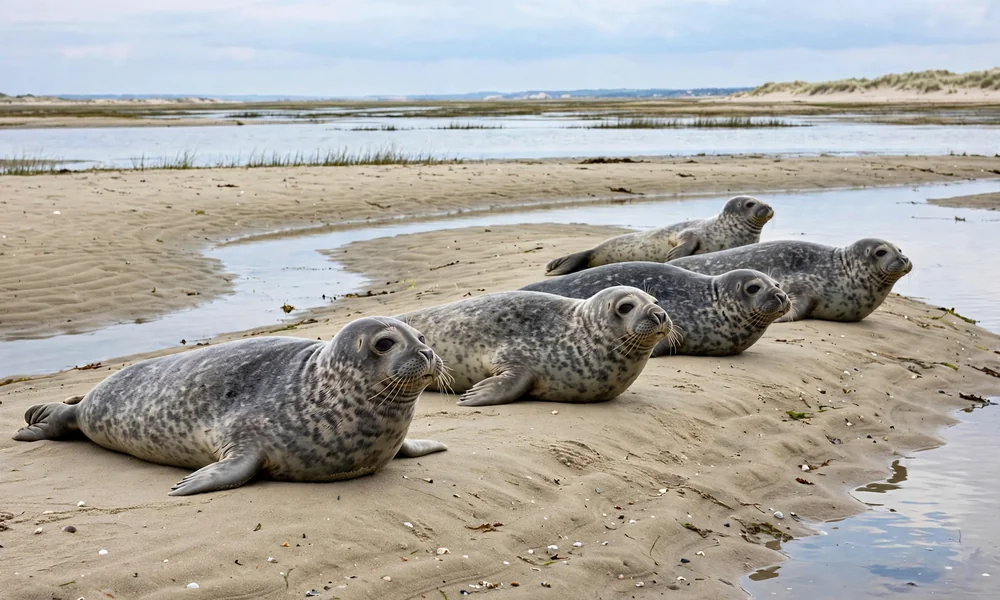
Denmark’s long coastline and shallow seas support a rich marine world, and the seals are the easiest part of it to see. Grey seals and harbour seals haul out on sandbanks and rocky islets, and the largest colonies are in the Wadden Sea, along the west coast of Jutland, and around the island of Anholt in the Kattegat. Grey seals are larger, with long faces, while harbour seals are smaller and shyer.
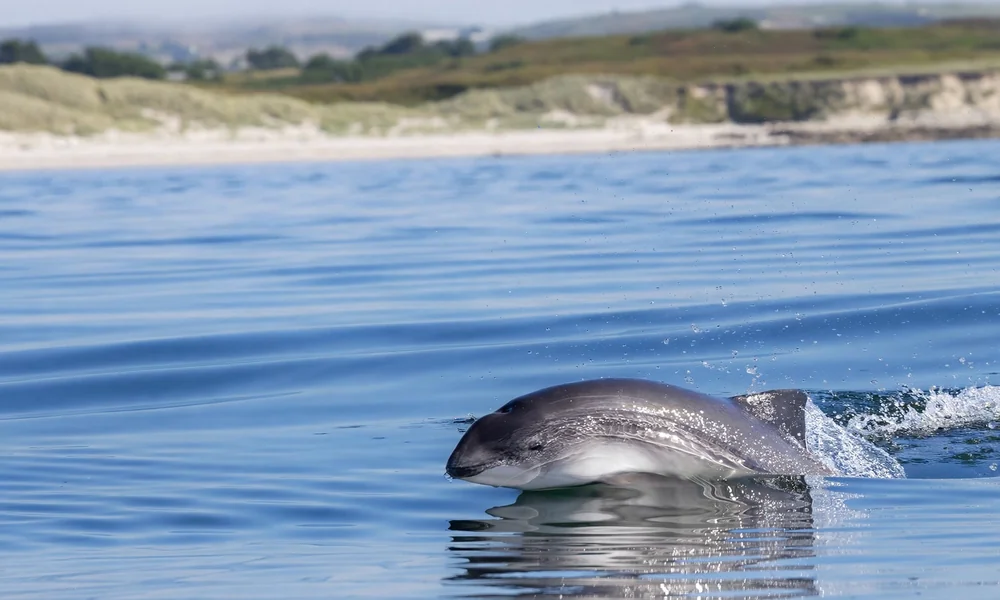
The harbour porpoise is the most common whale in Danish waters, a small, shy relative of the dolphins that lives in the seas around Denmark all year. It is rarely seen well, usually only as a brief roll at the surface, and the coasts of northern Jutland and the Kattegat are among the better places to look for it. Porpoises are protected in Denmark.
Inland, the lakes and rivers hold otters, which hunt fish along the rivers and lakes of Jutland, though they are shy and mostly active at night.
Smaller animals of field and forest
Not all of Denmark’s wildlife is large. Hares are common in the fields, and in spring they can be seen boxing in the open meadows. Hedgehogs visit gardens at night, and stoats and weasels hunt mice and voles in the hedgerows. Red squirrels live in the conifer forests, and the edible dormouse lives in a few beech woods.
Butterflies, bees and dragonflies fill the meadows and wetlands in summer, and the dunes hold sand lizards and adders. The adder is Denmark’s only venomous snake, and it is shy, living mainly on heaths and dunes.
Where to see Denmark’s wildlife
The best place depends on the species. Red deer are easiest in the forests and heaths of Jutland, and fallow deer are easiest in the deer park north of Copenhagen, where the herds are used to visitors. Roe deer can be seen almost anywhere, at the edge of a field in the early morning.
For seals, the Wadden Sea is the classic destination, with boat trips to the sandbanks in summer, and Anholt is another good seal island. For birds, the Wadden Sea gathers waders, the lakes of Zealand are good for white-tailed sea eagles, and western Jutland is good for cranes and geese.
| Species | Where to look | Best season | How likely is a sighting |
|---|---|---|---|
| Red deer | Forests and heaths of Jutland | September to October, dawn and dusk | Good |
| Fallow deer | Deer park north of Copenhagen | All year | Good |
| Grey seal | Wadden Sea sandbanks and Anholt | Summer, from a boat | Good |
| Harbour porpoise | Coasts of northern Jutland and the Kattegat | All year | Low |
| White-tailed sea eagle | Lakes of Zealand and coasts of Jutland | All year | Good |
| Mute swan | Lakes, ponds and sheltered coasts | All year | Good |
Best seasons for wildlife watching
Spring is the season of return. Cranes pass through on their way north, the woods fill with birdsong, and the deer are out with their young. It is also the most sensitive season, so keep to paths, keep dogs on a lead and give every animal more space than you think it needs.
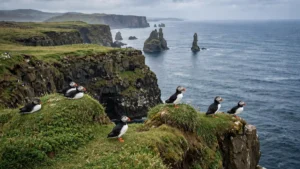
Summer is the easiest season. The days are long, the seabirds are at their colonies, the seals are hauled out on the sandbanks and the deer park is full of fallow deer with their fawns. Boat trips to the seals run through the summer months.
Autumn brings the deer rut, when red deer stags roar on the heaths of Jutland at dawn and dusk. It is also the season when the bird migration passes through, with geese and waders gathering on the Wadden Sea in large numbers.
Staying safe around Denmark’s wildlife
Denmark’s animals are mostly small and calm, but they deserve respect. Keep your distance from deer, especially stags in the rut and hinds with fawns, and never try to feed or touch any wild animal. Adders live on heaths and dunes, so wear shoes on the paths and watch where you step in the grass. Seals may look tame on the sandbanks, but they bite if approached, so keep well back and use binoculars.
Wildlife watching checklist
- Book a local guide or a boat trip for seals and sea eagles — they know where the animals are.
- Go out at dawn or dusk for deer, and plan bird trips for spring and autumn, when migration is at its peak.
- Bring binoculars, warm layers and waterproofs, even in summer — Danish weather changes fast.
- Keep at least 50 metres from seals, nesting birds and grazing deer, and far more from stags in the rut.
- Never feed wild animals, and never use food or calls to lure them closer for a photograph.
- Leave no trace: take your rubbish home and keep to marked paths in sensitive habitats.
Frequently asked questions
What is the most common large animal in Denmark?
The roe deer is the most common deer, living in farmland and forest edges across the whole country. Red deer are the largest land mammal, but they live mainly in Jutland.
Are there wolves in Denmark?
Yes, in small numbers. Wolves have returned to Jutland in recent years, after an absence of about two centuries. They are shy, rarely seen, and avoid people whenever they can.
Where can I see seals in Denmark?
The Wadden Sea, along the west coast of Jutland, is the best place, and boat trips run to the sandbanks in summer. Anholt, in the Kattegat, is another good seal island.
When is the best time to see red deer in Denmark?
The rut runs from September to October, when stags roar on the heaths of Jutland at dawn and dusk. Red deer can be seen all year, but the rut is the most dramatic season.
What is Denmark’s national bird?
The mute swan is Denmark’s national bird. It lives on lakes, ponds and sheltered coasts across the country, and it stays in Denmark all year.
Can I see whales in Denmark?
The harbour porpoise, a small relative of the dolphins, lives in Danish waters all year. It is shy and hard to see, usually only as a brief roll at the surface.
Conclusion
Denmark’s wildlife rewards patience: red deer on the heaths of Jutland, grey seals on the Wadden Sea sandbanks and white-tailed sea eagles over the lakes are all within reach if you plan around the seasons and keep your distance.
The next step is to pick one species and one season — an autumn deer rut trip, a summer seal boat trip, or a spring visit to the Wadden Sea — and plan your visit around it.