Animals that start with N include some of the most unusual species on earth, from the narwhal and the nightingale to the newt, the numbat and the nuthatch. If you are wondering which animals start with N, the short answer is this: the list runs from Nile crocodiles and nurse sharks to naked mole-rats, nightjars and needlefish, and it covers mammals, birds, fish, reptiles and insects from every continent.
This guide lists the best-known N animals, with a fact about each one, grouped so you can find the species you are looking for.
Key takeaways
- The best-known animals that start with N are the narwhal, nightingale, newt, numbat, nuthatch, Nile crocodile, needlefish and naked mole-rat.
- N animals live on every continent and in every habitat, from the Arctic sea ice to the Australian bush and the African savanna.
- The narwhal is the most famous N animal, with a spiralled tusk that is really an elongated tooth, and the nightingale is famous for its rich, powerful song.
- Many N animals are famous for their special skills: nuthatches climb down trees head first, newts regrow lost limbs, and naked mole-rats live in underground colonies like insects.
- This list covers mammals, birds, fish, reptiles, amphibians and insects, with a fact about each species.
Big mammals that start with N
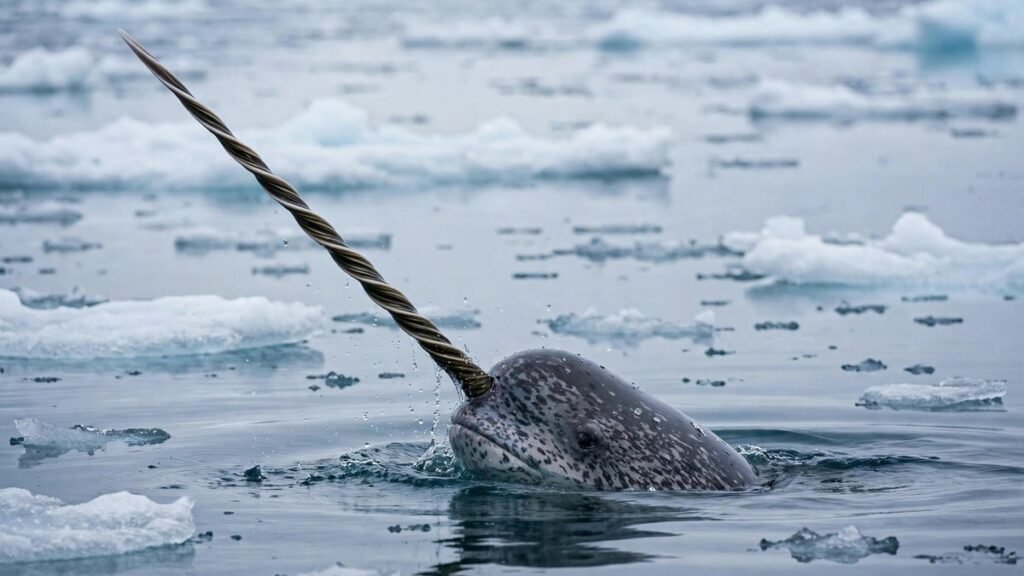
The narwhal is the star of the N list, and it is one of the strangest whales in the world. It lives in the icy waters of the Arctic, around Greenland and northern Canada, and the male carries a long, spiralled tusk that can grow to nearly 3 metres. The tusk is really an elongated tooth, packed with nerve endings. Narwhals are mottled grey and white, they feed on fish, squid and shrimp, and they surface through cracks in the sea ice to breathe.
The numbat is a small, striped marsupial from Western Australia, and it is one of the few marsupials active during the day. It has a pointed snout, a long sticky tongue and bold white stripes across its back, and it feeds almost entirely on termites, eating thousands every day. Unlike most marsupials it has no pouch, and its young cling to its belly fur.
The northern fur seal lives in the cold waters of the North Pacific and breeds in huge colonies on remote islands such as the Pribilof Islands off Alaska. Males are far larger than females, and a big bull can weigh several times as much as a female. They feed on fish and squid, diving deep to hunt, and return to the same beaches each summer to breed.
The nilgai is the largest antelope in Asia, living on the grasslands of India and Pakistan. The male is blue-grey with small, straight horns, while the female is brown and hornless. The night monkey is the only truly nocturnal monkey, with huge eyes for seeing in the dark forests of Central and South America. Like other forest animals, many N mammals depend on large, undisturbed areas to find food and raise their young.
Birds that start with N
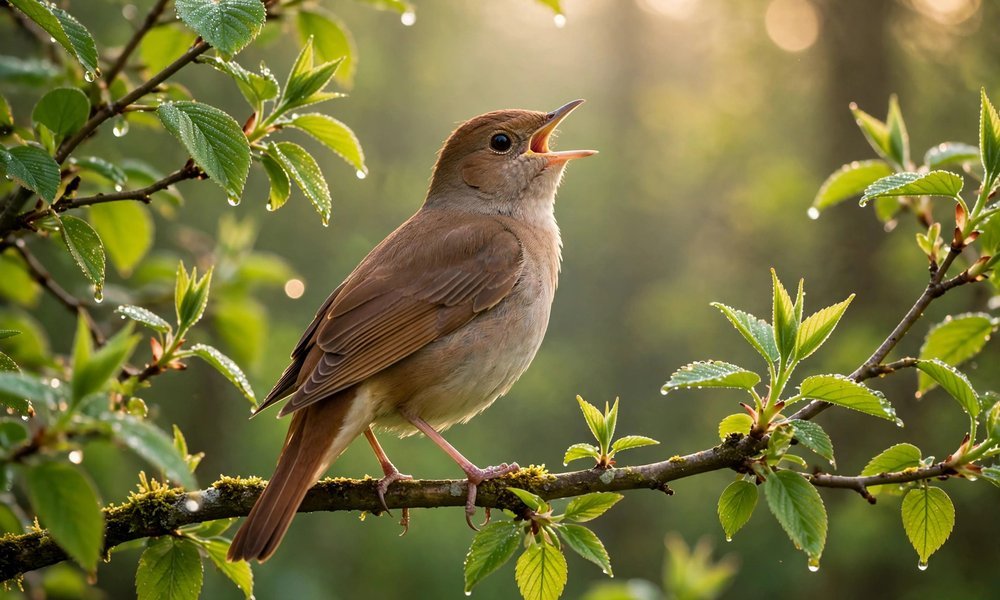
The nightingale is the most famous N bird, loved for one of the richest songs of any bird in Europe. It is a plain brown bird, about the size of a robin, but its song is loud, varied and beautiful, and it often sings at night in spring. Nightingales spend the winter in Africa and return to Europe to breed, nesting low in dense scrub. The male sings to defend his territory and attract a mate.
The nuthatch is a small, compact bird with a talent no other common bird shares: it can climb down a tree trunk head first. It has a strong bill, a blue-grey back and a black stripe through the eye, and it wedges nuts and seeds into bark, then hammers them open. The Eurasian nuthatch lives across Europe and Asia, including Norway.
The nightjar is a nocturnal bird with soft, mottled plumage that looks like bark or dead leaves, so it is almost invisible when it rests on the ground during the day. It flies at dusk, catching moths in the air, and its eerie, churring song is a sound of summer evenings. The northern pintail is an elegant duck with a long, pointed tail that breeds in the far north. The nene, or Hawaiian goose, was saved from near extinction by captive breeding.
Other N birds include the black-crowned night heron, a stocky heron that hunts fish and frogs at night around lakes and marshes, and the northern cardinal, a bright red songbird of North America. The nightingale and the northern pintail both cross continents on migration, just like the species in our guide to animal migration.
Small animals that start with N
The naked mole-rat is one of the strangest small animals in the world, living underground in the dry grasslands of East Africa. It is almost hairless, with wrinkled pink skin and large front teeth that it uses for digging, and it lives in colonies of dozens of animals ruled by a single breeding female, much like bees or ants. They can survive with very little oxygen, and live far longer than other rodents of their size.
The nudibranch is a sea slug, and it is one of the most colourful animals in the sea, with bright patterns of pink, purple, orange and blue. It has no shell, so it defends itself in other ways: some species store stinging cells from the animals they eat, while others are simply poisonous to touch. Many are only a few centimetres long.
The northern short-tailed shrew is a small, grey-brown mammal of North America, with a short tail, tiny eyes and a pointed snout. It is one of the few venomous mammals, using venom in its saliva to subdue insects, worms and even small mice. Like the small animals of every letter, these species show that size is no measure of importance.
Sea animals that start with N
The needlefish is a long, thin fish with a sharp, pointed beak full of small teeth, swimming just below the surface of warm seas around the world. It feeds on small fish, and can leap out of the water when startled. The nurse shark is a slow, bottom-dwelling shark of warm Atlantic waters, spending much of the day resting on the seabed in groups. It feeds at night on fish and shellfish, using suction to pull prey from cracks in the reef.
The chambered nautilus is a living fossil, a cephalopod related to octopuses and squid that has changed little in hundreds of millions of years. It lives in a coiled, pearly shell divided into chambers. The northern pike is a freshwater hunter of northern Europe and North America, including Norway, with a long body, a duck-billed snout and sharp teeth. It waits in ambush among reeds and weeds, then strikes in a sudden burst of speed.
The Nile perch is a huge freshwater fish of African lakes and rivers, growing to more than a metre long. In Lake Victoria it became one of the most important food fish. Like the predator animals of every letter, these hunters help control the animals they eat.
Reptiles, amphibians and more N animals
The Nile crocodile is the best-known N reptile, and it is one of the largest crocodiles in the world, growing to more than 5 metres long. It lives in the rivers, lakes and marshes of Africa, and it eats fish, birds and mammals, including animals that come to the water to drink.
The newt is a small amphibian, and the smooth newt is the most common newt in Europe, including Norway. It lives in ponds to breed, when the male grows a crest along his back, and spends the rest of the year on land. Newts can regrow lost limbs and tails, a rare talent among vertebrates, and they return to the same pond year after year to breed. The natterjack toad lives on sandy heaths and dunes, with a pale yellow stripe down its back.
The Nile monitor is a large lizard of African rivers and wetlands, with a long tail, strong claws and a taste for crabs, snails and fish. The northern alligator lizard lives in the forests of western North America, with a long body and a tail that can break off and regrow if a predator grabs it.
| Animal | Type | Where it lives | Best-known fact |
|---|---|---|---|
| Narwhal | Mammal | Arctic waters around Greenland and Canada | Spiralled tusk is an elongated tooth |
| Nightingale | Bird | Woodland and scrub in Europe, winters in Africa | Sings a rich, powerful song at night |
| Numbat | Mammal | Woodland in Western Australia | Eats thousands of termites every day |
| Nile crocodile | Reptile | Rivers and lakes of Africa | Grows to more than 5 metres long |
| Newt | Amphibian | Ponds and damp land across Europe | Regrows lost limbs and tails |
| Nuthatch | Bird | Woodland across Europe and Asia | Climbs down trees head first |
| Naked mole-rat | Mammal | Underground burrows in East Africa | Lives in colonies ruled by one queen |
| Nurse shark | Fish | Warm, shallow waters of the Atlantic | Rests on the seabed and feeds by suction |
Animals that start with N checklist
- Start with the big names: narwhal, nightingale, newt, numbat, nuthatch, Nile crocodile, needlefish and naked mole-rat.
- Remember the birds: nightingale, nuthatch, nightjar, northern pintail, nene and black-crowned night heron.
- Do not forget the sea: needlefish, nurse shark, chambered nautilus, northern pike and Nile perch.
- Add the small ones: naked mole-rat, nudibranch and northern short-tailed shrew.
- Check the spelling: a narwhal is not a unicorn, and a natterjack toad is not a common toad, though both are easy to confuse.
- Use this list for quizzes, school projects and games, and add your own favourites.
Frequently asked questions
What is the most famous animal that starts with N?
The narwhal is probably the most famous, with its long spiralled tusk, along with the nightingale, famous for its song.
How many animals start with N?
There are hundreds of animals that start with N, from narwhals and nightingales to newts and nudibranchs. This guide lists the best-known species, but the full list is much longer.
What is the largest animal that starts with N?
The narwhal is one of the largest N animals, growing to around 4 to 5 metres long, and the Nile crocodile can grow to more than 5 metres.
What is the smallest animal that starts with N?
The nudibranch is one of the smallest N animals, with many species only a few centimetres long, and the northern short-tailed shrew is only a few centimetres long too.
Is a narwhal’s tusk really a tooth?
Yes. The narwhal’s tusk is an elongated left canine tooth that grows through the upper lip, mostly in males, and it can grow to nearly 3 metres long.
Do nightingales really sing at night?
Yes. Male nightingales often sing at night in spring, as well as during the day, and their song is loud and varied.
Conclusion
So the N list runs from narwhals and nightingales to newts, numbats, nuthatches and Nile crocodiles — hundreds of species, on every continent and in every habitat, from Arctic ice to desert dunes and quiet woodland. The pattern is plain: one letter holds Arctic whales, desert toads and songbirds alike.
Pick one animal from this list, learn its story properly, and the next letter will feel like familiar ground.