The wolverine is the largest land member of the weasel family, a stocky, powerful animal with a reputation for strength far beyond its size. If you are wondering what a wolverine is, where it lives and what it eats, the short answer is this: it is a tough, solitary predator and scavenger of the northern mountains and forests, it eats reindeer, small mammals and carrion, and it can travel huge distances through deep snow.
In Norway the wolverine lives in the mountains of the north and centre, and it is one of the country’s rarest and most elusive animals. This guide covers its appearance, habitat, diet, behaviour and the conservation work that keeps it alive in a crowded landscape.
Key takeaways
- The wolverine is the largest land mustelid, weighing 10 to 25 kg.
- It is a solitary predator and scavenger, famous for its strength and endurance.
- Reindeer are its main prey in Norway, and it also eats small mammals, birds and carrion.
- Wolverines roam over huge home ranges, sometimes more than 1,000 square kilometres.
- Norway holds a small, protected population, and the species is listed as endangered in the country.
What is a wolverine?
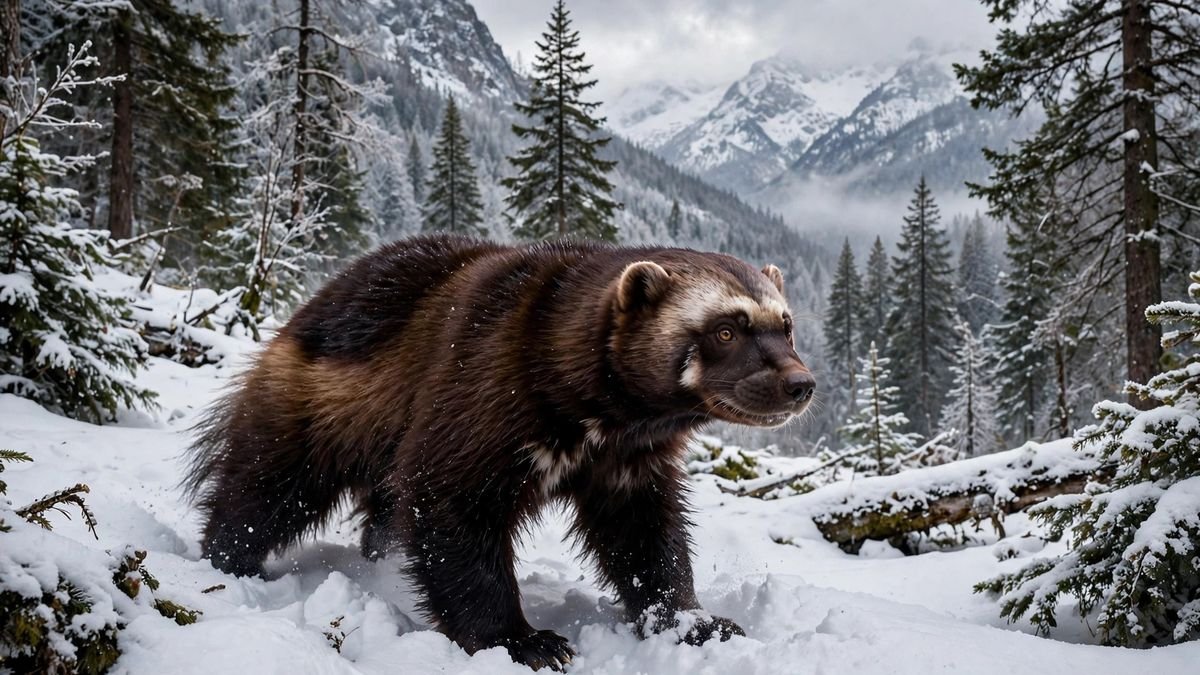
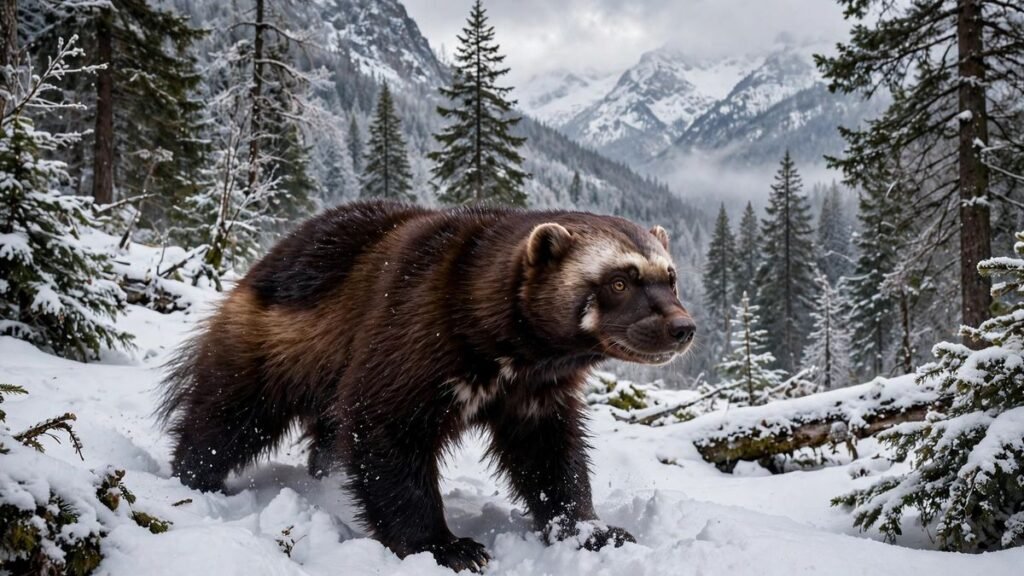
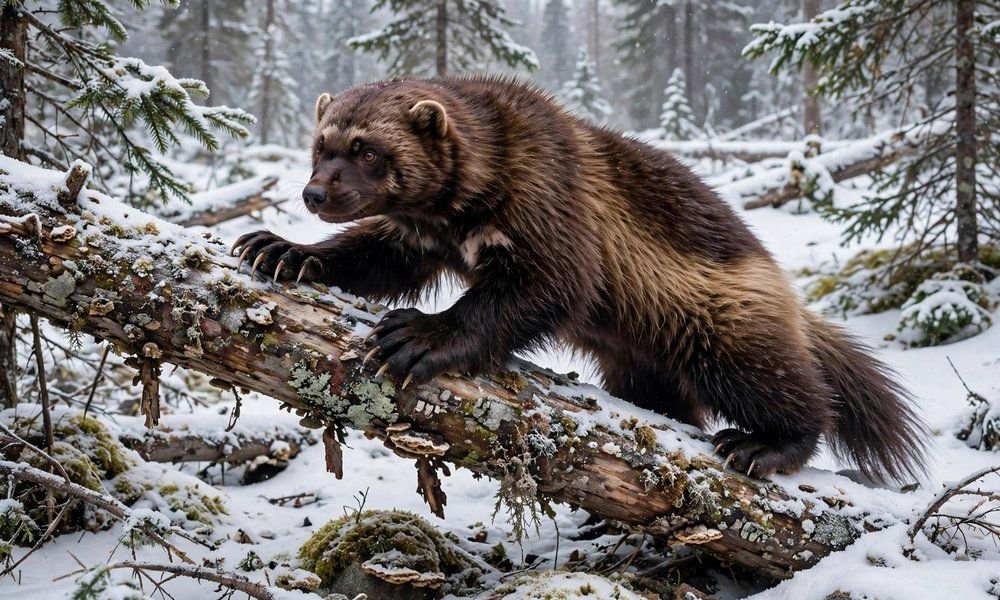
The wolverine (Gulo gulo) is a member of the mustelid family, which also includes otters, badgers, stoats and weasels, and it is the largest land species in the family. Adults are 65 to 105 cm long, with a bushy tail of 17 to 26 cm, and they weigh 10 to 25 kg, with males larger than females. The body is stocky and muscular, with short legs, a broad head and a heavy jaw.
The coat is dark brown to black, with a pale band running along the sides from the shoulders to the tail, and a pale face mask. The fur is thick and oily, and it resists frost and ice, which is why it was once prized for parka trim in the Arctic. The paws are large and five-toed, with long, curved claws for digging and climbing, and they work like snowshoes, letting the wolverine travel across deep snow that would stop other animals.
The wolverine’s reputation comes from its strength and temper. It can drag a carcass many times its own weight, crush bones with its jaws, and drive much larger animals, including wolves and bears, away from a kill. It is not a big animal, but it is fearless, and that fearlessness has made it a legend across the north. Like other predator animals, it is a carnivore, but it is also a skilled scavenger, and much of its food is carrion.
Habitat and range
Wolverines live in the remote north, across the boreal forest and tundra of Norway, Sweden, Finland, Russia, Canada and Alaska. They need large, wild areas with deep snow, and they avoid people, roads and settlements. In Norway they are found in the mountains of the north and centre, from Finnmark and Troms down through Nordland and Trøndelag to the mountains of the south, though the southern population is small and scattered.
Each wolverine holds a huge home range, and males roam over 500 to more than 1,000 square kilometres, while females hold smaller ranges of 100 to 300 square kilometres. The ranges overlap, and a male’s range may cover the ranges of several females. Wolverines travel constantly, covering 20 to 30 km a day on their rounds, and they mark their ground with scent glands, leaving a musky smell that gives them their scientific name, Gulo, meaning glutton.
The wolverine depends on snow. It dens in snow, it caches food in snow, and it hunts in snow, where its big paws give it an advantage over reindeer and other prey that sink into the drifts. Climate change is a threat, because warmer winters mean less snow, and less snow means less denning ground and less food storage. The species is already at the southern edge of its range in Norway, and a warming climate pushes it further north.
What wolverines eat
Reindeer are the main food of the wolverine in Norway, and it takes both calves and adult animals. It hunts by stealth and endurance, following a reindeer for hours or days through deep snow, where the reindeer sinks and the wolverine runs on top, until the prey is exhausted. It also kills sheep, and a wolverine that finds a flock may kill many animals in a single night, which is why sheep farmers fear it more than any other predator.
When large prey is scarce, the wolverine eats what it can find: hares, lemmings, voles, grouse and other birds, fish and berries. It is a powerful scavenger, and it will feed on the remains of animals killed by wolves, lynx and bears, and on animals that die in avalanches or in hard winters. It caches food in the snow, in rock crevices and in trees, returning to its stores for weeks or months, and its sense of smell can find a buried carcass under metres of snow.
The wolverine eats a great deal when food is available, and it can eat a large share of its own body weight in a single meal. It then rests and digests, sometimes for days, before hunting again. This feast-and-fast pattern suits a life where food is unpredictable, and it is one reason the animal can survive in places where other predators cannot.
Behaviour and family life
Wolverines are solitary animals, and they meet only to mate. Mating takes place in summer, but the fertilised egg does not implant until winter, a process known as delayed implantation, which means the young are born at the right time of year. The kits are born in late winter or early spring, in a den dug into deep snow, often under a boulder or a fallen tree, and the litter is usually two or three kits.
The kits are born blind and helpless, weighing around 100 grams, and they stay in the den for the first weeks, fed by their mother. They emerge in spring, small and dark-furred, and they follow their mother as she hunts and scavenges, learning the skills they will need to survive alone. They stay with her through the summer and autumn, and they disperse in their first winter or spring, travelling far to find their own range.
Wolverines are active day and night, and they are always on the move. They climb trees, swim rivers and cross mountain passes, and they are as much at home in the forest as on the open tundra. They communicate with scent, with calls and with body language, and they are intensely territorial, driving other wolverines out of their range. A wolverine that survives its first year may live for 10 to 15 years in the wild.
Wolverines and people
The wolverine was hunted almost to extinction in Norway in the nineteenth and early twentieth centuries, when it was seen as a pest and its fur was valuable. It was protected in 1973, and the population has recovered slowly since then, but it remains small, with only a few hundred animals in the country. It is listed as endangered in Norway, and it is strictly protected, with hunting allowed only under licence.
Sheep are the heart of the conflict, as they are with the lynx and the wolf. Wolverines kill sheep, and the losses are concentrated in a few areas, where a single animal can cause heavy damage. The state pays compensation, and farmers are encouraged to use guard dogs and fencing, but the wolverine is hard to stop: it climbs fences, travels far and returns to the same flock again and again. Research and tracking are used to identify problem animals, which may be removed under licence.
For visitors, the wolverine is almost impossible to see. It is nocturnal, shy and superbly camouflaged, and it lives in the most remote mountains in the country. The best sign is its track in the snow: a large, five-toed print, wider than a dog’s, often in a loping pattern across a mountainside. If you find one, you have found a wolverine’s country, even if the animal itself stays hidden.
Conservation and the future
The future of the wolverine in Norway depends on space, snow and tolerance. The population is growing slowly, but it is still small, and it is vulnerable to a warming climate, to roads and cabins that fragment its habitat, and to conflict with sheep farmers. The authorities manage the population to a target, counted in reproductions each year, and the target is a compromise between conservation and farming.
Research is helping. GPS collars have shown how wolverines move, where they den and how they use the landscape, and the data is used to protect denning areas and to target compensation where it is needed most. The wolverine is a symbol of wild Norway, a survivor of the high mountains, and its future will depend on whether the country can keep enough wild, snowy ground for it to live in.
| Species | Weight | Where it lives | Main food |
|---|---|---|---|
| Wolverine | 10–25 kg | Northern mountains and forests | Reindeer and carrion |
| European otter | 7–12 kg | Rivers and coasts | Fish |
| European badger | 8–12 kg | Woodland and farmland | Earthworms and small animals |
| Pine marten | 1–2 kg | Forest | Small mammals and birds |
| Stoat | 0.2–0.4 kg | Fields and woodland | Mice and voles |
Wolverine watching checklist
- Look for wolverine tracks in fresh snow in the mountains of the north and centre in winter.
- Go out at dawn or dusk, when wolverines are most active, and move quietly.
- Use binoculars and scan open mountainsides and valley floors, where wolverines travel.
- Never try to call or lure a wolverine, and never approach a den.
- Keep dogs on a lead in wolverine country, and report tracks and sightings to the local wildlife authorities.
- Accept that you may never see one — the track in the snow is often the best you will get.
Frequently asked questions
How big is a wolverine?
Adults are 65 to 105 cm long, with a bushy tail of 17 to 26 cm, and they weigh 10 to 25 kg, with males larger than females. It is the largest land member of the weasel family, and far heavier and stronger than it looks.
Are wolverines dangerous to people?
Wolverines avoid people and there are no recorded attacks on humans in Norway. They are powerful and fearless when cornered, so a trapped or injured wolverine should be left alone, but a wild wolverine will run from a person.
What do wolverines eat?
Reindeer are the main food in Norway, along with sheep, hares, lemmings, birds and carrion. Wolverines are skilled scavengers and will feed on animals killed by other predators, and they cache food in the snow for later.
Where can I see a wolverine in Norway?
Wolverines live in the mountains of the north and centre, but they are extremely hard to see. Your best chance is to look for tracks in fresh snow in winter, or to join a guided tracking walk with a local wildlife guide.
How many wolverines are there in Norway?
The population is small, in the low hundreds, and it is managed to a target set by the authorities, counted in reproductions each year. The species is listed as endangered in Norway.
Why are wolverines called gluttons?
The scientific name, Gulo gulo, means glutton in Latin, and it comes from the wolverine’s habit of eating a great deal when food is available. It can eat a large share of its own body weight in a single meal, then fast for days.
Conclusion
The wolverine asks for wild ground, deep snow, room to roam. Give it that, and it keeps its place in the mountains. Next, look for five-toed tracks in fresh snow and report them to wildlife authorities.