Spain animals range from Iberian lynx in Andalusia to brown bears in the Cantabrian Mountains, and the country holds some of the most varied wildlife in Europe. If you are wondering which animals live in Spain and where to see them, the short answer is this: lynx, wolves, bears, ibex and deer live in the mountains and forests, great bustards live on the open steppes, and the wetlands host flamingos and imperial eagles.
Spain is one of the best places in Europe to watch large mammals and birds, because the country runs from the Atlantic to the Mediterranean, from green northern mountains to dry southern plains. This guide covers the species you are most likely to meet and where each one lives.
Key takeaways
- Spain’s most iconic land animals are the Iberian lynx, Iberian wolf, brown bear, Spanish ibex, red deer, roe deer and wild boar.
- The Iberian lynx is the star species: once among the world’s rarest cats, it has recovered in Andalusia and now lives in several regions.
- The north holds wolves and bears in the Cantabrian Mountains, while the south holds lynx, imperial eagles and flamingos.
- Early morning and late evening are the best times to spot large mammals, and spring is the best season for birds.
- Keep your distance, never feed wild animals, and follow local rules in national parks and nature reserves.
What makes Spain’s wildlife special
Spain stretches from the wet Atlantic coast in the north-west to the dry Mediterranean coast in the south-east, and from the Pyrenees to the Strait of Gibraltar. That range covers temperate forest, high mountains, open steppe and wetlands, so the country holds species from several climate zones at once.
Spain is also a crossroads for migration. Birds travelling between Africa and northern Europe pass through the Strait of Gibraltar and stop in Doñana, the great wetland of the south-west.
The great mammals of Spain
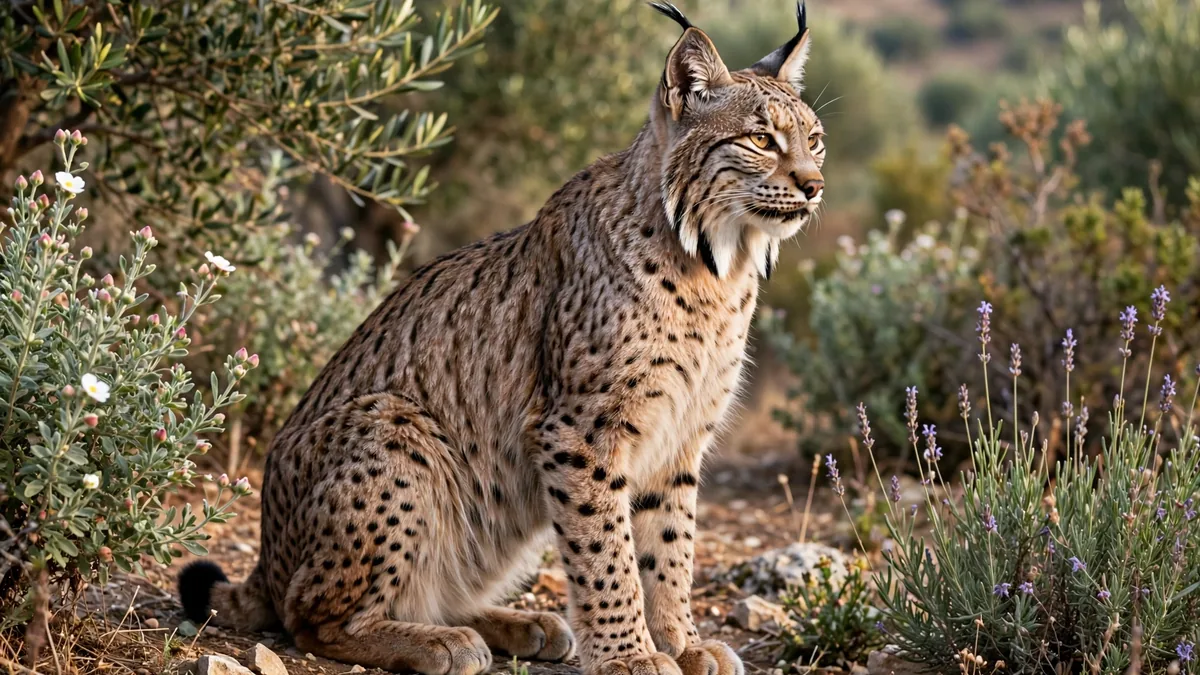
The Iberian lynx is the animal most visitors hope to see. It is smaller than the Eurasian lynx, with a spotted coat, tufted ears and a short tail, and it hunts rabbits in the Mediterranean scrub of Andalusia. Once among the world’s rarest cats, it has recovered through captive breeding and reintroduction, and it now lives in Andalusia, Extremadura and Castilla-La Mancha. Sightings are still rare, and the best chance comes on a guided watch in the Sierra de Andújar.
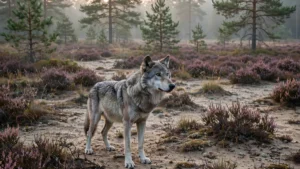
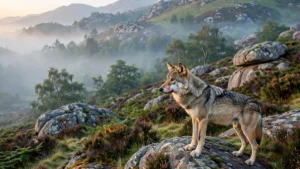
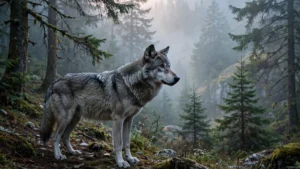
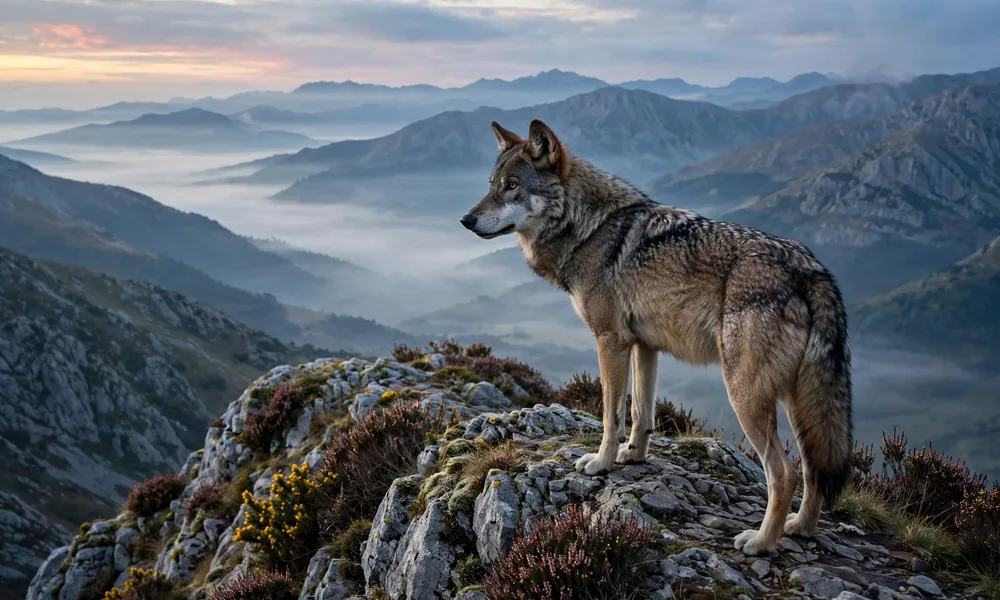
The Iberian wolf lives mainly in the north-west, in Galicia, Asturias, León and Zamora, where it hunts deer and wild boar. Like other predators, wolves are shy and mostly nocturnal, so a sighting is rare, but their howls are sometimes heard at dawn in the Cantabrian Mountains.
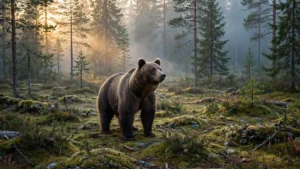
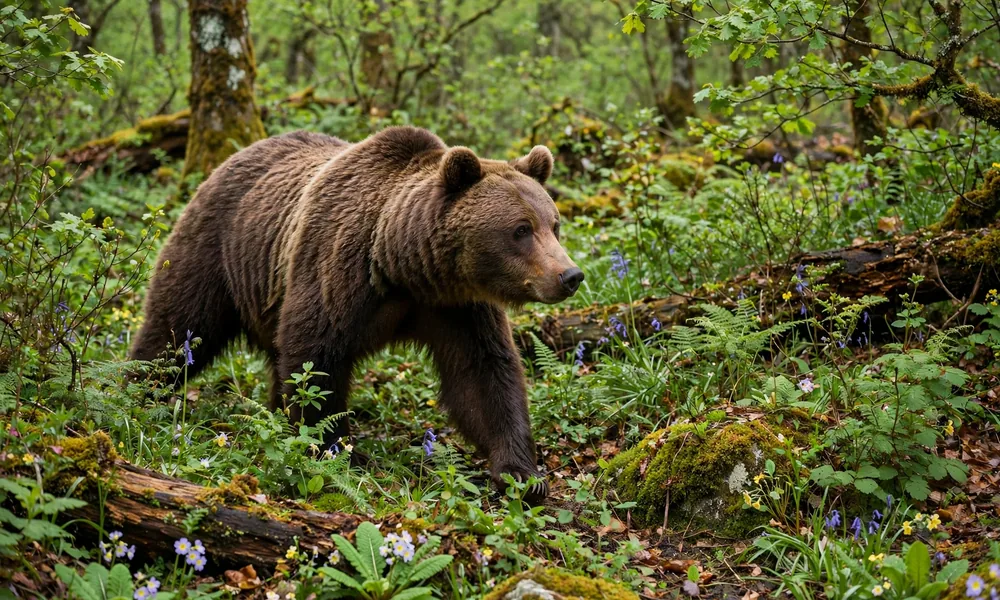
Brown bears live in the Cantabrian Mountains, in Asturias, León and Cantabria, with a smaller population in the Pyrenees. The Cantabrian bears feed on berries, nuts and roots, and they are most active at dawn and dusk. They are wary of people and rarely seen.
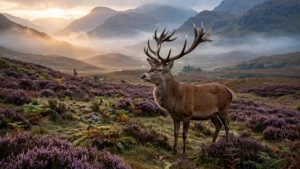
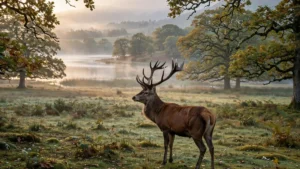
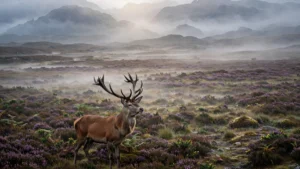
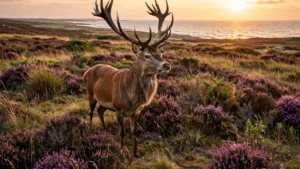
Red deer are Spain’s largest deer, most numerous in the big forests and dehesas of the west and south. The autumn rut, when stags bellow in the valleys, is one of the great wildlife spectacles of Spain. Roe deer are smaller and more widespread, and wild boar are common across the country.
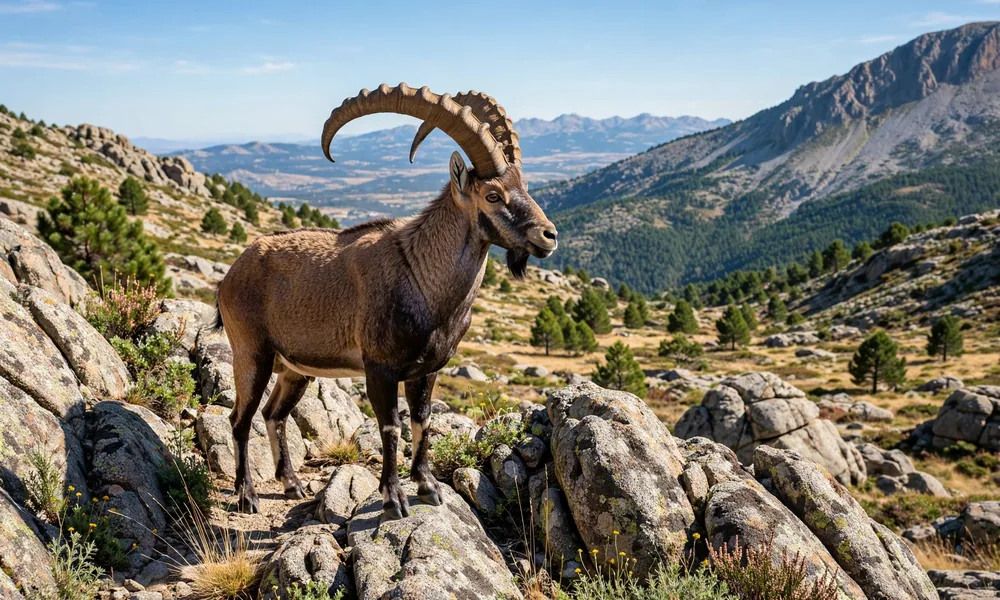
The Spanish ibex is the classic mountain animal of central Spain, with large curved horns in the males. It lives on the high rocks of the Sierra de Gredos, the Sierra Nevada and the Pyrenees, and it is easy to spot with binoculars. The Pyrenean chamois, known in Spain as the rebeco, lives on the high slopes of the Pyrenees.
Birds of the Spanish mountains, steppes and wetlands
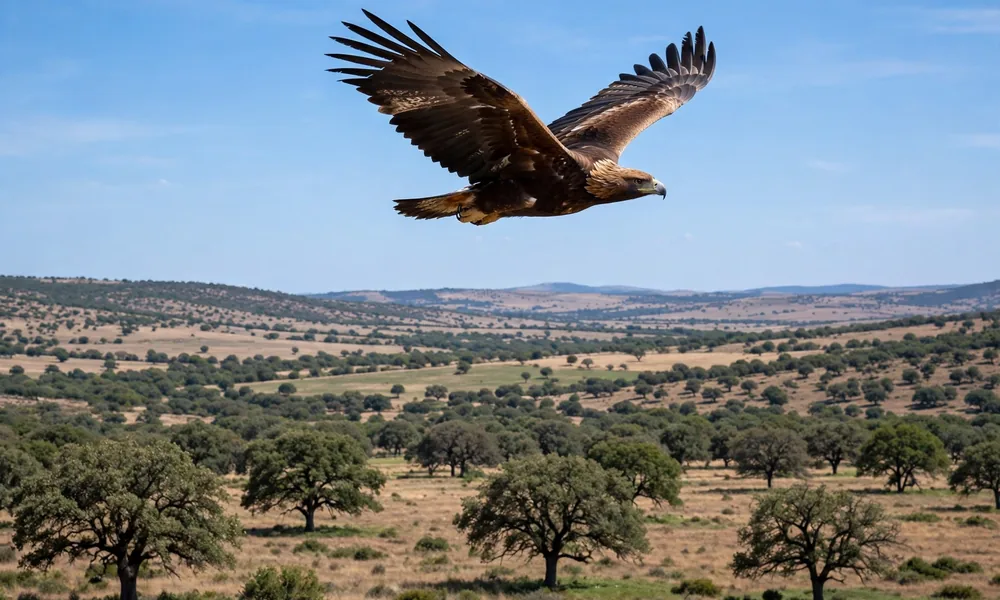
The Spanish imperial eagle is one of the great birds of Spain, and it is found almost nowhere else in the world. It hunts rabbits and birds over the dehesas and open woodland of the centre and south-west. The golden eagle hunts over the mountains instead.
The bearded vulture, or lammergeier, was reintroduced to the Pyrenees and the Picos de Europa, where it now soars over high valleys. Griffon vultures circle the cliffs of the Pyrenees and the gorges of the south in large groups, and the black vulture soars over the forests of Extremadura and Andalusia.
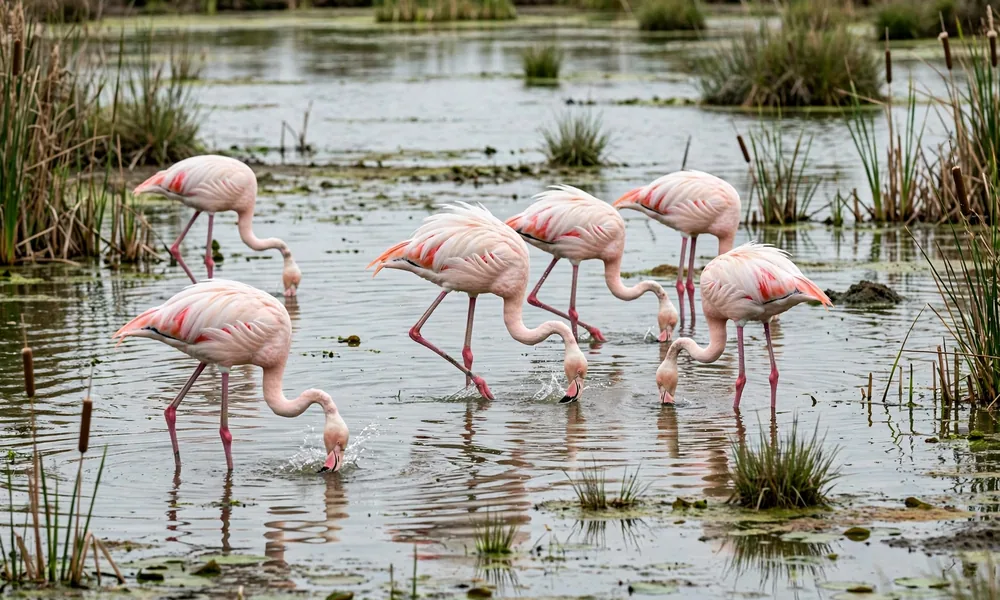
Doñana, the great wetland of the south-west, is the best-known bird place in Spain. Greater flamingos feed in the shallow lagoons, herons and egrets wade in the marshes, and in spring and autumn the wetland fills with migrating waders. The marshes of the Ebro Delta in the east are another great bird place.
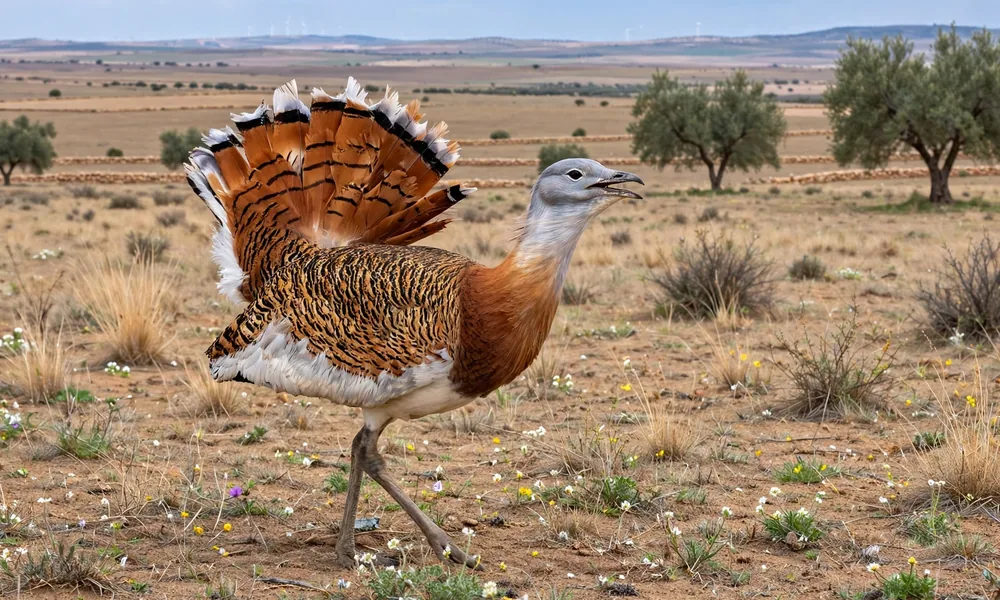
On the open steppes of Castilla-La Mancha and Extremadura, the great bustard is the star bird. Males gather at spring leks, displaying with white feathers fanned out, and the species is one of the heaviest flying birds in the world. The steppes are best visited in spring.
Seals, dolphins and life on the Spanish coasts
Spain has Atlantic and Mediterranean coasts, and both hold marine wildlife. Bottlenose dolphins and common dolphins are seen from boats off the south coast and in the Strait of Gibraltar, where whales also pass on migration. Pilot whales and sperm whales are seen off the Canary Islands.
Grey seals and harbour seals are rare visitors to the northern coast, and the Mediterranean monk seal is now very rare. The Balearic Islands hold their own seabirds, including the Balearic shearwater, which breeds only on the islands.
Inland, the rivers hold their own wildlife. Beavers have returned to some Spanish rivers, otters hunt along rivers in the north and west, and the Iberian desman, a small, semi-aquatic mammal, lives only in the cold mountain streams of the north and centre.
Smaller animals and endemic species
Not all of Spain’s wildlife is large. The Iberian desman is one of the country’s most unusual animals, a nocturnal relative of the mole that hunts in fast mountain streams. It is very hard to see, though its presence shows that a stream is clean and healthy.
The Iberian hare and the rabbit are key species of the south, feeding lynx, eagles and wolves. In the dry south, the Mediterranean scrub holds the ocellated lizard, one of Europe’s largest lizards, and the chameleon of Andalusia.
Among the small animals of the forests, pine martens, badgers, red squirrels and dormice are common. The Iberian desman and the Spanish imperial eagle are found only on the Iberian Peninsula.
Where to see Spain’s wildlife
Iberian lynx are best sought in the Sierra de Andújar in Andalusia, with a guide, at dawn or dusk. Wolves are a north-western species, and the Cantabrian Mountains and the hills of Zamora are the places to look. Bears are best in the Cantabrian Mountains, in Asturias and León.
For mountain animals, the Sierra de Gredos is the classic place for Spanish ibex, and the Picos de Europa are good for chamois and vultures. For birds, Doñana is the first stop, while the steppes of La Mancha are best for great bustards in spring. For dolphins, the Strait of Gibraltar is the most reliable place, visited by boat in summer.
| Species | Where to look | Best season | How likely is a sighting |
|---|---|---|---|
| Iberian lynx | Sierra de Andújar in Andalusia | Winter, dawn and dusk | Low, best with a guide |
| Iberian wolf | Cantabrian Mountains and Zamora | All year, dawn and dusk | Low |
| Brown bear | Cantabrian Mountains, Asturias and León | May to September | Low |
| Spanish ibex | Sierra de Gredos | Summer | Good |
| Spanish imperial eagle | Dehesas of Extremadura | All year | Good with a guide |
| Greater flamingo | Doñana wetlands | Spring to autumn | Good |
Best seasons for wildlife watching
Spring is the season of return. Great bustards display on the steppes, flamingos and herons are at their best in Doñana, and bears leave their dens in the Cantabrian Mountains. It is also the most sensitive season, so keep to paths and give every animal more space than you think it needs.
Summer is the easiest season. The days are long, the ibex and chamois are out on the high slopes, and dolphins are most often seen in the Strait of Gibraltar, from boats. Autumn brings the deer rut, when red deer stags bellow in the valleys of the west and south.
Winter is the quiet season, and it is the best time for Iberian lynx, when the animals are most active in the cool of the day and the scrub is bare. It is also the best season for ducks and geese on the wetlands of Doñana and the Ebro Delta.
Staying safe around Spain’s wildlife
Spain’s large animals are usually calm, but they deserve respect. Keep your distance from wolves, bears and wild boar, never approach a wild boar with piglets or walk between a deer and her young, and never try to feed or touch any wild animal. If you meet a bear, back away slowly, speak calmly and never run.
Wildlife watching checklist
- Book a local guide for lynx, wolves and bears — they know where the animals are and keep you safe.
- Go out at dawn or dusk for mammals, and plan Doñana trips for spring to autumn for flamingos.
- Bring binoculars, warm layers and waterproofs, even in summer — mountain weather changes fast.
- Keep at least 50 metres from seals, nesting birds and grazing deer, and far more from bears, wolves and wild boar with young.
- Never feed wild animals, and never use food or calls to lure them closer for a photograph.
- Leave no trace: take your rubbish home and keep to marked paths in sensitive habitats.
Frequently asked questions
What is the most famous animal in Spain?
The Iberian lynx is the most famous, because it recovered from the edge of extinction through captive breeding and reintroduction.
Are there bears and wolves in Spain?
Yes. Brown bears live in the Cantabrian Mountains, with a smaller population in the Pyrenees, and Iberian wolves live mainly in the north-west. Both are shy and rarely seen.
When is the best time to see Iberian lynx in Spain?
Winter is the best season, when the lynx are most active in the cool of the day and the scrub is bare. The Sierra de Andújar in Andalusia is the classic place, visited with a guide.
Is it safe to see wild boar in Spain?
Wild boar are usually shy and run away, but a sow with piglets can charge if she feels cornered. Keep your distance and never approach piglets.
Can I see Spanish ibex in Spain?
Yes. Spanish ibex live on the high rocks of the Sierra de Gredos, the Sierra Nevada and the Pyrenees, and they are often easy to spot with binoculars on sunny slopes.
Do I need a guide to see wildlife in Spain?
Not for common species such as ibex, flamingos, bustards and deer. For lynx, wolves and bears, a local guide greatly improves your chances and keeps you safe.
Conclusion
Spain’s wildlife rewards patience: lynx in the Sierra de Andújar, bears in the Cantabrian Mountains and flamingos in Doñana are all within reach if you plan around the seasons and keep your distance.
The next step is to pick one species and one season — a winter lynx watch, a spring bustard trip, or a summer visit to Doñana — and plan your visit around it.