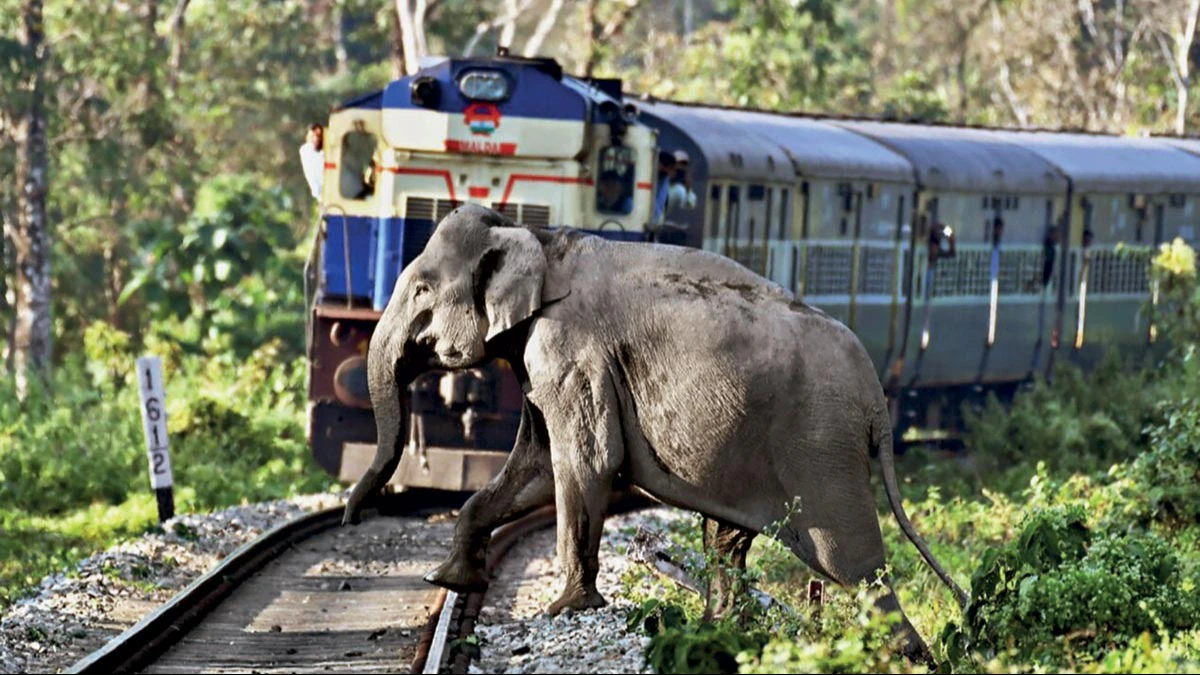
Every year, Norway’s rail network experiences an astonishingly high casualty rate among large wild and semi-domesticated ungulates. While the nation’s roads claim thousands of animals annually across tens of thousands of kilometers, the railway network spanning roughly 4,200 kilometers kills significantly more large animals per kilometer than the surrounding highway network.
Understanding railway wildlife collisions requires setting aside standard assumptions about traffic safety. On a road, animals are typically hit while attempting to cross from one side to the other. On a railway line in deep Scandinavian winter, animals are not crossing the tracks; they are actively walking along them for kilometers at a time. On a road they cross, on a line they walk.
What the numbers show?
Across Norway, the annual recorded count of railway wildlife collisions fluctuates sharply depending on winter severity, but the multi-year baseline reveals a persistent, systemic problem. Data compiled by Bane NOR (the national railway infrastructure manager) and recorded in the national Fallvilt register shows that between 1,500 and 3,000 large ungulates die on the tracks each year.
Unlike road incidents which involve high numbers of roe deer and sheep train casualties recorded under viltpåkjørsler jernbane are heavily weighted toward Norway’s largest species: moose (Alces alces) and semi-domesticated reindeer (Rangifer tarandus).
-
Nordland Line (Nordlandsbanen): Moose and Reindeer primary species; 600 to 1,100 average annual recorded strikes; Saltfjellet pass and Helgeland valleys hotspot character.
-
Røros Line (Rørosbanen): Moose primary species; 250 to 450 average annual recorded strikes; Østerdalen river valley corridors hotspot character.
-
Dovre Line (Dovrebanen): Moose primary species; 150 to 300 average annual recorded strikes; Gudbrandsdalen valley floor hotspot character.
-
Ofoten Line (Ofotbanen): Reindeer primary species; 80 to 200 average annual recorded strikes; Narvik mountain passes to Swedish border hotspot character.
Over a ten-year monitoring period, train strikes accounted for thousands of recorded deaths of moose and reindeer alone. When evaluated side by side, total road and rail casualties highlight a striking discrepancy: while roads spread casualties over vast geographical zones, railways concentrate immense mortality along narrow, localized transit corridors. To mitigate these statistics, tracking systems continuously log incidents to spot emerging environmental patterns.
-
2018 Annual Casualties: 2,850 moose and reindeer
-
2019 Annual Casualties: 2,300 moose and reindeer
-
2020 Annual Casualties: 1,650 moose and reindeer
-
2021 Annual Casualties: 2,100 moose and reindeer
-
2022 Annual Casualties: 2,550 moose and reindeer
-
2023 Annual Casualties: 3,100 moose and reindeer
Why animals use the track?
The physics of winter survival dictate animal behavior in northern latitudes. When deep snow covers the boreal forest and mountain tundra, walking through unplowed terrain requires immense energy expenditure. For a 400-kilogram moose or a winter-fattened reindeer, wading through waist-deep snow drains critical fat reserves at a time when food quality is at its lowest.
When Bane NOR’s heavy snowplows clear the rail lines, they inadvertently create the most efficient winter walking trail in the region. The cleared track bed provides a flat, hard-packed trench flanked by steep walls of plowed snow. Animals step onto the cleared railway bed because it represents the path of least physical resistance across kilometers of impassable terrain.
Furthermore, railway lines in Norway predominantly follow river valleys where elevation is lowest, snow accumulation is milder, and winter forage like willow and birch is most abundant. Hungry ungulates descend into these valleys toward winter feeding grounds, intersect the track, and remain on it. Analyzing these travel patterns explains why railway wildlife collisions peak so aggressively during deep winter months rather than during the autumn rutting season.
Why a train cannot avoid it?
A modern passenger or freight train operating on Norwegian lines weighs anywhere from several hundred to over two thousand metric tons. At standard operational speeds of 80 to 130 kilometers per hour, a train’s total braking distance ranges from 800 meters to well over 1.5 kilometers.
Even if a train driver spots a moose or herd of reindeer standing on the track 500 meters ahead, stopping in time is physically impossible. Furthermore, night driving in winter conditions offers limited headlight illumination, often giving drivers only a few seconds of visual warning.
When an animal is caught on the line, its natural instinct is to flee straight ahead along the cleared path rather than leap into deep snowbanks on either side. In narrow cuttings or high embankments, the animal is completely trapped between snow walls. Drivers can sound warning horns and apply emergency brakes, but in the vast majority of encounters, railway wildlife collisions remain entirely unavoidable. Following an impact, drivers log the exact kilometer marker and report the strike to rail signaling central immediately.
Which lines and which stretches?
Severe railway wildlife collisions are not evenly distributed across Norway’s network; they are hyper-concentrated along specific lines running through boreal forest corridors and alpine migration routes.
The Nordland Line (Nordlandsbanen)
Stretching from Trondheim to Bodø, the Nordland Line is consistently the deadliest railway stretch in Norway. The section passing through the Helgeland region and across the Saltfjellet mountain plateau experiences intense winter mortality, frequently seeing hundreds of reindeer and moose killed in a single winter season.
The Røros Line (Rørosbanen)
Running through the heavily forested Østerdalen valley, this unelectrified line bisects one of Northern Europe’s densest moose populations. The tracks parallel the Glomma River, running directly through the wintering grounds where Norway’s moose congregate when high-altitude snow drives them down from the mountains.
The geographic positioning of these rail lines through primary winter migration corridors creates persistent hotspots for railway wildlife collisions across Northern and Central Norway.
Reindeer, which is a different problem again
While moose collisions primarily involve individual wild animals, railway wildlife collisions on northern lines like the Nordland and Ofoten lines involve semi-domesticated animals belonging to Indigenous Sámi herders.
When a freight train hits a herd of reindeer walking a snow-plowed track, the impact is rarely limited to a single animal. A single train passing through a herd trapped in a rail cutting can kill dozens of animals in seconds. In extreme winter events, individual herding districts (siida) have lost over a hundred animals to rail traffic in a single week.
-
Ownership: Semi-domestic reindeer are private property owned by Sámi herders, whereas wild moose are a state/public ecological resource.
-
Social Structure: Reindeer move in dense herds of 10 to 100+ animals, leading to mass mortality events, whereas moose move solitarily or in small family groups.
-
Financial Impact: Reindeer losses directly impair a herder’s commercial livelihood, whereas moose losses represent an indirect ecological loss.
-
Compensation Mechanisms: Reindeer losses trigger state compensation schemes for herders, whereas no direct compensation is paid to local private landowners for wild game loss.
This creates an economic and cultural crisis for herders, as losses directly erode the breeding stock of the herding district. Unlike wild game, semi-domesticated reindeer loss triggers formal state compensation mechanisms, though herders consistently point out that financial reimbursement fails to cover the long-term herd disruption and genetic loss resulting from railway wildlife collisions.
What has been tried?
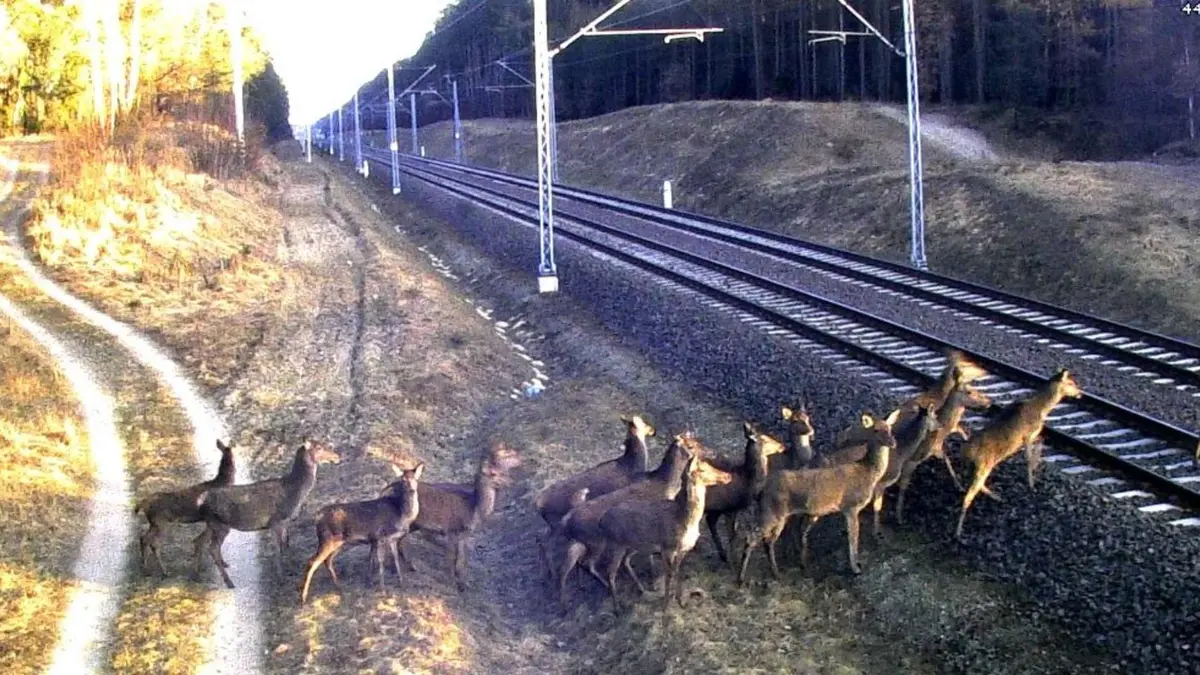
Mitigating railway wildlife collisions requires approaches fundamentally different from road interventions. Several measures have been tested on high-risk Norwegian stretches over past decades:
-
Exclusion Fencing: While fencing works well along highways, fencing a railway line often backfires. If an animal finds a break in the fence or enters at a level crossing, it becomes completely trapped inside the narrow track corridor with no escape route when a train approaches.
-
Vegetation Clearing: Cutting back brush, trees, and willow saplings within 10 to 30 meters of the track removes the food source that attracts moose to the railway line. This also improves line-of-sight visibility for train drivers.
-
Forage and Diversion Feeding: Placing feed stations high up the valley slopes during heavy snow months encourages animals to remain away from cleared track corridors. When maintained consistently, diversion feeding significantly reduces track intrusion.
-
Digital Warning Systems and Speed Restrictions: Equipping trains with GPS triggers, acoustic deterrence systems, or wildlife sensors alerts drivers and helps scare animals. Implementing temporary speed reductions along known high-risk stretches during migration peaks gives animals time to flee.
The failure of standard fencing along rail lines highlights why mitigations developed for road systems cannot simply be transferred to prevent railway wildlife collisions.
Who actually decides?
Solving a high-risk railway stretch involves a complex web of public authorities, land owners, and local wildlife boards (viltnemnd).
Bane NOR holds direct responsibility for rail infrastructure, vegetation clearance, and trackside safety installations. However, funding for large-scale mitigation must be balanced against national railway maintenance budgets. Decisions to establish diversionary feeding sites or altered forestry clearing require formal agreements between Bane NOR, municipal wildlife authorities, local forestry owners, and—in Northern Norway—the relevant Sámi herding district representatives.
When a specific stretch of track demonstrates elevated mortality over consecutive winters, the local municipality logs the trend and submits formal requests to Bane NOR’s environmental department to prioritize the section for structural clearing or temporary speed adjustments. Through coordinated local action, communities work to minimize railway wildlife collisions along vulnerable migratory paths.
After an incident
When a train strikes an animal, the driver immediately contacts the train dispatch center (Toppledelsen), reporting the exact location, time, and estimated species. Dispatch notifies the local municipality’s emergency response team.
A licensed tracking team (ettersøksekvipasje) equipped with a trained tracking dog is dispatched to the location to search for injured animals that may have fled into the surrounding woods. Dead animals are cleared from the track bed to maintain rail safety, and every incident detail is officially entered into the national Fallvilt register for ecological tracking. Proper wildlife collision reporting ensures that post-incident data is accurately quantified across regions.
The read
Despite clear data identifying high-mortality stretches, funding dedicated to reducing railway wildlife collisions in Norway continues to lag far behind highway safety allocations. While road authorities invest heavily in wildlife overpasses and continuous fencing, rail interventions remain largely reactive—relying on vegetation clearance and post-incident cleanup rather than structural prevention.
Until Bane NOR receives dedicated, long-term capital allocations for wildlife overpasses and automated early-warning systems, winter railway tracks will remain lethally attractive corridors for Norway’s large ungulates. In the coming winter, watch whether temporary speed restrictions and acoustic scaring trials around Saltfjellet and the Østerdalen valley are enforced early enough in the snowfall cycle to reduce railway wildlife collisions.
Frequently Asked Questions
How many animals are killed on Norwegian railways?
Between 1,500 and 3,000 large animals, predominantly moose and semi-domesticated reindeer, are killed on Norwegian rail tracks every year depending on snow depth and winter severity.
Why do animals walk along railway lines?
In deep winter, walking through unplowed snow consumes vital energy reserves. Plowed railway lines provide the easiest, most accessible walking paths through river valleys and mountainous terrain.
Which lines are worst?
The Nordland Line (Nordlandsbanen) and the Røros Line (Rørosbanen) consistently log the highest numbers of fatalities due to dense animal populations and deep snow conditions.
Does fencing work on railways?
Standard roadside fencing generally fails along railway lines because any animal that manages to get inside the fence becomes trapped on the tracks with no escape path when a train approaches.
Why are reindeer collisions different?
Reindeer collisions involve semi-domesticated animals owned by Sámi herders rather than wild game. A single collision can wipe out dozens of animals at once, severely affecting the herder’s livelihood and triggering state compensation schemes.
Who is responsible for reducing them?
Bane NOR manages the rail infrastructure and mitigation measures, working alongside local municipalities, wildlife boards (viltnemnd), landowners, and Sámi herding districts.
