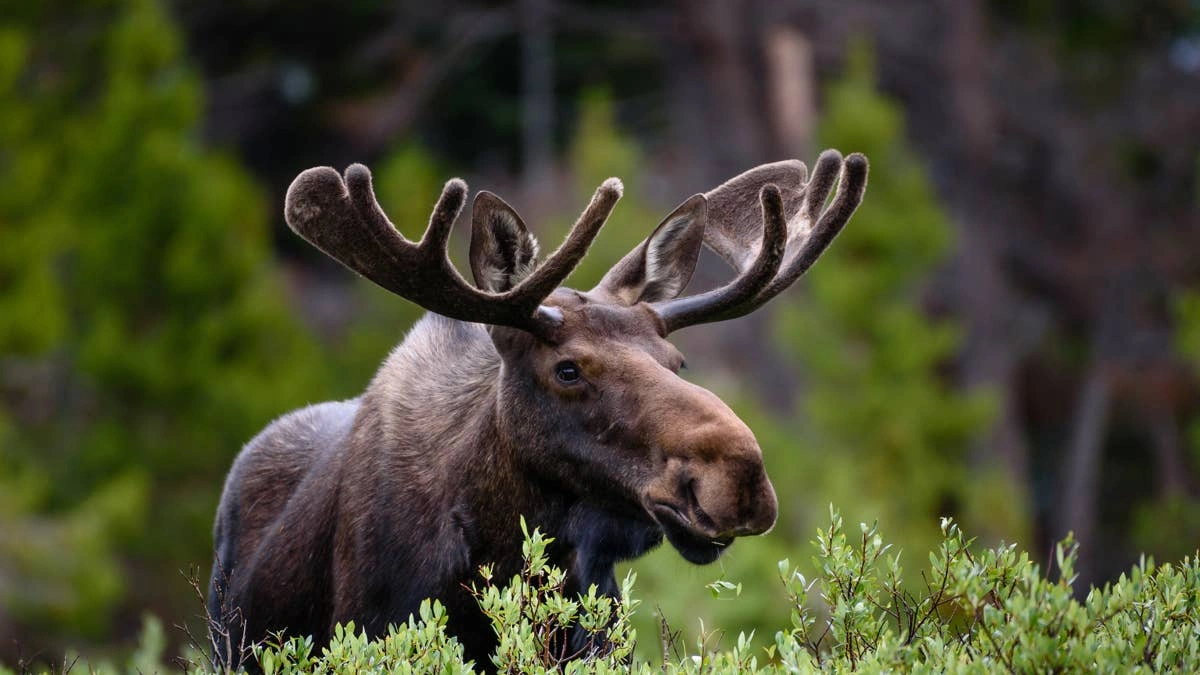
According to Statistics Norway (SSB), hunters harvested 26,609 moose out of 36,247 issued felling licences during the 2025–2026 hunting season. Official reports on the norway moose population typically cite a winter total of 120,000 to 140,000 animals prior to the autumn hunt, but this number represents a modeled estimate derived from observation logs, harvest statistics, and local density indicators rather than a direct physical headcount. Nobody counts moose in Norway, meaning every figure published on the norway moose population represents a statistical projection rather than a direct census. While national metrics remain relatively stable over multi-year periods, significant regional shifts and declining calf body weights show that local herds face shifting environmental pressures.
Norway’s Moose Population: Where the Numbers Stand
Where the numbers actually come from
Headline figures concerning the norway moose population do not originate from aerial surveys or direct physical counts. Understanding the status of moose in Norway helps explain why these monitoring systems are important for long-term wildlife management.
During every autumn hunting season, hunters record field data through the sett elg (seen moose) monitoring system. Field teams log total hunting hours alongside every calf, cow, and bull observed. Biologists pair this observation index with official harvest statistics (fellingstall) which detail the age and sex of harvested animals against municipal quotas—to calculate population density trends and demographic ratios.
How is Norway’s moose population estimated? By combining these observation rates and kill reports within population reconstruction models. Accepting that these totals represent statistical indices rather than direct censuses is essential when evaluating media headlines or local management decisions regarding the norway moose population. A change in a municipal figure reflects hunter effort, sighting frequency, and demographic modeling rather than an exact headcount.
What the national picture shows
At the national level, harvest records across recent seasons reveal how the norway moose population has stabilized following peak totals recorded in the late 1990s and early 2000s.
For the 2025–2026 season, SSB reported 36,247 issued felling licences and 26,609 harvested animals, yielding a national harvest rate of 73 percent. This compares to 38,100 issued licences and 27,400 harvested moose in 2023–2024 (a 72 percent fill rate), and 39,500 licences with 31,131 harvested animals in 2015–2016 (a 79 percent fill rate).
The gap between issued quotas and actual harvest totals offers important insights into management policy and hunter effort. A persistent national harvest rate around 72 to 74 percent shows that local wildlife boards set conservative quotas to avoid overharvesting while adapting to regional browse availability. The gradual drop in total harvest over the past decade stems from intentional quota reductions aimed at balancing forestry impacts rather than a sudden population collapse.

The regional picture the national number hides
A stable national total conceals major regional divergence across the country. The regional elgbestand (moose herd) is shifting significantly due to forest aging, changing weather patterns, and forage competition.
In southern coastal districts like Agder, Telemark, and Vestfold, moose numbers have dropped over the past decade. Decades of high herd density caused overbrowsing of deciduous trees, reducing habitat quality and lowering calf production. In response, municipal boards reduced quotas to let vegetation recover.
Inland strongholds across Innlandet and Trøndelag maintain large, stable segments of the norway moose population. Innlandet recorded 7,839 harvested moose from 10,044 licences in 2025–2026, while Trøndelag recorded 5,904 harvested animals from 7,798 licences. Northern counties like Nordland and Troms show resilient populations, where modern forestry clear-cuts provide abundant early-successional browse like birch and willow.
Is the moose population declining in Norway? The answer depends on the region: southern herds have shrunk from historic peaks, central herds remain tightly managed, and northern herds remain stable.
What is driving the changes
Several biological and management factors shape the broader trends seen in the norway moose population :
-
Forestry and Forage Availability: Clear-cutting creates temporary flushes of shrub growth ideal for winter feeding. As pine and spruce stands mature into closed canopies, understory forage decreases, lowering local carrying capacity.
-
Winter Severity: Heavy winter snow increases energy expenditure for calves, reducing winter survival rates and pregnant cow condition.
-
Road and Rail Collisions: Drivers can learn more about safety measures and procedures after they hit a moose in Norway.
-
Predator Pressure: In eastern border areas, wolf (ulv) packs and brown bears (bjørn) take young calves. These impacts remain concentrated in specific regions and are factored into local quota decisions.
-
Targeted Harvest Strategy: Municipal boards adjust quotas by age and sex—specifying calves, yearlings, adult cows, and bulls—to shape local herd structure.
Body weight, the number managers watch more closely than population
While headcount models provide macro trends, wildlife managers focus on mean calf and yearling dressed weights as the most accurate indicator of herd health and habitat quality.
When moose density exceeds available winter browse, cows struggle to find adequate nutrition. Poorly nourished cows give birth to smaller calves with lower winter survival chances. A downward trend in average calf body weight over consecutive years alerts managers to habitat strain long before broad population estimates shift.
Why are moose calf weights falling? In overpopulated zones, heavy grazing damages preferred plants, forcing animals to consume lower-quality winter food. When dressed calf weights drop significantly below historical averages (such as falling from 65 kg to under 55 kg), local boards cut total quotas or focus harvesting on adult females to reduce grazing pressure and restore habitat balance.
Moose, red deer and reindeer together
Similar conservation challenges can be seen in wild reindeer in Norway, where habitat changes and human activity affect population management.
Red deer populations have expanded eastward and northward from their historic western coastal range, competing with moose for deciduous forage in low-elevation forests. Wild reindeer remain restricted to alpine plateaus, where habitat fragmentation from roads and infrastructure presents ongoing conservation challenges.
Management strategies also focus on health monitoring across overlapping ranges, including surveillance for chronic wasting disease to protect wild herds.
What to watch in the coming hunting year
When SSB and the Norwegian Institute for Nature Research (NINA) release upcoming monitoring updates on the norway moose population , look for these specific indicators:
-
Sighting Indices (sett elg per jegerdag): Watch whether sightings per hunter-day in southern counties stabilize or continue to drop.
-
Calf-to-Cow Ratios: Check the proportion of cows observed with single or twin calves in inland counties like Innlandet.
-
Dressed Body Weights: Review municipal carcass weight logs for 1.5-year-old animals in SSB tables to see if lowered quotas are improving average weights.
The read
Norway’s municipality-based management model remains effective, adjusting harvest quotas to maintain ecological balance. Landowners, hunters, and local board members evaluating the norway moose population should base upcoming quota decisions on multi-year calf weight trends and sett elg sighting ratios rather than relying solely on estimated national headcounts.
Frequently Asked Questions
How many moose are there in Norway?
The national norway moose population is estimated between 120,000 and 140,000 animals in winter. Because direct physical counts are not conducted, this total is a statistical estimate calculated from hunter sighting logs, harvest statistics, and local density indicators.
How is the moose population estimated?
The norway moose population is estimated using data reported to Statistics Norway and the national deer register (Hjorteviltregisteret). Reconstruction models combine hunter observation records (sett elg), harvest returns (fellingstall), age/sex ratios, and carcass weights.
What is sett elg data?
Sett elg (seen moose) is a monitoring system where hunters log their field hours and every moose observed during the hunting season. This generates an observation index such as sightings per hunter-day used to track density trends over time.
Is the Norwegian moose population declining?
Nationally, the total norway moose population remains relatively stable, but regional trends vary. Southern regions have seen intentional reductions to prevent overbrowsing, while central and northern herds remain stable.
Why are moose calf weights falling?
Calf weights decrease when local herd density exceeds winter food supply. Overbrowsing reduces the quality of available forage, leaving cows with fewer energy reserves, which leads to lower calf birth weights and slower growth.
How many moose are shot in Norway each year?
Hunters harvest around 26,000 to 29,000 moose annually from an issued quota of roughly 36,000 to 40,000 licences. During the 2025–2026 season, 26,609 moose were harvested.
