When wildlife managers cleared the last breeding mink from a cluster of outer islands along the Helgeland coast, the response from nesting seabirds was immediate. Within two seasons, black guillemots returned to low-lying rock crevices that had sat empty for two decades, and arctic tern colonies expanded back into their historic nesting grounds.
The spread of american mink across coastal Norway has reshaped vulnerable marine ecosystems, yet the intervention required to restore those islands was conceptually simple, highly targeted, and indisputably successful. A native predator is part of an evolutionary system; an introduced one is a structural addition to it.
How they got here?
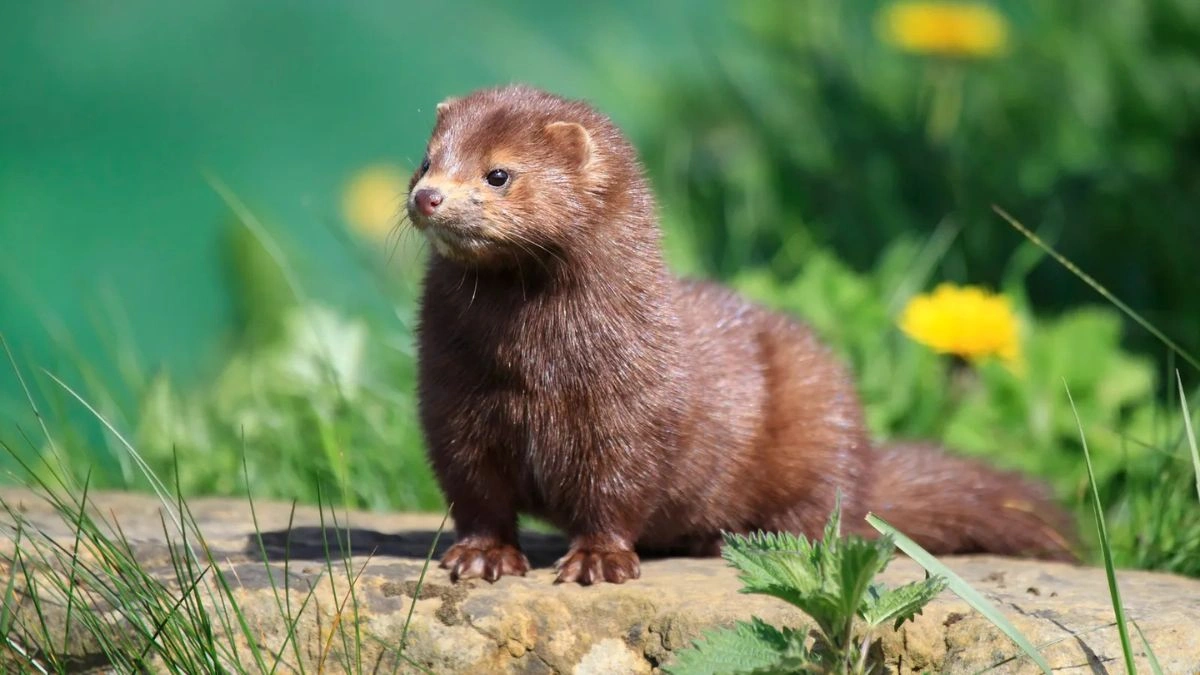
The story of the american mink (Neovison vison) in Scandinavia is a classic case of commercial introduction followed by ecological naturalization. Imported from North America in the late 1920s to stock commercial fur farms, mink were prized for their dense pelts. However, the semi-aquatic mustelid proved exceptionally adept at escaping confinement. Pen leakages, flood damage to farm infrastructure, and deliberate releases during economic downturns quickly introduced breeding pairs into the Norwegian countryside.
By the 1950s, established feral populations were moving rapidly along major river systems and coastal archipelagos. Recognized legally as a mink invasiv art (an alien invasive species in Norwegian), the animal found Norway’s fragmented, island-rich coastline to be ideal habitat. With an abundance of shallow marine life, nesting birds, and virtually no native aquatic carnivores competing in the same niche, wild american mink colonized almost every municipality in the country within a few decades.
Unlike slow-spreading terrestrial mammals, the american mink can swim several kilometers across open ocean currents and trek across watersheds. Their rapid spread transformed them from an agricultural asset into one of the most widespread invasive predators in Northern Europe.
Why an introduced predator is different?
Debates around wildlife management often lump all predator control into a single controversial bucket. However, managing an american mink population is a fundamentally different ecological proposition from managing native carnivores.
Ground-nesting birds across Norway’s coastal archipelagos evolved alongside native predators like the red fox, crows, and eagles. Against these threats, island-nesting birds developed effective defense strategies: nesting on isolated outer skerrys surrounded by cold sea water kept mammalian predators like foxes at bay.
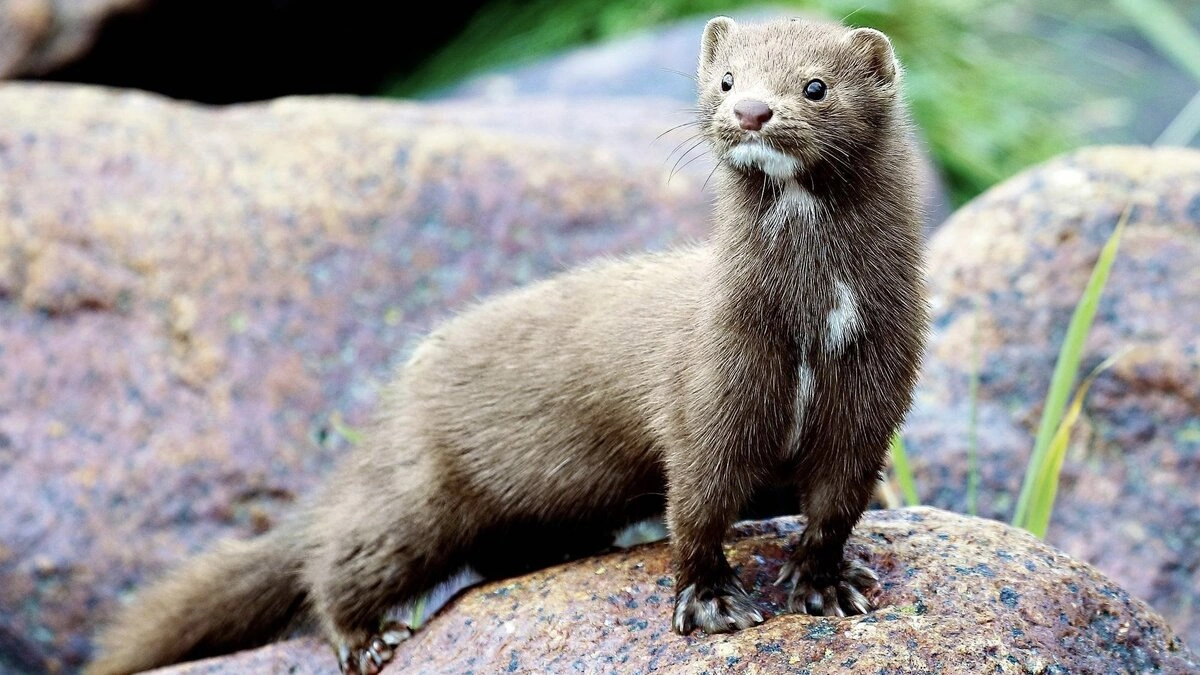
The arrival of the american mink shattered those evolutionary safeguards. As an amphibious, agile predator that easily swims several kilometers between islands, climbs steep rock faces, and squeezes into tight boulder scree, the american mink gained access to previously invulnerable breeding colonies. The prey possessed no behavioral instinct to avoid a semi-aquatic mammal.
While native red fox control involves altering the density of an established species within a shared evolutionary history, american mink management aims to eliminate an unbalancing intruder. An introduced predator adds an unmitigated layer of predator pressure to a system that has no natural defenses against it.
What the evidence shows about impact?
The ecological impact of the american mink in Norway is thoroughly documented across coastal reserves and freshwater systems. In seabird sanctuaries where mink establish territories, the loss is rarely limited to what the predator can consume. Mink exhibit surplus killing behavior when entering dense breeding colonies, slaughtering dozens of adult birds or chicks in a single night and leaving the carcasses unconsumed.
Key long-term field studies highlight the severity of these impacts:
-
Sula Archipelago Study (1993–2005): Monitoring of black guillemot and common eider colonies showed a 60 percent drop in breeding success within three years of mink arrival on previously predator-free skerries.
-
Lofoten Coastal Reserves (2002–2012): Comparative surveys demonstrated that mink presence reduced arctic tern chick survival to near zero in unmanaged island clusters, leading to total colony abandonment.
-
Hardanger Fjord Monitoring: Studies into freshwater and intertidal zones revealed marked declines in local amphibian populations and white-throated dipper nest success alongside rivers colonized by mink.
Inland, the american mink also impacts ground-nesting game birds. Where mink follow river corridors into upland birch zones, they increase total predator pressure on nesting birds. In areas monitored for mountain bird health, nest predation rates rise significantly when mink join native predators. While annual grouse counts and rype populations are primarily driven by weather, habitat, and rodent cycles, localized mink predation adds an additive drain on chick survival in valley bottoms.
Where eradication has worked?
Despite the widespread presence of mink across Scandinavia, targeted mink eradication campaigns have produced some of the most dramatic conservation successes in Northern Europe. Where programs are carefully designed, removing mink results in rapid ecological recovery.
The clearest successes have occurred on offshore island groups, such as the national park archipelagos of outer Vestfold and selected reserves in Trøndelag and Nordland. These programs succeed because they operate under four strict ecological conditions:
-
A Defined Boundary: Isolated archipelagos create clear geographic limits where every individual mink can be identified and targeted.
-
Buffer Zones Against Recolonisation: Islands separated from the mainland by broad stretches of open water slow down the arrival of new mink, giving cleared zones lasting protection.
-
Sustained Multi-Year Pressure: Eradication requires continuous effort over several years to eliminate secretive, trap-shy individuals and late-season litters.
-
Rigorous Post-Removal Detection: Utilizing trained scent dogs and trail cameras ensures an area is genuinely cleared before active hunting stops.
In cleared island reserves, seabird recovery has been remarkable. Within three to five years of verified eradication, eider fledging rates routinely double, and colony sizes for gulls, terns, and alcids stabilize or grow. These island programs stand as clear evidence that invasive species management can successfully reverse biodiversity loss when applied to the right geography.
Why the mainland is different?
If island eradication is a clear conservation success, mainland american mink control presents a very different challenge. On the mainland, the absence of geographic barriers turns eradication into an impossible task.
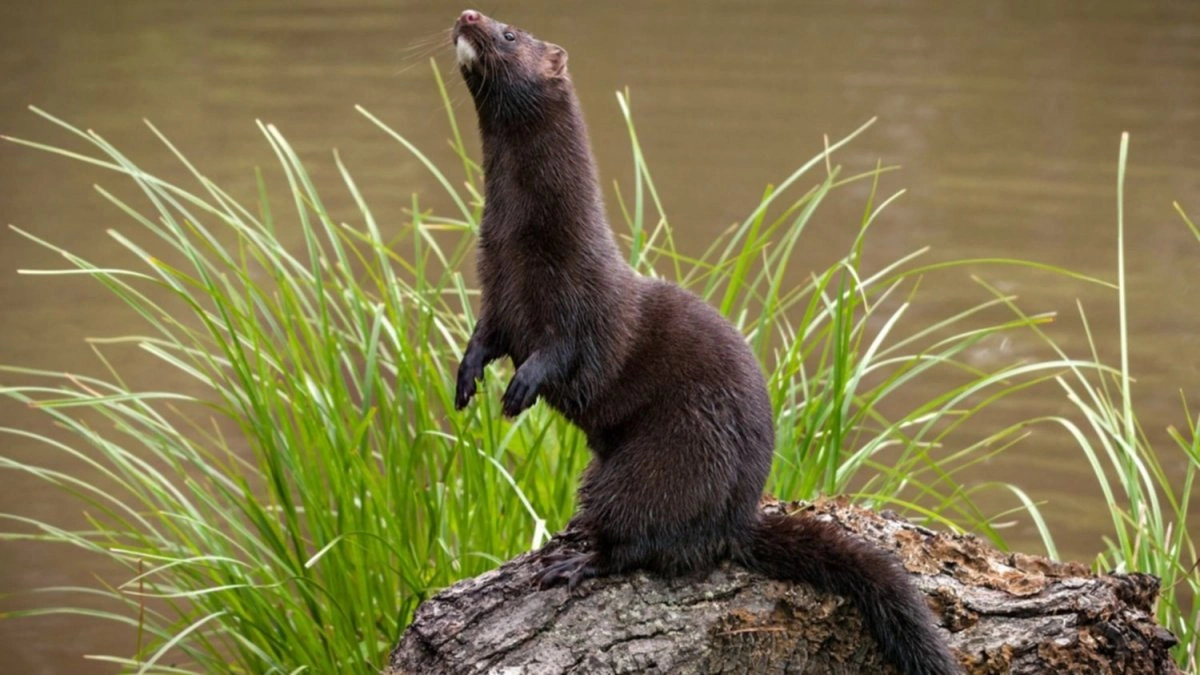
Mainland river systems, lakes, and continuous coastlines allow mink to move freely across the landscape. When a local municipality or hunting association removes mink from a specific river stretch, neighboring animals rapidly move in to occupy the vacant territory. Without a physical barrier to prevent recolonization, local control efforts act as a temporary sink rather than a permanent solution.
As a result, mainland american mink management is an ongoing exercise in population suppression rather than true eradication. Much like regional attempts at managing large-scale native predators, mainland control requires continuous, uninterrupted effort to keep numbers low. The moment control efforts ease, mink populations quickly return to their baseline capacity.
How control is actually carried out?
Modern mink control relies on a combination of specialized trapping, targeted hunting with trained dogs, and advanced environmental detection.
-
Initial Mapping: Deploy scent cards and trail cameras to identify active dens along shoreline corridors.
-
Primary Trapping: Set lethal body-gripping traps along natural travel routes and rock crevices.
-
Dog Tracking: Use trained scent dogs to flush remaining trap-shy individuals from deep boulder scree.
-
Verification: Monitor cleared zones for 12 to 24 months using tracking dogs and remote cameras to confirm zero presence.
-
Perimeter Surveillance: Maintain outer perimeter traps along nearby mainland points to intercept new swim-ins.
Because the american mink is listed as an alien invasive species, the legal framework governing its control is far more flexible than the rules applied to native wildlife. Under Norwegian hunting regulations, mink can be hunted year-round without seasonal protection closures, and landowners or authorized control personnel can deploy specialized kill-traps without animal quota limits.
In many coastal management zones, mink control operates alongside other predator management efforts. Where wildlife agencies conduct broader habitat protection, mink removal is frequently paired with corvid management and red fox control to maximize breeding success for endangered ground-nesting birds. However, while corvid and fox controls remain subject to debate regarding their long-term efficacy, mink removal is universally recognized as a necessary conservation measure.
What it costs and who pays?
Funding for mink control in Norway is a patchwork of state environmental grants, municipal allocations, and thousands of hours of unpaid volunteer labor. National environmental agencies fund targeted eradication campaigns within high-priority nature reserves and national parks, where protecting threatened seabird colonies yields clear, measurable returns.

However, outside state-managed reserves, the bulk of mink removal relies on local hunting and fishing associations (NJFF), archipelago boards, and private landowners. Trappers often monitor trap lines along icy shorelines at their own expense, driven by a commitment to local wildlife conservation.
The stark reality of mink control is that stopping a program almost always leads to recolonization. If funding dries up or volunteer trappers step back, mink from adjacent unmanaged areas typically swim back within two to four years, wiping out a decade of local seabird recovery. Long-term success requires sustained financial and operational commitments to keep the american mink from re-establishing territories in cleared coastal habitats.
The read
When comparing predator management strategies across Scandinavia, the contrast between native predator control and invasive species management is striking. While native carnivore management remains tangled in policy debates and contested science, the evidence supporting american mink eradication is clear: removing an introduced, amphibious predator directly restores vulnerable bird populations.
Despite this clear evidence, public funding for invasive mink eradication remains modest and inconsistent compared to the high-profile budgets allocated to native large-carnivore management. Expanding long-term funding for coastal mink eradication represents one of the most cost-effective conservation investments available in Norway today. In the coming seasons, watch the expanding use of specialized mink-sniffing dogs along the outer archipelagos their deployment may finally turn the tide for Norway’s most vulnerable island seabird colonies.
Frequently Asked Questions
How did American mink get to Norway?
American mink were brought to Norway in the late 1920s for fur farming. Escapes from farms and deliberate releases during economic downturns quickly established feral breeding populations across rivers and coastlines.
What damage do mink do to birds?
Mink swim to offshore skerries and raid ground-nesting seabird colonies. They kill adult birds, chicks, and destroy eggs, often exhibiting surplus killing behavior where dozens of birds are killed in a single night.
Does mink eradication work?
Yes, eradication has proven highly successful on defined island archipelagos. When all mink are removed from an isolated island group and monitored with tracking dogs, seabird colonies rapidly recover.
Why does it work on islands and not inland?
Islands have clear boundaries and open water barriers that prevent immediate recolonization. On the mainland, continuous river systems allow mink from neighboring areas to quickly move in and replace removed animals.
Is mink control the same as fox control?
No. Red foxes are native predators that co-evolved with local prey. American mink are an invasive introduced species that ground-nesting island birds have no evolutionary defense against.
Who carries out mink control?
Mink control is carried out by state environmental agencies in national parks and reserves, supported by local hunting associations (NJFF), archipelago boards, and volunteer trappers.
