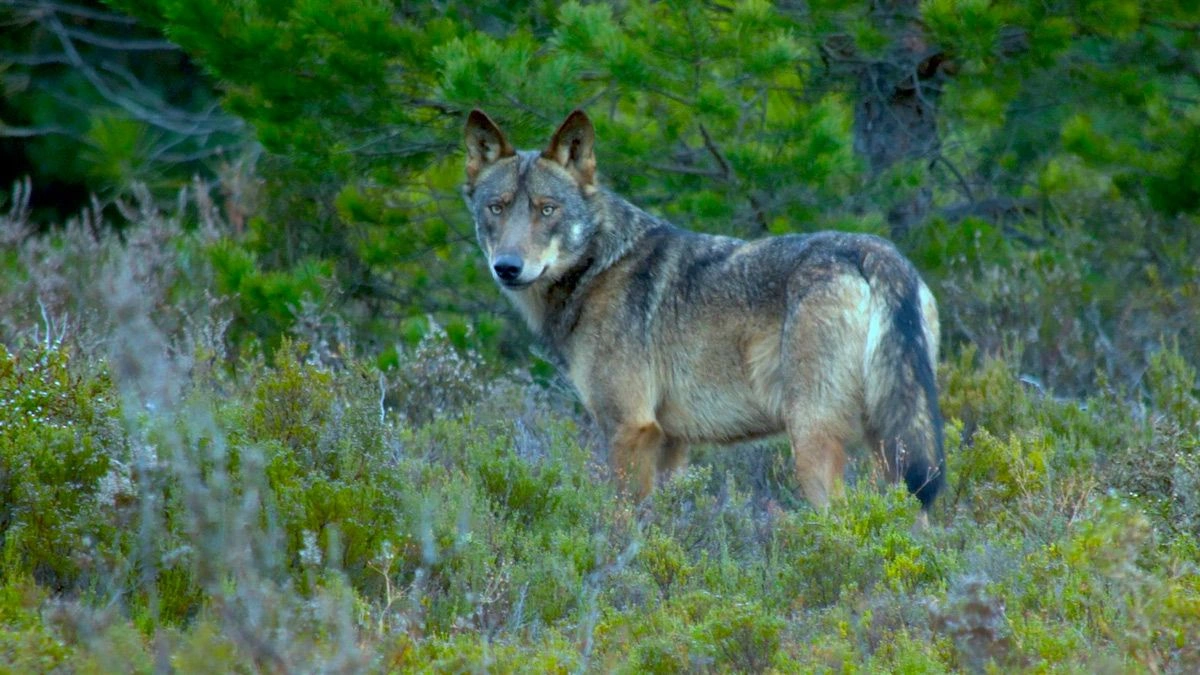
Norway’s management target for wolves is four to six annual reproductive litters, with at least three occurring entirely within national borders. That specific range was not derived from a habitat model or a population viability analysis conducted by biologists. It was negotiated in late-night sessions inside the Storting, Norway’s parliament, as part of a broad political compromise designed to balance rural grazing interests against international biodiversity obligations.
When political debates address bestandsmal rovvilt the Norwegian term for national carnivore population target opponents and proponents frequently frame the debate around ecological thresholds. In search indices and public discourse, people search both for the proper Norwegian bestandsmål and the plain letter version bestandsmal rovvilt. Yet the core reality of Norway’s predator policy is structural rather than purely biological.
These numbers are a political settlement reached in parliament, expressed in a metric that makes them strictly countable, and handed to a civil administration tasked with delivering them.
What a Target Actually Is?
In Norwegian wildlife policy, a target or bestandsmål is a legally defined statutory threshold of annual breeding units per species, distributed nationally across specific management regions. When state agencies evaluate bestandsmal rovvilt, the Storting mandates a specific number of verified annual reproductions that the state wildlife management system must maintain rather than regulating total headcounts.
The choice of unit is deliberate. Counting individual solitary predators across vast boreal forests is notoriously imprecise. By focusing on breeding units such as family groups of wolves, lynx family groups with kittens, or wolverine female reproductions the state measures reproductive engine capacity rather than fluctuating individual numbers. One breeding unit of wolves or lynx implies a surrounding cluster of adults, subadults, and pups, meaning a target of 65 lynx family groups translates to roughly 350 to 450 individual animals in the woods.
Where They Came From?
The modern foundation of Norway’s carnivore policy rests on two major parliamentary compromises (forlik): the 2004 Predator Settlement and the 2011 Carnivore Policy Agreement, with a specific wolf supplement added in 2016. Every parliamentary review regarding bestandsmal rovvilt reflects this balance.
Prior to 2004, predator management suffered from perpetual parliamentary deadlock. Urban conservation advocates demanded strict adherence to the Bern Convention, while rural farming communities and agrarian politicians argued that unrestrained carnivore recovery threatened traditional free-ranging sheep farming (beitenæringen) and semi-domesticated reindeer husbandry.
The 2004 settlement created the current regional management system and established statutory population targets for four major species: Eurasian lynx (Lynx lynx), wolverine (Gulo gulo), brown bear (Ursus arctos), and wolf (Canis lupus). The agreement represented a classic Norwegian political compromise:
-
Rural and agricultural caucuses accepted the permanent presence of large carnivores on Norwegian soil, giving up the ambition of total eradication.
-
Environmental factions accepted strict geographic zoning and hard caps on population growth, giving up the goal of allowing predators to recolonize their full historical ranges.
Every date and figure in these settlements reflects political bargaining. When the Storting updated the settlement in 2011, it reaffirmed the dual mandate (to-partet målsetting): protecting carnivore species while maintaining viable grazing agriculture. Achieving this balance required establishing a clear parliament population goal that locked both sides into a binding framework.
How They Have Moved?
While political settlements are designed to be durable, parliamentary targets have been adjusted over time when biological realities or intense local political pressure forced the Storting to re-evaluate how bestandsmal rovvilt is distributed.
National Target Specifications and Movements:
-
Eurasian Lynx: 65 family groups / annual litters. Lowered in 2011 from earlier regional ambitions to reduce sheep losses.
-
Wolverine: 39 annual female reproductions. Adjusted regionally to relieve severe pressure on domestic reindeer herds in the north.
-
Brown Bear: 13 annual female reproductions. Maintained at a low level; political attempts to raise it face fierce opposition from sheep farmers.
-
Wolf: 4 to 6 annual reproductions (min. 3 in Norway). Set in the 2016 Wolf Settlement; includes shared border packs counted as 0.5.
When evaluating bestandsmal rovvilt across consecutive counting seasons, lynx and wolverine counts frequently hover at or above national goals, triggering regular hunting quotas. Brown bears have consistently remained below their national target of 13 annual reproductions, primarily due to low female density in border areas. Wolves have regularly met or exceeded their target range, keeping them at the center of heated legal battles. Setting a stable carnivore population target norway allows wildlife authorities to maintain structured oversight despite seasonal population swings.
Who Delivers Them and How?
Execution of the Storting’s targets falls to eight regional carnivore management boards (rovviltnemnder). Each rovviltnemnd consists of politically appointed members chosen by county councils and the Sameting (Sami Parliament). They operate under a strict zoning policy (arealdifferensiering), dividing regions into designated carnivore zones (rovviltsone) and priority grazing zones (beiteprioritert område).
Regional Management Execution Flow:
-
Storting (Parliament): Establishes statutory national targets.
-
Ministry / Environmental Agency: Allocates specific quotas per management region.
-
Regional Boards (Rovviltnemnder 1–8):
-
Region Above Target: Regional board retains local management control and opens hunting quotas via kvotejakt (lynx) or lisensfelling (wolf, wolverine, bear).
-
Region Below Target: Management authority reverts directly to the state (Norwegian Environment Agency). Hunting is restricted, and protective culling occurs strictly via skadefelling permits.
-
Whenever a regional administration evaluates bestandsmal rovvilt and finds that local species counts exceed the allocated target, the regional board holds full authority to open public quota hunting or licensed culling to bring numbers down. If a region falls below its designated target, management authority reverts directly to the Norwegian Environment Agency (Miljødirektoratet), which restricts hunting to prevent further population declines.
To manage populations that exceed statutory limits or cause severe damage, authorities rely on specific legal mechanisms. Regional boards use licensed culling for population control via lisensfelling for wolves and wolverines, while acute livestock protection relies on targeted emergency removal via skadefelling permits.
Why the Counting Is Contested?
Because political consequences depend directly on whether a population is above or below a specific number, the counting process itself is subject to constant scrutiny and debate, particularly when assessing bestandsmal rovvilt across regional borders.
Defining what constitutes a “breeding unit” across four different species bear, wolf, lynx, wolverine involves complex field methodology:
-
Cross-Border Packs: Wolves and brown bears move freely across the long forest border between Norway and Sweden. Under current counting rules, a wolf pack whose territory straddles the border is counted as 0.5 toward Norway’s national target. Agricultural groups argue this overcounts Norway’s contribution, while environmental organizations claim it artificially inflates culling quotas inside Norway.
-
DNA Tracking vs. Track Logs: Wolverine and bear counts rely heavily on winter scat collection and DNA analysis coordinated by Rovdata. Farming organizations frequently argue that DNA sampling misses active breeding females, leading to undercounted populations and delayed culling permits.
-
Partial Units: Lynx monitoring relies on registered sightings of tracks from family groups. Disputes arise over whether two track logs separated by a few kilometers represent two distinct litters or a single female moving across terrain.
When officials calculate whether bestandsmal rovvilt has been achieved in a border zone, every partial pack count directly dictates whether winter culling will be authorized.
Why Nobody Is Satisfied?
The statutory population targets fail to fully satisfy either side of Norway’s environmental debate, especially when local regions review bestandsmal rovvilt limits.
Perspectives on Statutory Targets:
-
Conservation Groups (NOAH, WWF Norway, Naturvernforbundet):
-
View target as a biological ceiling that artificially caps natural recovery.
-
Argue that keeping populations at minimum target levels ensures species remain on the national Red List.
-
Contend that strict population caps violate obligations under the Bern Convention.
-
-
Agricultural & Hunting Groups (Norges Bondelag, NNSG, NJFF):
-
View target as a biological floor that forces local tolerance of predators.
-
Maintain that presence of large carnivores threatens traditional sheep and reindeer farming cultures.
-
Demand immediate culling permits as soon as local counts reach statutory levels.
-
Conservation organizations view the targets as an artificial ceiling that prevents large carnivores from reaching true ecological sustainability. Conversely, agricultural unions view the targets as a maximum floor that forces communities to tolerate damage to livestock and hunting dogs. Where predators cross into farming zones, the financial cost is offset by state carnivore compensation (rovvilterstatning) for documented livestock losses. However, rural groups maintain that financial payouts cannot offset the psychological strain and loss of traditional free-ranging farming practices.
This structural tension is deliberate. A negotiated parliamentary compromise regarding bestandsmal rovvilt satisfies neither side completely, but it creates a stable administrative baseline that prevents policy from shifting wildly after every general election.
The Read
Using parliamentary compromise to manage biological populations is inherently clumsy. Ecology operates on fluid habitat boundaries and fluctuating prey availability, whereas legislation demands fixed, countable numbers that can be defended in court.
Yet, without parliamentary targets, Norwegian carnivore policy would lapse into endless litigation and administrative chaos. The statutory baseline for bestandsmal rovvilt provides a clear political mandate for an otherwise intractable conflict.
When the next annual population counts are published by Rovdata, look closely at the cross-border wolf pack calculations. Whether a single border pack is assigned to Norway or Sweden will determine whether regional boards open winter culling inside the wolf zone demonstrating once again how a political agreement shapes wild nature on the ground as agencies evaluate bestandsmal rovvilt in practice.
Frequently Asked Questions
What is a bestandsmål?
A bestandsmål is a legally defined parliamentary population target set by the Storting that dictates the statutory number of annual breeding units Norway must maintain for each large carnivore species.
Who sets Norway’s carnivore population targets?
The targets are set directly by the Storting (Norway’s parliament) through political compromises and national settlements rather than determined solely by biological researchers.
What is an annual breeding unit?
An annual breeding unit measures verified annual reproductions such as wolf litters, lynx family groups, or wolverine female reproductions rather than total individual headcounts.
Have the targets changed over time?
Yes, the targets have been adjusted periodically following political reviews, such as the 2011 Carnivore Policy Agreement and the 2016 Wolf Settlement, to respond to regional livestock impact and political consensus.
What happens if a region is above target?
If a region meets or exceeds its target, the regional carnivore management board (rovviltnemnd) retains local management authority and can authorize licensed culling or quota hunting to lower population levels.
Why do both sides object to the targets?
Conservationists argue the targets function as a strict ceiling that limits natural species recovery, while agricultural groups view them as a forced floor that compels communities to accept unwanted predators near grazing areas.
