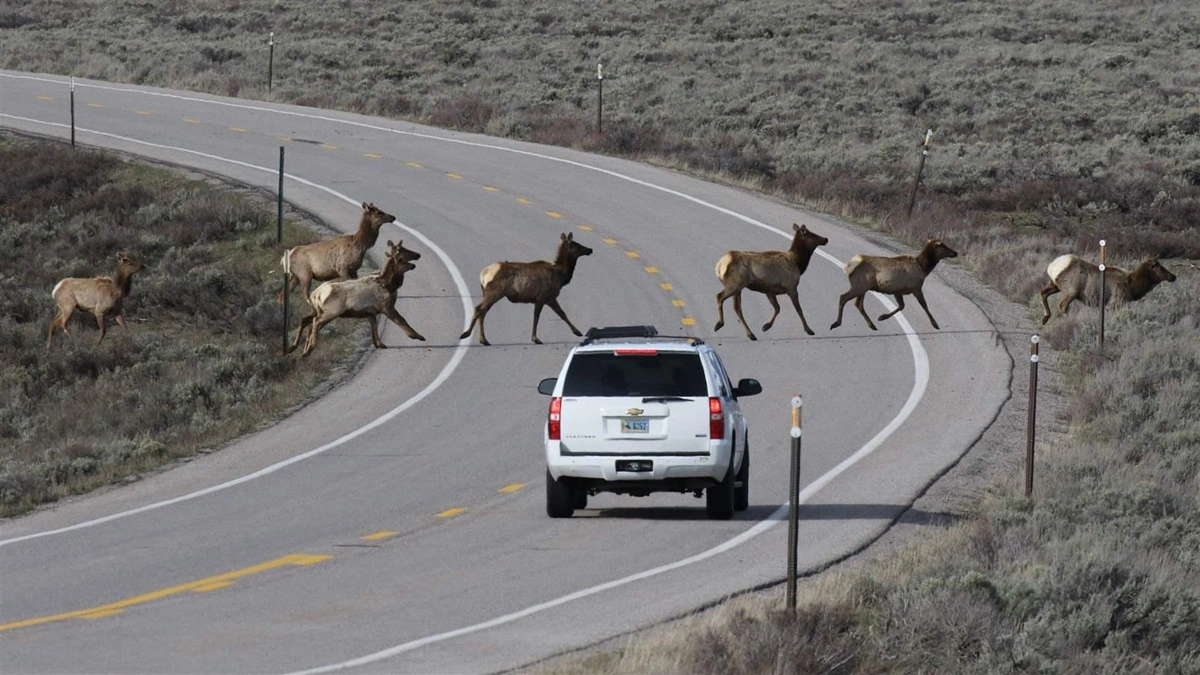
Norway experiences two distinct annual spikes in road-kill incidents, yet most drivers and traffic planners assume the danger follows a single uniform curve. The first surge occurs in late autumn, while the second arises in late winter. Understanding seasonal wildlife collisions requires recognizing that these twin peaks stem from fundamentally different ecological drivers, involve different species, and occur during different hours of the day.
A single year-round strategy fails to address either phenomenon effectively. Managing seasonal wildlife collisions demands a dynamic approach tailored to these changing conditions. This analysis separates the two annual peaks to uncover what drives each surge and how mitigation must adapt.
What the Year Actually Looks Like?
National statistics reveal that Norwegian animal-vehicle impacts do not follow a simple bell curve centered on dark winter months. When broken down month by month and categorized by species, the data demonstrates two explicit operational windows where seasonal wildlife collisions sharply escalate.
Analyzing collision seasonality shows that total numbers are driven primarily by roe deer (Capreolus capreolus) and moose (Alces alces), but their relative contribution shifts dramatically across the calendar. Roe deer incidents dominate the total volume, hitting an initial high point as daylight shrinks in October and November. Moose collisions, while fewer in absolute numbers, represent a much higher proportion of severe structural damage and human injuries, peaking when winter snow accumulation reaches its maximum depth between January and March.
Reindeer (Rangifer tarandus) impacts in specific Northern regions show a narrower, highly concentrated late-winter spike linked strictly to herd migration paths across major transport corridors. Understanding the viltpåkjørsler sesong (wildlife collision season) requires analyzing these distinct species dynamics, as overall seasonal wildlife collisions reflect separate behavioral triggers rather than a uniform trend.
| Month | Roe Deer Incidents | Moose Incidents | Primary Behavioral Driver | Transport Network Impact Risk |
| Jan – Feb | Moderate | Peak | Deep snow displacement | High (Railway & Highway corridors) |
| Mar – Apr | Low – Moderate | Moderate | Exhaustion / Crusted snow | Medium |
| May – Jun | Moderate | Low | Calving / Territorial shifts | Low – Medium |
| Jul – Aug | Moderate | Low | Rutting season (Roe deer) | Low |
| Sep – Oct | High | Moderate | Rutting / Autumn dispersal | High (Commute hours) |
| Nov – Dec | Peak | High | Darkness / Commute overlap | Extreme (Commute hours) |
The Autumn Peak
The autumn surge stretching from late October through early December is driven by three overlapping factors that converge during a very narrow temporal window.
First, the autumn mating season (rut) for larger cervids increases movement across established territories, making animals far less cautious near roadways. Second, young animals born in spring are actively dispersing from their maternal ranges, navigating unfamiliar terrain and crossing transport corridors without established safe patterns. Third, and most critically for drivers, the arrival of winter daylight savings time aligns peak animal activity with high-volume commuter traffic, causing a steep rise in seasonal wildlife collisions.
Roe deer and red deer (Cervus elaphus) dominate the autumn statistics. Roe deer are particularly susceptible in suburban and agricultural transition zones where fragmented forest patches meet paved roads.
The hourly pattern of autumn seasonal wildlife collisions is extraordinarily sharp. The majority of impacts occur during a two-hour window around twilight and full darkness specifically between 06:00 and 08:00 in the morning and 16:00 and 19:00 in the evening. During these hours, headlights illuminate animals only at short distances, while high traffic density leaves minimal room for corrective driver action.
The Late Winter Peak
The late winter peak occurring between late January and late March presents a completely different behavioral mechanism. The drivers of these seasonal wildlife collisions stem not from reproduction or darkness, but from energy preservation and physical survival.
As deep snow covers the forest floor, moving through the countryside becomes bioenergetically expensive. Ungulates seek out terrain where movement requires less exertion. Ploughed highways, county roads, and cleared railway tracks offer paths of least resistance. Animals purposefully move onto cleared transportation corridors to walk, often feeding on browse along exposed road verges.
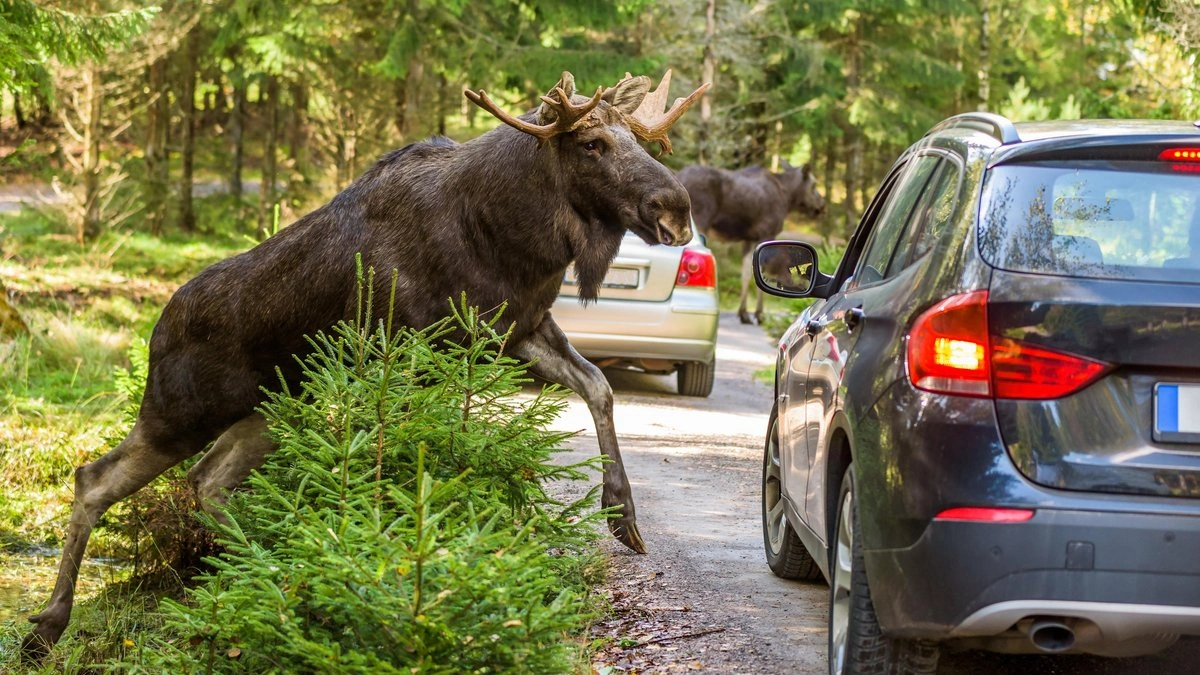
Moose dominate this late winter spike in seasonal wildlife collisions. Their large body size allows them to navigate deeper snow than roe deer, but prolonged winter conditions force them down from higher elevations into valley bottoms where major roads and train lines run. Railways suffer a disproportionate number of strikes during these months, as steep snowbanks along the tracks trap animals inside the clearance envelope when trains approach. Malnutrition late in the season also slows animal reaction times, making them less responsive to vehicle horns and approaching lights.
Why the Two Need Different Responses?
Because the drivers of autumn and late winter seasonal wildlife collisions are fundamentally different, mitigation strategies cannot rely on a single year-round approach.
| Mitigation Measure | Target Season | Primary Mechanism | Target Species |
| Verge Clearing & Lighting | Autumn | Improves driver visibility during twilight commute hours | Roe Deer, Red Deer |
| Speed Limit Reductions | Autumn | Reduces stopping distances during high-volume commute periods | All Ungulates |
| Snowbank Flattening | Winter | Removes escape barriers along roadsides and railway tracks | Moose, Reindeer |
| Diversionary Feeding | Winter | Draws animals away from transport corridors to deep-forest feeding sites | Moose, Roe Deer |
| Temporary Fencing | Winter | Blocks access to known snow-refuge movement paths | Moose |
Applying autumn solutions to winter conditions yields poor results. Clearing vegetation along verges helps visibility in November, but if deep snow banks are piled four feet high alongside a cleared road in February, an animal that steps onto the asphalt cannot escape an oncoming vehicle regardless of sightlines. Addressing seasonal wildlife collisions effectively requires dynamic mitigation plans that adapt as environmental conditions evolve across seasons.
What Varies Year to Year?
While the calendar timing of autumn daylight shifts remains fixed, the magnitude of winter seasonal wildlife collisions fluctuates wildly from year to year based on environmental variables.
Snow depth and duration dictate the severity of the winter spike. A mild winter with low accumulation results in a negligible February-March collision curve, as animals remain dispersed throughout forest habitats. Conversely, a prolonged winter with heavy snowpack or surface ice crusts creates a sharp spike in seasonal wildlife collisions. Mast years—seasons with abundant wild fruit and nut production—can also alter autumn foraging routes and local density.
Traffic managers and wildlife authorities must treat sudden yearly spikes with caution. A 40% increase in winter seasonal wildlife collisions rarely signals a sudden explosion in local ungulate populations; more often, it simply reflects severe snowpack forcing a higher percentage of the existing population onto transport corridors.
The Driver Side
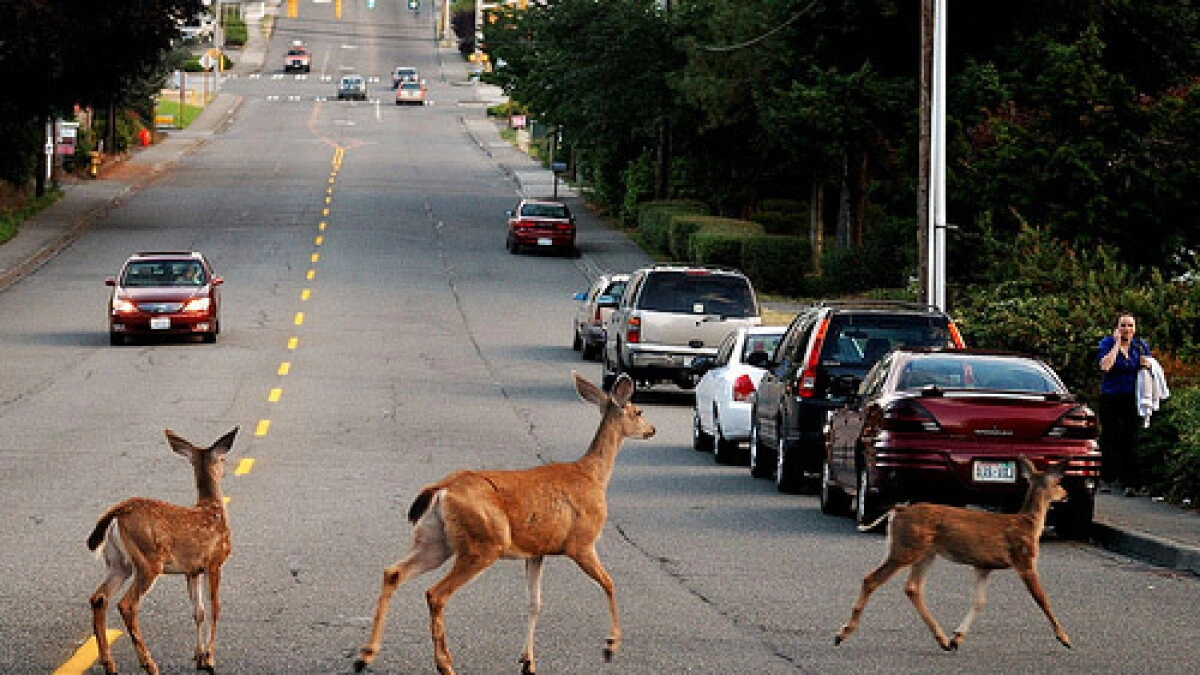
For drivers, the risk of experiencing seasonal wildlife collisions is not spread evenly across the year or the day. Heightened awareness is most critical during the autumn twilight commute and during late-winter travel through snow-bound valley corridors.
When driving through high-risk areas during periods prone to seasonal wildlife collisions, keep key evidence-based practices in mind:
-
Watch for the second animal: Cervids, particularly roe deer and elk, frequently travel in small family units or pairs. The passage of one animal across the road is a high-reliability predictor that a second is immediately behind it.
-
Brake hard, avoid swerving: Road safety research consistently shows that aggressive swerving into oncoming traffic lanes or off the shoulder carries a significantly higher risk of severe or fatal human injury than a direct impact with a medium-sized animal. Maximum straight-line braking within your lane is the safest defensive maneuver.
What Happens After an Impact?
If an animal vehicle collision occurs, Norwegian law dictates an immediate duty to report the incident. Drivers must mark the site of the collision using a warning triangle or dedicated marker, secure the area, and contact the authorities.
Reporting triggers a police notification, which immediately dispatches the local municipal wildlife service (fallviltvakt). A specialized ettersøksekvipasje—consisting of a certified handler and an approved tracking dog—is deployed to locate injured animals that have fled into the surrounding terrain. Prompt reporting enables swift humane dispatch to prevent prolonged animal suffering and ensures proper carcass handling to clear the roadway and meet public health protocols. Reducing the secondary impacts of seasonal wildlife collisions relies heavily on this rapid emergency response chain.
Seasonal Adaptation for Better Safety
Traffic authorities and municipal planners must move away from static, annual wildlife management strategies in favor of seasonally adaptive models. Adjusting roadside snow removal procedures in January yields far higher safety returns than maintaining identical year-round protocols. By deploying speed reductions during the dark autumn commute and coordinating winter snow clearance to leave escape routes along high-risk corridors, authorities can systematically reduce seasonal wildlife collisions across both annual peaks.
Frequently Asked Questions
When are wildlife collisions most common in Norway?
Wildlife collisions peak twice a year: first during late autumn (October–November) due to reduced daylight, the rut, and animal dispersal, and again in late winter (January–March) driven by heavy snow forcing animals onto cleared roads.
Why is there a second peak in late winter?
Deep snow makes forest movement bioenergetically costly. Animals use ploughed roads and cleared railway tracks as paths of least resistance, leading to a late-winter surge in collisions.
Which species are hit in which season?
Roe deer dominate the autumn collision peak during twilight commute hours, whereas moose dominate the late winter peak as deep snow forces them down into valley transport corridors.
Does snow clearing increase collisions?
Yes, ploughed roads and railways create easy walking routes for animals. If snow clearing leaves steep snowbanks alongside roads, animals become trapped inside the roadway when traffic approaches.
