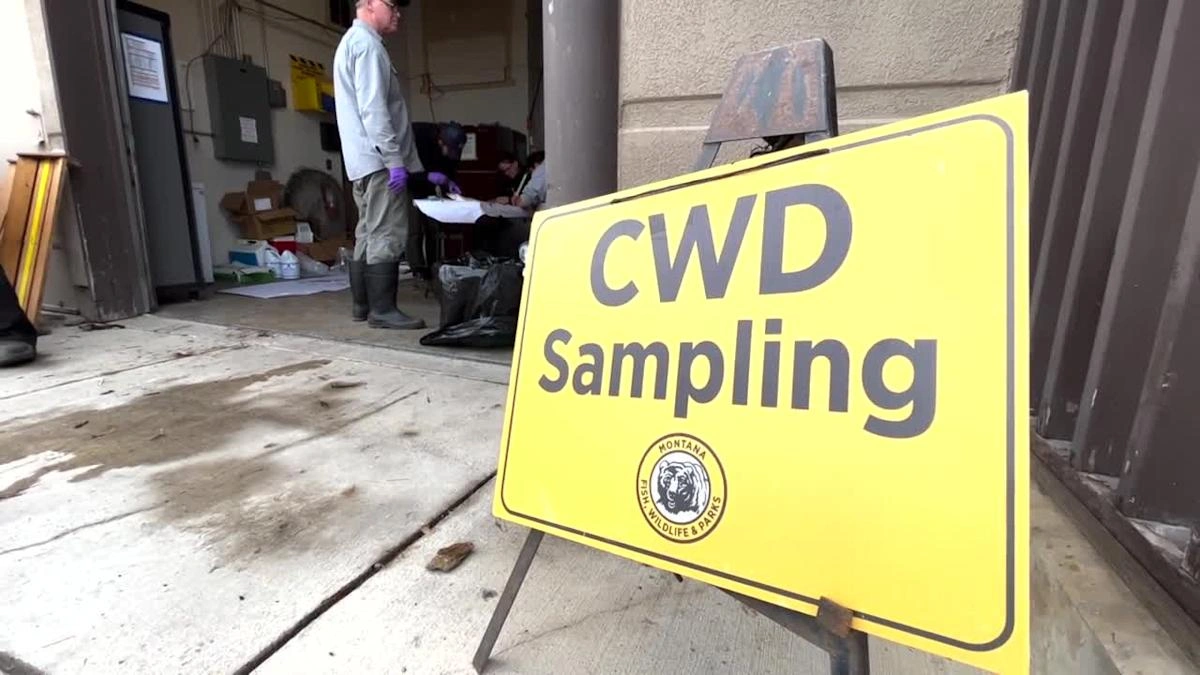
Standing over a freshly downed animal in the cold at six in the morning, you do not need policy background or historical context. You need to know right now whether this specific carcass requires testing and exactly how to extract the tissue without ruining it.
If you are hunting wild reindeer, moose, or red deer in Norway, the cwd sampling hunters duty applies directly to you depending on the harvested animal’s age, species, and management zone. Every season, Mattilsynet (the Norwegian Food Safety Authority) and the Norwegian Veterinary Institute update compulsory submission thresholds to track prion spread. This field guide walks through the 4 steps to fulfill your legal obligation for the current hunting season, ensuring your sample is usable and your meat remains safe. Completing your cwd sampling hunters requirements promptly protects both the local ecosystem and the broader wildlife population.
Which Animals Have to Be Sampled?
Sampling requirements depend strictly on three variables: species, age class, and geographical area. Requirements vary across municipalities and are updated ahead of every autumn hunting season.
Mandatory Requirements by Species
-
Wild Reindeer (Villrein): Mandatory sampling applies nationwide for all harvested animals aged 1.5 years or older. Active cwd sampling hunters must ensure every adult reindeer in these zones is processed.
-
Moose (Elg) and Red Deer (Hjort): Mandatory sampling applies to animals 1.5 years or older in designated surveillance municipalities, particularly around Nordfjella, Hardangervidda, and surrounding buffer zones. Local cwd sampling hunters need to verify municipal boundaries before hunting.
-
Roe Deer (Rådyr) and Calves: Calves under one year are exempt from routine hunter submissions across all species.
Where sampling is designated as voluntary, hunters are still strongly encouraged to submit tissue. Voluntary monitoring provides vital early warning data in low-risk zones. Always check your local hunting unit (vald) pre-season instructions to verify whether your specific area falls under mandatory sampling for the current season. Search terms in local documentation will reference skrantesjukeprøver, though many hunters search for skrantesjukeprover online.
Step 1: Before You Start Cutting
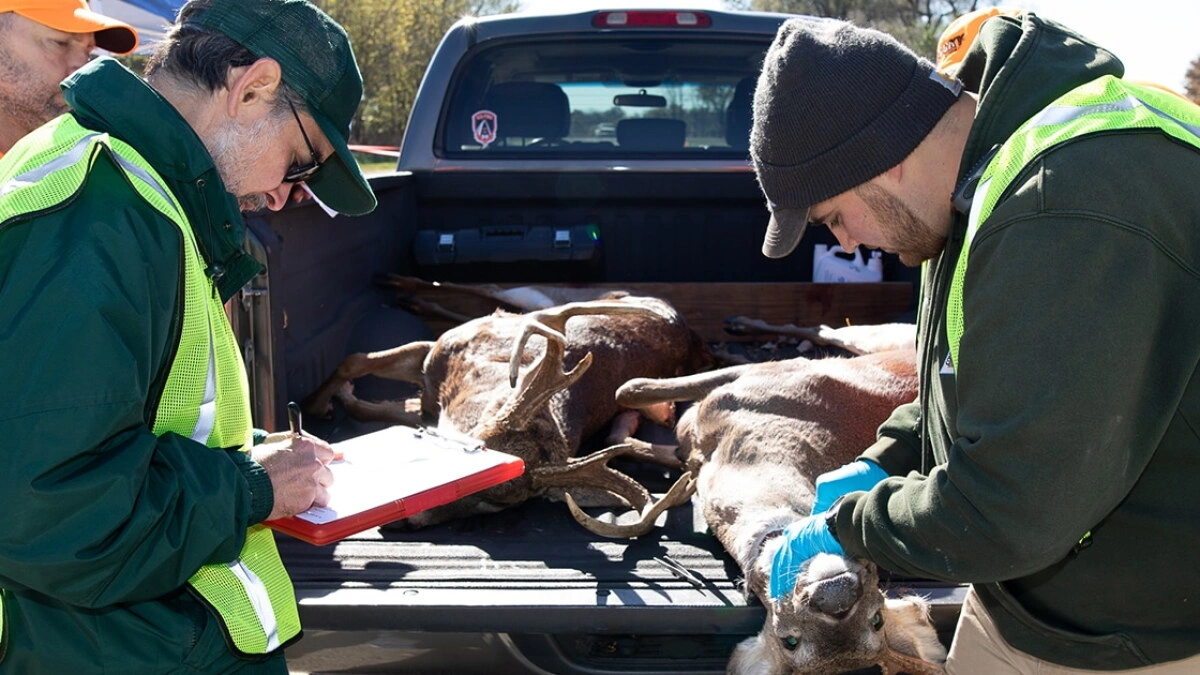
Before opening the carcass, pull out your CWD kit. A standard kit issued by your local hunting board or management council contains two barcode labels, a sealable sample pouch, plastic gloves, and a pre-addressed envelope. Responsible cwd sampling hunters carry these supplies into the field on every outing.
-
Verify Equipment: Keep your kit, a clean knife, clean paper towels, and a smartphone or pencil and paper next to the carcass.
-
Record Data Before Cutting: Log the exact harvest location (GPS coordinates), species, age class, sex, date, and municipality before making any incisions. Experienced cwd sampling hunters know that accurate field location data is essential for trace-backs.
-
Practice Strict Hygiene: Prions are exceptionally resistant proteins. Never use the same knife for deboning muscle meat that you use to extract brainstem tissue or lymph nodes without thoroughly cleaning and bleaching it in between. Wear disposable gloves throughout tissue removal.
Step 2: Taking the Sample
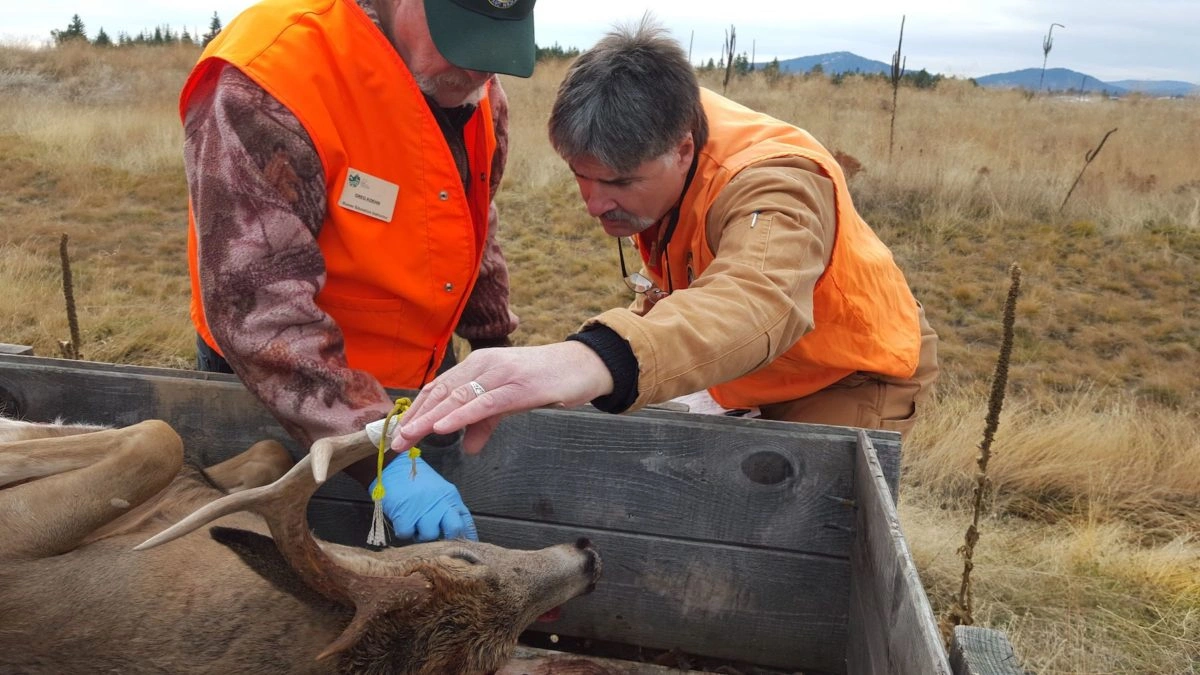
The official prion sample duty requires two specific anatomical tissues: the brainstem (specifically the obex) and the retropharyngeal lymph nodes located in the throat. Dedicated cwd sampling hunters follow a systematic process to extract both tissues cleanly.
Extraction Sequence
-
Expose the Joint: Sever the head at the atlanto-occipital joint where the base of the skull meets the first spinal vertebra.
-
Locate the Foramen Magnum: Turn the head upside down. Look into the large opening at the base of the skull where the spinal cord enters.
-
Extract the Obex: Insert a specialized sampling spoon or curved knife approximately 5 cm into the cavity, scoop upward to cut the neural attachments, and gently pull back the V-shaped section of the lower brainstem. Place it directly into your clean plastic pouch.
-
Locate the Lymph Nodes: Cut along the inner side of the lower jawbones in the throat tissue. Feel deep between the back of the tongue and the jaw joints for two firm, kidney-shaped, greyish-pink nodes.
-
Extract the Lymph Nodes: Carefully slice out both lymph nodes without crushing them and place them in the pouch alongside the brainstem sample.
Proper carcass sampling ensures the laboratory receives tissue containing enough target material for valid diagnostic testing.
Step 3: Labelling and Registering It
A sample without accurate metadata is completely useless to disease surveillance. Precise digital logging by cwd sampling hunters keeps the national registry reliable.
-
Attach the Unique Barcode: Apply one barcode label from your kit directly to the plastic sample pouch containing the tissue.
-
Register Online: Log into the official game management portal such as Hjorteviltregisteret or the designated national digital reporting app. Enter the harvest date, exact map coordinates, species, sex, age, and the barcode number.
-
Avoid Critical Errors: Common mistakes include submitting partial or crushed tissue, mixing samples from two different animals in one bag, or omitting the digital barcode registration. Mislabelled samples by cwd sampling hunters undermine national surveillance data and prevent authorities from tracing infected areas.
Step 4: Sending It
Once bagged and labelled, the sample must be shipped promptly to the laboratory. High compliance among cwd sampling hunters ensures high-volume laboratory throughput during peak harvest months.
-
Package the Tissue: Place the sealed sample pouch inside the padded, leak-proof pre-addressed mailer provided in your kit.
-
Ship Immediately: Hand the package over to a Posten drop-off point or local municipal collection drop-box within 24 to 48 hours of harvest. Keep the sample cold with refrigeration or ice if delay is unavoidable.
-
Receiving Laboratory: Samples are shipped directly to the Norwegian Veterinary Institute (Veterinærinstituttet), the national biomedical research body responsible for diagnostic testing. Postage is fully prepaid by state surveillance funds; hunters pay nothing out of pocket.
What to Do with the Carcass While You Wait?
While awaiting test results, proper carcass management is critical to prevent accidental environmental contamination.
-
Quarantine the Meat: Keep the carcass, offal, and hide stored securely in a cool, ventilated area isolated from scavengers or domestic animals.
-
Can You Eat the Meat Before Results Return? Current public health guidelines strongly advise against consuming meat from an animal pending CWD test results, even though CWD has not been shown to infect humans. Wait until a negative result is confirmed in the database.
-
What Happens If the Sample Returns Positive? If a sample tests positive, Mattilsynet contacts the hunter and local wildlife management board directly. The entire carcass, including the head, hide, and meat, must be destroyed and disposed of as hazardous biological waste following official instructions.
How Results Come Back and What They Mean?
Test turnaround typically takes between 5 and 14 days, depending on peak seasonal lab volumes at Veterinærinstituttet.
Hunters can check their sample status online via Hjorteviltregisteret using their personal hunter number or sample barcode. A negative result confirms no prions were detected in the tissue, allowing the carcass to be processed and consumed normally. A positive result triggers immediate epidemiological protocols, including regional herd tracing, potential culling in surrounding units, and heightened surveillance boundaries.
What the Programme Does with All This?
Norway’s wildlife disease surveillance testing programme analyzes thousands of cervid samples annually to map the geographical footprint of chronic wasting disease. High sampling coverage in specific management zones provides statistical certainty that an area remains disease-free or alerts authorities to early-stage outbreaks.
This duty sits alongside other vital wildlife monitoring initiatives managed by Veterinærinstituttet, including monitoring mange in foxes (skabb) and tracking avian influenza (fugleinfluensa) in wild bird populations. Active participation from cwd sampling hunters across all regions forms the backbone of Nordic ecosystem protection.
Field Checklist Before the Season Opens
Passive compliance is not enough; complete participation from cwd sampling hunters in targeted zones is necessary to maintain credible wildlife health monitoring. Missing a mandatory sample weakens the statistical reliability of an entire hunting district.
The Pre-Season Rule: Order your CWD sampling kits from your local hunting board (vald) and confirm your municipality’s exact sampling rules before you head into the field on opening morning.
For background on disease origin and policy history, see our complete guide to Chronic Wasting Disease in Norway. For animals found dead or injured in the wild, refer to our Fallvilt Reporting Protocol.
Frequently Asked Questions
Which animals have to be tested for CWD in Norway?
Mandatory testing applies to all wild reindeer aged 1.5 years or older nationwide. For moose and red deer, mandatory testing applies to animals aged 1.5 years or older harvested in designated surveillance municipalities and buffer zones. Calves under one year old are exempt across all species.
How do you take a CWD sample?
After severing the head at the base of the skull, extract the obex (a V-shaped section of the lower brainstem) through the foramen magnum opening using a curved sampling spoon. Next, locate and remove both retropharyngeal lymph nodes found deep inside the throat near the jaw joints. Place both tissue types into the sealable sample pouch provided in your kit.
Where do you send the sample and who pays?
Samples are sent directly to the Norwegian Veterinary Institute (Veterinærinstituttet) using the pre-addressed, leak-proof mailer included in your kit. Packages can be dropped off at any Posten location or municipal drop-box. Postage is fully prepaid by state surveillance programs, so hunters do not pay anything.
Can you eat the meat before the result comes back?
No. Official health guidelines advise keeping the carcass in quarantine and refraining from consuming the meat until a negative test result is officially registered in Hjorteviltregisteret.
How long do CWD results take?
Results generally take between 5 and 14 days depending on laboratory volume during the hunting season. You can check status online using your sample barcode or hunter ID.
What happens if a sample comes back positive?
If a sample tests positive, Mattilsynet and local wildlife authorities will contact you directly. The entire carcass, head, hide, and offal must be turned over or destroyed as hazardous biological waste according to official instructions, and regional tracing protocols will be initiated.
