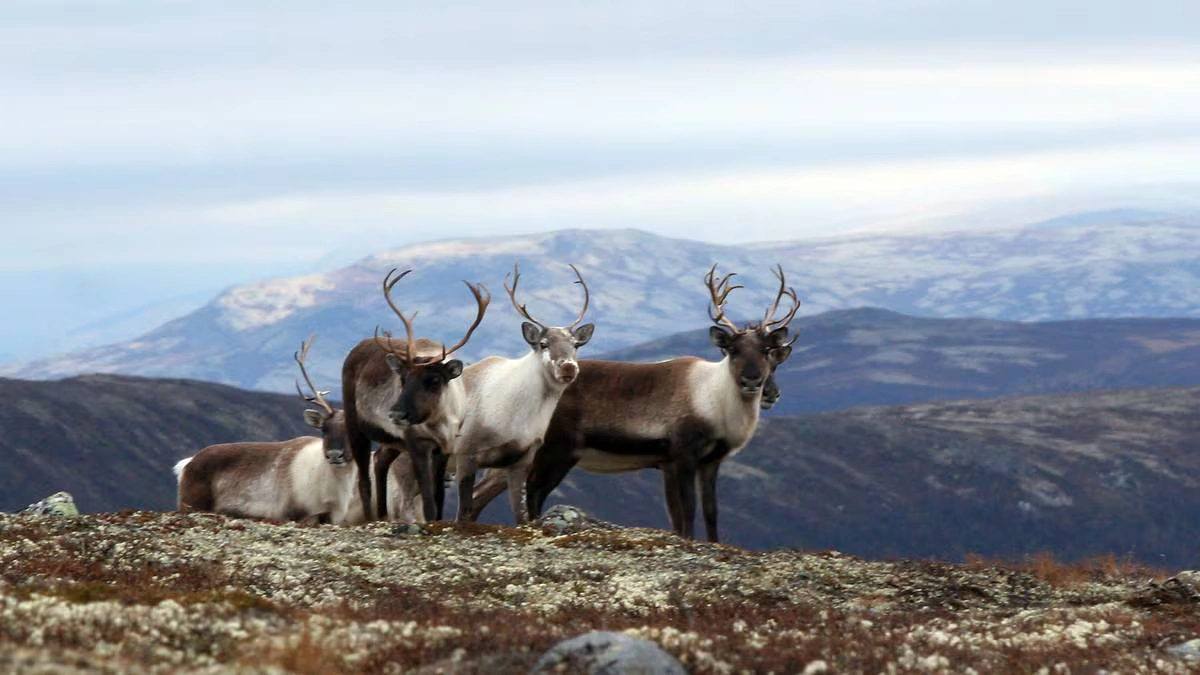
Imagine an Arctic fox roaming across a wind-swept plateau in Dovrefjell, or a rare black-spotted large blue butterfly settling on a hillside outside Oslo. Under Norwegian law, these individual organisms do not lose their safeguard the moment they step off the boundary of a national park or nature reserve. They carry a personal shield that travels with them across every square meter of the realm. This mechanism is known as prioriterte arter, or priority species. When evaluating norway’s priority species uses a legal status that applies to specific plants, animals, and fungi regardless of where they occur, protecting them on private farmland, timber tracts, and unmanaged wilderness alike.
Norway relies on three distinct legal instruments to conserve its biodiversity: area protection draws a hard boundary around a place, selected habitat types protect specific ecological categories wherever they are found, and norway’s priority species scheme safeguards individual species across the entire landscape.
The Three Instruments, Side by Side
To understand natural resource management in Norway, one must distinguish between how the law treats territory, landscape features, and individual organisms:
-
Area Protection: Establishes fixed geographical boundaries (such as national parks, nature reserves, or landscape protection areas) where all human activity within the border is regulated under strict management tiers.
-
Selected Habitat Types (Utvalgte Naturtyper): Protects specific, mapped ecosystem categories—such as coastal heathlands or hay meadows—wherever they occur across the country, regardless of who owns the land.
-
Priority Species (Prioriterte Arter): Safeguards designated high-risk species everywhere they exist, placing explicit legal duties on landowners and planning authorities regardless of whether the area holds a formal reserve status.
While area protection secures high-value landscapes within designated protected areas, it leaves vast stretches of private and working land open to development. The selected habitat types instrument addresses ecological communities across property lines, while norway’s priority species regulation ensures that the most vulnerable organisms do not fall through the spatial gaps between reserves.
What a Priority Designation Does?
A priority species designation derives its legal authority directly from Chapter III of the Nature Diversity Act (naturmangfoldloven). Under Section 23 of the Act, once a species is designated, any form of harvesting, killing, damage, or disturbance is strictly prohibited unless specifically permitted by regulation.
Crucially, Section 24 allows King-in-Council to extend this protection directly to the habitat of norway’s priority species. For designated species, the law can protect specific ecological elements essential to their survival—such as breeding sites, nesting trees, feeding grounds, or wintering burrows. When planning public infrastructure or private development, municipal authorities and private landowners are legally obligated to consider these habitat elements under Section 24 during land use decisions.
The strength of this requirement is significant, but it is not an absolute, automatic development ban. Instead, it alters the legal standard of review under Section 8 through Section 12 of naturmangfoldloven:
-
Standard Species Protection: Unlisted species receive baseline protection against arbitrary killing or destruction under general species protection rules, but their habitats on private land enjoy no direct safeguards outside formal reserves.
-
Priority Species Status: Reverses the burden of proof. Any activity that might negatively affect norway’s priority species or their designated habitat requires a formal assessment. Permits can only be granted if the public interest significantly outweighs the harm to the species, and mandatory mitigation measures must be enforced.
Which Norway’s Priority Species Are Listed?
The list of prioriterte arter (the official Norwegian term for priority species) is purposefully concise, targeting organisms where specific, site-level protection can alter their extinction risk.
-
Mammals (Arctic Fox – Vulpes lagopus): Compact canine with dense white or slate-blue winter coat, short ears, and a thick bushy tail. Primary threats include habitat fragmentation, climate warming, and competition with expanding red foxes in alpine zones.
-
Birds (Lesser White-fronted Goose – Anser erythropus): Small arctic goose featuring a distinct yellow eye-ring and a bright white patch extending up the forehead. Threats include loss of staging grounds, wetland alteration, and disturbance along migratory flyways.
-
Insects (Black-Spotted Large Blue – Phengaris arion): Distinctive blue butterfly with black spots on forewings; requires Myrmica ant nests for caterpillar development. Threatened by abandonment of traditional grazing, scrub encroachment, and loss of wild thyme patches.
-
Plants (Dragon’s Head – Dracocephalum ruyschiana): Perennial herb with narrow lanceolate leaves and deep violet-blue, two-lipped flowers clustered in spikes. Threats include encroachment, residential construction across dry lowland meadows, and road verge mowing.
-
Fungi & Lichens (Golden Coral Fungus – Clavaria aurea): Branched, coral-like fruiting body displaying brilliant golden-yellow to orange-yellow tips. Threatened by deforestation, clear-cutting, and loss of undisturbed old-growth deciduous forest soils.
Each organism among norway’s priority species was selected because conventional spatial protection alone failed to secure its survival. For instance, the Arctic Fox moves across massive alpine ranges that exceed park boundaries, requiring landscape-wide legal protection against human interference and hunting across its entire range.
How a Norway’s Priority Species Gets on the List?
The path to a priority designation is a rigorous legal and administrative process managed by the Norwegian Environment Agency (Miljødirektoratet) and formally enacted by the Ministry of Climate and Environment.
-
Ecological Assessment: Norwegian Red List data identifies high-risk species.
-
Draft Regulation: Target species selection and habitat boundary drafting.
-
Action Plan Draft: Species action plan (handlingsplan) framed.
-
Public Consultation: Landowners, municipalities, and industry provide feedback.
-
Revision & Review: Stakeholder impact and cost-benefit analysis.
-
Legal Enactment: King-in-Council adopts priority status.
The process begins with scientific data drawn from threat assessments, but ecological vulnerability alone does not trigger automatic listing. The agency evaluates whether designation will provide actionable legal leverage without imposing unmanageable administrative burdens for norway’s priority species.
Central to this framework is the target-driven species action plan Norway issues for high-priority taxa (handlingsplan). A common point of confusion is equating an action plan with a priority designation:
-
Species Action Plan (Handlingsplan): An administrative policy document outlining management targets, monitoring routines, habitat restoration goals, and funding allocations. It carries no direct regulatory restrictions for landowners.
-
Priority Species Designation (Forskrift om prioriterte arter): A binding legal regulation passed by the government that establishes strict prohibitions, legal liabilities, and mandatory planning rules.
Because each priority listing creates legal encumbrances on land use, progress is deliberately slow. Preparing impact assessments, mapping host habitats, consulting municipal authorities, and handling landowner hearings can take several years for each addition to norway’s priority species list.
What It Means for a Landowner?
For private property owners, foresters, and developers, the presence of norway’s priority species fundamentally transforms local land use planning.
Under Norwegian administrative law, landowners are expected to exercise due diligence. Municipalities maintain public GIS databases—primarily the Species Map Service (Artskart)—where verified sightings are logged. When a landowner applies for a building permit, forestry clearance, or agricultural drainage project, the municipality checks whether the activity intersects with known occurrences of norway’s priority species or their designated functional habitat.
If a priority species is identified within the project footprint:
-
Mandatory Avoidance: The landowner must first adapt the project design to avoid direct harm to the species or its critical habitat elements (e.g., leaving a buffer zone around nesting trees or dry meadow patches).
-
Permit Restrictions: If avoidance is impossible, the municipal or county authority must conduct a formal balancing test under naturmangfoldloven. If the project proceeds, strict mitigation measures are attached to the permit.
-
Compensation: Landowners may apply for state compensation under Section 39 of the Nature Diversity Act if a decision regarding norway’s priority species significantly restricts ongoing land use (such as timber harvesting or farming operations). However, routine restrictions that merely require minor adjustments to development plans rarely trigger full financial compensation.
The central practical challenge mirrors that of protected habitats: a species present on your land is legally protected regardless of whether you personally knew it was there. Unintentional destruction during construction or forestry remains a legal violation.
Where the Scheme Is Criticised?
Norway’s priority species framework faces scrutiny from both environmental organizations and industry stakeholders, highlighting the tension between conservation aims and property rights.
Environmental groups argue that the list of norway’s priority species is far too small to halt biodiversity decline. With thousands of species facing extinction risk on national threat registries, placing only a small fraction under legal priority status leaves the vast majority of threatened biodiversity dependent on general management rules. Furthermore, conservationists highlight a resourcing bottleneck: designating a species legally accomplishes little if the state fails to fund long-term population monitoring, active habitat restoration, and field enforcement. Without active management, priority status simply records a species’ decline rather than reversing it.
Conversely, agricultural and forestry associations criticize the scheme for creating regulatory uncertainty. Because species distributions are dynamic and mapping is incomplete, landowners face sudden development freezes when norway’s priority species are discovered on their property mid-project. Industry advocates argue that the system places disproportionate administrative and financial burdens on private land managers without providing clear, upfront compensation models.
From a landscape perspective, critics also note that focus on single species fails to prevent broader habitat fragmentation. Protecting isolated patches of land for individual plants does not stop the surrounding matrix from being fragmented by roads, power lines, and timber harvesting, ultimately isolating populations over time.

How It Connects to the Red List?
A frequent point of confusion in Norwegian environmental policy is the relationship between the Norwegian Red List for Species (Norsk rødliste for arter) and the Priority Species Scheme.
The Red List is an independent, advisory scientific assessment published by the Norwegian Biodiversity Information Centre (Artsdatabanken). It evaluates biological extinction risks using international IUCN criteria, categorizing species from “Near Threatened” to “Critically Endangered.” Crucially, placement on the Red List carries no automatic legal protection or direct land-use restrictions.
By contrast, the Priority Species Scheme is a statutory legal tool enacted by government decree. While all designated species are drawn from the Red List, only a tiny fraction of red-listed species ever enter the ranks of norway’s priority species.
The two lists diverge because political and administrative feasibility dictate legal listings. A species classified as “Vulnerable” on the Red List might be chosen as a priority species because its remaining habitat consists of small, easily identifiable meadow patches where targeted legal protection is highly effective. Meanwhile, a “Critically Endangered” marine fish might be excluded from the priority species list because its recovery requires international fishing quotas and broad ecosystem policies rather than site-specific landowner restrictions under naturmangfoldloven.
The Horizon of Priority Protection
The Priority Species Scheme represents one of the most potent legal mechanisms in Norwegian environmental law, explicitly disconnecting species protection from fixed reserve boundaries. However, its real-world impact remains constrained by political reluctance to expand the list and the ongoing challenge of monitoring working landscapes. While the legal framework provided by naturmangfoldloven is robust enough to halt localized extinctions, the tool is currently applied as a targeted surgical instrument rather than a comprehensive landscape shield for norway’s priority species.
For landowners, municipal planners, and developers, the key practical takeaway is straightforward: before initiating any ground-disturbing work, consult the national Artskart database to verify whether your property overlaps with norway’s priority species or their functional habitat. Discovering a listed organism before breaking ground is far easier to manage than navigating a mandatory site shutdown after work has already begun.
Frequently Asked Questions
What is a priority species in Norway?
A priority species (prioritert art) is an organism protected under Chapter III of the Nature Diversity Act (naturmangfoldloven). This status provides binding legal protection to the individual species and its key functional habitats anywhere in Norway, regardless of land ownership or reserve boundaries.
Which species are prioritised?
The list includes specific vulnerable animals, plants, insects, and fungi, such as the Arctic fox, the Lesser White-fronted Goose, the black-spotted large blue butterfly, Dragon’s Head, and the golden coral fungus.
How is it different from being red listed?
The Red List is an advisory scientific assessment of extinction risk published by Artsdatabanken without automatic legal force. The Priority Species Scheme is a legally binding regulation passed by the government that establishes enforceable restrictions on land use.
What does it mean for a landowner?
If a priority species or its functional habitat is present on private land, activities that harm the species or destroy its habitat are restricted or prohibited. Landowners and developers must consult national species maps (Artskart) before making land use changes.
How does a species get listed?
The Environment Agency drafts regulations and species action plans based on Red List data, conducts public and stakeholder consultations, and submits recommendations to the government. The status is formally enacted by King-in-Council.
Is the protection actually enforced?
Yes, protection is enforced through municipal planning processes, environmental assessments, and the Nature Diversity Act. However, critics note that limited monitoring resources mean some remote or unmapped occurrences may go undetected during development.
