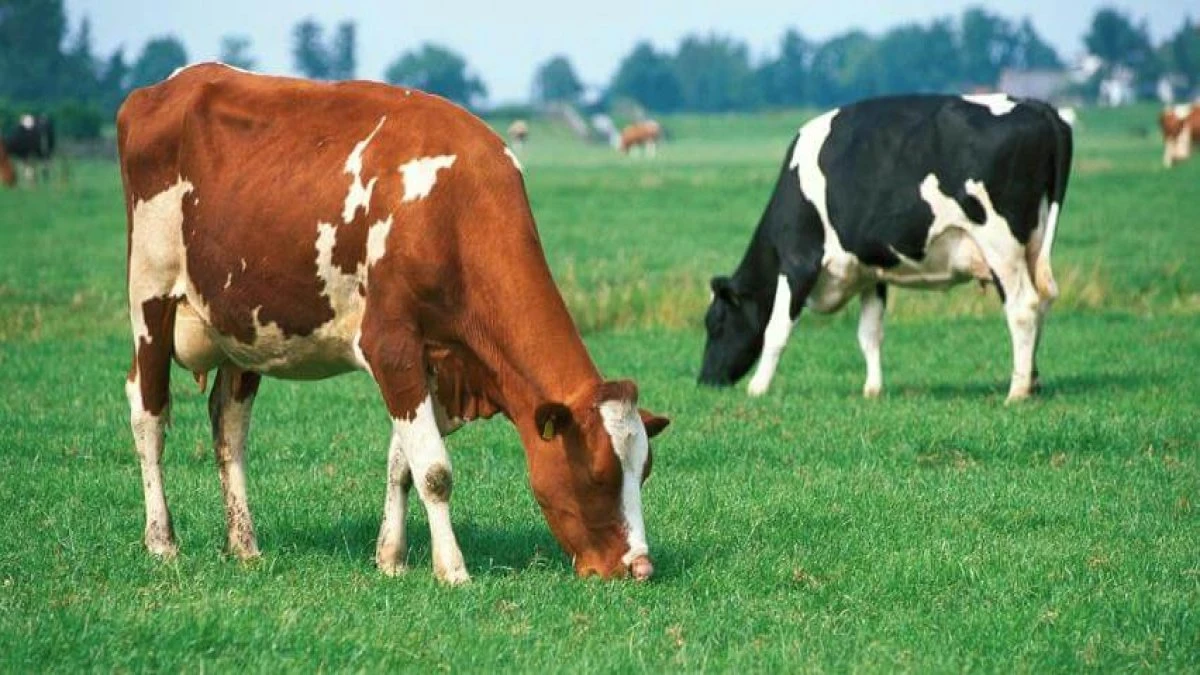
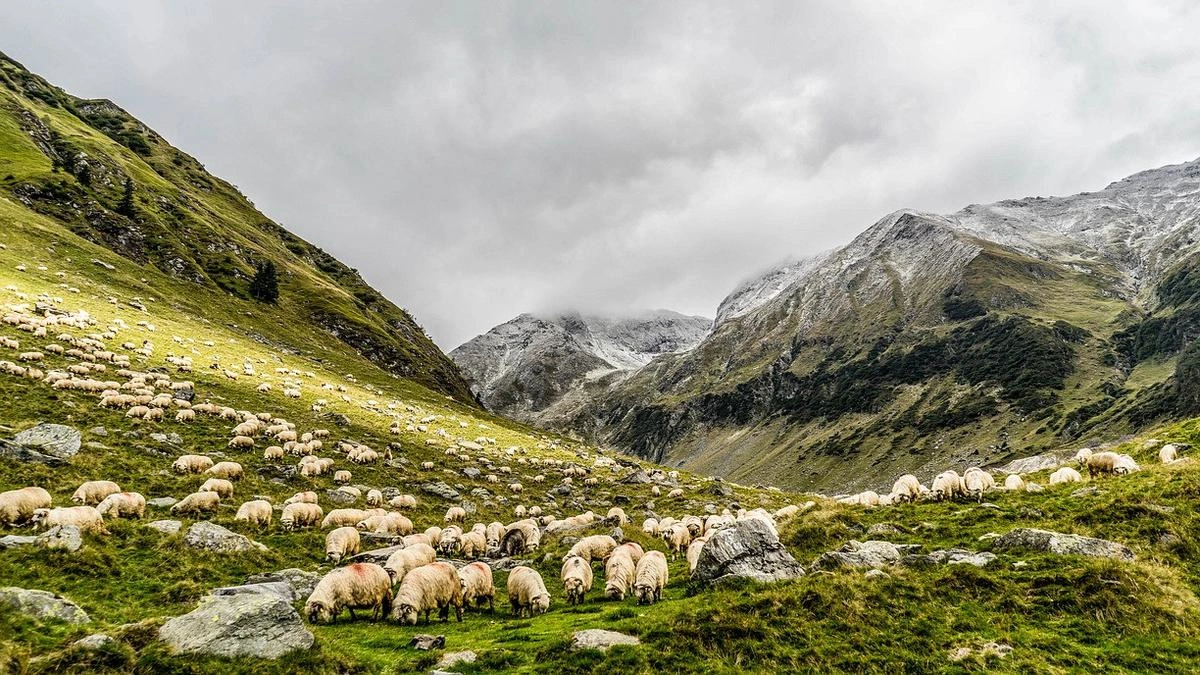
Every summer, Norwegian sheep farmers release roughly 1.8 to 2 million sheep and lambs into unfenced forests, mountain ranges, and valleys across a total grazing area covering nearly half of the mainland. For about 90 to 100 days from early June until the September roundup these animals roam completely unsupervised.
Understanding how outfield grazing norway relies upon operates is fundamental to understanding Nordic agriculture. The traditional practice of outfield grazing norway maintains is an economic necessity for smallholdings, but it is also the core engine driving Scandinavia’s fiercest wildlife management disputes.
Because sheep graze untethered across vast wildernesses, preventing predator attacks is virtually impossible, and proving what killed a missing animal is equally difficult. Studying how outfield grazing norway functions reveals why sheep farmers and predator conservationists look at the exact same landscape and arrive at fundamentally irreconcilable conclusions.
What outfield grazing is
In Norwegian agriculture, outfield grazing norway utilizes is known locally as utmarksbeite: the systemic release of livestock onto uncultivated public and private land (utmark) during the summer months. It stands in contrast to innmark, the fenced, cultivated arable fields surrounding farmsteads.
The seasonal rhythm of outfield grazing norway manages is straightforward:
-
Late May to June: Ewes and their young lambs are driven or trucked out to mountain plateaus and pine forests.
-
June through August: Livestock spend the sheep summer pasture season unsupervised, foraging on high-protein wild flora, native grasses, and shrubs.
-
September: Farmers, dogs, and local volunteers organize massive multi-day collection sweeps (sanking) to haul the flocks back down before autumn snows arrive.
Crucially, under the model of outfield grazing norway practices, “unsupervised” means precisely that. Farmers do not sleep out with their herds, nor do shepherds guide flocks daily across terrain. Flocks scatter into small family units across thousands of rugged hectares, making daily welfare checks non-existent.
Why the system exists at all
To understand why farmers continue using outfield grazing norway wide rather than simply fencing their livestock in pastures, one must examine mountain geography and agricultural economics. Norway’s topography is dominated by rock, peat, and steep slopes; less than 3% of the country’s land area is arable farmland.
That limited arable land (innmark) is vital. During the short Nordic growing season, farmers must harvest every available square meter of grass for silage and hay to feed livestock through six months of sub-zero winter. If sheep grazed on cultivated fields during the summer instead of relying on outfield grazing norway supports, farms would run out of winter fodder, forcing growers to buy imported feed that would ruin the micro-economics of smallholdings.
Furthermore, state subsidy structures actively incentivize utmarksbeite. Government payments reward producers for maintaining open cultural landscapes through outfield grazing norway encourages, preventing forest rewilding, and supporting rural livelihoods in remote municipalities. The free forage offered by mountain ranges is the single factor that keeps small-scale hill farming financially viable across northern and western districts.
Who has the right to graze where
Grazing rights (beiterett) across the areas designated for outfield grazing norway utilizes are governed by centuries-old property law and complex customary rights. Holding a title to a farm does not mean grazing is restricted to that plot’s boundaries.
-
State Commons (Statsallmenning): Enormous tracts of land, particularly in mountain regions, owned by the state where local farmers hold statutory rights for outfield grazing norway regulates under the Mountain Act (Fjelloven).
-
Community Commons (Bygdeallmenning): Land owned collectively by a group of farms in a valley.
-
Private Outfield (Privat Utmark): Even on privately owned land, neighboring farms often possess historic easements (hevd) allowing their livestock to traverse and feed across property boundaries.
To streamline management, farmers form local grazing associations (organized outfield grazing areas or beitelag). These cooperatives coordinate release dates, maintain salt licks, build boundary fences, and organize the autumn roundup.
How losses are counted
The statistics surrounding sheep losses in outfield grazing norway registers trigger intense public debate. These cases are recorded through wildlife reporting systems similar to the broader fallvilt management process used for animals that die outside normal hunting. The dispute centers on what actually killed them.
Losses in outfield grazing norway tracks split into two main operational channels:
1. Non-Carnivore Losses
Thousands of sheep die from natural causes completely unrelated to predators: falling off crags, drowning in high rivers, contracting tick-borne illness (sjodogg), ingestion of poisonous plants (like Narthecium ossifragum), or disease. In areas with no carnivore populations, baseline natural mortality during outfield grazing norway averages 2% to 5% of a flock.
2. Carnivore-Attributed Losses
When large carnivores (wolverines, lynx, brown bears, wolves, or golden eagles) kill sheep, the economic damage falls heavily on specific regions. Data published by the Norwegian Environment Agency (Miljødirektoratet) shows that state authorities compensate farmers for approximately 15,000 to 20,000 sheep killed by protected predators annually during outfield grazing norway monitors.
Impacts vary across species:
-
Wolverine (Gulo gulo): Represents the largest share of annual sheep loss claims.
-
Lynx (Lynx lynx): Causes high losses in forest regions.
-
Bear (Ursus arctos): Causes severe localized damage to ram flocks.
-
Wolf (Canis lupus): Causes high impact, but largely confined to specific designated zones.
These disagreements are part of wider human-wildlife conflicts where farming interests and species conservation goals overlap.
Farmers argue that finding a carcass across vast, forested wildernesses before scavengers consume it is impossible, meaning true loss numbers from outfield grazing norway records are undercounted. Conservation groups argue that the state compensates thousands of unverified natural deaths under the label of “probable carnivore damage” to appease agricultural lobbyists. Both perspectives stem from the physical realities of unsupervised grazing.
Compensation and how a claim actually works
When a sheep goes missing or is found dead, the farmer interacts with the State Inspectorate for Nature (Statens naturoppsyn or SNO). The legal threshold for payouts distinguishes between documented damage and probable damage.
-
Discovery and Reporting: The farmer finds a dead animal or notices missing sheep during periodic checks and notifies the SNO.
-
SNO Field Inspection: A trained inspector travels to the site, examines bite patterns, skin subcutaneous hemorrhaging, claw marks, and nearby tracks to confirm if a large carnivore caused the death.
-
Filing Depredation Claims: At the end of the season, the farmer submits formal depredation claims to the County Governor (Statsforvalteren).
-
Probability Evaluation: For missing animals with no carcass, administrators evaluate local carnivore activity data (GPS collar tracks, scat samples, verified kills nearby). If carnivores were active in the grazing district, missing sheep from outfield grazing norway regions are written off as probable losses and paid out at market rates.
Guard measures and what they cost
Under national biodiversity policy, livestock owners participating in outfield grazing norway regulates can apply for grants to implement preventative guard measures, but their practical application faces major operational hurdles:
-
Carnivore-Proof Fencing: High effectiveness within enclosed fields, but impossible across open mountains. It costs up to 150 to 200 NOK per meter and conflicts with the public right-to-roam (Allemannsretten).
-
Livestock Guard Dogs: Effective in fenced pastures, but dangerous on open trails. They require specialized training and create conflicts with hikers, pets, and tourists in open mountain areas.
-
Early Gathering (Tidligsanking): Reduces late-summer wolverine attack windows, but cuts lamb growth rates, reducing slaughter weight and farm revenue.
-
Bells and GPS Collars: Helps locate carcasses faster for inspection, but comes with high equipment costs and does not prevent an active predator attack.
While guard measures work well in fenced, intensive agricultural systems found in North America or Western Europe, they struggle in the open-access system of outfield grazing norway maintains.
Where the zoning line changes everything
This approach is connected with Norway’s regional carnivore zoning and management zones, where authorities decide which areas prioritize predators and which prioritize livestock production. The government divides regions into designated carnivore priority zones and livestock priority zones.
To see how regional carnivore policy operates on the ground, read our full breakdown of regional carnivore zoning and management zones.
For a sheep farmer utilizing outfield grazing norway designates, sitting on the wrong side of that administrative boundary changes everything:
-
Inside a Carnivore Zone: The state prioritizes breeding populations of wolves, bears, or wolverines. Farmers receive higher grants for mitigation, but bear the brunt of livestock losses, with emergency culling licenses granted only in extreme scenarios.
-
Inside a Livestock Zone: Agricultural interests take priority. If a large carnivore enters areas prioritized for outfield grazing norway protects, the State Administrator quickly issues culling permits to protect grazing flocks.
The read
The current system of outfield grazing in Norway sits in a delicate balance. You cannot maintain free-ranging livestock without experiencing losses, nor can you recover viable carnivore populations without generating conflict over those same losses.
As political pressures mount to meet both agricultural production targets and international biodiversity commitments, something has to give. Either Norway must accept higher public expenditure to subsidize carnivore-proof farm conversions, or accept that carnivore recovery will inevitably shrink the footprint of traditional mountain sheep farming.
Keep a close eye on early-season predator culling quota decisions ahead of the upcoming summer pasture release.
Frequently Asked Questions
What is outfield grazing in Norway?
Outfield grazing (utmarksbeite) is the practice of releasing livestock into unfenced mountain, forest, and coastal terrain during summer to forage on natural vegetation, leaving arable fields free to grow winter feed.
How long is the Norwegian grazing season?
The grazing season typically runs for 90 to 100 days, starting in late May or early June and concluding with organized community roundups in September.
How many sheep are lost in the outfield each year?
Approximately 100,000 to 120,000 sheep and lambs fail to return from the outfield each year due to a mix of natural accidents, diseases, tick-borne illnesses, and predator attacks.
How does carnivore compensation work?
Farmers submit depredation claims to the County Governor. Payments are issued for verified kills inspected by State Inspectorate officers, as well as missing sheep deemed probable carnivore losses based on regional predator tracking data.
Do guard measures actually reduce losses?
Guard measures like early gathering and electric fencing can reduce attacks, but their effectiveness is limited by Norway’s vast, unfenced terrain and public right-to-roam laws.
Who owns the right to graze in the outfield?
Grazing rights (beiterett) are legally distinct from land ownership. They are held through historic easements, community commons (bygdeallmenning), or statutory rights on state commons (statsallmenning).
