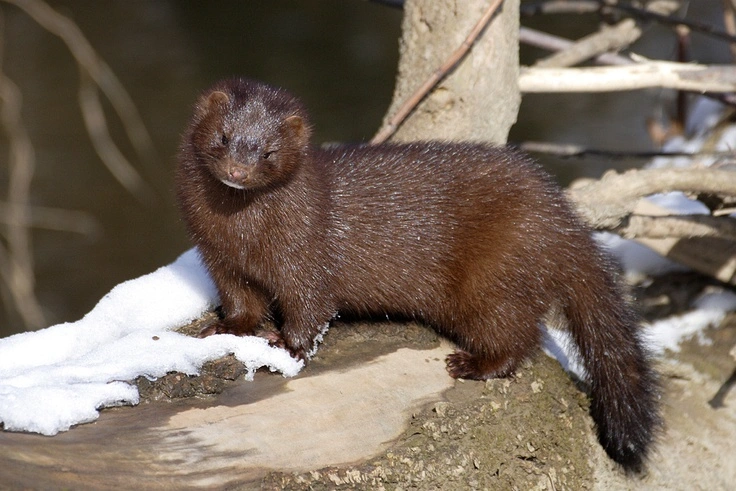
Minks are small, secretive predators that are closely connected to water. Their long bodies, short legs, dark fur, and sharp hunting skills make them easy to recognize once you know what to look for. Although they may look somewhat like otters or weasels, minks have their own distinctive habits and lifestyle.
When people search for Mink Facts, they often want to know where these animals live, what they eat, whether they can swim, and how they behave when they encounter other animals. The answers reveal a surprisingly adaptable mammal that can hunt both in water and on land.
This guide from Viltnemnda explores the most useful Mink Facts simply, covering their habitat, diet, behavior, homes, distribution, and some lesser-known details about life in the wild.
Key Takeaways
The most interesting thing about minks is their connection between land and water. They are not completely aquatic animals like otters, nor are they strictly land-based hunters. Instead, they use both environments to find food, travel, hide, and survive.
Their flexible diet also helps explain their success in different habitats. When one food source becomes less available, they can take advantage of other suitable prey.
For anyone interested in wildlife, minks are a good example of how a relatively small predator can be highly adaptable without needing a large territory of completely open land.
What Is a Mink?
A mink is a small carnivorous mammal belonging to the mustelid family, the same broader family that includes weasels, badgers, and otters. The American mink is commonly identified by its scientific name Neogale vison, although older sources often use Mustela vison or Neovison vison.
American minks have long, flexible bodies, short legs, small rounded ears, and a relatively bushy tail. Their fur is usually dark brown to nearly black, and many individuals have a small white marking around the chin or throat.
One of the most important Mink Facts is that these animals are strongly associated with water. Rivers, streams, lakes, ponds, marshes, and wetlands provide both shelter and hunting opportunities.
Where Do Minks Live?
Mink Habitat
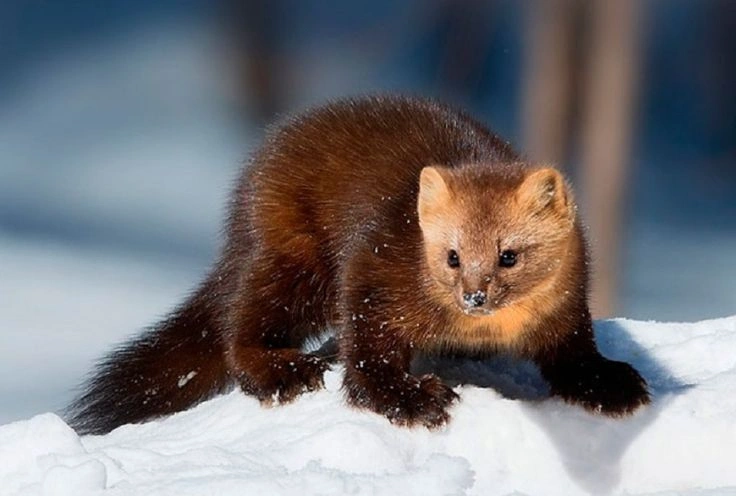
Minks generally choose habitats where water and protective cover are close together. Streambanks, lake edges, marshes, wetlands, and wooded shorelines can provide excellent conditions for them.
They particularly benefit from areas containing fallen trees, thick vegetation, rocks, roots, and natural debris. These features give minks places to hide while also creating opportunities to find prey.
The U.S. Forest Service notes that water is a critical habitat feature for American minks, with streambanks, lakeshores, and marshes among their preferred environments. Smaller streams can be especially suitable when they provide plenty of cover and food.
Where Are Minks Found?
American minks are native to much of North America. Their natural range extends across large parts of Canada and the United States, with the species generally associated with areas containing suitable water and prey.
They have also been introduced to areas outside their native range. In parts of Europe, free-ranging American mink populations became established after escapes and releases from fur farms. Because of their ability to adapt to different habitats and food sources, they can survive successfully in many environments.
It is important to distinguish the American mink from the European mink. They are different species, and the European mink has a much more restricted distribution and is considered endangered.
What Do Minks Eat?
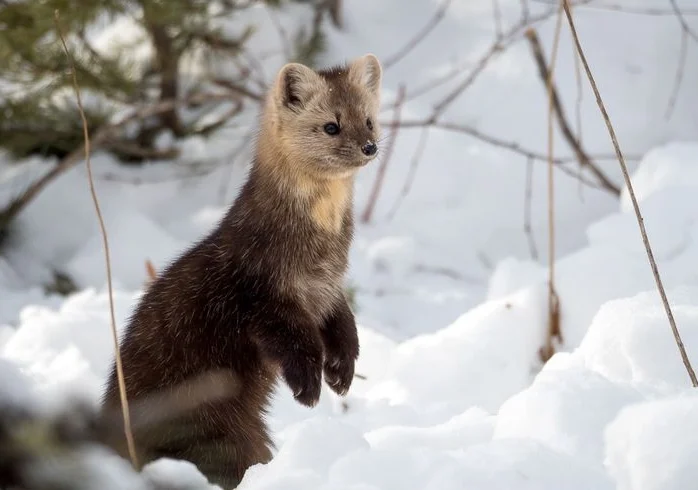
Minks are carnivores, but their diet is not limited to one particular type of prey. They are flexible hunters and usually eat whatever suitable food is available in their surroundings.
Their diet can include:
- Fish
- Frogs
- Crayfish
- Small mammals
- Mice and voles
- Muskrats
- Birds
- Bird eggs
- Snakes
- Insects
- Other small aquatic animals
The exact menu can change according to season, habitat, and local prey availability. Research from the U.S. Forest Service describes American mink as almost exclusively carnivorous and notes that they hunt both aquatic and terrestrial prey.
This flexibility is one reason minks can live in different environments. If fish are difficult to find, a mink may rely more heavily on mammals, amphibians, birds, or other available prey.
How Do Minks Hunt?
Excellent Swimmers
One of the most interesting Mink Facts is how comfortable these animals are in water. Minks are strong swimmers and can pursue prey in aquatic environments.
Their long bodies and short legs may not look particularly powerful, but their body structure allows them to move efficiently through water and along shorelines. They can also dive while searching for prey.
This makes the edge between land and water an ideal hunting zone. A mink can move along a streambank, investigate vegetation or rocks, and then enter the water when an opportunity appears.
Skilled Land Hunters
Minks are not dependent on fish or aquatic prey. They also hunt on land and can catch small mammals and birds.
Their diet therefore reflects both sides of their habitat. Near a stream, for example, a mink may encounter fish and frogs in the water while finding mice or other small mammals along the bank. This combination gives the animal several feeding options.
Mink Behavior in the Wild
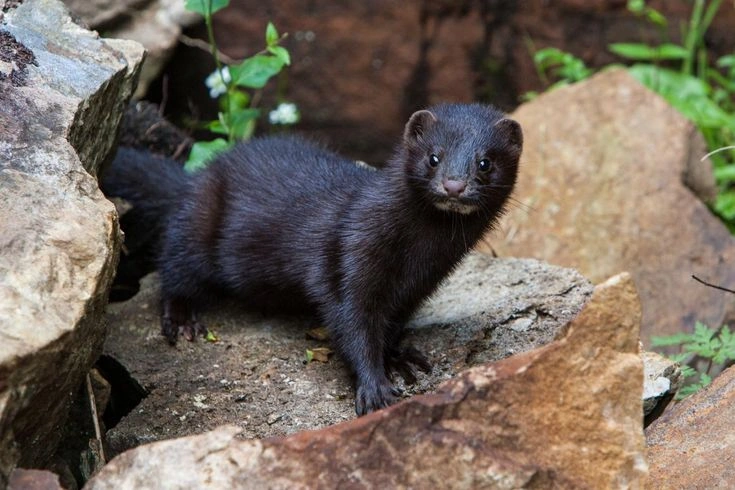
Minks are generally solitary animals. They do not normally live in large social groups, and males can be particularly intolerant of other males.
They also use scent to communicate. Minks have scent glands that help them mark territory and communicate information to other individuals. These scent signals can provide clues about territory and reproductive status.
Their activity pattern can vary depending on location and circumstances. American minks are often active around dawn, dusk, and during nighttime hours, although research has also documented activity during daylight in some introduced European populations.
This secretive lifestyle means that seeing a mink in the wild can be much harder than knowing that one is living nearby.
Where Do Minks Sleep?
Minks usually stay close to water and use protected places as dens. They may create burrows in streambanks or use existing shelters made by other animals.
Possible den locations include holes beneath tree roots, spaces under logs, cavities in banks, rock piles, and abandoned muskrat or beaver shelters.
A mink does not necessarily depend on one permanent shelter. Depending on the individual and habitat, several denning locations may be available within its home range.
The inside of a den can be lined with natural materials such as grass, leaves, feathers, or fur, creating a more protected resting space.
Are Minks Good Swimmers?
Yes. Swimming is one of the mink’s strongest natural abilities.
Their relationship with water is much more than simply living near a river or lake. Minks can enter the water to escape danger, investigate their surroundings, and search for prey.
Their ability to hunt both in water and on land gives them an advantage in habitats where food sources change throughout the year.
Are Minks Dangerous?
Wild minks are predators, but that does not mean they normally pose a threat to people. They are generally secretive animals that prefer avoiding human contact.
Like other wild mammals, however, a mink should be given space. A wild animal that feels trapped or threatened can defend itself.
For people observing wildlife, the safest approach is simple: watch from a distance and avoid attempting to capture, feed, or handle a wild mink.
American Mink vs. European Mink
The names can confuse because American mink and European mink are not the same animal. The American mink is widespread across much of North America and has also established populations in parts of Europe. The European mink, Mustela lutreola, has a much smaller remaining range and is classified as endangered.
The spread of American mink outside its native range has also raised ecological concerns in Europe. Research has documented its broad diet and ability to adapt its feeding behavior to different environments.
Understanding this difference is important when reading about mink conservation or wildlife management.
Mink Facts You Should Remember
If you only remember a few facts, these are the ones worth keeping in mind:
- Minks are carnivorous mammals from the mustelid family.
- American minks are native to much of North America.
- They strongly prefer habitats near water.
- Rivers, streams, lakes, marshes, and wetlands can provide suitable habitat.
- Minks eat both aquatic and terrestrial prey.
- Fish, frogs, crayfish, rodents, birds, and other small animals can form part of their diet.
- They are excellent swimmers and capable land hunters.
- Minks are generally solitary and territorial.
- They commonly use burrows, bank holes, roots, logs, and abandoned animal shelters as dens.
- American mink populations have become established outside their native range, including parts of Europe.
E-E-A-T Note
The information in this article is based on established wildlife references and scientific literature covering American mink habitat, diet, behavior, distribution, and ecology. Sources include the U.S. Geological Survey, U.S. Forest Service, National Park Service, Animal Diversity Web, and peer-reviewed research on American mink ecology. Individual mink behavior can vary according to location, season, prey availability, and local environmental conditions.
Frequently Asked Questions
Are minks nocturnal?
Minks are often most active around dusk, dawn, and nighttime, although their activity can vary with location, season, and environmental conditions. Studies of American mink in Europe have also recorded activity during daylight hours.
What is a mink’s favorite food?
There is no single food that every mink prefers. Their diet changes according to habitat and availability, but fish, small mammals, frogs, crayfish, birds, and other small animals can all be important food sources.
Do minks live alone?
Yes, minks are generally solitary animals. They maintain individual areas and use scent marking to communicate territorial information.
Can minks climb?
Yes. Minks are capable climbers as well as swimmers and ground-based hunters. Their ability to move through different environments helps them search for food and shelter.
Where do minks make their dens?
Minks can use holes in streambanks, spaces beneath roots and logs, rock piles, hollow areas, and abandoned burrows or shelters made by animals such as muskrats. Their dens are usually close to suitable water and food sources.
Are American mink and European mink the same?
No. They are different species. American mink are widespread and have been introduced into parts of Europe, while European mink have a much more restricted range and are classified as endangered.
