Key Takeaways
A wolf spider is a highly adaptable ground hunter found across much of the world. Its speed, hairy body, and large eyes can make it look dangerous, but its normal behavior toward people is avoidance rather than aggression.
Unlike many familiar spiders, the wolf spider usually hunts without a large prey-catching web. Instead, it actively searches for insects and other small arthropods, making it an important predator in terrestrial ecosystems.
Perhaps the most remarkable feature is its maternal care. Female wolf spiders carry their egg sacs and, in many species, transport newly emerged spiderlings on their bodies. Recent research shows that this behavior can involve surprisingly flexible responses to environmental risks.
Finally, the wolf spider bite risk is generally low. Most documented bites produce temporary local symptoms such as pain, redness, swelling, or itching. However, rare systemic reactions have been reported, so severe or unusual symptoms should receive medical attention.
For more nature, wildlife, and animal information, viltnemnda can use this topic alongside related educational articles to help readers understand animals without relying on common myths or exaggerated claims.
Quick Answer
A wolf spider is a member of the Lycosidae family and is an active ground hunter rather than a typical web-building spider. Wolf spiders occur across much of the world and occupy habitats ranging from grasslands and forests to beaches, gardens, fields, and underground burrows.
Most wolf spiders are not considered dangerous to people. A bite can cause pain, redness, swelling, or itching, but verified clinical studies generally describe wolf spider bites as producing minor local effects. Nevertheless, unusual or severe symptoms should be medically assessed because not every suspected spider bite is actually caused by a wolf spider.
What Is a Wolf Spider?
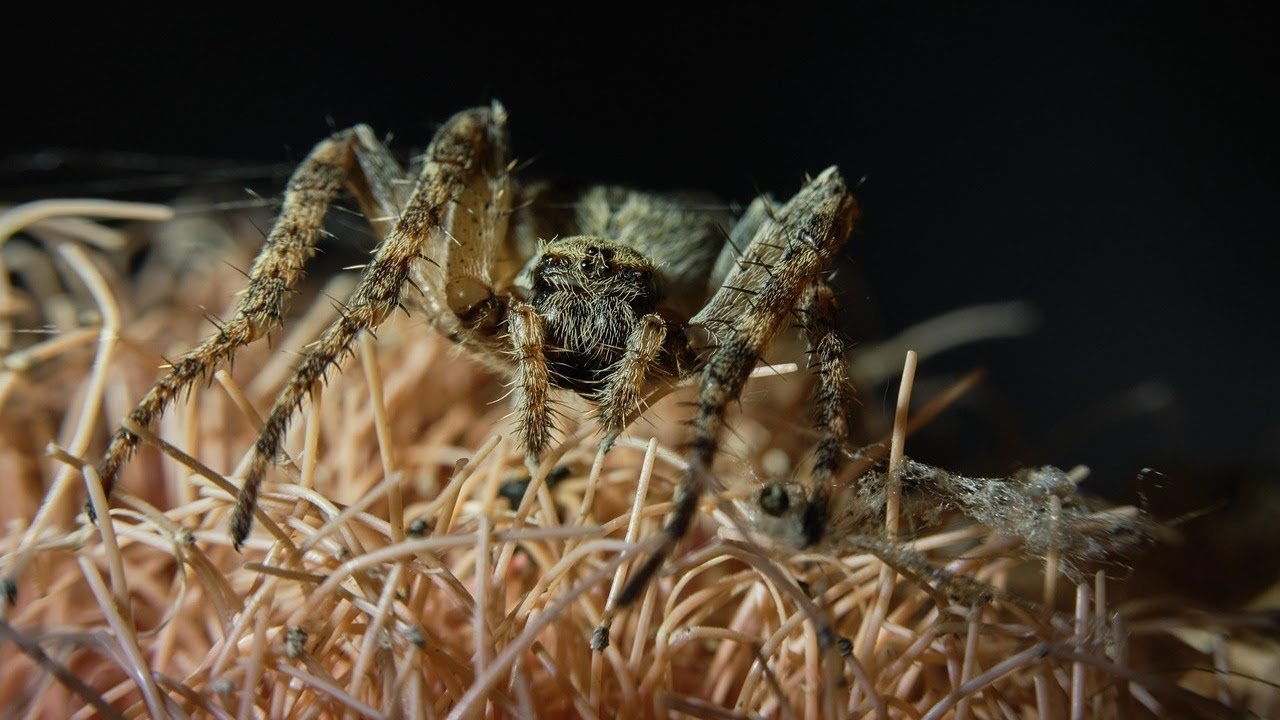
The name wolf spider refers to a large and diverse spider family rather than one single species. Scientifically, wolf spiders belong to the family Lycosidae within the order Araneae.
Modern research describes Lycosidae as a globally distributed family containing thousands of species. A 2026 medical review notes 2,419 species in 124 genera, while recent taxonomic work continues to refine the classification as new species are described and relationships are reassessed.
Consequently, wolf spiders can look quite different from one another. Some are small, while others are comparatively large. Their colors commonly include shades of brown, gray, tan, and black, which can help them blend into soil, leaves, bark, and other natural surroundings.
How to Identify a Wolf Spider
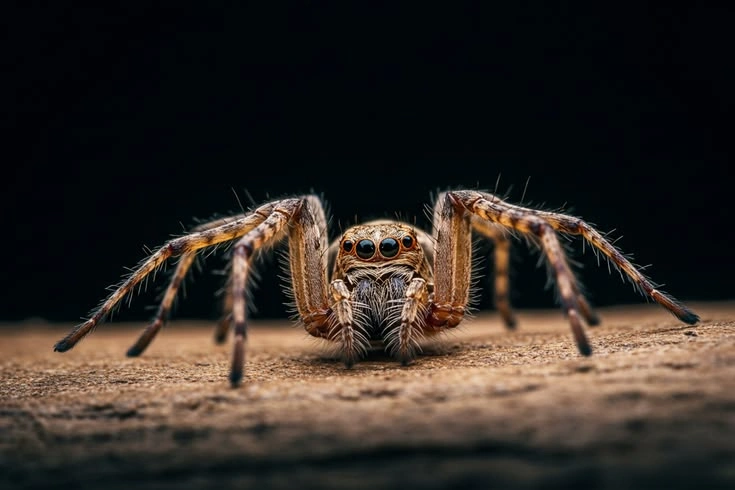
One of the most useful identification features is the eye arrangement. Wolf spiders have eight eyes arranged in three rows, including four smaller eyes in the front row, two noticeably larger eyes in the middle row, and two more eyes positioned higher on the head.
They also tend to have long, hairy legs and a relatively robust body. Their brown or gray coloration can make them difficult to notice when they are sitting still on soil or among dry leaves.
| Feature | Wolf Spider |
|---|---|
| Family | Lycosidae |
| Legs | 8 |
| Typical lifestyle | Active ground hunter |
| Main hunting method | Chasing or ambushing prey |
| Large prey-catching web | Usually absent |
| Common habitats | Fields, forests, gardens, grasslands, shorelines and burrows |
| Egg care | Female carries egg sac |
| Young | Often carried on the mother’s abdomen |
| Risk to humans | Usually low |
Identification can still be difficult because several unrelated spiders have similar body shapes and colors. Therefore, size or color alone should not be used to identify a wolf spider.
Where Do Wolf Spiders Live?
Wolf spiders have an exceptionally broad distribution. Scientific research describes the Lycosidae family as occurring worldwide, and recent work continues to document its global diversity.
They can live in grasslands, forests, agricultural areas, gardens, fields, beaches, shorelines, leaf litter, and other terrestrial environments. Some species live underground or construct burrows, while others remain more active on the surface.
Furthermore, wolf spiders are not limited to warm environments. Different species have adapted to very different climates and habitats. Their ability to move actively and disperse has contributed to the family’s wide geographic distribution.
You may also encounter a wolf spider around buildings when outdoor conditions or prey availability bring it close to human structures. Finding one indoors does not necessarily mean that a population is established inside the building.
What Does a Wolf Spider Eat?
A wolf spider is primarily a predator of other small animals. In particular, it commonly targets insects and other arthropods that move across the ground or vegetation.
Instead of waiting for an insect to become trapped in a large web, the spider actively searches for prey. It may detect movement, approach quickly, and then capture the animal with its legs and jaws.
As a result, wolf spiders can play a useful ecological role by feeding on insects and other arthropods. They are predators rather than plant-feeding pests, and extension resources generally describe spiders as beneficial components of ecosystems.
How Does a Wolf Spider Hunt?
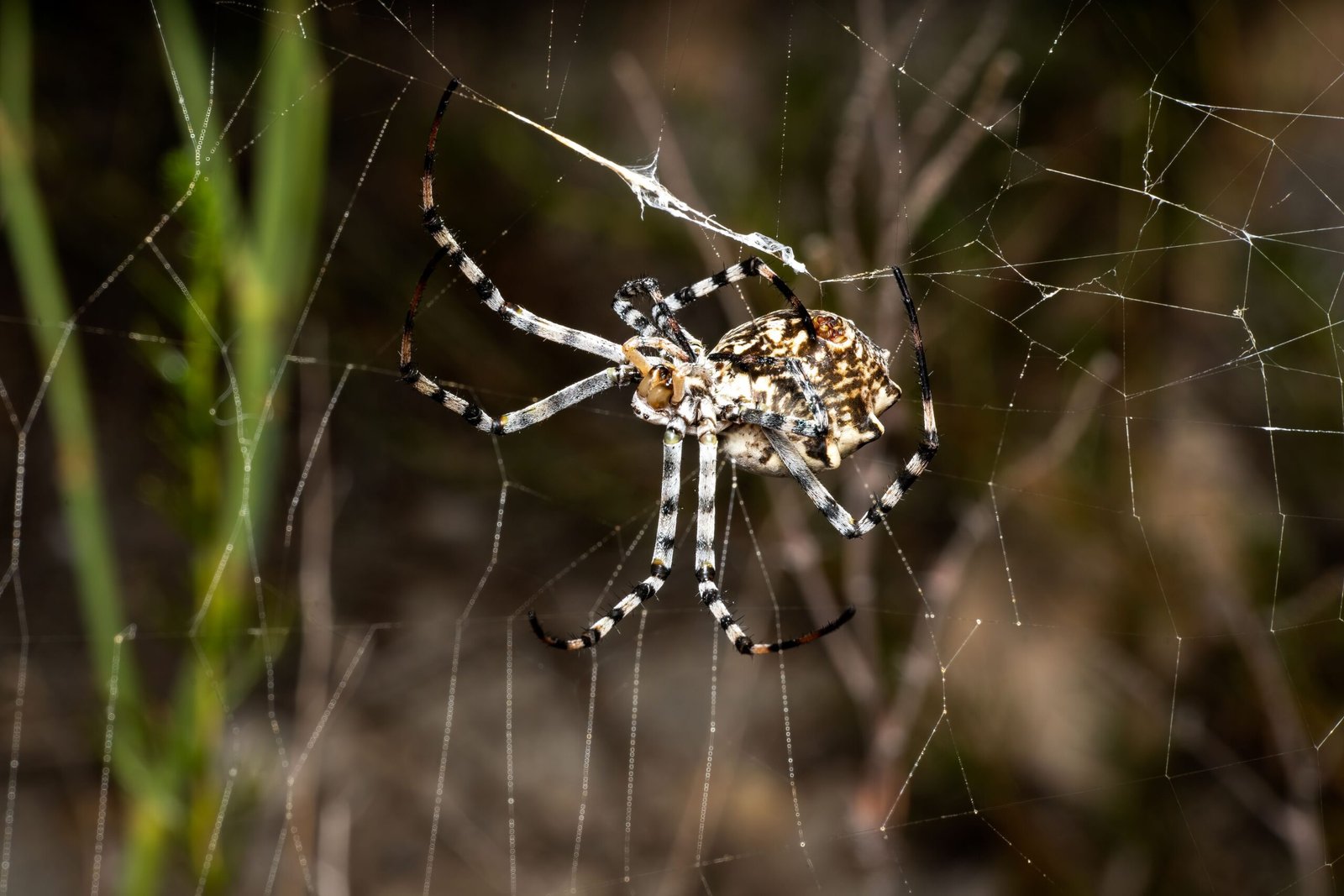
The hunting style is one of the most interesting things about a wolf spider. Most species do not construct large prey-catching webs. Instead, they actively search for prey, often moving across the ground or through leaf litter.
Some wolf spiders use retreats or burrows as places to shelter. These silk structures are different from the classic webs people usually associate with spiders because they are not primarily designed to trap passing insects.
Moreover, wolf spiders can be active during both daylight and darkness, depending on the species and environmental conditions. Some are easier to spot at night because their eyes can reflect light from a flashlight.
Wolf Spider Behavior
A wolf spider is generally a solitary predator. Its behavior is shaped by hunting, avoiding predators, finding shelter, mating, and reproduction.
Despite their fast movements, wolf spiders are not normally aggressive toward people. When disturbed, their usual response is to flee rather than attack.
Their speed can nevertheless make them appear more threatening than they actually are. A large spider suddenly running across a floor can cause alarm, although rapid movement itself is not evidence of aggression.
Why Do Wolf Spiders Have Such Large Eyes?
Vision is important for many wolf spiders. Their distinctive eye arrangement is associated with their active hunting lifestyle, allowing them to detect movement and navigate their surroundings.
However, wolf spiders do not rely on vision alone. Like other spiders, they can use sensory information from their environment to detect nearby movement and vibrations.
The Wolf Spider’s Remarkable Maternal Care
One of the most fascinating facts about a wolf spider is the way females care for their offspring.
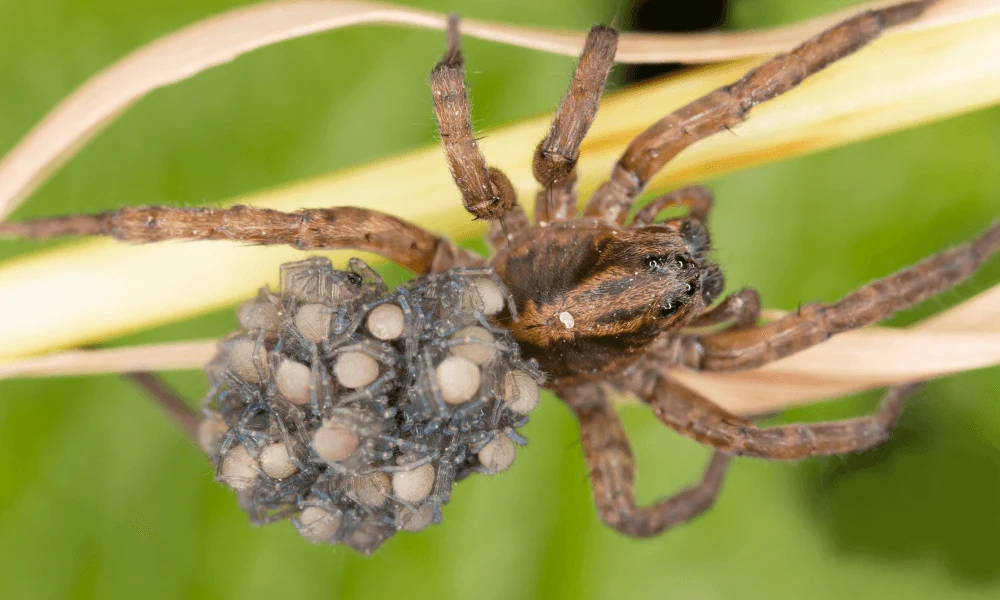
After producing an egg sac, the female carries it attached to her spinnerets. This allows her to remain mobile while protecting the developing eggs.
After the spiderlings emerge, many wolf spider species carry the young on the mother’s abdomen. This behavior is unusual among spiders and has been studied as an important example of maternal care in arthropods.
Recent research has added another layer to this behavior. A 2025 study of Pardosa pusiola found that mothers can adjust egg-sac opening and escape behavior according to environmental risks such as sunlight, predators, and flooding.
Therefore, the maternal behavior of a wolf spider is more complex than simply carrying eggs. Researchers continue to investigate how mothers respond to their developing offspring and changing environmental conditions.
Are Wolf Spiders Dangerous?
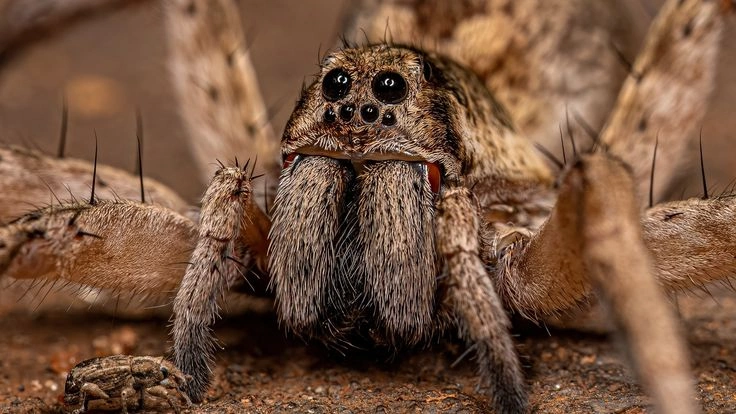
For most people, encountering a wolf spider is not a serious health concern. Extension and medical sources generally describe wolf spider bites as causing limited local effects rather than severe poisoning.
Still, “usually mild” does not mean that every reaction is identical. A confirmed Australian study involving 45 wolf spider bites found pain in all cases, while redness, swelling, itching, and fang marks occurred in some patients. No necrotic ulcers were reported in that study.
Similarly, medical literature has challenged the older belief that wolf spider bites commonly cause tissue necrosis. Verified studies have not supported that association.
There is, however, a notable recent exception. A 2026 case report described a child who developed nausea, vomiting, severe abdominal pain, and headache after a confirmed wolf spider bite. The symptoms resolved within several hours with supportive care, but the report shows why unusual systemic symptoms should not simply be dismissed.
Wolf Spider Bite Symptoms
A wolf spider bite may cause:
| Possible symptom | What research shows |
| Pain | Common |
| Redness | Commonly reported |
| Local swelling | Can occur |
| Itching | Can occur |
| Puncture or fang marks | Sometimes present |
| Nausea or headache | Uncommon |
| Tissue necrosis | Not supported as a typical effect |
The severity can vary with the individual, the spider species, and the circumstances of the bite. Therefore, a suspected wolf spider bite should be monitored rather than automatically assumed to be harmless.
What to Do After a Wolf Spider Bite
If a bite occurs, gently wash the area with soap and water. A cold pack or cool damp cloth can help with discomfort and swelling, while scratching should be avoided because damaged skin can become infected.
Most uncomplicated reactions improve without specific medical treatment. However, medical evaluation is appropriate when symptoms become severe, continue to worsen, or include signs of infection.
Seek urgent medical attention for serious symptoms such as difficulty breathing, severe swelling, widespread rash, severe dizziness, repeated vomiting, or other signs of a significant systemic reaction.
It is also important not to assume that every unexplained skin wound is a spider bite. Cleveland Clinic notes that identifying the actual spider is the only reliable way to establish that a particular spider caused the bite.
Wolf Spider vs. Other Spiders
A wolf spider can easily be confused with other large, fast-moving spiders. Fishing spiders, for example, can look similar in size, shape, and color.
The eye pattern is therefore more useful than simply judging whether a spider looks large or hairy. Professional identification may be necessary when an exact species matters.
| Characteristic | Wolf Spider | Typical Web-Building Spider |
| Hunting style | Active hunting | Often waits in web |
| Large prey-catching web | Usually no | Often yes |
| Ground activity | Common | Varies |
| Speed | Often fast | Varies |
| Female egg care | Carries egg sac | Varies by family |
| Young carried by mother | Common in Lycosidae | Not typical for most spiders |
How to Keep Wolf Spiders Out of Your Home
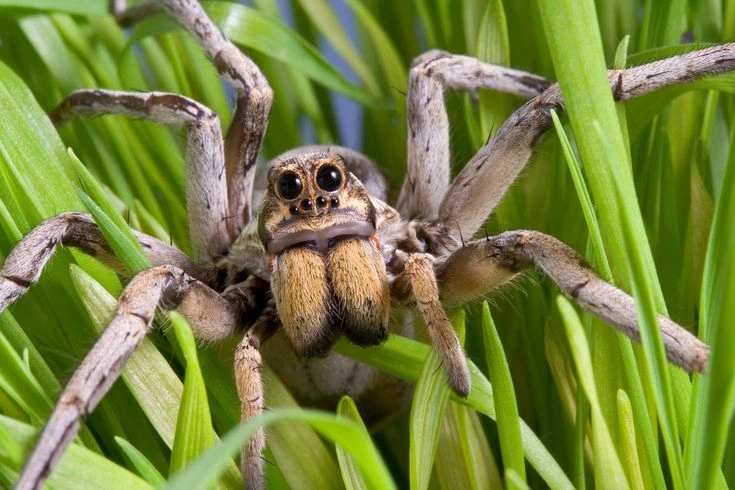
Because wolf spiders are predators, reducing the insects around a building can also reduce the food available to them. Keeping indoor areas clean and reducing unnecessary hiding places can help.
Seal obvious gaps around doors, windows, and other entry points where practical. Outdoor lighting can also attract insects, which may indirectly attract hunting spiders.
Most importantly, avoid handling a wolf spider with bare hands. A spider that is trapped against the skin may bite defensively, even though it is not naturally aggressive toward people.
Common Mistakes About Wolf Spiders
Mistake 1: Assuming every large hairy spider is a wolf spider
Several spiders can look similar. Reliable identification should consider multiple features, particularly the eyes and overall body structure.
Mistake 2: Believing wolf spiders build large webs to catch prey
Most wolf spiders actively hunt instead of relying on large prey-catching webs. Some species still produce silk retreats or live in burrows.
Mistake 3: Assuming a wolf spider is aggressive
Fast movement can look threatening, but wolf spiders generally avoid people and bite primarily when handled or trapped against the skin.
Mistake 4: Blaming every serious skin lesion on a spider
Medical research has shown that suspected spider bites are often difficult to verify. In particular, older claims about wolf spiders causing necrotic wounds have not been supported by well-documented studies.
Wolf Spider Facts at a Glance
- Family: Lycosidae
- Type: Hunting spider
- Distribution: Worldwide
- Typical habitat: Ground, leaf litter, vegetation, fields, forests, gardens, beaches and burrows
- Main food: Insects and other small arthropods
- Large prey-catching web: Usually absent
- Activity: Species may be active during the day, at night, or both
- Maternal care: Females carry egg sacs and, in many species, spiderlings
- Human bite risk: Generally low
- Typical bite effects: Pain, redness, swelling or itching
- Serious reactions: Uncommon, but unusual systemic symptoms require medical attention |
Frequently Asked Questions
Are wolf spiders poisonous?
Wolf spiders have venom, as spiders use venom to subdue prey, but their venom is generally not considered medically dangerous to humans. Most documented bites cause local symptoms rather than serious poisoning.
Do wolf spiders bite humans?
Yes. A wolf spider can bite, particularly if it is handled or trapped against the skin. However, wolf spiders generally do not seek out humans to attack.
Can a wolf spider bite cause skin necrosis?
Necrosis is not considered a typical effect of a verified wolf spider bite. Prospective studies from Australia and Brazil found no necrotic ulcers in their documented cases, and later medical reviews questioned the historical association between wolf spiders and necrotic arachnidism.
Do wolf spiders make webs?
Most wolf spiders do not build large webs for catching prey. They are active hunters, although some species use silk retreats or construct burrows.
Are wolf spiders good for the environment?
Yes. Wolf spiders are predators of insects and other arthropods, so they form part of natural food webs and can contribute to the biological control of some insect populations.
Why do wolf spiders carry babies?
Female wolf spiders carry their egg sacs and, after the young emerge, many species carry the spiderlings on their abdomen. This maternal behavior provides protection during an important stage of the young spiders’ development.
Where can wolf spiders be found?
Wolf spiders occur worldwide and occupy many terrestrial habitats. Depending on the species, they may live in forests, fields, grasslands, gardens, beaches, leaf litter, or burrows.
What should I do if a wolf spider bites me?
Wash the area with soap and water and use a cool compress for discomfort or swelling. If symptoms worsen, persist, become widespread, or include breathing difficulty, severe dizziness, repeated vomiting, or signs of infection, seek medical care.
