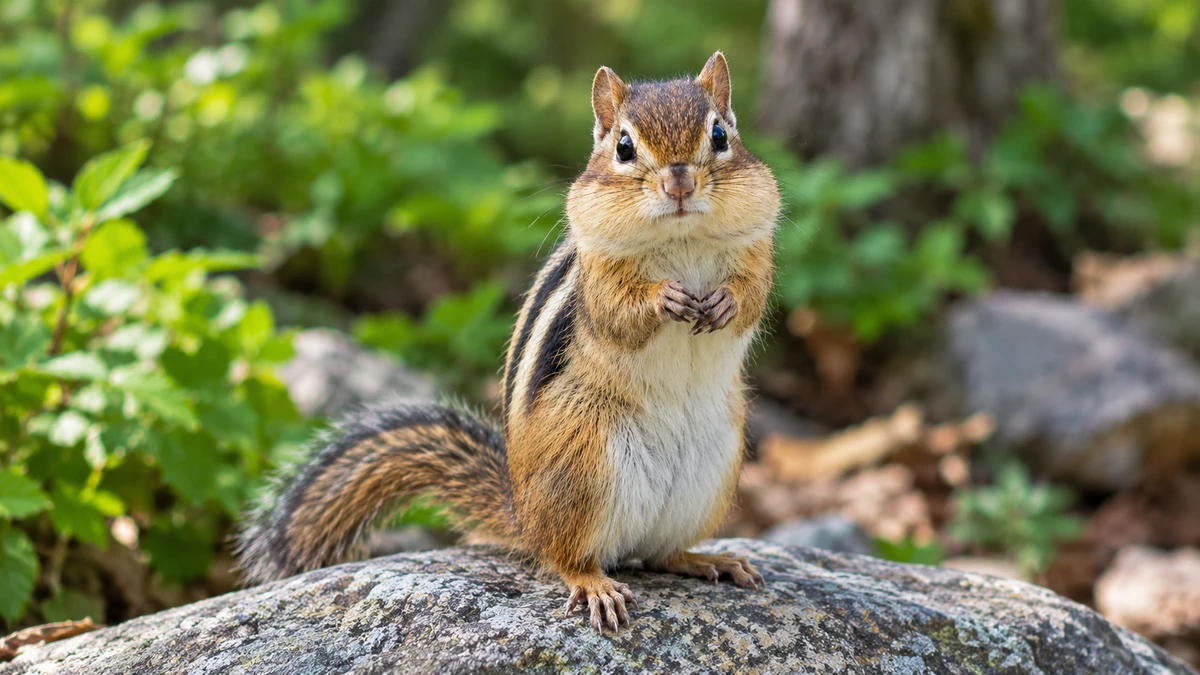
What is a chipmunk exactly? They are tiny members of the squirrel family (Sciuridae) and are classified within the rodent order, Rodentia. These active mammals belong to the tribe Marmotini alongside prairie dogs and marmots. Knowing basic facts helps wildlife enthusiasts identify these striped rodents quickly.
People often want to know how they live, what they eat and how they survive winter. Their underground burrows, expandable cheek pouches and food-storage habits reveal how these small mammals adapt to forests, mountains and backyards.
Key Takeaways
- Classification: Small ground-dwelling rodents belonging to the family Sciuridae, with roughly 25 living species worldwide.
- Identification: Recognized by five dark back stripes, facial stripes and expandable internal cheek pouches.
- Habitats and Burrows: Build complex underground burrows with separate food-storage and nesting areas.
- Winter Strategy: Experience torpor and wake periodically to eat cached food.
- Conservation: Most species are categorized as Least Concern, although certain isolated subspecies face endangerment.
What Do Chipmunks Look Like?
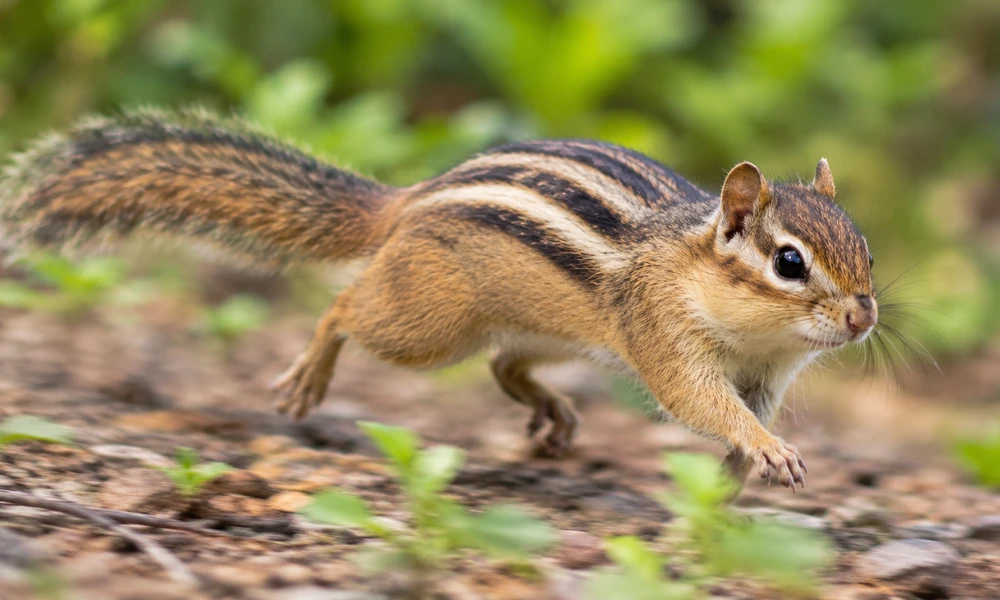
Chipmunks are small, active mammals with prominent dark eyes, upright ears, expandable cheek pouches and somewhat bushy tails. Their striped bodies make them easier to distinguish from many other rodents.
What Are the Main Physical Characteristics of Chipmunks?
Most species measure 8 to 16 cm in body length, with tails measuring 6 to 14 cm. The Eastern chipmunk is the largest species, weighing between 70 and 142 grams.
Their front paws feature four flexible digits with sharp claws designed for digging. Their hind feet have five digits that provide traction on rough terrain. Their tails are shorter and flatter than those of many tree squirrels and often stand upright while they run.
How Do Chipmunks Use Their Cheek Pouches?
Chipmunks can stretch their cheek pouches to carry food, with these roomy pockets extending from the mouth along the sides of the head toward the shoulders. They fill these pouches with seeds and other food before transporting it to underground storage areas.
These pouches allow them to carry multiple food items in one trip rather than moving each item separately.
How Can You Identify a Chipmunk by Its Stripes?
Look for these identifying features:
- Five dark brown stripes running along the back.
- Two lighter stripes alternating between the darker bands.
- Distinct facial stripes around the eyes and cheeks.
- A relatively short, flatter tail compared with many tree squirrels.
Facial stripes are particularly useful when distinguishing them from other small mammals.
How Many Species of Chipmunks Are There?
There are roughly 25 living chipmunk species, although classifications differ. Traditional classifications group them into one genus, Tamias, while other taxonomic systems recognize three genera: Tamias, Eutamias and Neotamias.
| Genus | Common Representative | Native Geographic Range | Notable Characteristics |
| Tamias | Eastern Chipmunk | Eastern North America | Largest chipmunk species with strong back stripes |
| Eutamias | Siberian Chipmunk | Northern Asia & Europe | Only Old World species; widely introduced in Europe |
| Neotamias | Western Chipmunks (23 species) | Western North America | Smaller size; adapted to diverse alpine and desert habitats |
Where Do Different Chipmunk Species Live?
Most chipmunk species live in North America, where their natural range stretches from parts of Canada south into Mexico. The Siberian chipmunk is native to northern Asia and has also established introduced populations in parts of Europe.
What Are the Three Chipmunk Genera?
- Tamias: This genus includes the eastern chipmunk, which inhabits areas of eastern North America.
- Eutamias: This genus is associated with the Siberian chipmunk, a species found across parts of northern Asia.
- Neotamias: Includes numerous western North American chipmunk species.
The exact number of recognized species depends on the classification system used. For a general overview, approximately 25 living species is a useful figure.
Where Does the Name Chipmunk Come From?
The name has Indigenous linguistic origins. It likely derives from the Odawa word jidmoonh, meaning red squirrel. Early European settlers used different spellings of the word, including chitmunk, before the modern form became widely accepted.
What Were Chipmunks Called in the Past?
Historical naming variants include chipmonk, chipmuck, chipping squirrel and hackee. The spelling chipmonk was recorded in 1842.
These variations reflect how common animal names changed across regions and generations.
Are Chipmunks Named After Their Calls?
The name also resembles the sharp chipping sounds these animals produce. They make high-pitched calls when startled or threatened, and these noises can carry through wooded areas.
Where Do Chipmunks Live?
They occupy a wide range of habitats, including hardwood forests, alpine meadows, rocky areas and suburban gardens. Some species live near sea level, while others occur at elevations approaching 3,900 meters.
How Do Chipmunks Live on Forest Floors and in Meadows?
Leaf litter and fallen logs provide cover while They search for food. Stone walls, brush piles and other sheltered spaces offer protection from predators.
Habitats with seed-producing trees, suitable soil and nearby hiding places can provide the resources they need to forage and establish burrows.
Which Chipmunks Live in Mountains and Deserts?
Different species show distinct habitat preferences.
The Hopi chipmunk can move across rocky cliffs in southwestern desert environments. The Uinta chipmunk often climbs coniferous trees and may use tree hollows or old bird nests as sheltered places to nest.
Although many chipmunks spend most of their time near the ground, not all species follow the same habits.
What Do Chipmunks Eat?
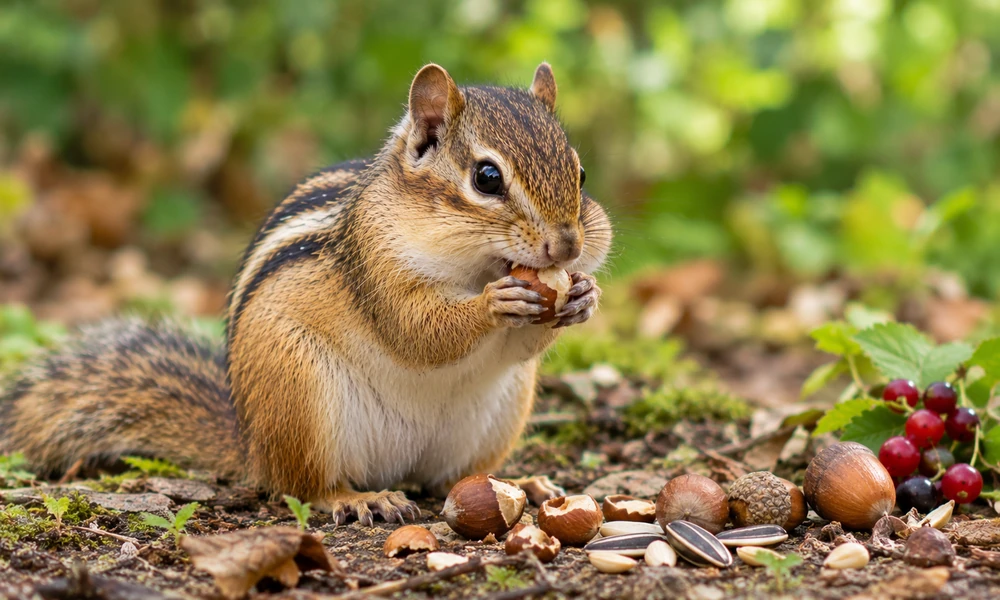
They are opportunistic omnivores. Their diet includes seeds, nuts, fruits, berries, plant buds, fungi and various small animals. They adjust their food choices according to seasonal availability.
| Food Category | Primary Examples | How Obtained / Used |
| Nuts & Seeds | Acorns, hazelnuts, beech nuts, sunflower seeds | Harvested from trees/ground; stored in burrow larders |
| Plant Matter | Berries, fruits, buds, fungi, flower bulbs | Eaten seasonally on the ground; cached for short periods |
| Animal Protein | Insects, earthworms, small frogs, bird eggs | Foraged opportunistically to supplement diet |
Which Plants, Nuts and Seeds Do Chipmunks Prefer?
Acorns, hazelnuts and wild seeds provide important energy sources. In spring, they may eat tender shoots and plant roots, while fallen berries become available during warmer months.
They also gather seeds and nuts for storage, helping them maintain a food supply when fresh food becomes scarce.
Do Chipmunks Eat Insects, Eggs and Small Animals?
Yes. They sometimes consume insects, earthworms, small frogs and bird eggs. They may also take newly hatched nestlings when an opportunity arises.
They usually forage on the ground but can climb trees to collect nuts and other food.
What Do Chipmunks Eat in Backyards?
Around homes, they may eat birdseed, cultivated grains, garden vegetables and flower bulbs. They often visit bird feeders because spilled seeds provide an accessible food source.
Their digging and feeding habits can disturb planted beds, particularly when they search for bulbs or establish underground tunnels.
How Do Chipmunk Burrows Work?
Chipmunk burrows can contain an extensive network of underground tunnels and specialized chambers. Some systems stretch more than 3.5 meters, although their size and layout vary.
What Rooms Are Inside a Chipmunk Burrow?
A burrow may contain several types of spaces:
- Nesting chamber: Lined with dry leaves and grass for sleeping and raising young.
- Food-storage chambers: Used to store gathered seeds and nuts.
- Waste areas: Separate spaces that help keep nesting areas clean.
- Escape passages: Additional routes that may help them avoid predators.
Every burrow does not contain the same arrangement of chambers. Its structure depends on the animal and the surrounding conditions.
Why Are Chipmunk Burrow Entrances Difficult to Notice?
Entrance holes are often around two inches wide and may lack the obvious piles of excavated soil associated with other burrowing animals.
They can carry soil away from the entrance in their cheek pouches, helping reduce visible signs of excavation. This behavior may make their underground systems less noticeable.
Do Chipmunks Hibernate in Winter?
They do not remain in one continuous deep winter sleep. Instead, they experience periodic torpor, a state in which body temperature and metabolic activity decrease to conserve energy.
What Happens to a Chipmunk’s Body During Torpor?
During torpor, a chipmunk’s core body temperature can fall from approximately 35°C to around 5°C. Its heart rate and breathing slow, reducing energy use.
The animal periodically wakes to eat food stored in its underground burrow.
How Do Chipmunks Survive Cold Weather?
- Body temperature falls substantially during torpor.
- Chipmunks wake periodically to consume stored seeds and nuts.
- Some individuals emerge briefly during mild winter weather.
- Winter behavior varies by species and local climate.
Food storage and reduced energy expenditure help them survive periods when fresh food is difficult to find.
How Do Chipmunks Reproduce and Raise Their Young?
They generally live solitary lives outside mating periods. Males and females come together briefly during the breeding season, which commonly occurs in spring and early summer. Female chipmunks typically deliver their young after a gestation period of about 31 days.
When Do Chipmunks Mate and How Many Babies Do They Have?
A typical litter contains two to eight young. Newborn chipmunks are hairless and blind, and they remain in the underground nest during their early development.
Eastern chipmunks may raise two litters per year, commonly in spring and late summer.
When Do Baby Chipmunks Leave the Burrow?
Young chipmunks generally begin emerging above ground at around six weeks of age. They become independent after leaving the nest and developing the skills needed to find food and shelter.
How Long Do Chipmunks Live?
Wild chipmunks commonly live around three years, although lifespan varies with species, predators, disease and environmental conditions. Some individuals kept in captivity can live up to nine years.
How Do Chipmunks Communicate and Behave?
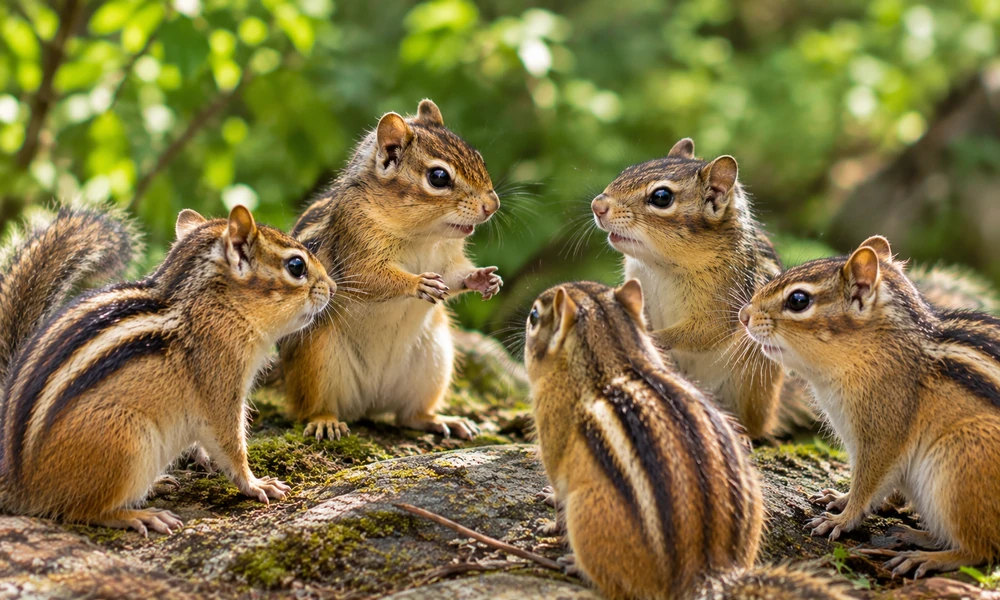
They communicate through vocal calls and use territorial behavior to protect their immediate surroundings. Their sounds include high chirps, shrill trills and lower croaking noises.
What Do Chipmunk Alarm Calls Mean?
When danger approaches, they use warning calls to alert others nearby. A rapid, high-pitched trill can signal the presence of an overhead threat, such as a hawk.
Repeated chipping noises can signal danger from animals approaching along the ground, including cats, snakes and foxes.
Are Chipmunks Territorial?
Outside the mating season, adult chipmunks often defend their burrows and nearby feeding areas. Despite their small size, they can behave aggressively toward other chipmunks that approach these spaces.
How Much Do Chipmunks Sleep?
Chipmunks spend substantial time resting in underground chambers. Their burrows provide shelter from weather and predators while allowing them to rest between periods of foraging.
Why Are Chipmunks Important to the Ecosystem?
Chipmunks contribute to forest ecosystems through seed dispersal, fungal spore distribution and their role in the food web.
How Do Chipmunks Help Forests Grow?
Chipmunks collect and bury seeds and nuts for later use. Some stored food remains uneaten, allowing seeds to germinate under suitable conditions.
These forgotten caches can help trees and other plants grow away from their parent plants.
Do Chipmunks Spread Fungal Spores?
Chipmunks eat subterranean fungi, including truffles, and can disperse fungal spores through their droppings.
Some of these fungi form beneficial relationships with tree roots, helping trees obtain nutrients from the soil.
Which Animals Eat Chipmunks?
Chipmunks serve as prey for numerous predators, including hawks, owls, foxes, snakes and coyotes. Their presence therefore contributes to the food supply that supports other wildlife.
What Is the Difference Between a Chipmunk, a Tree Squirrel and a Ground Squirrel?
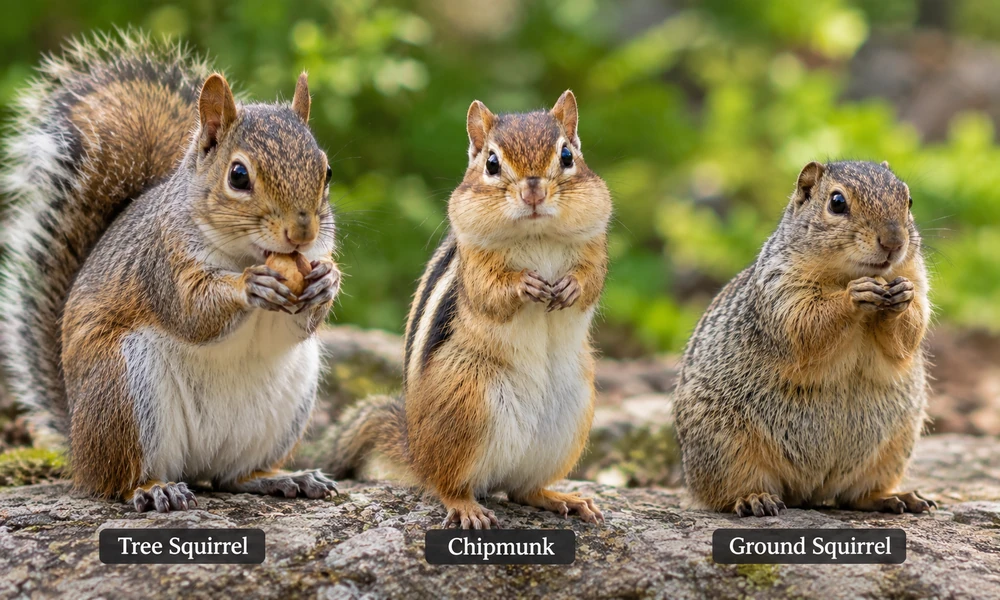
Chipmunks, tree squirrels and ground squirrels belong to the squirrel family, but they differ in appearance, shelter and behavior.
| Feature | Chipmunk | Tree Squirrel | Ground Squirrel |
| Average Weight | 70–142 g (2.5–5 oz) | 400–700 g (14–25 oz) | 200–900 g (7–32 oz) |
| Facial Stripes | Present (around eyes) | Absent | Mostly Absent |
| Primary Shelter | Underground Burrow | Tree Nest (Drey) | Underground Burrow |
| Food Carrying | Expandable Cheek Pouches | Carried in Mouth | Varies by Species |
| Winter Activity | Periodic Torpor in Burrow | Active Year-Round | Species Dependent |
How Can You Tell a Chipmunk From a Tree Squirrel?
Chipmunks are generally smaller and have distinctive dark and light stripes across their backs and faces. Tree squirrels are usually larger, lack the characteristic facial stripes and often nest in trees.
Chipmunks also use internal cheek pouches to transport food, making their food-carrying behavior another useful identifying feature.
How Are Chipmunks Different From Ground Squirrels?
Chipmunks are themselves a type of ground squirrel in the broad biological sense. However, the common name ground squirrel often refers to other squirrel species.
The most useful distinctions are body markings, size, habitat preferences and species-specific behavior. Facial stripes are common in chipmunks but are not a universal feature of all ground squirrels.
What Is the Conservation Status of Chipmunks?
Many chipmunk species are classified as Least Concern, but conservation status varies by species and subspecies. Changes to natural habitats and the loss of suitable living areas can threaten small, separated chipmunk populations.
| Species / Subspecies | Conservation Status | Primary Threats | Geographic Location |
| Eastern Chipmunk | Least Concern (IUCN) | Minor local habitat loss | Eastern North America |
| Siberian Chipmunk | Least Concern (IUCN) | Introduced invasiveness in Europe | Northern Asia & Europe |
| Peñasco Least Chipmunk | Endangered (US ESA) | Severe habitat fragmentation & climate change | Sacramento Mountains, New Mexico |
Are Chipmunk Populations Endangered?
All chipmunks don’t face the same risk level. Although many species have relatively stable populations, certain geographically restricted subspecies are vulnerable to habitat changes and other pressures.
What Threats Affect Chipmunks?
Important threats include:
- Habitat loss caused by deforestation and suburban development.
- Climate change affecting mountain and alpine habitats.
- Habitat fragmentation that isolates small populations.
- Changes in vegetation and other environmental conditions.
Protecting forests, mountain ecosystems and suitable habitat helps support chipmunks and the wider wildlife communities that depend on these environments.
Are Chipmunks Pests? How Can You Manage Them Humanely?
Chipmunks can become a nuisance when they dig near foundations, disturb garden beds or consume planted bulbs. Their underground tunnels may also affect paths, patio stones and retaining walls, depending on soil conditions and tunnel placement.
What Damage Can Chipmunks Cause in a Yard?
Common problems include disturbed flower beds, missing bulbs, eaten vegetables and small holes around gardens.
Burrowing beneath concrete foundations and similar structures may loosen the surrounding soil, potentially causing erosion or stability problems. The level of risk depends on the location and extent of the burrows.
How Can You Deter Chipmunks Without Harming Them?
- Install suitable hardware cloth around vulnerable garden beds to discourage digging.
- Clean up spilled birdseed and fallen seed hulls regularly.
- Store pet food in sealed containers.
- Secure outdoor trash cans.
- Avoid hand-feeding wild chipmunks, as feeding can encourage them to approach people.
Is It Safe to Handle Wild Chipmunks?
Avoid handling wild chipmunks. They may bite when frightened or cornered, and wild rodents can carry parasites, including ticks that may transmit disease.
Observe them from a distance and seek advice from a local wildlife professional if an animal appears injured or is causing a persistent problem.
Conclusion
Chipmunks are more than small striped visitors to gardens and forest floors. Their cheek pouches help them carry food, their burrows provide shelter and storage, and their forgotten seed caches can contribute to plant growth. Their winter routines also show how they conserve energy when conditions become difficult.
Understanding these behaviors makes it easier to identify chipmunks, appreciate their ecological role and manage backyard conflicts without harming wildlife.
Frequently Asked Questions About Chipmunks
Do Chipmunks Bite Humans?
Yes. Chipmunks may bite if they feel threatened, trapped or handled. Observe them from a safe distance and avoid trying to pick them up.
Do Chipmunks Hibernate All Winter?
No. Chipmunks experience periodic torpor rather than remaining continuously dormant throughout winter. They wake at intervals to eat stored food.
What Is the Conservation Status of Chipmunks?
Many chipmunk species are classified as Least Concern, but some isolated subspecies face greater risks. The Peñasco least chipmunk is listed as endangered under US federal law.
How Long Do Chipmunks Live in the Wild?
Wild chipmunks commonly live around three years, although lifespan varies by species and environmental conditions. Some captive individuals can live up to nine years.
Are Chipmunks and Tree Squirrels the Same Animal?
No. Both belong to the squirrel family, but chipmunks are generally smaller, have distinctive facial stripes and commonly use underground burrows. Tree squirrels typically nest in trees.
Can Chipmunks Climb Trees?
Yes. Chipmunks can climb trees to collect nuts, seeds and berries. Even so, many chipmunk species spend a large part of their day searching for food on the ground.
