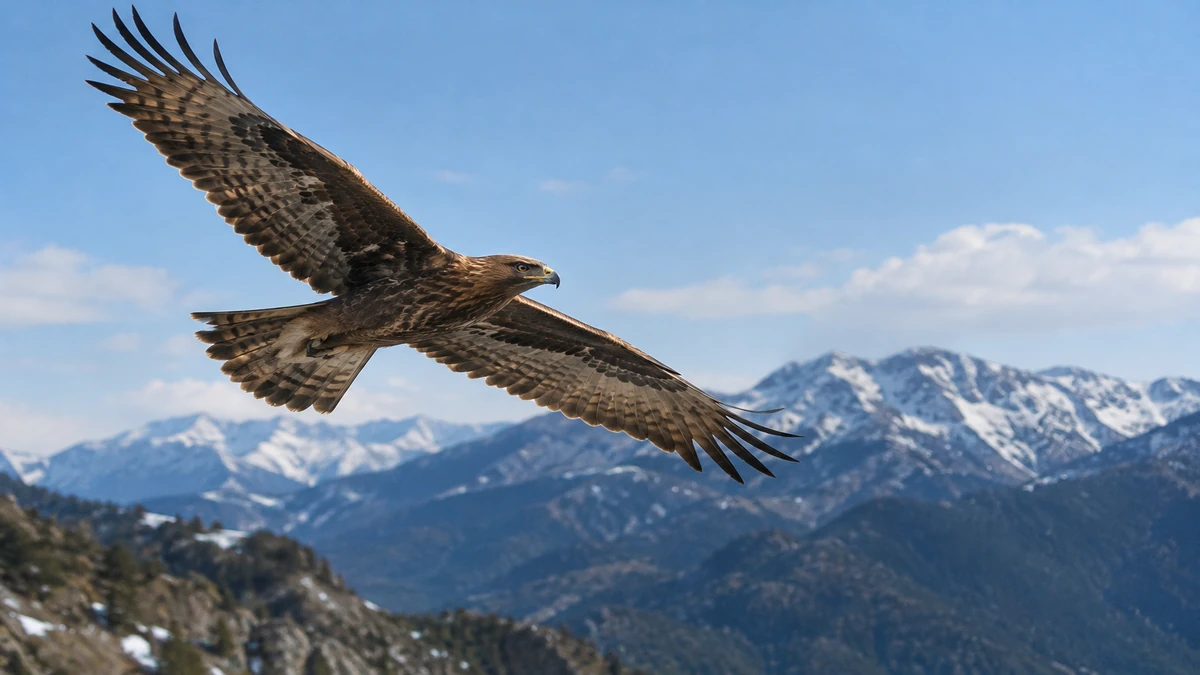
A hawk is a diurnal bird of prey and belongs to the family Accipitridae. It inhabits every continent except Antarctica. These raptors maintain natural ecosystem balances by controlling prey and rodent populations across their ranges, serving as vital ecological regulators.
Because “hawk” covers diverse species with vastly different habitats, diets, and flight mechanics, broad generalizations fall short. This guide breaks down how each species’ physical body, natural home, and hunting strategy fit together.
Hawk Quick Facts
When observing it across varying field conditions and environments, having a structured baseline of their physical and behavioral traits makes identification and study straightforward.
| Trait / Category | Accipiters (True Forest Hawks) | Buteos (Soaring Hawks) | Specialized / Regional Groups |
| Typical Representative | Cooper’s Hawk, Sharp-shinned Hawk | Red-tailed Hawk, Swainson’s Hawk | Harris’s Hawk, Desert & Regional species |
| Wingspan & Weight | 20–40 in (50–100 cm) | 3–20 oz (80–570 g) | 38–58 in (95–148 cm) | 1.2–4.5 lbs (550–2,000 g) | Varies (e.g., Harris’s: 40–47 in | 1.5–2.3 lbs) |
| Flight Morphology | Short, rounded wings + long rudder-like tail | Broad, wide wings + short, fan-shaped tail | Broad wings suited for low-altitude pack tactical maneuvers |
| Primary Hunting Trigger | High-speed horizontal ambush in dense brush | Vertical swoop from high soaring or utility perches | Social pack driving (flushers + ambushers) |
| Eye Color Maturation | Iris turns from bright yellow (juvenile) to deep crimson (adult) | Iris shifts from pale yellow/gray to deep dark brown | Dark brown/hazel throughout adulthood |
| Nesting & Territory | Concealed stick platforms inside dense forest canopy | Prominent platforms on tall trees, cliffs, or power pylons | Shared communal nests in cacti, trees, or arid bluffs |
| First-Year Survival Rate | ~30–40% (high juvenile mortality during winter) | ~45–50% (main threat: collision & territory loss) | Higher in packs due to shared feeding (~60%) |
What Is a Hawk?
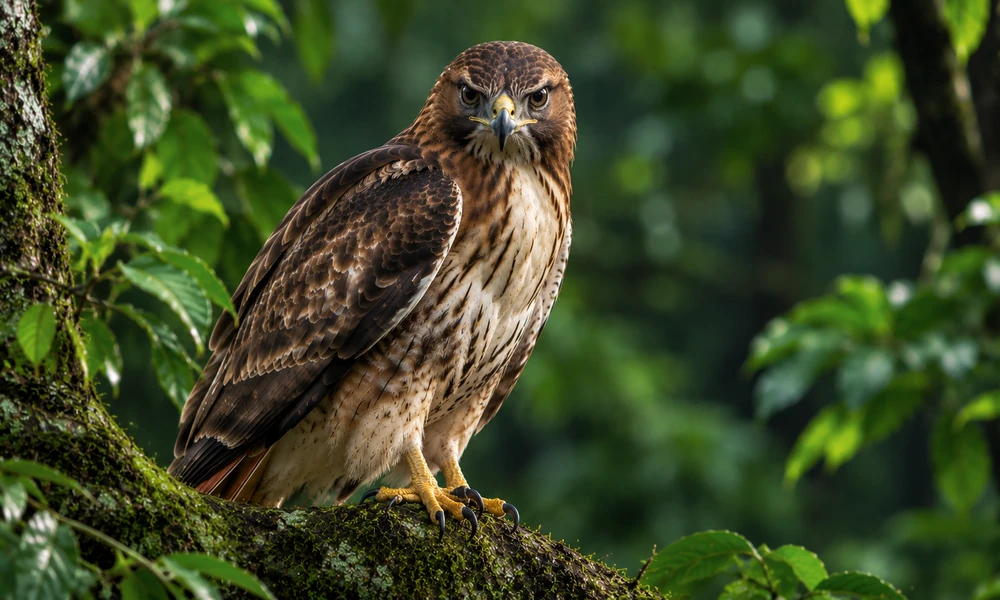
It is a diurnal bird of prey belonging to the family Accipitridae. All share four core physical features built for live hunting:
- Strong, Hooked Beak: Curved downward to tear flesh efficiently.
- Sharp, Needle-Like Talons: Engineered with intense crushing pressure to instantly grip and kill prey.
- Large Eyes: Positioned forward on the skull to provide deep binocular vision and pinpoint distance detection.
- Fleshy Cere: The smooth, bare patch of skin around the nostrils at the top of the bill, usually bright yellow in healthy adults.
It is a broad common name rather than a single scientific group. Members of the family Accipitridae are closely related to eagles, kites, harriers, and buzzards, sharing similar anatomical structures and hunting adaptations.
Are All Hawks the Same Bird?
No. Because “hawk” covers dozens of distinct species, you cannot summarize all with a single habitat, diet, or hunting style. Body shape and flight mechanics directly reflect how and where each species hunts:
- The Soaring Open-Country Hunter: A Red-tailed Hawk features broad, wide wings made to catch thermal updrafts over open fields, pastures, and deserts, scanning the ground below for small mammals.
- The Agile Forest Pursuit Hunter: A Cooper’s Hawk possesses short, rounded wings and a long, rudder-like tail, a physical build made for sharp, twisting turns through dense woodland trees to chase fast-moving songbirds.
- The Cooperative Desert Hunter: A Harris’s Hawk exhibits a rare social behavior among raptors, hunting in coordinated family groups to flush, drive, and corner prey in arid scrublands.
Trying to describe all hawks with one set of habits overlooks the wide variation in wing shapes, preferred environments, and hunting tactics across the species.
Hawk vs. Buzzard Comparison
The distinction between a “hawk” and a “buzzard” comes down to geographic naming traditions rather than fundamental biological differences. Understanding these regional habits prevents confusion when comparing raptor descriptions across international field guides and research studies.
- In North America, broad-winged soaring raptors (genus Buteo) are officially referred to as hawks, while the term “buzzard” is informally used by locals to describe scavenging vultures.
- In Europe, Africa, and Asia, birds in the exact same Buteo genus are strictly called buzzards, while the name “hawk” is reserved almost exclusively for agile forest hunters like sparrowhawks and goshawks (genus Accipiter).
| Feature / Trait | North American Convention | European / Global Convention |
| “Hawk” Terminology | Applies broadly to Buteo (soaring) and Accipiter (forest) species. | Primarily refers to Accipiter species (e.g., Sparrowhawks, Goshawks). |
| “Buzzard” Terminology | Colloquially used to describe scavengers like Turkey Vultures. | Strictly refers to broad-winged Buteo species (e.g., Common Buzzard). |
| Dietary Focus | Associated with live prey (Buteo/Accipiter) or scavenging (when misapplied to vultures). | Active predators catching live rodents, birds, and small mammals. |
| Flight Morphology | Varies by group: broad wings (Buteos) or short, rounded wings (Accipiters). | Broad, rounded wings with short, fan-shaped tails built for thermals. |
| Taxonomic Family | Accipitridae (True Hawks) or Cathartidae (New World Vultures). | Accipitridae (Genus Buteo). |
What Are the Types of Hawks?
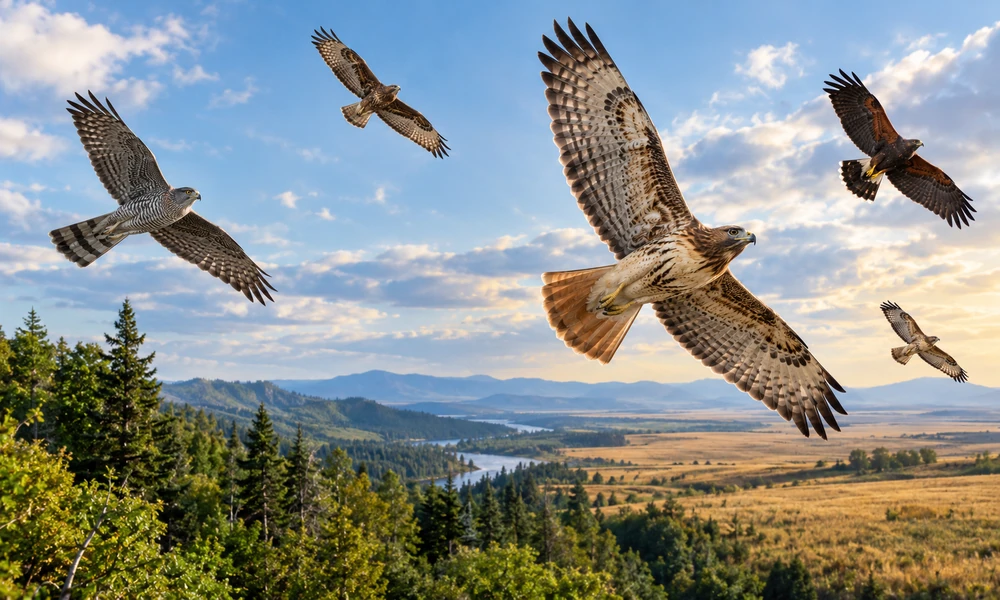
When categorizing hawks in the field, ornithologists split them into two primary groups based on body structure, wing proportions, and hunting environments: Accipiters and Buteos. Outside these two lineages sit several unique species and regional birds that carry the “hawk” moniker.
Accipiters (True Hawks)
Accipiters are compact, forest-dwelling hunters built for rapid acceleration and tight maneuvering through woodland vegetation:
- Physical Structure: Short, rounded wings and a long, narrow tail that functions like an aerial rudder for instant course adjustments.
- Flight & Hunting Style: They utilize thick foliage as cover, bursting from hidden perches to chase prey through dense tree branches.
- Primary Diet: Heavily bird-focused (avivores), taking songbirds, doves, and gamebirds mid-flight.
- Key Examples: Cooper’s Hawk, Sharp-shinned Hawk, Northern Goshawk, and the Eurasian Sparrowhawk.
Buteos (Soaring Hawks / Buzzards)
Buteos are heavy-bodied raptors engineered for low-energy gliding across vast, open spaces:
- Physical Structure: Long, broad wings and wide, fan-shaped tails designed to ride rising thermal air currents.
- Flight & Hunting Style: They circle high above fields and pastures or scan the ground from elevated telephone poles before swooping down onto targets.
- Primary Diet: Mammal-focused, hunting voles, mice, ground squirrels, and rabbits.
- Key Examples: Red-tailed Hawk, Ferruginous Hawk, Swainson’s Hawk, Rough-legged Hawk, and the Common Buzzard.
Prominent Hawk Species
1. Red-Tailed Hawk (Buteo jamaicensis)
The Red-Tailed Hawk is the most recognizable open-country hawk across North America. Adults feature a brick-red upper tail, while juveniles lack this red coloring and have brown banded tails until their second year. Plumage can range from pale leucistic tones to dark chocolate morphs depending on regional geography.
Rodents and small mammals make up roughly 85% to 95% of their daily diet. Their sharp, raspy scream, often described as a kreeee-aar, is famous in pop culture and is routinely dubbed over bald eagle footage in movies and television.
2. Cooper’s Hawk (Accipiter cooperii)
The Cooper’s Hawk is a medium-sized woodland hunter that has adapted exceptionally well to suburban parks and residential neighborhoods. It is an agile, fast-flying bird pursuer that uses backyard fencing, tree lines and corners of buildings to surprise songbirds near bird feeders.
3. Harris’s Hawk (Parabuteo unicinctus)
The Harris’s Hawk is a striking desert raptor native to the southwestern United States and South America. Unlike many other raptors, it has a highly social hunting structure and can hunt in coordinated family groups.
These groups work together to flush, surround and corner desert prey. This unusual social intelligence also makes the species a standout favorite in falconry.
4. Sharp-Shinned Hawk (Accipiter striatus)
The Sharp-Shinned Hawk is the smallest accipiter in North America, roughly the size of a blue jay or robin. It relies on stealth, dense branches and explosive speed to capture small songbirds.
Its long, square-tipped tail helps it maneuver through thick underbrush while pursuing prey.
Other Common & Regional Hawks
| Species | Geographic Range / Habitat | Key Trait & Field Mark |
| Ferruginous Hawk | Open prairies & western plains | One of North America’s largest hawks, featuring fully feathered legs down to its toes and a wide mouth gape. |
| Swainson’s Hawk | North & South American grasslands | A long-distance migrant, traveling over 6,000 miles (10,000 km) twice each year between breeding and wintering grounds. |
| Rough-Legged Hawk | Arctic tundra (summers) / Open fields (winters) | Breeds in high-latitude Arctic tundra; named for its fully feathered legs that provide insulation against freezing temperatures. |
| Shikra | South Asian woodlands & urban outskirts | A small, widespread Asian accipiter known for fast, aggressive dashes through orchard canopy lines to catch lizards and small birds. |
| Common Buzzard | European countryside & forests | The most widespread Buteo across Europe and Asia, easily recognized by its soaring flight on thermals and loud, cat-like mewing calls. |
How Many Hawk Species Are There?
Determining an exact global count for hawks comes down to how you define “hawk.” Depending on whether an authority uses a strict biological boundary or a broad common-name approach, figures vary wildly:
- Biological Definition: Counting only the “true hawks” belonging to the genus Accipiter yields approximately 50 species worldwide.
- Core Raptor Definition: Combining true accipiters with the Buteo genus (soaring hawks and buzzards) brings the global total to roughly 90 to 100 species.
- Broad Family Definition: Including every raptor casually referred to as a hawk across English-speaking regions, including hawk-eagles, harriers, kites, and buzzards, pushes the number well past 200 to 250+ species.
Throughout this guide, we rely on the Core Raptor Definition (focusing on the Accipiter and Buteo lineages within the family Accipitridae), which aligns with the global taxonomy maintained by the International Ornithological Congress (IOC).
Hawk vs Falcon vs Eagle: How Are They Different?
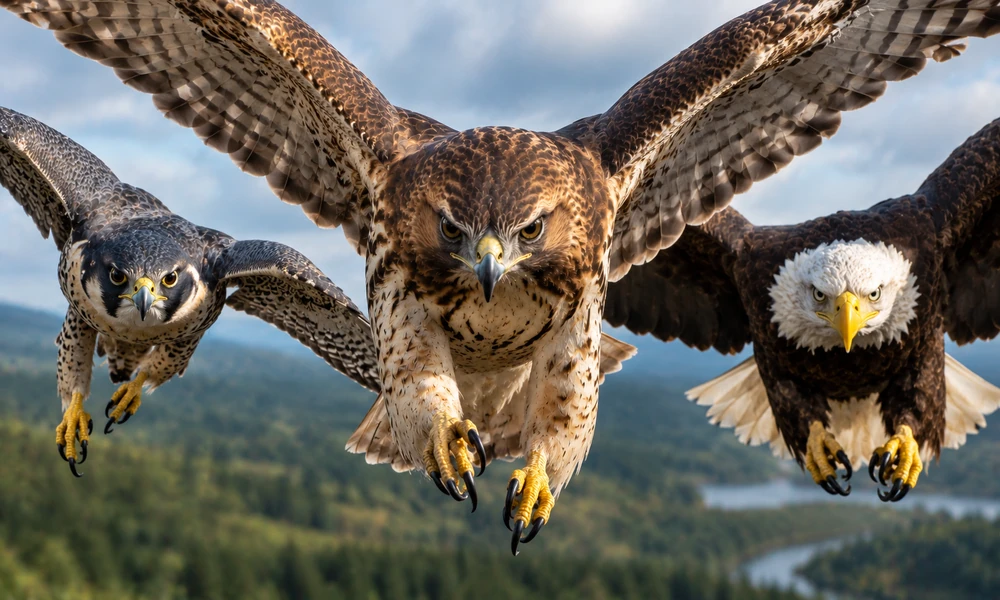
Although hawks, falcons, and eagles are all daylight predators, evolutionary history separates them into distinct lineages. Falcons belong to an entirely separate family tree (Falconidae), whereas hawks and eagles share the family Accipitridae.
The main physical differences, hunting tactics, and killing mechanisms across these three raptor groups are highlighted below:
| Feature / Trait | Hawks | Falcons | Eagles |
| Taxonomic Family | Accipitridae | Falconidae | Accipitridae |
| Wing Morphology | Short & rounded (Accipiter) or broad & wide (Buteo) | Long, slender, and pointed | Massive, broad wings with deep primary “fingers” |
| Body Build | Streamlined to sturdy medium build | Compact, aerodynamic, highly streamlined | Massive, heavy-set frame with deep chest and thick neck |
| Primary Kill Method | Talons: Squeeze and crush prey with high foot pressure | Beak: Use a specialized “tomial tooth” (sharp beak notch) to sever the spine | Talons: Massive, crushing talons capable of crushing force |
| Hunting Style | Ambush dashes from cover or low-energy soaring and swooping | High-speed aerial stoops (dives) and open-sky chases | High-altitude soaring, heavy perching, and power swoops |
| Relative Size | Small to Medium (0.2 lbs to 4.5 lbs) | Small to Medium (0.1 lbs to 3.5 lbs) | Large to Massive (4 lbs to 20+ lbs) |
How Can I Identify a Hawk?
Identifying a hawk in the field becomes second nature once you know where to focus your attention. Rather than getting bogged down in individual feather shades, successful identification relies on assessing four overall clues: silhouette, behavior, markings, and environment.
First, look at the overall shape. Broad, wide wings paired with a short, fan-shaped tail indicate a Buteo built for soaring over open fields. In contrast, short, rounded wings paired with a long, narrow tail reveal an Accipiter designed for rapid maneuvering through forest branches.
Next, observe their actions: a raptor circling endlessly on thermals without flapping is likely a soaring hawk, whereas one making fast, low-altitude dashes through thick brush is an ambush specialist at work. Finally, check for distinct field marks such as dark horizontal tail bands or a solid brick-red upper tail and cross-reference your sighting with local habitat and regional field guides.
Do Young Hawks Look Different?
Young hawks look dramatically different from their mature parents. Juvenile plumage is usually much browner, heavily streaked across the chest, and lacks the bold, high-contrast markings seen in adults. This muted appearance helps camouflage young, inexperienced hunters while they learn to navigate their environments.
A classic example is the Red-tailed Hawk: juveniles do not possess a red tail during their first year. Instead, they sport a dull gray-brown tail marked with narrow dark bands until completing their second-year molt. Eye color also transforms as a hawk matures.
In many species, particularly accipiters, an individual’s irises start as a pale yellow in youth, gradually deepening to dark orange or rich crimson as they reach adulthood. Because juvenile plumage varies widely based on age and geographic region, it is best to avoid relying on a single rigid visual rule when identifying young birds.
Where Do Hawks Live?
Hawks are super adaptable and live almost everywhere in the world except Antarctica. They can survive anywhere they can find food, a high perch to look for prey, and a safe spot for a nest.
- Open Country: Broad-winged hawks love open fields, deserts, and farmland. They ride rising warm air currents to float high up and spot food on the ground.
- Forests: Forest hawks have short wings and long tails. This shape helps them zip through tight tree branches without crashing.
- Cities and Towns: Many hawks now live in cities. They build nests on tall buildings or utility poles and hunt local pigeons, squirrels, and rats.
Where Do Hawks Build Nests?
Hawks build big, bulky nests made of sticks and twigs, lined with soft leaves or grass.
They place these nests high up in tree forks, on cliff edges, or on man-made towers and ledges. Both the male and female work together to gather sticks. Hawk pairs often come back to the exact same nest every year, adding new sticks each time until the nest grows over three feet wide.
Do Hawks Migrate?
Some hawks stay in one place all year, while others travel thousands of miles when winter comes.
For example, the Swainson’s Hawk flies over 6,000 miles every year from North America all the way to South America. Other species only travel short distances depending on how cold it gets, how much food is available, and how strong their body fat stores are.
What Is a Kettle of Hawks?
A kettle is a group of hawks floating and circling together in a column of rising warm air (called a thermal). By riding these air currents together, they gain altitude fast without wasting energy flapping their wings.
What Do Hawks Eat?
Hawks are carnivores (meat-eaters) and eat whatever prey is easiest to catch in their habitat:
- Small Mammals: Mice, rats, voles, squirrels, and rabbits (favorite meals for open-country hawks).
- Birds: Songbirds, doves, and pigeons (favorite targets for fast forest hawks).
- Reptiles & Insects: Snakes, lizards, frogs, and large grasshoppers.
Do Hawks Eat Carrion?
While hawks prefer live prey, many species will eat dead animals (carrion) if food is scarce, especially during hard winters. Broad-winged soaring hawks are much more likely to scavenge dead animals than smaller forest hawks.
How Good Is a Hawk’s Eyesight?
Hawk vision is incredible because of how their eyes are built inside:
- Super Retina: A hawk’s eye has up to five times more light-sensing cells per square millimeter than a human eye.
- Two Focal Spots: Each hawk eye has two “sweet spots” (foveae) for sharp focus—one for looking ahead and one for looking down at the ground.
- Head Tilting: When a hawk cocks its head sideways, it is aiming the sharpest part of its eye directly at a target far away.
- UV Myth: Most hawks can see violet light, but claims that they hunt mice by following glowing urine trails are mostly a myth.
How Do Hawks Hunt?
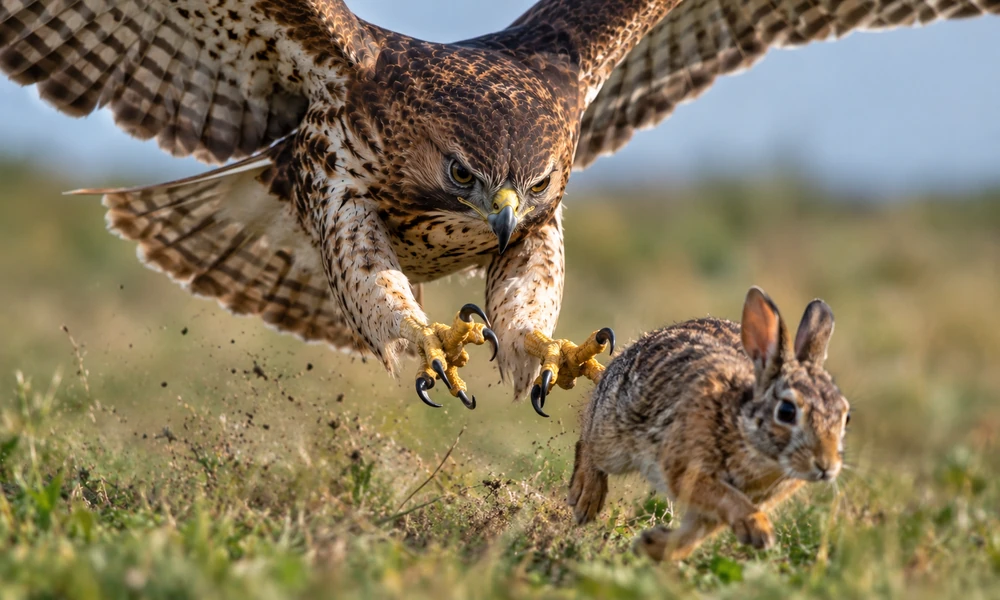
Hawks use different hunting styles based on their body shape:
- Perch and Pounce: Sitting quietly on a pole or branch, watching the ground, and swooping down when food moves.
- Soaring: Gliding high in the sky and diving down when they spot prey.
- Kiting: Floating motionless directly into the wind like a kite, keeping their eyes locked on the ground.
- Forest Dash: Bursting out from hiding behind trees to chase down small birds.
Do Hawks Hunt in Groups?
Most hawks hunt completely alone. The main exception is the Harris’s Hawk, which hunts in family groups like a pack of wolves. They work together to flush out, chase, and share prey in the desert.
How Do Hawks Kill Their Prey?
Hawks kill using their powerful feet and needle-sharp talons. They grab prey with enormous crushing pressure to disable it instantly, then use their curved beak to tear off pieces to eat.
How Fast Can a Hawk Fly?
When cruising normally, hawks fly around 20 to 40 mph. But when they fold their wings and dive straight down after prey, large hawks can reach speeds between 80 and 120 mph.
How Do Hawks Mate and Raise Young?
- Courtship: Male and female hawks perform amazing aerial acrobatics, sometimes locking talons and spiraling toward the ground together.
- Raising Chicks: Both parents build the nest and feed the chicks. As the chicks grow, parents drop live prey in the nest so the young hawks can practice catching it.
- Mating for Life: Many hawks stay with the same partner for life. If one mate dies, the survivor will usually find a new partner next season.
- Laying Eggs: Females lay 1 to 5 eggs. The chicks hatch a day or two apart and stay in the nest for about 6 to 7 weeks before learning to fly.
Why Are Female Hawks Bigger Than Males?
Female hawks are about 10% to 30% larger than males. Scientists believe this size gap allows the parents to hunt different sizes of prey so they don’t compete with each other, while giving the bigger female more strength to guard the nest.
How Long Do Hawks Live?
In the wild, hawks live around 10 to 12 years. However, life is tough for young hawks, and nearly half die in their first year from winter weather or lack of food. In safe environments or captivity, they can live over 20 years.
Humans, Pets, and Rules
- Attacks on Humans: Very rare, happening only if a person gets too close to a nest with baby chicks.
- Protecting Pets: Large hawks can occasionally go after very small pets or chickens. Keep small pets supervised and cover chicken runs with wire mesh.
- Injured Hawks: Never touch a wild hawk with bare hands. Call a local wildlife rehabilitator or rescue team right away.
- The Law: Hawks are strictly protected by federal laws. It is illegal to harm, catch, or keep a hawk, its feathers, or its nest without official government permits.
Conclusion
Hawks are some of the most impressive hunters in the air. Whether soaring high over open fields or weaving through dense forest trees, their sharp vision, powerful feet, and flying skills make them essential predators in ecosystems all over the world.
Frequently Asked Questions
Why Do Hawks Sit in the Same Spot for So Long?
Hawks often sit quietly on a high branch, pole, fence, or other perch while watching the ground. This saves energy and gives them a good view of potential prey. When they spot an opportunity, they can quickly swoop down and grab it.
Why Do Hawks Circle in the Sky?
Hawks circle to take advantage of rising columns of warm air called thermals. These air currents help them gain altitude while using very little energy. Groups of migrating hawks may also appear together while riding these thermals.
Do Hawks Come Back to the Same Nest Every Year?
Many hawks reuse the same nesting area or return to a familiar nest. Pairs may repair and add new material to an existing nest before breeding again. Over time, repeated use can make a hawk nest surprisingly large.
Why Do Hawks Shake or Bob Their Heads?
Head movements can help a hawk judge distance and position while it watches something nearby. Hawks rely heavily on vision, so changing the angle of their head can help them focus on a target or understand its position.
Why Do Hawks Hunt Birds Around Bird Feeders?
Bird feeders can attract many small birds into one area, which can also attract hawks. A hawk may use nearby trees, fences, or other cover to watch the activity and surprise a bird when it gets an opportunity.
Do Hawks Eat Their Prey Whole?
It depends on the size of the prey. Hawks may swallow smaller prey whole, while larger prey is usually torn into smaller pieces. Indigestible material such as fur and some bones can later be formed into a pellet and regurgitated.
