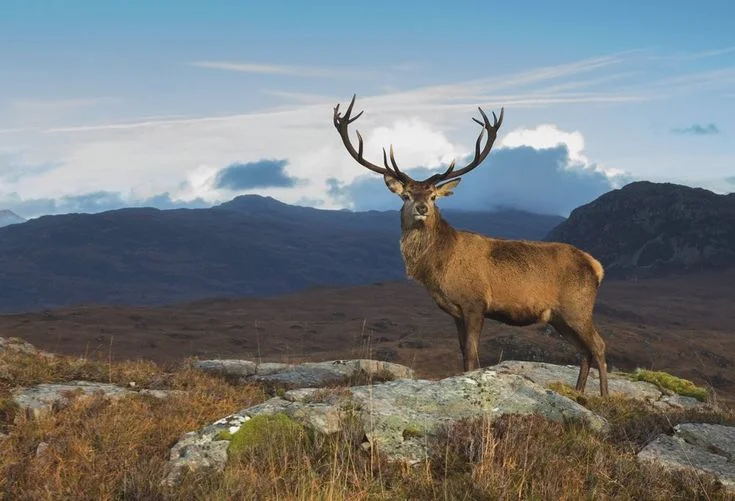
Red deer expansion norway is not a story about one sudden population boom. It is a longer change in where red deer live, how many animals some areas can support, and how wildlife managers respond when local densities become high. The west coast remains the main stronghold, but the species has also spread far beyond its older coastal range.
As of 2026, the clearest picture comes from hunting records and monitoring indices rather than one exact national population number. Official sources show that red deer are now found in most municipalities south of Saltfjellet in Nordland. Vestland is still the most important red deer county by harvest, followed by Møre og Romsdal. That makes the Norwegian west coast a useful place to understand the wider change.
What does red deer expansion in Norway look like in 2026?
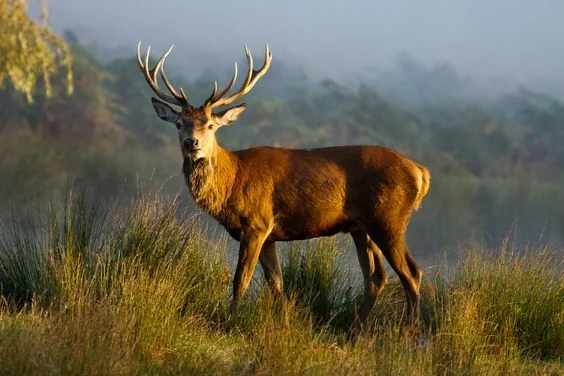
Red deer expansion in Norway means both population growth and geographical spread. The species was historically concentrated along parts of the west coast. Over the last several decades, it has expanded southward, eastward and northward and now occupies a much larger part of Norway.
That does not mean every place has the same density or trend. A strong population in one valley can exist beside a much smaller population only a short distance away. Local food, winter conditions, land use, hunting pressure and movement patterns all matter.
The 2025–26 hunting figures show how strongly the west coast still stands out. SSB recorded 24,468 harvested red deer in Vestland and 11,281 in Møre og Romsdal. Rogaland had 3,827, and Trøndelag had 4,684. These are harvest figures, not direct population counts, but they show where much of Norway’s red deer management is happening.
Red Deer Expansion Norway: Why is the west coast still the centre of the story?
The landscape helps explain this. Red deer can use forests, farmland, grassland and other mixed habitats. Many parts of western Norway provide a combination of cover and food, while the coastal climate can give relatively mild winters.
The species also moves between seasonal areas. Some deer stay in roughly the same area throughout the year, while others use different summer and winter ranges. This matters because a local hunting area may not contain the whole population that uses it during the year.
Is the red deer population still growing?
The answer depends on the area and the measure being used. It is safer to talk about local trends than to claim one uniform national growth rate.
The Hjorteviltregister uses several indexes to track changes. “Seen deer per hunter-day” is used as a relative indicator of population development. It does not give the actual number of deer in an area. The register also warns that the same index value can represent different densities because observation conditions and hunting methods vary.
Managers can look at seen deer, animals harvested, hunting effort, calves per hind, sex ratios and age indicators together. When several measures point in the same direction, the picture becomes more useful.
How does quota setting control local growth?
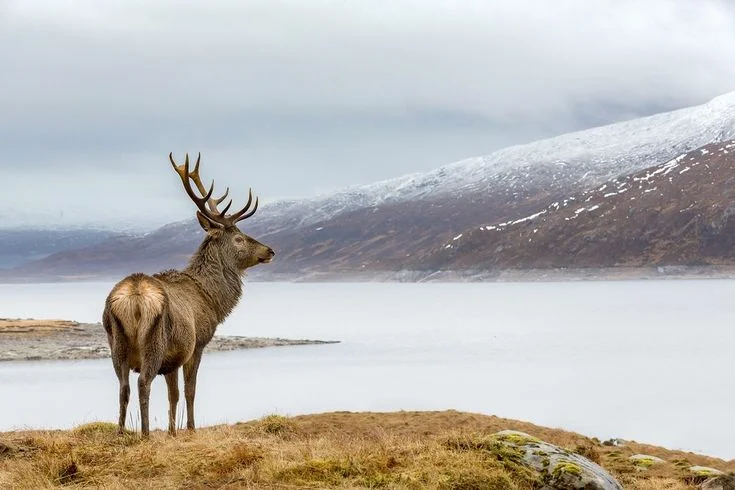
Quota setting is one of the main tools used to influence red deer numbers. In simple terms, a quota sets how many animals may be legally harvested in a defined area and often divides permits by sex and age.
The aim is not always to reduce numbers. In one area, managers may want to hold a population near a chosen level. In another, they may want to reduce pressure on forests or farmland. Elsewhere, a population may still be developing and the management approach can be different.
The Hjorteviltregister shows that permits can be specified by sex and age or issued as free animals under an approved population plan. That makes quota setting more than a single national number. It is a local management tool built around local conditions.
What about elg bestand and villrein?
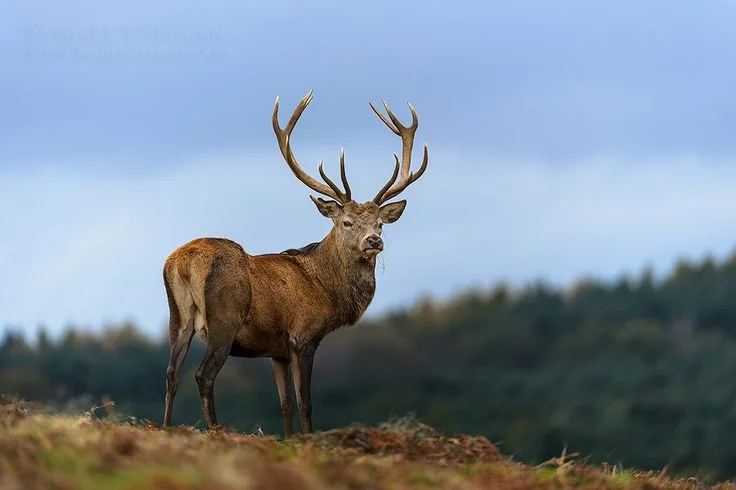
Red deer management does not happen in isolation. Norway also has moose and wild reindeer, and different species can use overlapping landscapes or food resources.
Comparing hjort, elg and villrein can be useful, but their populations should not be treated as if they respond to the same conditions. Moose and red deer have different habitat use and behaviour, while wild reindeer are strongly connected to open mountain landscapes.
That makes local monitoring especially useful when boundaries and movement patterns overlap.
Why does red deer expansion in Norway matter right now?
There are practical reasons to watch the trend closely. More deer can mean more hunting opportunities and more wildlife value, but higher density can also mean more browsing pressure and damage to crops or forest.
Wildlife vehicle collisions are another road-safety concern. SSB recorded 733 red deer killed by motor vehicles or trains outside ordinary hunting during 2025–26. Vestland accounted for 284 of those recorded deaths and Møre og Romsdal for 186.
Could climate change affect future expansion?
The species also moves between seasonal areas. Some deer stay in roughly the same area throughout the year, while others use different summer and winter ranges.
That makes the future less simple than “warmer means more deer.” Different seasons can push in different directions. Food availability, forest structure, farming, hunting and local weather will continue to matter.
What happens next for red deer management?
The next phase is likely to depend heavily on local monitoring. A national headline about expansion can hide major differences between municipalities and management areas.
Useful information includes hunting results, seen-deer indexes, calf production, sex structure, age data, body weights and reports of damage. Body weight can be especially useful because weights of calves and yearlings can provide information about changes in population condition.
For readers following wildlife management through Viltnemnda, this is the part worth watching: not just how many red deer are harvested, but how managers use several types of evidence to decide what happens next.
Key Takeaways
- Red deer have expanded far beyond their older west-coast range and now occur across most of Norway south of Saltfjellet.
- Vestland and Møre og Romsdal remain major red deer areas based on recent hunting figures.
- Hunting totals show harvest activity, not the exact size of the full population.
- Age and sex structure help managers understand population development.
- Quota setting is used to manage local populations rather than apply one identical rule everywhere.
- Moose and wild reindeer are part of the wider wildlife management picture, but they have different ecology and management needs.
- Climate, habitat, hunting pressure and food availability can all influence future expansion.
Frequently Asked Questions
Is red deer expansion in Norway still happening in 2026?
Red deer have clearly expanded their Norwegian range over recent decades. Current data should be read region by region because some populations can be stable, rising or falling at the same time.
Where are most red deer found in Norway?
Vestland is the leading county by recent harvest numbers, with Møre og Romsdal also having a large harvest. Red deer are now found across most municipalities south of Saltfjellet in Nordland.
Does a higher hunting harvest mean the population is growing?
Not automatically. A higher harvest can result from a larger population, higher quotas, stronger hunting effort or management decisions. Population indexes and several data sources are needed to interpret the trend.
Why is age and sex structure important?
It helps managers understand whether a population contains many young animals, females or older males and how that structure may affect reproduction and future development.
What is the purpose of quota setting?
Quota setting controls the number and type of deer that may be harvested. Local authorities and management areas can use it to keep populations near desired levels or respond to problems such as high browsing pressure.
Could climate change change where red deer live?
It could influence future distribution, but the direction will not be identical everywhere. Milder winters can help some populations while warmer summers, changed rainfall and parasites can create new pressures.
Sources Note
This article uses public information from Statistics Norway, the Norwegian Institute of Bioeconomy Research, Artsdatabanken, the Norwegian Environment Agency’s Hjorteviltregister and Hjortevilt.no. These sources provide hunting statistics, monitoring indexes, species information, and wildlife management data.
The article separates recorded harvests and monitoring indexes from estimates about future change. No exact national red deer population total is presented because the available monitoring figures are not the same as a direct national census.
Disclaimer
This article is for general educational and informational purposes. Wildlife populations, hunting figures and management conditions can change as new data becomes available. Readers should check Norwegian wildlife authorities and local management plans for the latest rules and figures.
