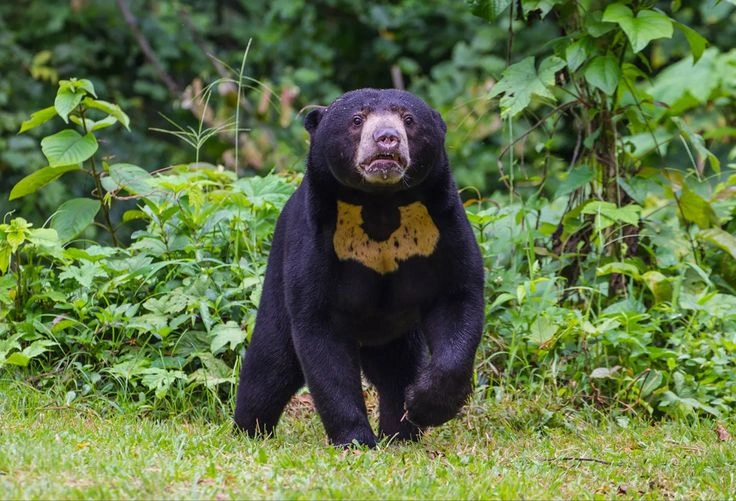
If you picture a Sun Bear, you may imagine a large brown or black animal. The sun bear is different. It is the smallest bear species in the world, built for life in the warm forests of Southeast Asia. Its scientific name is Helarctos malayanus, and its short black coat, golden chest mark, strong claws, and long tongue make it easy to recognize.
Sun bears are omnivores, meaning they eat both plant and animal foods. Their menu can include insects, honey, fruit, plant shoots, and occasionally small vertebrates. They are also excellent climbers and spend much of their lives around trees. Despite their small size, they are powerful, curious, and well adapted to dense tropical forests.
Key Takeaways
The sun bear is small, but its adaptations are anything but ordinary. It is the smallest bear species, yet it has the strength and climbing ability needed to live in demanding tropical forests.
Its diet is flexible, with insects, honey, fruit, and other foods changing with season and location. Its long tongue helps it reach hidden food, while its curved claws help it climb and break into nests and logs.
The biggest lesson from sun bear conservation is simple: the animal cannot be separated from its forest. Protecting connected, healthy habitat is central to giving this unusual bear a future.
What Is a Sun Bear?
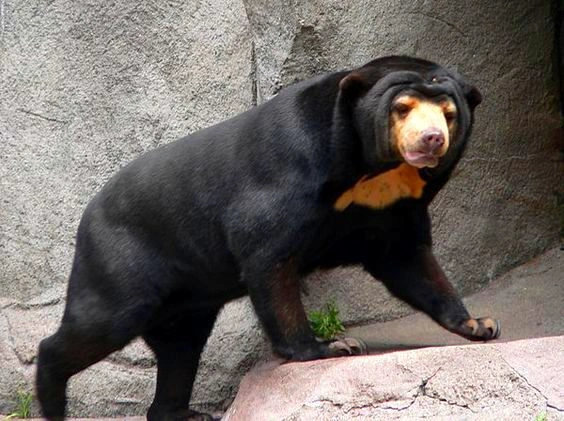
A sun bear is a small tropical bear belonging to the family Ursidae. It is also called the Malayan sun bear or honey bear in parts of its range. The name “sun bear” comes from the pale golden or orange patch across its chest, which can look like a rising sun.
The species is solitary. A mother may stay with her cubs, while adults usually move and forage alone. Research has also found that sun bears can use detailed facial expressions when interacting with other bears, showing that their social behavior is more interesting than their mostly solitary lifestyle might suggest.
Where Do Sun Bears Live?
Sun bear habitat stretches across parts of Southeast Asia. Their range includes islands such as Borneo and Sumatra. They are closely associated with forests, especially lowland tropical forest, where trees provide food, shelter, and routes for climbing.
Sadly, much of this habitat has been fragmented or cleared. The IUCN Bear Specialist Group identifies habitat loss and fragmentation, along with poaching and illegal exploitation, as major threats to the species. Sun bears are currently classified as Vulnerable on the IUCN Red List.
What Do Sun Bears Eat?
The sun bear diet is broad, which is one reason the species can live on many different forest foods. It is a generalist omnivore rather than a bear that depends on one type of meal.
Honey, Insects, and Other Animal Foods
Honey is famous in the sun bear diet, but it is only part of the story. Sun bears eat ants, termites, beetle larvae, bees, bee larvae, earthworms, and other invertebrates. They may also take small animals such as lizards, birds, or rodents when an opportunity appears.
Their long tongue is especially useful here. A sun bear can reach into narrow spaces in tree trunks, logs, or nests and pull out insects that would be difficult to reach with a shorter tongue.
Fruit and Plant Foods
Fruit can also be an important part of the diet, especially figs and other tropical fruits. Sun bears may eat flowers and young plant growth as well.
Their diet changes with location and season. Research in northeastern India found both plant and animal foods in sun bear scat, showing why it is safer to describe them as flexible feeders rather than assigning one fixed percentage to every population.
How Big Is a Sun Bear?
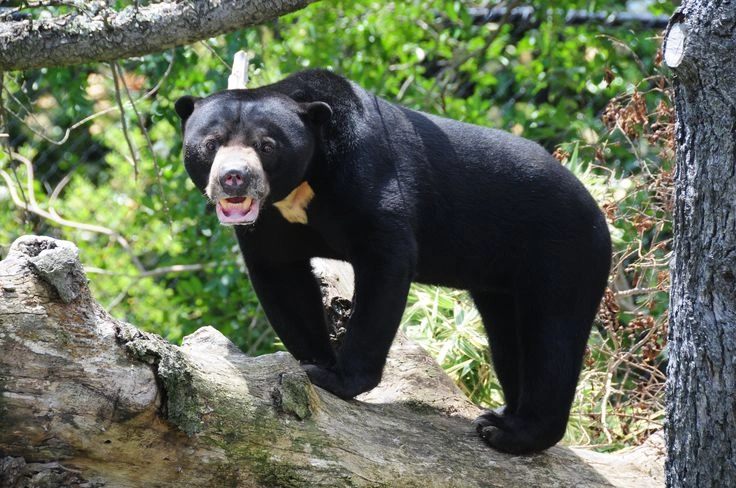
Sun bear size is surprisingly small compared with other bears. Adults are generally around 4 to 5 feet long, while reported weights commonly fall between about 60 and 150 pounds. Males are usually larger than females.
That makes the sun bear the smallest living bear species. Its compact body is useful in a forest where climbing, squeezing through vegetation, and moving along branches can matter more than sheer body size.
What Makes Sun Bears So Good at Climbing?
Climbing is one of the most noticeable sun bear adaptations. Their strong limbs and long claws help them grip tree surfaces, climb trunks, reach fruit, and investigate bee nests.
Some sun bears build resting platforms or “beds” in trees using branches and vegetation. Being able to move above the forest floor also gives them access to food that other animals may struggle to reach.
Why Is the Sun Bear’s Tongue So Long?
The sun bear’s tongue is one of its strangest and most useful adaptations. It can extend to roughly 10 inches, allowing the bear to reach deep into cracks, hollow trees, and insect nests.
Think of it as a natural feeding tool. Instead of opening every small space completely, the bear can use its tongue to pull out insects, larvae, and honey.
Its claws are just as important. Long, curved claws can break into rotting wood, dig into soil, open nests, and help the bear climb. Together, the claws and tongue make the sun bear particularly effective at finding hidden food.
What Is Sun Bear Behavior Like?
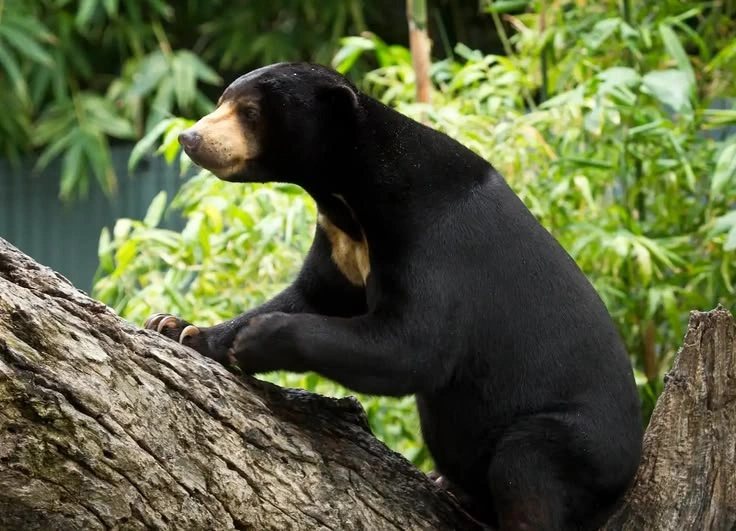
Sun bear behavior can look playful or even mischievous, but much of it is connected to survival. These bears spend time searching for food, climbing, resting, exploring trees, and moving through forest habitat.
They are mainly solitary, although mothers and young stay together. Males can be territorial, and individual home ranges can overlap depending on the area and resources.
Sun bears are also known for their unusual facial communication. A 2019 study reported that they can closely mimic facial expressions of other sun bears. That finding was especially interesting because advanced facial mimicry had been documented more commonly in highly social animals.
Why Is the Sun Bear Important to Forests?
Sun bears are not simply another animal living in the rainforest. Their feeding habits can affect the forest around them.
When they eat fruit, they may move seeds through the forest and help disperse them. When they break into logs or search through soil for insects, they also disturb small parts of the forest floor and dead wood.
What Threatens Sun Bears Today?
The biggest problems are connected to the loss and fragmentation of forest habitat, along with illegal hunting and wildlife trade. When large forest areas are divided into smaller pieces, sun bears can lose access to food, shelter, and safe movement routes.
Poaching is another serious concern. Sun bears have been targeted for body parts and illegal trade, while young bears can also be captured from the wild.
Conservation work focuses on protecting forests, reducing illegal exploitation, and improving monitoring. Rescue and rehabilitation programs can also play a role in specific situations.
Sun Bear Facts at a Glance
- Scientific name: Helarctos malayanus
- Common names: Sun bear, Malayan sun bear, honey bear
- Family: Ursidae
- Diet: Omnivorous
- Size: About 4 to 5 feet long
- Weight: Roughly 60 to 150 pounds
- Habitat: Tropical forests of Southeast Asia
- Distinctive feature: Golden or orange chest mark
- Major adaptations: Long tongue, strong curved claws, climbing ability
- Social pattern: Mostly solitary
- Conservation status: Vulnerable
Where These Sun Bear Facts Come From
This article was prepared using established wildlife references, including the IUCN, IUCN Bear Specialist Group, Animal Diversity Web, National Geographic, and peer-reviewed research on sun bear diet. These sources were used to cross-check species identity, habitat, diet, size, behavior, adaptations, and conservation information.
Viltnemnda presents this information for educational purposes and separates facts from areas where research remains limited. Sun bear populations and local conservation conditions can vary, so current information from recognized wildlife authorities should be used for conservation decisions.
Frequently Asked Questions
Is the sun bear the smallest bear species?
Yes. The sun bear, Helarctos malayanus, is recognized as the smallest living bear species. Adults are much lighter and shorter than most other bears.
Are sun bears dangerous?
Sun bears are wild animals and can defend themselves if threatened. Their strong claws and jaws make close contact unsafe. They are not animals that should be approached or treated like domestic pets.
Do sun bears really eat honey?
Yes. Honey and bee products are part of their diet, but sun bears also eat many other foods, including insects, fruit, and plant material.
Can sun bears climb trees?
Yes. They are strong climbers. Their claws, limbs, and body structure help them climb trees to reach fruit, insects, bee nests, and resting places.
Where are sun bears found?
They are found across parts of Southeast Asia, including areas of mainland Southeast Asia and islands such as Borneo and Sumatra. Their exact distribution varies by country and remaining forest habitat.
Why are sun bears vulnerable?
Habitat loss and fragmentation, together with poaching and illegal exploitation, have reduced the security of many sun bear populations. Conservation depends heavily on protecting forests and reducing illegal wildlife trade.
Disclaimer
This article is intended for general educational and informational purposes. Wildlife behavior, population estimates, and conservation conditions can vary by region and may change as new research becomes available. Always refer to recognized conservation and wildlife authorities for the latest information.
