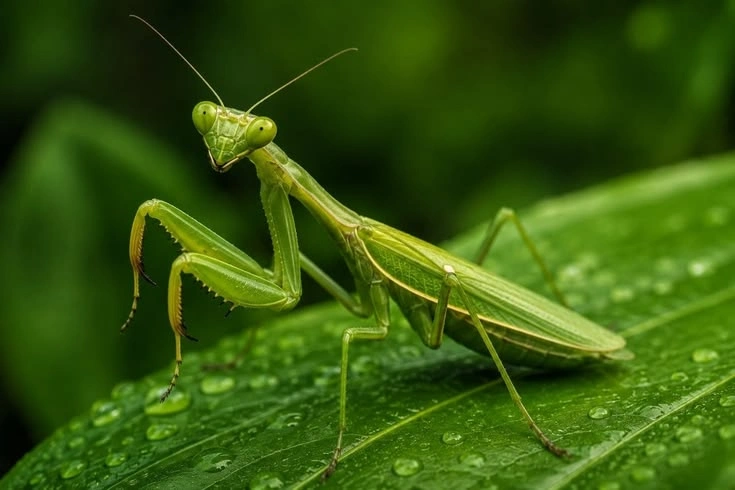
Praying mantises are some of the most fascinating insects you can find in gardens, forests, grasslands, and other warm environments. Their long bodies, triangular heads, large eyes, and folded front legs make them easy to recognize. These unusual insects are predators, and they spend much of their lives waiting quietly for the right moment to catch prey.
There are thousands of mantis species around the world, and they can look very different from one another. Some are green or brown and blend into plants, while others have body shapes that resemble leaves, flowers, or branches. Despite their strange appearance, praying mantises are not dangerous to people. They are mainly interested in catching other insects and small animals.
This guide covers the most useful Praying Mantis Facts, including what they eat, where they live, how they grow, how they hunt, and what makes their behavior so interesting.
Key Takeaways
- Praying mantises are carnivorous insects that mainly eat other insects and arthropods.
- They are ambush predators that use their spiny front legs to grab prey.
- Their life cycle has three main stages: egg, nymph, and adult.
- Female mantises lay eggs inside a protective case called an ootheca.
- Nymphs look similar to adults but must molt several times as they grow.
- Most mantises prefer warm areas with grass, shrubs, flowers, and other vegetation.
- Mantises can eat both pest insects and beneficial insects, so their value as garden pest control is limited.
- Some larger species have been recorded eating small vertebrates, including frogs, lizards, and birds.
What Is a Praying Mantis?
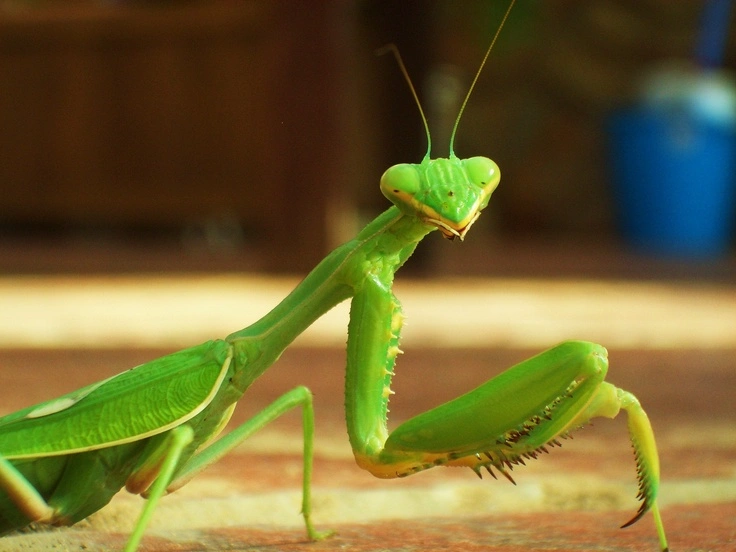
A praying mantis is a predatory insect belonging to the order Mantodea. The name comes from the way its large front legs are often held together, giving the insect an appearance similar to a person praying.
Mantises have a long body, a triangular head, large compound eyes, and specialized front legs called raptorial legs. These legs have sharp spines that help the insect hold onto struggling prey. Their head can also rotate a remarkable amount, allowing them to watch their surroundings without moving their entire body.
Many mantises rely heavily on camouflage. A green species may disappear among leaves, while a brown species can look like a dried plant or branch. Some species have developed even more unusual shapes that help them resemble flowers or other parts of their surroundings.
What Do Praying Mantises Eat?
Praying mantises are carnivores, which means they eat animal prey rather than plants. Their usual meals include insects and other small arthropods.
Common Praying Mantis Foods
Depending on the species and its size, a mantis may eat:
- Flies
- Crickets
- Grasshoppers
- Moths
- Beetles
- Caterpillars
- Bees
- Other mantises
- Spiders and other small arthropods
Larger species can sometimes capture small vertebrates such as frogs, lizards, and small birds. These events are unusual compared with their normal insect-based diet, but they have been documented in different parts of the world.
Young mantises begin hunting soon after they hatch. They need regular meals because they grow quickly and must repeatedly shed their outer skin.
How Does a Praying Mantis Hunt?
A praying mantis usually does not chase its prey for long distances. Instead, it uses an ambush strategy.
The mantis may remain completely still on a plant while watching for movement. Its camouflage helps it remain unnoticed. When an insect comes close enough, the mantis quickly extends its front legs and grabs the prey.
The movement can happen so quickly that the prey has little chance to escape. The mantis then uses its strong mouthparts to eat the captured animal. Some mantises slowly stalk prey instead of simply waiting, but the basic strategy is still based on surprise and careful positioning.
Praying Mantis Life Cycle
The praying mantis life cycle is different from that of butterflies because mantises do not have a larval or pupal stage. They go through incomplete metamorphosis.
The three main stages are:
- Egg
- Nymph
- Adult
Egg and Ootheca
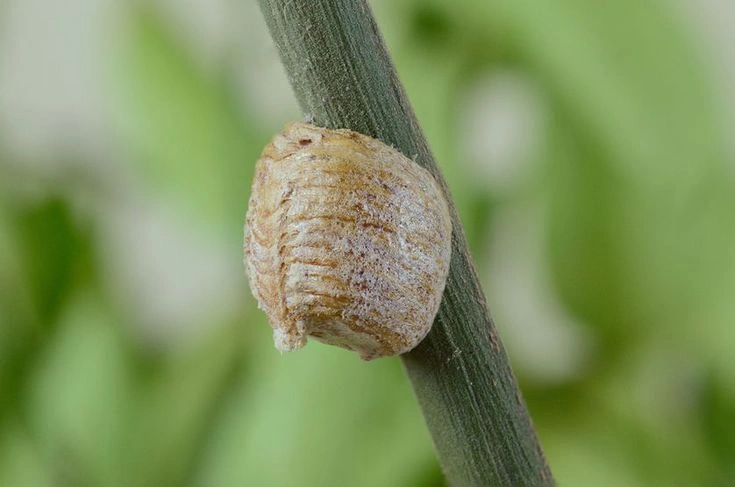
After mating, the female lays eggs inside a protective structure called an ootheca. The ootheca begins as a soft, foamy material and hardens around the eggs.
Depending on the species, an egg case may contain dozens or hundreds of eggs. Females can attach these cases to twigs, stems, tree trunks, fences, walls, or other suitable surfaces. In many temperate regions, the eggs remain protected through winter and hatch when conditions become favorable.
Nymph Stage
When young mantises hatch, they are called nymphs. They look like tiny versions of adult mantises, although they do not have fully developed wings.
Nymphs immediately begin looking for food. As they grow, they shed their outer covering several times. Each shedding allows the insect to become larger and move closer to adulthood.
This process is called molting. The number of molts varies between species and can also differ between males and females.
Adult Stage
Once the nymph completes its final molt, it becomes an adult. Adult mantises are sexually mature and, in winged species, have developed wings.
Adults spend their time hunting, avoiding predators, finding mates, and reproducing. In many temperate species, adults are most noticeable during late summer and fall before the next generation begins with newly laid eggs.
Where Do Praying Mantises Live?
Praying mantises can live in many different habitats, but most prefer places that provide vegetation, warmth, shelter, and plenty of prey.
Common habitats include:
- Grasslands
- Meadows
- Gardens
- Shrublands
- Forest edges
- Agricultural areas
- Flowering plants
- Trees and bushes
Many species spend much of their time on vegetation because plants provide both camouflage and hunting opportunities. A mantis may sit on a flower waiting for an insect to approach or hide among leaves where its body is difficult to see.
Different species are adapted to different climates. Mantises are found across many parts of the world, although Antarctica does not have native praying mantises.
Praying Mantis Behavior
Praying mantises are best known for their patient hunting behavior. They can remain motionless for long periods before suddenly moving when prey comes within reach.
Camouflage and Movement
Camouflage is one of their most useful defenses. Many species match the colors of their surroundings. Some can also move gently from side to side, making them look like vegetation moving in the wind.
Their large eyes help them detect movement and judge the position of nearby prey. They can also turn their heads significantly, which gives them a wide field of view.
Cannibalism
Cannibalism is another well-known part of mantis behavior. Mantises may sometimes eat other mantises, including members of their own species.
Female mantises are especially famous for sometimes eating males during or after mating. However, the behavior is often exaggerated. It does not happen in every species or during every mating attempt. Research and field observations suggest that mating cannibalism occurs only in some situations and at varying rates depending on the species and conditions.
Are Praying Mantises Good for Gardens?
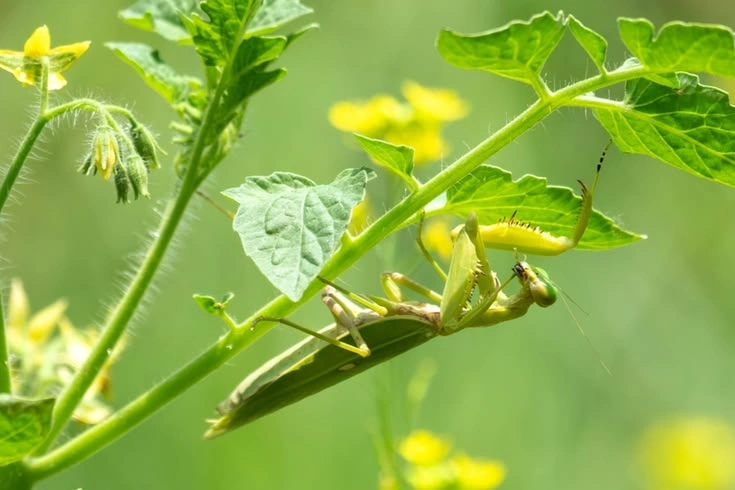
It is common to hear that praying mantises are excellent natural pest controllers. They certainly eat many insects that people consider pests, so having one in a garden can be interesting and sometimes helpful.
However, mantises are not selective hunters. They may eat pests, but they can also eat bees, butterflies, other pollinators, and insects that are useful to the garden. They may even eat other mantises.
For this reason, university extension experts generally consider their overall value as biological pest control to be limited. If you find a mantis in your garden, there is usually no reason to disturb it, but releasing large numbers of mantises specifically for pest control is not a reliable solution.
Are Praying Mantises Dangerous to Humans?
Praying mantises are generally harmless to people. They do not have venom or a stinger, and they normally have no reason to attack humans.
A mantis may raise its front legs or react defensively if it feels threatened. It is best to observe it without trying to grab or handle it unnecessarily.
Their powerful front legs are designed for catching small prey, not attacking people. Their hunting behavior can look intimidating, but these insects are much more interested in finding food than confronting humans.
How Long Do Praying Mantises Live?
The lifespan of a praying mantis depends on its species, climate, and environmental conditions. Many species complete their life cycle within about a year, while the adults of some species live for only a relatively short part of that period.
In temperate areas, eggs may survive winter while adults die after reproduction or when cold weather arrives. This creates a seasonal cycle in which a new generation hatches and grows during the warmer months.
What Science Tells Us About Praying Mantises
The information in this guide is based on established entomology resources and educational material from university extension programs and major science publications. Sources such as Iowa State University Extension, University of Maryland Extension, University of Wisconsin Horticulture, UC Integrated Pest Management, and National Geographic describe mantis feeding habits, life stages, camouflage, reproduction, and hunting behavior.
One important point is that common mantis myths should be treated carefully. For example, the idea that female mantises always eat the male after mating is incorrect. Scientific observations show that mating cannibalism occurs in some species and circumstances, but it is not a universal behavior.
For readers of Viltnemnda, these facts also provide a useful reminder of how much interesting biology can be found in ordinary natural surroundings. A small insect sitting quietly on a plant can have highly specialized hunting, camouflage, and survival behaviors.
Conclusion
Praying mantises are patient hunters with impressive adaptations for survival. Their powerful front legs, excellent vision, camouflage, and ambush hunting style make them highly effective predators of insects and other small animals.
Understanding these Praying Mantis Facts also helps separate real behavior from popular myths. They are not dangerous monsters, and females do not always eat their mates. Instead, they are complex insects that play a natural role in food webs and can be fascinating to observe in gardens and wild habitats.
Frequently Asked Questions About Praying Mantis Facts
What do praying mantises eat?
Praying mantises mainly eat live insects and other arthropods, including flies, crickets, moths, beetles, and grasshoppers. Larger species can occasionally capture small vertebrates.
Can a praying mantis turn its head?
Yes. A praying mantis can rotate its head through a very wide range, helping it watch its surroundings and locate potential prey without moving its entire body.
Do praying mantises bite humans?
They can potentially bite or pinch if handled roughly, but they are generally harmless to humans and do not normally attack people.
How many stages are in a praying mantis life cycle?
The basic life cycle has three stages: egg, nymph, and adult. Nymphs resemble small adults and grow by molting several times.
Do praying mantises eat each other?
Yes. Cannibalism can occur among mantises, particularly when food is limited or when mantises encounter smaller individuals. Females may also sometimes consume males during mating.
Are praying mantises good for gardens?
They can eat garden pests, but they also eat beneficial insects and pollinators. Because they are generalist predators, they should not be considered a precise or dependable pest-control method.
