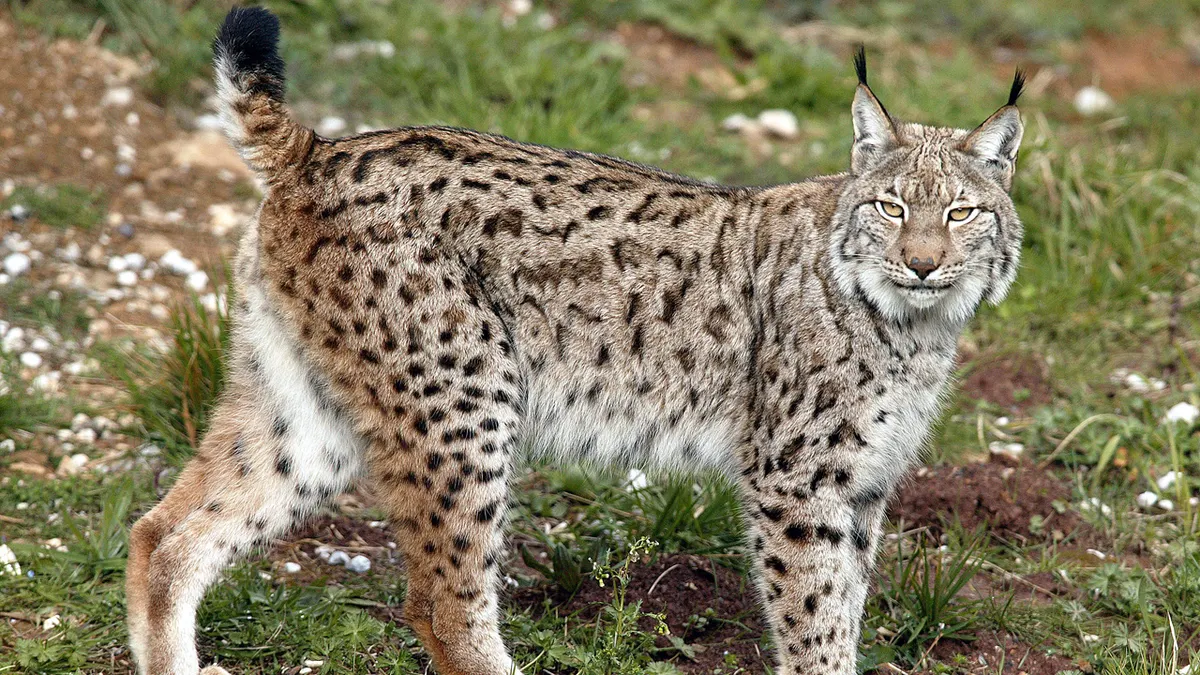
Following fresh snow across the boreal forest, a field inspector from the Norwegian Nature Inspectorate (Statens naturoppsyn) logs two parallel sets of feline tracks a female Eurasian lynx and her kitten before uploading the coordinates to Rovdata. Several months later, after complex statistical conversion models run inside government databases, that single field sighting emerges as a binding legal limit: a total allowance of six animals for a designated hunting district. The distance between those tracks in the snow and that final published number represents Norway’s winter carnivore management framework. If you want to understand how a kvotejakt gaupe (lynx quota hunt in Norway) is established each winter, you must trace a rigorous, multi-step chain. This process converts raw winter field observations into legal quotas through five distinct administrative steps.
What Kvotejakt Is, and What It Is Not?
In Norwegian carnivore management (rovviltforvaltning), hunting is categorized under three distinct legal instruments: damage culling (skadefelling), license culling (lisensfelling), and quota hunting (kvotejakt). While wolves, bears, and wolverines classified under the national carnivore policy alongside lynx as bear wolf lynx wolverine are managed exclusively through culling instruments to regulate population limits, the Eurasian lynx holds a unique status as Norway’s only large carnivore subject to an ordinary quota hunt.
A kvotejakt gaupe framework operates as a traditional game hunt open to all registered sports hunters who hold a valid hunting license, have passed the big-game shooting proficiency test, and hold access to local land rights. It is regulated under game management law rather than emergency conservation exceptions. Kvotejakt is different from licensed culling, which is used for other large carnivores under separate rules.To explore how a lynx quota hunt norway framework differs in detail from licensed state culls or emergency lethal removals, read our complete breakdown of Norwegian carnivore hunting mechanisms.
Step One: Counting Family Groups
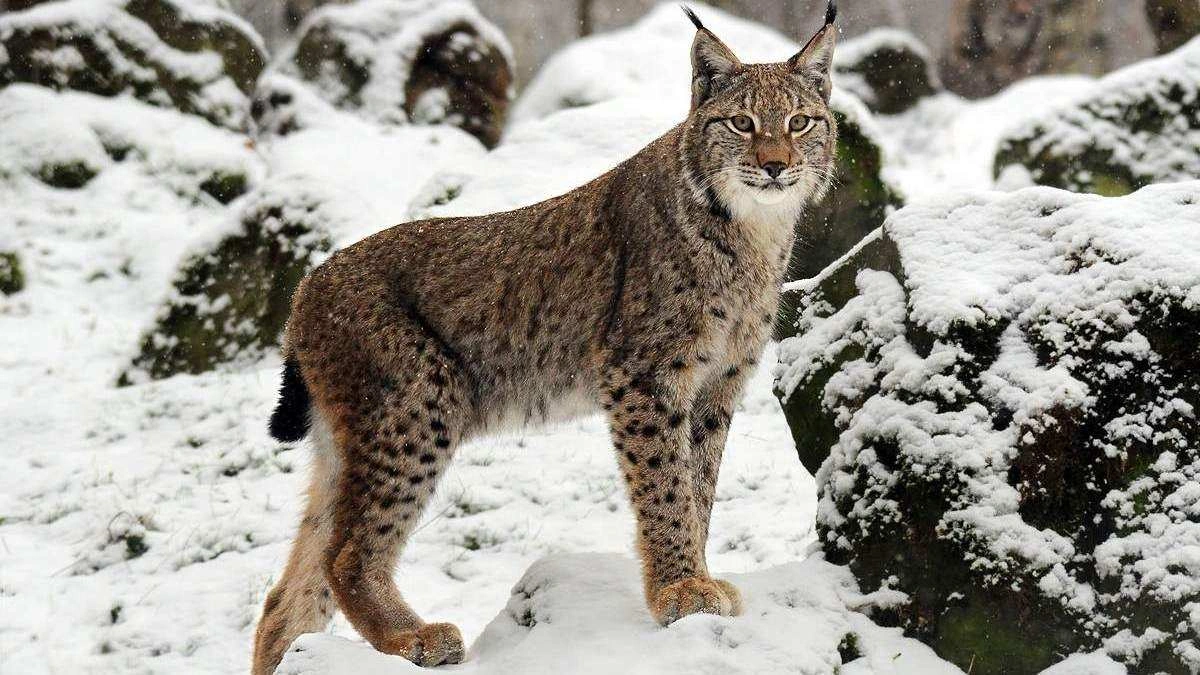
The foundational link in setting the kvotejakt gaupe quota is the winter field count. Rather than attempting to tally every secretive, solitary adult cat moving through vast mountainous terrain, Norway’s monitoring program measures a specific metric: family groups (familiegrupper). A family group is strictly defined as a female lynx travelling together with one or more of her kittens born during the previous spring.
The Monitored Lynx Family Group Tracking Process:
-
Structure: Adult female lynx traveling with kitten or kittens.
-
Survey Window: Tracked continuously between October 1 and February 28.
-
Verification: Verified by Statens naturoppsyn (SNO) or registered camera trap networks.
Fieldwork runs annually throughout the snow-cover period, primarily between October 1 and February 28. Monitoring relies heavily on snow tracking carried out by field officers from Statens naturoppsyn (SNO), supplemented by verified camera-trap networks (Scandcam). Local hunters, land managers, and the general public play an active role by logging track sightings through the national observation portal Skandobs. However, an observation reported by a member of the public does not automatically enter the official dataset; an SNO inspector must physically visit the location to verify the track measurements, step stride, and group composition before it is officially logged as a confirmed family group.
Focusing on family groups provides an ecologically stable foundation. Solitary adults shift home ranges and are easily double-counted, whereas a female travelling with kittens leaves a distinct, repeatable tracking footprint in fresh snow.
Step Two: Turning Counts into a Population Estimate
Once field observations close at the end of February, the raw number of confirmed family groups must be converted into an estimate of the total population size before determining the final kvotejakt gaupe limits. This critical conversion is where the statistical translation occurs—and where much of the technical controversy resides.
To convert confirmed family groups into total individual animals, wildlife biologists at Rovdata multiply the count by a standardized, empirically derived multiplication factor of 6.0. This multiplier is based on long-term demographic data from collar-tracked lynx populations across Scandinavia. The model assumes that for every female lynx successfully raising a litter of kittens in a given winter, there are approximately five other individual lynx in the ecosystem—including subadults, non-breeding females, solitary territorial males, and floating adults. For instance, if a region logs 65 confirmed family groups, multiplying by 6.0 yields an estimated population of approximately 390 lynx.
Because the factor of 6.0 is a fixed demographic average, any shift in underlying population dynamics introduces uncertainty into the kvotejakt gaupe calculation. If reproductive success is exceptionally high in a given year due to abundant roe deer prey, or if adult male mortality has spiked due to unrecorded factors, the actual ratio of total animals to family groups may deviate from 6.0. If the real multiplier in a region is 5.2 or 6.8, multiplying by 6.0 will understate or overstate the true total population size accordingly.
Step Three: Comparing Against the Regional Target
With the population estimate established, the figures are passed to regional management bodies. Norway is divided into eight management regions for large carnivores, each governed by a politically appointed regional carnivore board (rovviltnemnd).
Every region operates under a binding, politically mandated national population target (bestandsmål) set by the Norwegian Parliament (Stortinget). The population target is expressed explicitly as a specific number of annual lynx family groups (e.g., a target of 10 family groups for Region 4).
If the verified count of family groups in a region sits at or above its designated population target (bestandsmål), the regional rovviltnemnd possesses full legal authority to grant a kvotejakt gaupe season. Conversely, if the regional count falls below its target, authority is automatically revoked from the political board, and management control reverts directly to the state environment agency (Miljødirektoratet). In these under-target regions, quota hunting is typically suspended or heavily restricted to allow the population to recover toward its target. For a full breakdown of how management boundaries and regional boards operate, review our guide to Norwegian rovvilt regions.
Step Four: Setting the Quota and its Conditions
When a rovviltnemnd meets to set the hunting quota, it does not merely decide a single overall harvest number. The board establishes structural conditions for the kvotejakt gaupe to protect the core breeding population:
-
Total Quota: The maximum number of lynx permitted to be harvested across the region.
-
Sub-Quotas by Area: The total quota is partitioned into specific geographic sub-units to prevent localized overharvesting and align with zoning policy (soneinndeling), which separates areas prioritized for livestock grazing from areas prioritized for carnivore reproduction.
-
Female Sub-Quota (Hunnkvote): The maximum allowance of adult female lynx (typically females over 1 year of age or over a specific weight threshold, such as 14 kg) that can be taken within the total quota.
Example Regional Quota Structure:
-
Total Regional Quota: 10 Lynx.
-
Sub-Area A (High Livestock Zone): Allocation of 6 Lynx.
-
Sub-Area B (Carnivore Priority Zone): Allocation of 4 Lynx.
-
Critical Female Cap: Maximum 3 Adult Females Total. Once 3 adult females are harvested, the hunt closes region-wide immediately, even if the total cap of 10 animals has not been reached.
The female sub-quota is the single most critical lever in lynx management. Because lynx population trajectory is driven directly by adult female survival, reaching the female cap triggers an immediate, mandatory shutdown of the entire kvotejakt gaupe across that zone or region—even if the overall total quota has not been fulfilled.
Step Five: How the Season Actually Runs
The official timeline for the lynx season quota in Norway is strictly defined by national regulations, running annually from February 1 to March 31 during the kvotejakt gaupe period.
Participation requires hunters to register prior to the season opening. During the hunt, real-time communication mechanisms are mandatory:
-
Daily Quota Updates: Before setting out each morning at 06:00, hunters must check an automated telephone hotline or digital portal managed by the County Governor (Statsforvalteren) to verify whether the quota for their specific zone remains open.
-
Immediate Reporting: When an animal is shot during the kvotejakt gaupe period, the hunter is legally required to notify Statsforvalteren and Statens naturoppsyn immediately (typically within 30 to 60 minutes).
-
Biological Inspection: SNO officers conduct an immediate physical inspection of the carcass to verify the animal’s sex, weight, and precise location of harvest, and to collect tissue samples for genetic profiling.
-
Immediate Closure: Once the total quota or the female sub-quota is filled, Statsforvalteren issues an immediate closure broadcast, ending hunting activities in that zone with immediate effect.
Why Two Regions Get Very Different Quotas?
It is common during a single winter for one region in Norway to open a generous kvotejakt gaupe allocation while a neighboring region maintains a complete ban on hunting. This divergence is driven by three main factors:
-
Disparities relative to Regional Targets: A region with a target (bestandsmål) of 5 family groups that logs 8 groups has surplus animals available for harvest. A neighboring region with a target of 10 groups that logs only 7 groups sits below its mandate, requiring full protection.
-
Snow Tracking Conditions and Confidence: Regional monitoring relies on winter snow. If a coastal region experiences a mild winter with sporadic snow cover, field inspectors may fail to confirm existing family groups, resulting in a low official count that legally restricts the quota regardless of actual local lynx presence.
-
Prey Base and Grazing Pressure: Regions featuring free-ranging sheep or semi-domesticated reindeer pastures face higher conflict pressures. Regional zoning policy routinely sets higher harvest allocations in heavy livestock zones to minimize losses.
Where the Argument Actually Is?
Public controversy surrounding lynx management frequently focuses on the final quota numbers published each winter for the kvotejakt gaupe season. However, biological and legal debate centers higher up the technical chain:
-
The Fixed Multiplier (6.0): Conservation organizations argue that applying a uniform factor of 6.0 across diverse landscapes oversimplifies regional demographic variations, potentially leading to overestimating local populations. Conversely, farming and hunting associations argue the factor is overly conservative and underestimates total numbers.
-
Snow-Dependent Monitoring Gaps: In years with poor winter snow cover, monitoring coverage declines. Hunters argue that uncounted family groups exist on the ground but remain unverified due to lack of snow, unfairly depriving them of kvotejakt gaupe opportunities.
-
Political Target Setting: Environmental groups frequently contest the national population target (bestandsmål) itself, arguing that maintaining national targets close to minimum viable levels restricts natural ecological recovery.
The Verdict
Norway’s lynx monitoring and quota system is one of the most data-intensive large carnivore management frameworks in Europe. By grounding administrative decisions in verified field tracking data and applying automated female caps, the system prevents unmonitored population declines during any kvotejakt gaupe.
When the next annual monitoring report is published by Rovdata in spring, do not focus solely on the national total. Look specifically at the confirmed family group counts in low-snow regions—that parameter dictates where regional authority will shift and how quotas will take shape in the winter ahead.
Frequently Asked Questions
What is kvotejakt?
Kvotejakt is an ordinary quota-regulated game hunt open to licensed hunters, used in Norway to manage the Eurasian lynx population within established regional boundaries.
How is the lynx quota calculated?
The quota is calculated by counting winter family groups, multiplying that figure by 6.0 to estimate the total population, and comparing the result against regional population targets set by Parliament.
What is a lynx family group?
A lynx family group (familiegruppe) consists of an adult female lynx travelling together with one or more of her kittens born during the previous spring.
Who decides the lynx quota?
The quota is decided by the regional carnivore board (rovviltnemnd) if the regional population meets or exceeds its target. If the population is below target, authority reverts to the Norwegian Environment Agency (Miljødirektoratet).
Why do quotas differ between regions?
Quotas differ because regions have different population targets, varying counts of family groups, differing quality of winter tracking snow, and distinct zoning policies for livestock protection.
Can anyone take part in a lynx quota hunt?
Any hunter who is registered in the Norwegian Register of Hunters, has paid the annual hunting fee, has passed the big-game shooting proficiency test, and holds land hunting permissions can participate in a kvotejakt gaupe season.
