The Atlantic cod (Gadus morhua) is listed as Vulnerable on Norway’s national assessment, yet commercial trawlers land thousands of tonnes of it every year under government-allocated quotas. Meanwhile, the European eel (Anguilla anguilla) is Critically Endangered and strictly protected from targeting.
This contrast exposes the central misunderstanding in Scandinavian conservation: the red list is routinely described as an official register of protected animals. It is not.
Evaluation of norwegian red list species is a scientific exercise in risk accounting. Understanding how these assessments influence decisions requires looking at Norway’s wider wildlife management system, where scientific data guides conservation and resource management. A listing on the norwegian red list species registry records population trajectory, range loss, and extinction risk, but it confers no statutory protection on its own. Monitoring every norwegian red list species allows scientists to track ecological trends over time without imposing immediate statutory hunting bans.
The gap between biological evaluation and administrative protection is where nearly all public arguments over wildlife policy begin.
What the red list actually is
The Norwegian Red List for Species known locally as Rødlista (or written as Redlista) is a scientific assessment of the risk that a species will go extinct within Norway. Produced on a regular 6-year revision cycle, it is compiled by the Norwegian Biodiversity Information Centre (Artsdatabanken), an independent government knowledge agency under the Ministry of Climate and Environment.
Artsdatabanken does not write environmental laws, set hunting quotas, or decide municipal planning applications. Its sole mandate is to collect, verify, and publish objective data on Norway’s biological diversity.
Rødlista evaluates wild flora, fauna, and fungi using standardized international methodology adapted specifically for national and regional borders. Every norwegian red list species is categorized based on objective criteria rather than economic value or political preference. It functions as a diagnostic health report for national ecosystems. Crucially, it remains a value-neutral document: it records what is happening to wild populations, leaving management decisions to politicians and regulatory directorates.
How a species gets assessed
Assessing species assessment norway protocols requires applying the strict quantitative frameworks set out by the International Union for Conservation of Nature (IUCN). Dozens of expert panels evaluate species against five primary biological criteria:
-
Population Reduction Rate: Measured over ten years or three generations, whichever is longer.
-
Geographic Range: Calculated via Extent of Occurrence (EOO) or Area of Occupancy (AOO).
-
Small Population Size and Decline: Tracking absolute breeding numbers alongside ongoing habitat loss.
-
Very Small or Restricted Population: Measuring vulnerability to localized stochastic events.
-
Quantitative Risk Analysis: Statistical modeling that estimates the probability of extinction within a specific timeframe.
When an assessment finishes, a norwegian red list species falls into one of several specific risk tiers:
-
Regionally Extinct (RE): No reasonable doubt that the last individual in Norway has died.
-
Critically Endangered (CR): Facing an extremely high risk of extinction in the wild in the near future.
-
Endangered (EN): Facing a very high risk of extinction.
-
Vulnerable (VU): Facing a high risk of extinction.
-
Near Threatened (NT): Close to qualifying for a threatened category, or likely to qualify in the near future.
-
Data Deficient (DD): Inadequate information to make a direct or indirect assessment of extinction risk based on distribution or population status.
The Data Deficient (DD) tag is frequently misinterpreted by non-specialists as a badge of safety. In practice, it represents unquantified risk. A DD listing means scientists lack the census data needed to confirm whether a norwegian red list species is flourishing or quietly collapsing, making it a red flag for research funding rather than an administrative pass.
What a listing does and does not mean
A red list entry is a scientific diagnosis, not an executive order. A norwegian red list species evaluated as Critically Endangered does not automatically receive protection from hunting, habitat clearing, or industrial development.
This structural separation explains why management rules vary across species:
-
Red listed, but legally harvested: The Atlantic cod (Gadus morhua) is listed as Vulnerable, yet remains the backbone of Norway’s commercial fishing fleet under heavily managed quotas. Willow ptarmigan (Lagopus lagopus) populations fluctuate near management thresholds as explored in our ptarmigan population analysis yet managed game hunting continues seasonally.
-
Legally protected without a high-risk listing: Certain wild species receive statutory protection through specific executive orders or international treaties to prevent over-harvesting long before they trigger extinction risk thresholds.
The Nature Diversity Act provides the legal framework that determines how authorities consider biodiversity when making environmental decisions.
-
The Nature Diversity Act (Naturmangfoldloven): The primary legislative framework governing Norwegian conservation and resource management.
-
Prioritised Species (Prioriterte arter): Specific regulations under Naturmangfoldloven Section 23 that grant targeted, legal protection to individual species and their breeding sites.
-
The Wildlife Act (Viltloven) and Marine Resources Act (Havressourceloven): Regulating terrestrial harvesting and marine fisheries quotas, respectively.
Where the list actually bites
While Rødlista bestows no direct immunity, it acts as an administrative trigger across environmental law. Its statutory leverage is applied primarily through the Nature Diversity Act (Naturmangfoldloven).
The list influences decision-making in three distinct regulatory areas:
1. Land use planning and municipal zoning
Under Norway’s Planning and Building Act, local councils and private developers must conduct formal impact assessments before breaking ground. Naturmangfoldloven Section 8 states that administrative decisions must be based on scientific knowledge. If a proposed road, wind farm, or housing estate overlaps with a norwegian red list species habitat recorded in national databases (Artskart), the developer must address those risks.
2. General principles of consideration
Sections 8 through 10 of Naturmangfoldloven establish mandatory management duties:
-
Section 8 (Knowledge Base): Authorities must evaluate available biological data, where Rødlista serves as the primary scientific baseline.
-
Section 9 (Precautionary Principle): Lack of full scientific certainty cannot justify postponing protective measures when dealing with high extinction risks.
-
Section 10 (Cumulative Burden): Assessing how a new project compounds existing pressures on local ecosystem health.
3. Selection of protected areas and habitat types
When environmental authorities select candidates for national parks, nature reserves, or “selected habitat types” (utvalgte naturtyper under Section 52), the concentration of any threatened norwegian red list species serves as a core selection criterion.
What the most recent assessment showed
The 2021 Red List assessment examined 23,405 species across mainland Norway and adjacent sea areas. It remains the active national scientific baseline until the next major release cycle:
-
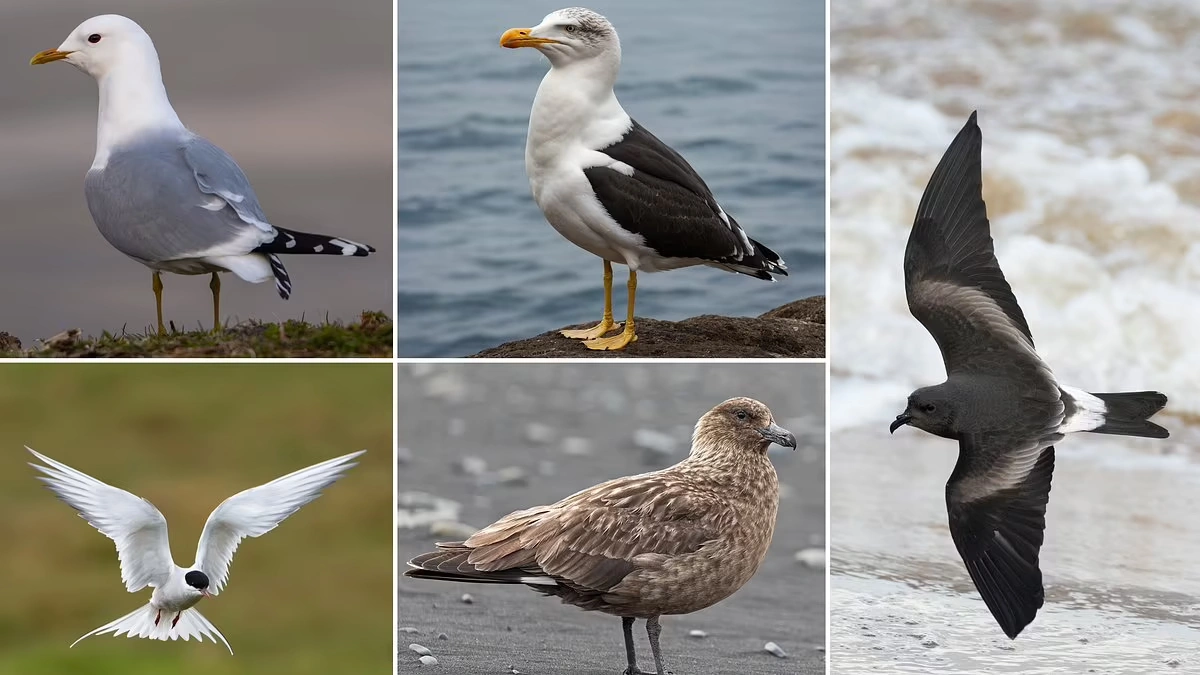
Birds: 288 evaluated, 134 red-listed (46.5%), 76 threatened (CR, EN, VU). Primary drivers include nest disruption, food web shifts, and climate pressure.
-
Mammals: 92 evaluated, 30 red-listed (32.6%), 22 threatened. Primary drivers include habitat fragmentation and low population baselines.
-
Vascular Plants: 1,326 evaluated, 425 red-listed (32.0%), 287 threatened. Primary drivers include agricultural abandonment and land conversion.
-
Fungi: 4,374 evaluated, 1,140 red-listed (26.1%), 833 threatened. Primary drivers include forestry practices and loss of old-growth woodland.
-
Insects: 10,230 evaluated, 2,028 red-listed (19.8%), 1,061 threatened. Primary drivers include industrial land use and loss of semi-natural meadows.
Habitat degradation remains the dominant pressure across all groups: 89% of threatened species in Norway are impacted by ongoing changes in land use planning and industrial land conversion.
The data highlights a shifting trend: historical drivers like direct overexploitation have largely been replaced by cumulative land-use changes, commercial forestry pressures, and climate-driven habitat changes. Protecting every norwegian red list species while aligning local management with global biodiversity targets requires addressing these structural land-use pressures.
Why the list gets argued about
These disagreements often connect with broader human-wildlife conflicts, where conservation goals can overlap with farming, development, and resource use.
-
National versus global scope: A species can be abundant across Sweden or Finland but critically threatened within Norway’s borders. Scientists evaluate local extinction risk within Norwegian territory. Critics argue that spending conservation resources on a nationally rare norwegian red list species that is globally secure distorts priorities, while proponents maintain that maintaining range edges is vital for genetic diversity.
-
The baseline problem: Disagreements frequently emerge over historical benchmarks. Commercial interest groups may view a population as recovering relative to mid-20th-century lows, whereas conservation biologists evaluate it against pre-industrial distribution levels.
-
Uncertainty and Data Deficiency: When a norwegian red list species is placed in the Data Deficient (DD) tier, industry groups often argue against precautionary restrictions due to lack of proof, while environmental groups invoke Section 9 of the Nature Diversity Act to halt developments until surveys are conducted.
How to read a listing before you quote it
Before citing a Rødlista entry in a policy document, news report, or public debate, check these five parameters:
-
Check the Assessment Year: Ensure the data comes from the active 2021 cycle rather than obsolete 2010 or 2015 publications.
-
Verify Spatial Boundaries: Confirm whether the listing applies to Mainland Norway, Svalbard, or international waters.
-
Identify the Specific Category: Distinguish clearly between Near Threatened (NT) and actual threatened categories (VU, EN, CR).
-
Inspect the Triggering Criteria: Review whether the listing was caused by a rapid population drop (Criterion A) or a restricted geographic range (Criterion B).
-
Read the Uncertainty Notes: Check if expert panels flagged major data gaps or listed the evaluation of a norwegian red list species under Data Deficient (DD).
The read
Norway’s Red List performs its technical task effectively: providing a rigorous, scientific audit of national species decline. The persistent issue is that society expects it to function as an enforcement mechanism.
By design, Artsdatabanken assesses ecological risk while leaving legal protections to political decision-makers. When a threatened norwegian red list species lacks statutory protection, the issue lies not with the scientific assessment, but with the political choice not to translate those findings into legal restrictions under Naturmangfoldloven.
When the next revision cycle publishes, watch how government agencies bridge the gap between scientific risk classifications and enforceable land-use decisions.
Frequently Asked Questions
What is the Norwegian red list?
The Norwegian Red List for Species (Rødlista) is a science-based inventory that evaluates the risk of species extinction within Norway. Compiled by Artsdatabanken using IUCN criteria, it measures ecological vulnerability rather than granting legal status.
Does being on the red list mean a species is protected?
No. A red list entry is a scientific risk assessment, not a legal protection order. Statutory protection requires separate administrative actions under statutes like the Nature Diversity Act (Naturmangfoldloven).
Who produces the Norwegian red list?
The list is published by the Norwegian Biodiversity Information Centre (Artsdatabanken), an independent scientific body under the Ministry of Climate and Environment, working alongside national expert taxonomy panels.
How often is the red list updated?
Artsdatabanken revises the Norwegian Red List on a regular 6-year cycle to account for new field data, population monitoring, and environmental shifts.
What do the red list categories mean?
Categories range from Least Concern (LC) to Regionally Extinct (RE). The formal “threatened” tiers include Vulnerable (VU), Endangered (EN), and Critically Endangered (CR). Data Deficient (DD) highlights insufficient data to assess risk.
Can a red listed species still be hunted?
Yes. Because red list status is an assessment rather than a harvest ban, hunted species can be listed if they meet population drop criteria, provided game management authorities permit quota harvesting.
