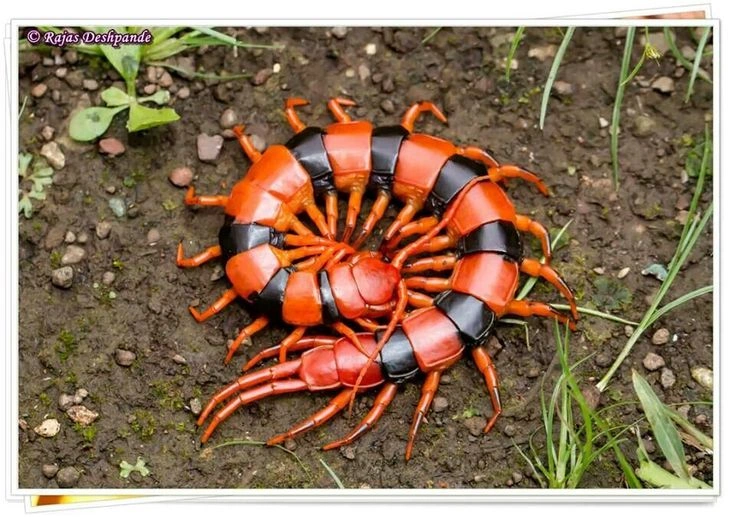
Centipedes are one of those creatures that can make people stop in their tracks. Their long bodies, many legs, and extremely fast movements can look scary, especially when one suddenly appears indoors. But there is much more to these unusual animals than their frightening appearance.
These small predators play an important role in nature. They hunt insects and other small creatures, usually at night, and help keep populations of other invertebrates under control. They are also very different from insects and millipedes, even though they are often confused with both.
In this guide to centipede facts, we will look at their different types, where they live, what they eat, how they behave, and whether they are actually dangerous to people.
What Is a Centipede?
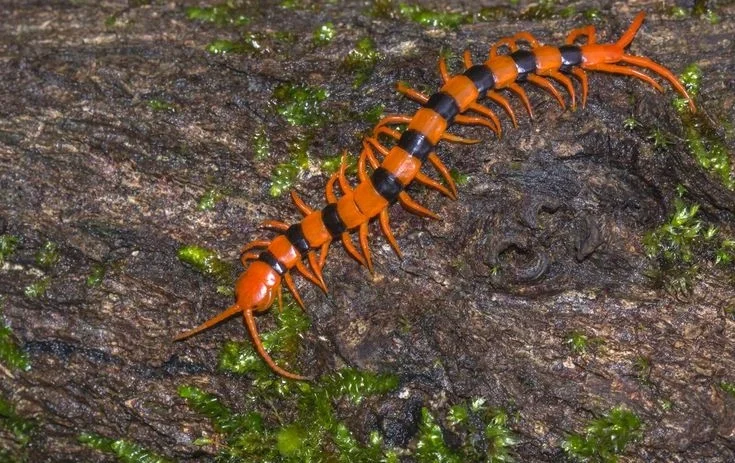
A centipede is a many-legged arthropod belonging to the class Chilopoda. It is not an insect. Centipedes have long, segmented bodies and one pair of legs on each body segment. Their first pair of legs has developed into special venom-delivery structures called forcipules, which they use to capture and subdue prey.
The name “centipede” means “hundred feet,” but this does not mean every centipede actually has 100 legs. Different species have different numbers of legs, and the number can vary considerably.
Centipedes are predators rather than plant eaters. They use their antennae to detect prey and their venom-bearing forcipules to catch it. Their speed is another major advantage when hunting.
Key Takeaways
- Centipedes are predators in the arthropod class Chilopoda.
- They are not insects and are different from millipedes.
- Their first pair of legs is modified into venom-bearing forcipules.
- Most centipedes prefer damp, dark and sheltered environments.
- Their diet mainly includes insects, spiders, worms and other small invertebrates.
- House centipedes can enter buildings when searching for moisture, shelter and prey.
- Most centipedes are not dangerous to humans.
- Larger species can deliver painful bites, so handling them should be avoided.
- Centipedes are useful predators that contribute to healthy ecosystems.
Key Centipede Facts at a Glance
- Centipedes are arthropods, not insects.
- They belong to the class Chilopoda.
- They have one pair of legs on each body segment.
- Their first pair of legs is modified into venomous forcipules.
- Most centipedes are predators.
- They mainly eat insects and other small invertebrates.
- They prefer dark, damp and sheltered places.
- Many species are active at night.
- House centipedes can enter homes while searching for food.
- Most centipedes are not dangerous to humans, although some larger species can deliver painful bites.
Types of Centipedes
There are many different centipede species around the world. They vary in size, color, body shape, habitat and behavior. Some stay almost entirely outdoors, while others are comfortable around buildings.
House Centipede
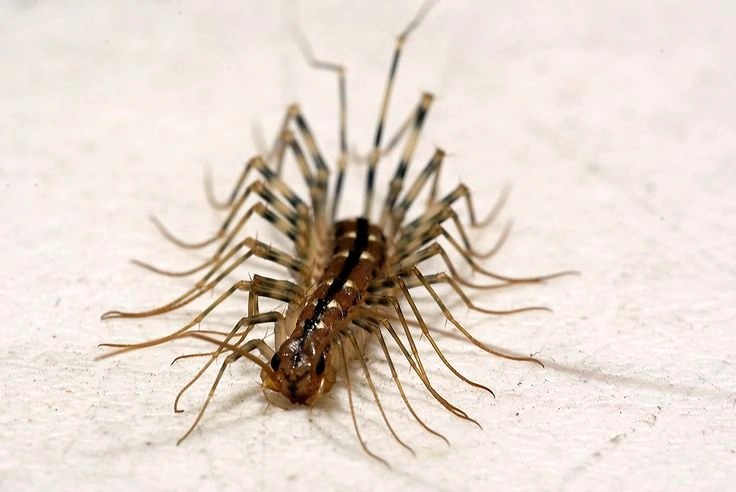
The house centipede is one of the most recognizable types. It has a relatively small body with very long, delicate legs and long antennae. It is often found inside homes, particularly in damp areas such as bathrooms, basements, closets and crawl spaces.
Unlike many pests that damage household items, house centipedes are predators. They feed on insects and other small creatures that may also be living inside a building.
Stone Centipedes
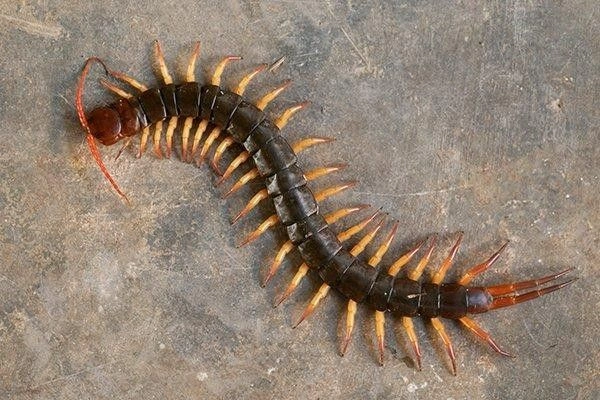
Stone centipedes are commonly associated with outdoor environments. They can be found under rocks, mulch, leaves and other materials that provide moisture and shelter.
They usually hunt small prey in hidden areas and are more active when conditions are suitable for them. Their flattened bodies help them move through narrow spaces.
Bark Centipedes
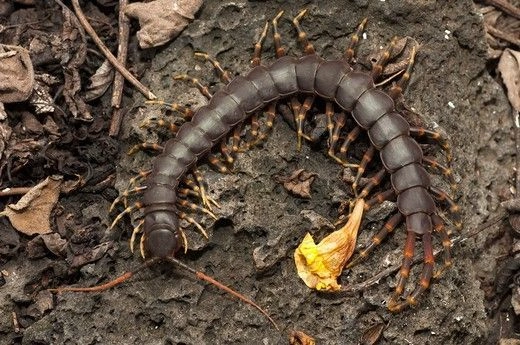
Bark centipedes often live around trees, fallen wood, forest floors and other natural areas. They hunt insects, worms and other small invertebrates.
Some species have darker or reddish colors that help them blend into bark, soil and leaf litter. Their natural camouflage makes them much easier to miss than their appearance might suggest.
Giant Centipedes
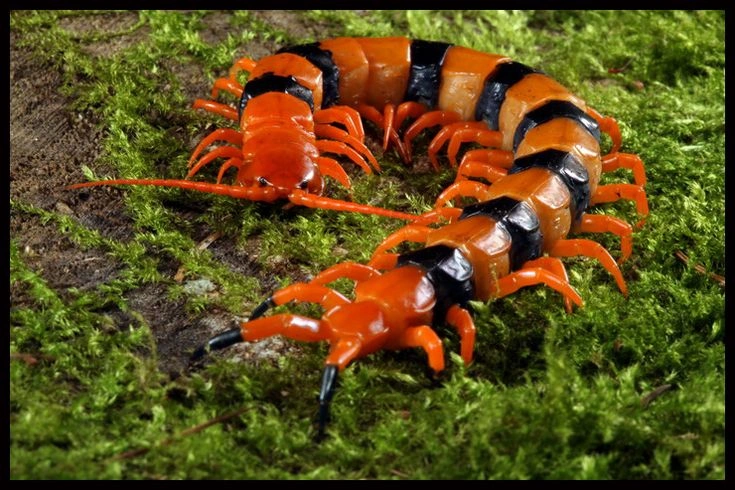
Some tropical centipedes can become much larger than the species commonly seen inside homes. Large members of the genus Scolopendra are powerful predators and can capture larger prey than smaller centipedes.
These species deserve more caution because their bites can be considerably more painful. They should never be picked up or handled.
Where Do Centipedes Live?
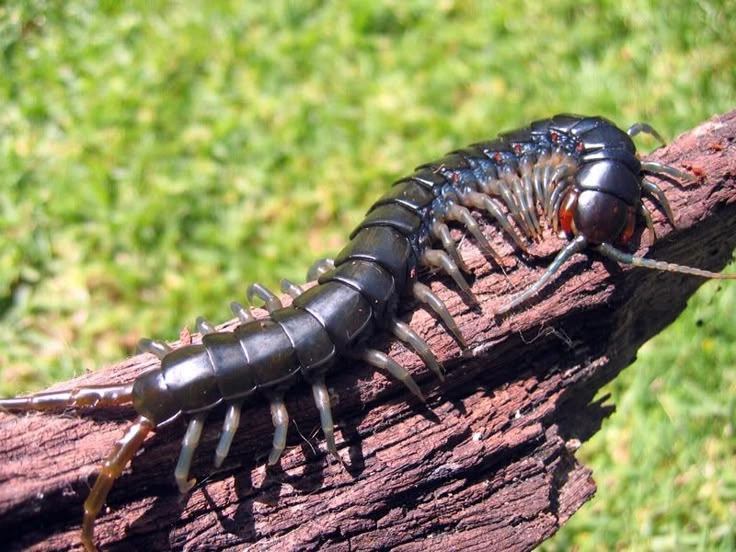
Centipedes can live in many parts of the world, from forests and grasslands to deserts and other environments. However, they usually need access to moist or protected microhabitats because their bodies can lose water relatively easily.
Outside, they commonly hide under:
- Rocks
- Fallen leaves
- Logs
- Loose bark
- Mulch
- Soil
- Compost and other organic material
They often avoid bright sunlight and spend the daytime hidden. Many become active after dark when they can search for prey while reducing their exposure to heat and dryness.
Why Do Centipedes Enter Homes?
A centipede may enter a home because it is looking for food, moisture or shelter. Damp basements, bathrooms, garages, crawl spaces and other quiet areas can provide suitable conditions.
If a home has plenty of insects, it can also become an attractive hunting area for centipedes. Small gaps around doors, pipes and other openings can give them a way inside.
What Do Centipedes Eat?
Centipedes are active hunters. Their diet mainly consists of other small animals rather than plants.
Depending on the species and its size, a centipede may eat:
- Flies
- Cockroaches
- Spiders
- Worms
- Slugs
- Small snails
- Other insects
- Other small invertebrates
Larger species can sometimes tackle much larger prey, including small vertebrates. They use their venom-bearing forcipules to subdue prey before feeding.
This hunting behavior makes centipedes useful in natural ecosystems. They help regulate populations of many smaller creatures and become part of the food web themselves.
How Do Centipedes Hunt?
Centipedes do not sit and wait for plants or decaying material to come along. They actively search for prey.
Their antennae help them sense their surroundings. Once they locate suitable prey, they use their modified front legs to grab it and inject venom. They then use their mouthparts to consume the captured animal.
Their speed also gives them an advantage. If you have ever seen a house centipede suddenly run across a floor, you already know how quickly they can move.
Are Centipedes Dangerous to Humans?
For most people, centipedes are more frightening than dangerous. Most species are not considered a serious threat to humans, and bites are relatively uncommon. Many smaller centipedes are also unable to cause significant injury.
However, centipedes should not be handled. Larger species can deliver a painful bite when threatened, trapped or picked up.
A bite can cause pain, redness, swelling and sometimes numbness around the affected area. The severity depends on the species and the person’s reaction.
Can a Centipede Bite Be Serious?
Most bites are localized and improve with basic care, but serious reactions can happen in uncommon cases. People who experience signs of a severe allergic reaction, such as difficulty breathing or swelling of the throat, need urgent medical attention.
The safest approach is simple: do not pick up a centipede with your bare hands. If you see one, give it space.
Are Centipedes Good or Bad?
Centipedes are not simply “bad pests.” In nature, they are useful predators.
They eat insects and other small animals that would otherwise continue to reproduce. House centipedes can even feed on household pests such as flies and cockroaches. They do not normally damage plants, furniture or household materials.
That does not mean everyone wants one running across the bathroom floor. Their appearance and fast movements can certainly make them unwelcome indoors.
From an ecological point of view, however, centipedes are valuable members of the food web.
Centipede vs Millipede: What Is the Difference?
Centipedes and millipedes are often confused because both have long bodies and many legs. Their lifestyles are quite different.
Centipedes have one pair of legs per body segment and are active predators. Millipedes generally have two pairs of legs on most body segments and mainly feed on decaying plant material.
Centipedes also have venomous forcipules for hunting, while millipedes do not use these structures to capture prey.
A quick look at their movement can also help. Centipedes usually move quickly, while millipedes tend to move much more slowly.
What Should You Do If You Find a Centipede?
If you find a centipede indoors, there is usually no reason to panic. Avoid touching it directly and keep children and pets away from it.
If centipedes repeatedly appear indoors, reducing moisture and sealing small openings can make the environment less attractive to them. It can also help to reduce the insects they feed on.
For a single centipede, simply removing it carefully or allowing it to leave is often enough. There is no need to treat every centipede as a dangerous animal.
Final Thoughts
Centipedes may look like creatures from another world, but their lifestyle is actually quite simple. They hide during the day, come out to hunt at night, and spend much of their lives searching for small prey in dark and damp places.
The most important lesson from these centipede facts is that they are usually not the dangerous pests people imagine them to be. They are fast, venomous predators, but most species pose little risk to humans when left alone.
For Viltnemnda, centipedes are a good reminder that even animals people often dislike can have an important role in nature. Their strange appearance may grab attention, but their role as small predators is what makes them truly interesting.
FAQs
Do centipedes really have 100 legs?
No. Despite their name, centipedes do not have exactly 100 legs. Different species have different numbers of leg pairs, so the actual number varies.
Are centipedes poisonous?
Centipedes produce venom, which they use mainly to subdue prey. Their venom is generally much more important for hunting than for harming humans. Some larger species can cause painful bites.
What attracts centipedes to a house?
Moisture, shelter and available prey can attract centipedes indoors. Damp bathrooms, basements, crawl spaces and areas with other insects can provide suitable conditions.
Do centipedes eat cockroaches?
Yes. Centipedes are predators and can eat cockroaches and other small household insects when they are able to catch them.
Should I kill a centipede in my house?
Not necessarily. Centipedes do not usually damage household items and can eat other pests. If you do not want one indoors, it is better to remove it without handling it directly.
What should I do if a centipede bites me?
Wash the area with soap and water and monitor the symptoms. Pain, redness and swelling can occur. If you develop serious symptoms such as difficulty breathing or throat swelling, seek urgent medical care.
