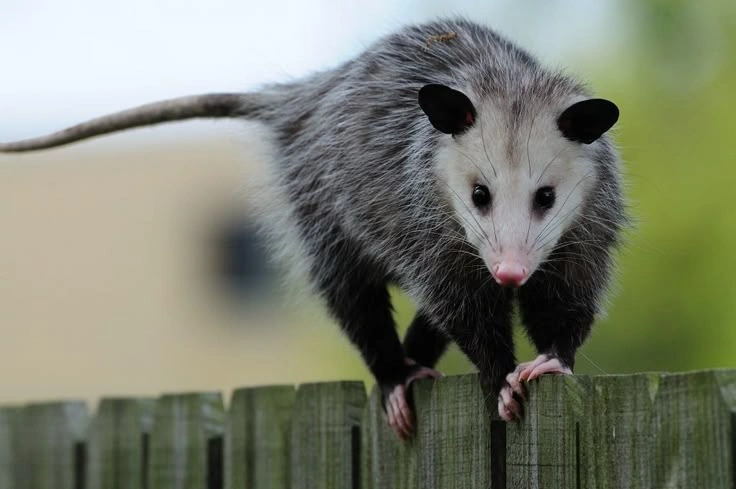
Opossum Facts: Opossums are some of the most misunderstood animals in North America. Their pointed faces, bare tails, and unusual behavior can make them look strange at first, but these small marsupials have several remarkable traits. They are adaptable, mostly active at night, and able to live in forests, wetlands, farms, suburbs, and cities.
The Virginia opossum (Didelphis virginiana) is especially interesting because it is the only marsupial naturally found in the United States and Canada. Like kangaroos, female opossums carry their young in a pouch. They are also opportunistic feeders, meaning they can eat many different types of food depending on what is available.
If you want to learn more about opossum diet, habitat, lifespan, and behavior, these facts explain what makes this animal so unique.
Key Takeaways
- The Virginia opossum is the only marsupial native to the United States and Canada.
- Opossums are omnivores that eat insects, fruits, plants, eggs, small animals, and carrion.
- They can live in forests, wetlands, fields, suburbs, and urban areas.
- Most opossums are nocturnal and usually search for food after dark.
- Their famous “playing dead” response is an involuntary defense mechanism.
- Opossums usually have short lives in the wild, often around one to two years.
- Female opossums carry their young in a pouch during early development.
- Their prehensile tails help with climbing and handling nesting material.
What Is an Opossum?
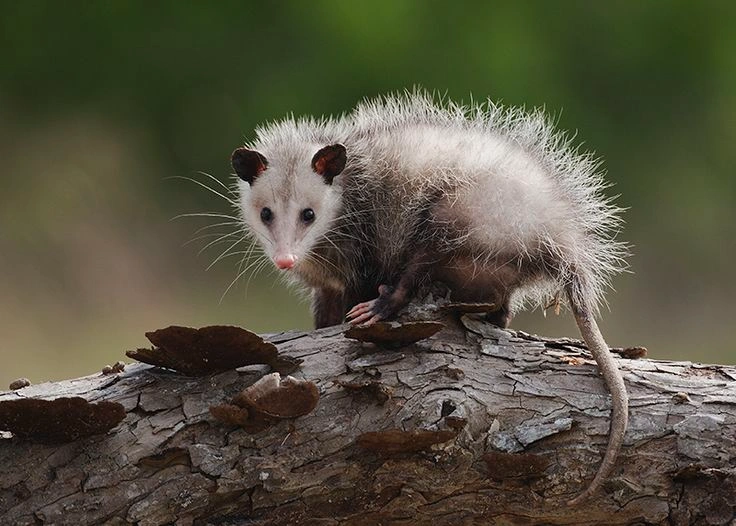
An opossum is a type of marsupial, which means females carry and nurse their young in a pouch. The Virginia opossum is scientifically known as Didelphis virginiana. The U.S. Fish & Wildlife Service lists it as a distinct species within the genus Didelphis.
Virginia opossums are about the size of a house cat, although their exact size can vary greatly. They usually have grayish fur, a long pointed snout, rounded ears, and a long hairless tail. Their unusual appearance often causes people to mistake them for large rats, but opossums are not rodents.
One of their most useful physical features is their tail. The tail is prehensile, meaning it can wrap around objects and branches. It helps the animal climb and can also be used to carry nesting material. Young opossums can use their tails for extra support while climbing, although an adult is generally too heavy to hang from its tail alone.
Where Do Opossums Live?
Opossums are highly adaptable animals. They can live in many environments as long as they have access to food, water, and suitable shelter. Their habitats include wooded areas, swamps, marshes, farms, fields, suburban neighborhoods, and cities.
They do not usually build complicated homes of their own. Instead, they take advantage of shelters that already exist. Hollow trees, abandoned burrows, brush piles, drainage areas, and spaces beneath buildings can all provide useful hiding places.
Their ability to adapt to human environments is one reason people often see them around homes. Garbage, fallen fruit, pet food, insects, and other food sources can make residential areas attractive to them.
Opossums are found across a large part of the Americas. The Virginia opossum has a particularly broad range, extending from parts of southern Canada through much of the United States and into Central America.
What Do Opossums Eat?
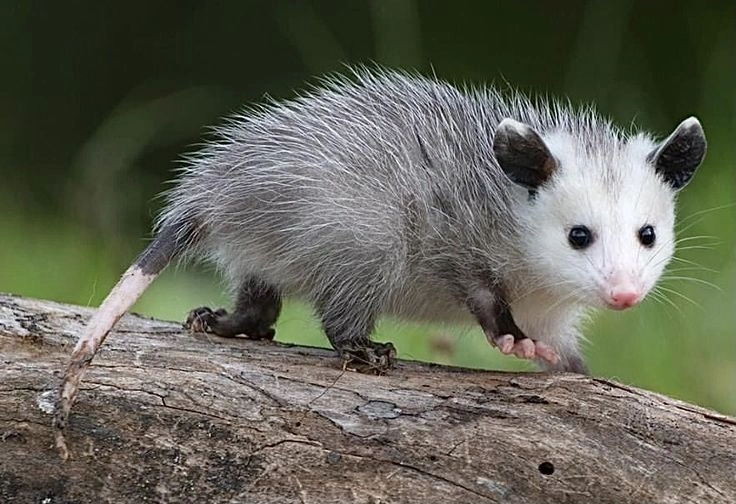
Opossums are omnivores with a very flexible diet. They do not depend on one particular food source, which helps them survive in changing environments.
Their diet can include:
- Insects
- Slugs and snails
- Fruits and berries
- Seeds and nuts
- Eggs
- Small mammals
- Frogs and other small animals
- Birds
- Vegetation
- Carrion
- Food found around human settlements
Their diet can change with the season and the habitat. Animal Diversity Web notes that Virginia opossums may consume vertebrates, invertebrates, plant material, fruits, grains, and carrion.
This flexible feeding strategy is one of the reasons opossums can survive in both natural and developed environments. They are not picky eaters when food is available.
Do Opossums Eat Dead Animals?
Yes. Carrion can be an important part of an opossum’s diet. They may feed on animals that have already died rather than hunting everything they eat.
This behavior gives them an important role as scavengers. By consuming dead animals and other organic material, they help remove food sources that might otherwise remain in the environment.
Are Opossums Nocturnal?
Yes, opossums are primarily nocturnal. They are usually most active after sunset and spend much of the night searching for food and moving between shelter locations. During the day, they generally rest in a protected place.
Their nighttime lifestyle can make them difficult to observe in natural habitats. However, people living in suburban or urban areas may notice them moving through yards, gardens, roadsides, and other places after dark.
Although they are mainly nocturnal, seeing an opossum during daylight does not automatically mean that it is sick or dangerous. Their activity can vary depending on food availability, disturbance, weather, and other circumstances.
Why Do Opossums Play Dead?
“Playing possum” is probably the behavior most closely associated with these animals. When an opossum feels extremely threatened, it can enter an involuntary state that makes it appear dead.
The animal may become still, lie on its side, open its mouth, and expose its teeth. It may also release unpleasant-smelling secretions. This response can discourage a predator that would rather eat live prey.
Importantly, the opossum does not simply decide to pretend to be dead. The response is largely involuntary. According to the National Wildlife Federation, an affected opossum can remain in this state for roughly one to four hours before recovering.
Not every encounter produces this response. An opossum may also run away, growl, or defend itself if it feels threatened.
How Long Do Opossums Live?
Opossums have surprisingly short lifespans compared with many mammals of a similar size. In the wild, a lifespan of around one to two years is common, although some individuals can survive longer.
A U.S. Fish & Wildlife Service document reports that Virginia opossums may live only one to two years, with survival dropping sharply after the first year in one studied population.
Several factors can shorten their lives. Road accidents are a major danger because opossums often move around at night and may feed on carrion near roads. Predators, severe weather, food shortages, and other environmental pressures can also affect survival.
Their short wild lifespan is one reason their reproductive strategy is so important.
How Do Opossums Have Babies?
Opossums have a very unusual reproductive system. Their pregnancy is extremely short, with gestation lasting roughly two weeks.
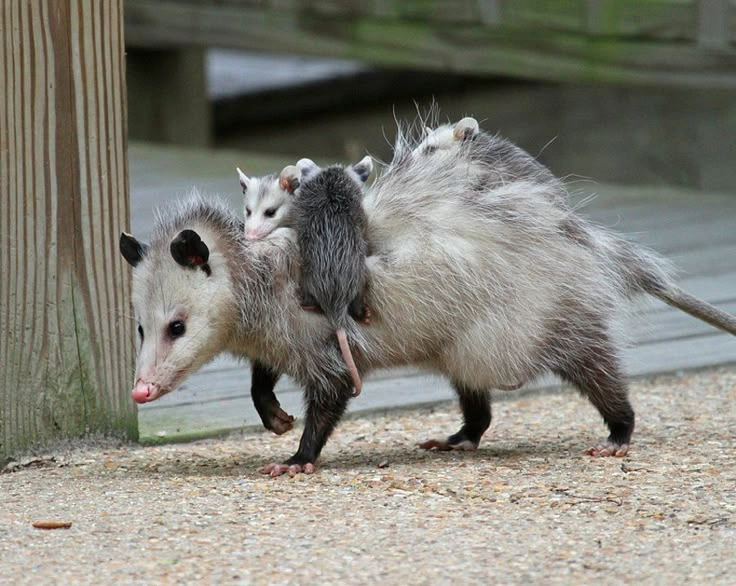
Newborns arrive at a very early stage of development. After birth, they make their way to the mother’s pouch, where they attach to teats and continue developing. The young remain in the pouch for around two months before beginning to spend more time outside it.
As they grow, young opossums may ride on their mother’s back. This allows the mother to move around while keeping her developing offspring close.
This reproductive strategy helps the species produce new generations despite the high mortality rate experienced by young and adult opossums in the wild.
Are Opossums Aggressive?
Opossums are generally not aggressive toward people. They usually prefer to avoid confrontation and escape when possible.
When cornered, however, an opossum may hiss, growl, bare its teeth, or bite. Its defensive behavior should not be confused with natural aggression. Like many wild animals, it is more likely to defend itself when it feels trapped or threatened.
The safest approach is to give a wild opossum plenty of space. There is normally no reason to approach, chase, or attempt to handle one.
Do Opossums Help the Environment?
Yes. Opossums can provide useful ecological services. Their broad diet allows them to consume insects, slugs, rodents, carrion, fruits, and other food sources.
They can therefore act as natural scavengers and predators of some small animals and invertebrates. They also consume fruits and may help move seeds through the environment.
One popular claim is that opossums are major tick-control animals because they supposedly eat thousands of ticks each year. However, this claim needs caution. Research discussed by Penn State Extension notes that the famous estimate came from a laboratory study, while a later examination of stomach contents from wild opossums found no ticks.
So, while opossums can be beneficial wildlife, it is better not to describe them as a guaranteed natural solution for tick problems.
Unique Opossum Facts
Opossums have several unusual traits that make them stand out among North American mammals.
They Are Marsupials
The Virginia opossum is the only marsupial native to the United States and Canada. Its reproductive system is one of its most distinctive features.
Their Tails Are Prehensile
Their naked tails can wrap around branches and objects. This helps with climbing and can assist with carrying nesting material.
They Are Highly Adaptable
Opossums can make use of natural and human-created shelters. Their ability to find food and shelter in different environments helps explain their broad distribution.
They Have Resistance to Some Snake Venom
Virginia opossums have unusual resistance to the venom of several venomous snakes, including rattlesnakes. This does not make them completely immune to every snakebite, but it is an impressive biological adaptation.
What Reliable Wildlife Sources Tell Us
Reliable information about opossums should come from wildlife agencies, university resources, and established conservation organizations rather than viral animal facts alone. The U.S. Fish & Wildlife Service identifies the Virginia opossum as Didelphis virginiana, while the National Wildlife Federation provides information about its diet, behavior, habitat, and adaptations.
Research-based sources also help separate popular myths from facts. For example, the idea that opossums routinely remove thousands of ticks from the environment has been questioned by more recent evidence.
For wildlife content on Viltnemnda, using evidence-based information is especially important because readers may use animal articles to understand and respond to wildlife they encounter.
Conclusion
Opossums may look unusual, but their behavior and survival skills make them fascinating animals. Their flexible diet, nighttime habits, adaptable habitat choices, short lifespan, pouch-rearing system, and famous defensive response all help explain how they survive across a wide geographic range.
The Virginia opossum is especially remarkable because it is the only marsupial native to the United States and Canada. Although often misunderstood, it is an important part of the ecosystem and has adapted surprisingly well to both natural and human-dominated environments. For more wildlife-focused information, Viltnemnda can help readers explore the fascinating behaviors and characteristics of animals around the world.
Frequently Asked Questions
What do opossums eat?
Opossums are omnivores. They can eat insects, fruits, seeds, eggs, small animals, plants, carrion, and other available foods.
How long do opossums live?
Wild opossums often live for about one to two years, although some individuals can survive longer depending on environmental conditions and threats.
Are opossums dangerous to humans?
Opossums generally avoid people and are not considered aggressive animals. Like any wild animal, they can defend themselves if they are cornered or handled.
Why do opossums play dead?
Playing dead is an involuntary defensive response triggered by extreme fear or threat. The animal becomes still and may appear completely lifeless.
Where do opossums sleep?
Opossums usually rest in sheltered locations such as hollow trees, abandoned burrows, brush piles, drainage areas, or spaces beneath structures.
Are opossums good for the environment?
Yes. Opossums can help ecosystems by consuming insects, small animals, fruits, and carrion. They are also useful scavengers that help remove dead organic material.
