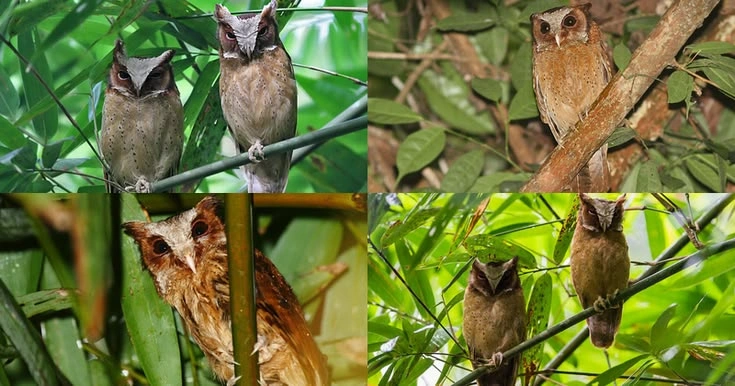
Key Takeaways
- There are more than 250 owl species worldwide.
- Owl identification depends on size, habitat, markings, and behavior.
- Barn owls, snowy owls, and eagle owls are among the most recognized species.
- Some owls hunt during the day while others are mainly nocturnal.
- Protecting forests and natural habitats helps conserve owl populations.
Quick Answer
There are over 250 recognized owl species worldwide. They belong to two families: Tytonidae (barn owls) and Strigidae (true owls). Owl identification usually depends on body size, ear tufts, eye color, facial disc shape, feather markings, habitat, and call. Well-known species include the barn owl, snowy owl, great horned owl, and Eurasian eagle-owl.
Why Owl Species Are So Different
Owls have evolved to survive in many environments. Some hunt in freezing Arctic regions, while others thrive in tropical rainforests or dry deserts. Their appearance changes depending on where they live and what they hunt.
For example, snowy owls have white feathers that blend into icy landscapes. In contrast, forest owls often have brown or gray plumage that helps them disappear among tree bark.
Even their size varies greatly. The tiny elf owl measures only about 5 inches long, while the Eurasian eagle-owl is one of the largest owl species in the world.
How to Identify Owl Species
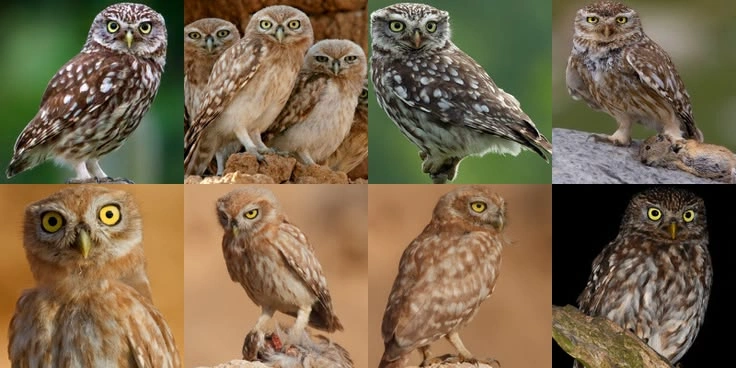
Identifying an owl becomes much easier when you focus on a few important features instead of only its color.
Body Size
Some owls are no bigger than a sparrow, while others are almost as large as an eagle. Estimating size is often the first clue.
Ear Tufts
Many people mistake ear tufts for real ears. These feather tufts help identify species such as the great horned owl and long-eared owl, while barn owls and snowy owls lack them.
Facial Disc
Owls have a circular arrangement of feathers around their faces that directs sound toward their ears. The shape of this facial disc differs between species.
Eye Color
Eye color can quickly narrow down your identification.
| Eye Color | Common Owl Examples |
|---|---|
| Yellow | Barn Owl, Burrowing Owl |
| Orange | Eurasian Eagle-Owl |
| Dark Brown | Barred Owl |
| Bright Yellow | Snowy Owl |
Feather Patterns
Spots, streaks, bars, and color shades provide valuable clues. Woodland species usually have camouflage patterns, while Arctic species appear much lighter.
Habitat
Knowing where you spotted the owl helps significantly.
- Forests
- Grasslands
- Wetlands
- Mountains
- Arctic tundra
- Deserts
- Farmland
- Urban parks
Owl Identification Comparison Table
| Feature | Barn Owl | Snowy Owl | Great Horned Owl | Eurasian Eagle-Owl |
|---|---|---|---|---|
| Ear Tufts | No | No | Yes | Yes |
| Face Shape | Heart | Round | Round | Broad Round |
| Main Color | Pale Golden | White | Brown | Brown Orange |
| Habitat | Farms | Arctic | Forests | Mountains |
| Active Time | Night | Day & Night | Night | Night |
1. Barn Owl
Scientific Name: Tyto alba
Picture Placeholder
The barn owl is one of the most recognizable owl species thanks to its beautiful heart-shaped face. Unlike many true owls, it belongs to the Tytonidae family.
It is found on every continent except Antarctica, making it one of the world’s most widespread owls.
Identification
- White heart-shaped face
- Golden-buff back
- White chest
- Long legs
- No ear tufts
Habitat
- Farms
- Grasslands
- Open countryside
- Old barns
- Agricultural fields
Diet
Barn owls mainly hunt mice, rats, voles, and small birds.
Interesting Fact
A barn owl can locate prey in complete darkness using its exceptionally sensitive hearing.
2. Snowy Owl
Scientific Name: Bubo scandiacus
Picture Placeholder
The snowy owl is famous for its brilliant white feathers and Arctic lifestyle. Unlike most owl species, it often hunts during daylight, especially in summer.
Males become whiter with age, while females usually keep darker markings throughout life.
Identification
- Bright white plumage
- Yellow eyes
- Rounded head
- Thick feathered legs
- Large body
Habitat
- Arctic tundra
- Coastal plains
- Open snowy fields
Diet
Its favorite prey is the lemming, though it also catches rabbits, birds, and fish.
Interesting Fact
Snowy owls can travel hundreds of miles south during winters when food becomes scarce.
3. Eurasian Eagle-Owl
Scientific Name: Bubo bubo
Picture Placeholder
The Eurasian eagle-owl is among the largest owl species alive today. Its massive size and striking orange eyes make it easy to identify.
It lives across Europe and much of Asia.
Identification
- Large ear tufts
- Orange eyes
- Powerful body
- Thick feathered legs
- Broad wings
Habitat
- Rocky cliffs
- Forests
- Mountains
- Woodland valleys
Diet
This powerful hunter catches rabbits, hedgehogs, ducks, fox cubs, and other birds.
Interesting Fact
Its deep hooting call can be heard from several kilometers away on quiet nights.
4. Great Horned Owl
Scientific Name: Bubo virginianus
Picture Placeholder
The great horned owl is one of North America’s strongest predators. Its feather tufts resemble horns, giving it its famous name.
It easily adapts to forests, deserts, parks, and suburban areas.
Identification
- Prominent ear tufts
- Yellow eyes
- Gray-brown feathers
- White throat patch
Habitat
- Forests
- Swamps
- Mountains
- Urban parks
Diet
It hunts rabbits, squirrels, snakes, skunks, ducks, and other birds.
Interesting Fact
The great horned owl has one of the strongest gripping forces among birds of prey.
5. Northern Hawk Owl
Scientific Name: Surnia ulula
Picture Placeholder
The northern hawk owl looks surprisingly different from most owls. Its long tail and daytime hunting behavior make it resemble a hawk.
It is commonly found in northern forests across Europe, Asia, and North America.
Identification
- Long tail
- Rounded head
- No ear tufts
- White-spotted brown plumage
Habitat
- Boreal forests
- Open woodland
- Forest edges
Diet
It mainly feeds on mice, voles, and small birds.
Interesting Fact
Unlike many nocturnal birds, the northern hawk owl hunts mostly during daylight.
6. Burrowing Owl
Scientific Name: Athene cunicularia
Picture Placeholder
The burrowing owl is one of the few owl species that lives underground. Instead of nesting in trees, it often uses abandoned burrows made by prairie dogs or other animals.
Its long legs also make it different from many forest owls.
Identification
- Small body
- Long legs
- Yellow eyes
- Brown feathers with white spots
Habitat
- Grasslands
- Deserts
- Prairies
- Farmland
Diet
Its diet includes insects, lizards, rodents, and small birds.
Interesting Fact
Burrowing owls often bob their heads when watching potential danger.
7. Long-eared Owl
Scientific Name: Asio otus
Picture Placeholder
The long-eared owl is known for its tall feather tufts and excellent camouflage. During the day, it blends almost perfectly with tree trunks.
Identification
- Long ear tufts
- Orange eyes
- Slim body
- Brown streaked feathers
Habitat
- Dense forests
- Woodland edges
- Shelterbelts
Diet
Mostly mice, voles, and other small mammals.
Interesting Fact
Groups of long-eared owls sometimes roost together during winter.
8. Short-eared Owl
Scientific Name: Asio flammeus
Picture Placeholder
Unlike its close relative, the short-eared owl has tiny ear tufts that are often difficult to see. It frequently hunts before sunset across open landscapes.
Identification
- Small ear tufts
- Yellow eyes
- Pale face
- Brown wings
Habitat
- Marshes
- Grasslands
- Coastal meadows
Diet
Voles, mice, and small birds.
Interesting Fact
Short-eared owls fly with slow, buoyant wingbeats that make them easy to recognize.
9. Tawny Owl
Scientific Name: Strix aluco
Picture Placeholder
The tawny owl is one of Europe’s most familiar woodland owls. Its famous hooting call has appeared in countless movies and nature documentaries.
Identification
- Rounded head
- Dark eyes
- Brown or gray feathers
- No ear tufts
Habitat
- Deciduous forests
- Parks
- Gardens
Diet
Small mammals, insects, frogs, and birds.
Interesting Fact
Tawny owls often stay with the same mate for many years.
10. Barred Owl
Scientific Name: Strix varia
Picture Placeholder
The barred owl is famous for its expressive dark eyes and distinctive striped feathers. It prefers mature forests near rivers and wetlands.
Identification
- Dark brown eyes
- Rounded head
- Brown and white bars
- No ear tufts
Habitat
- Mixed forests
- Swamps
- Woodland streams
Diet
Rodents, frogs, snakes, fish, and insects.
Interesting Fact
Its famous call is often described as sounding like, “Who cooks for you? Who cooks for you all?”
11. Elf Owl
Scientific Name: Micrathene whitneyi
Picture Placeholder
The elf owl is the smallest owl species in the world. Despite its tiny size, this little hunter is highly skilled and active during the night.
It lives mainly in dry regions of North America and hides inside old woodpecker holes and tree cavities.
Identification
- Very small body size
- Yellow eyes
- Brown and gray feathers
- No large ear tufts
- Pale eyebrows
Habitat
- Desert areas
- Cactus forests
- Dry woodlands
Diet
Elf owls mainly eat insects such as moths, beetles, crickets, and occasionally small reptiles.
Interesting Fact
Because of its tiny body, the elf owl can fit into small tree holes where larger predators cannot reach.
12. Great Gray Owl
Scientific Name: Strix nebulosa
Picture Placeholder
The great gray owl is one of the tallest owl species in the world. Its large facial disc gives it an impressive appearance, although much of its size comes from thick feathers.
It is a quiet forest hunter that depends heavily on its excellent hearing.
Identification
- Huge round facial disc
- Gray feathers
- Yellow eyes
- Long tail
- No ear tufts
Habitat
- Northern forests
- Boreal woodland
- Mountain forests
Diet
It mainly hunts voles, mice, and small mammals.
Interesting Fact
The great gray owl can detect prey moving under snow and dive through the snow to catch it.
13. Spotted Owl
Scientific Name: Strix occidentalis
Picture Placeholder
The spotted owl is a medium-sized forest owl known for its dark eyes and white spots across its body.
It depends on old forests with large trees for nesting and shelter.
Identification
- Dark brown eyes
- Brown feathers with white spots
- Rounded head
- No ear tufts
Habitat
- Old-growth forests
- Mountain woodlands
- Dense forests
Diet
Its diet includes flying squirrels, mice, rats, and small birds.
Interesting Fact
Spotted owls are considered an important indicator species because their presence shows a healthy forest environment.
14. Spectacled Owl
Scientific Name: Pulsatrix perspicillata
Picture Placeholder
The spectacled owl gets its name from the light markings around its eyes that look like glasses.
It is a tropical owl found in Central and South America.
Identification
- White facial markings
- Dark brown body
- Yellow eyes
- Large rounded head
Habitat
- Tropical rainforests
- Forest edges
- Humid woodlands
Diet
It eats small mammals, birds, frogs, and insects.
Interesting Fact
Unlike many owls, spectacled owls can sometimes be heard calling during the daytime.
15. Northern Saw-whet Owl
Scientific Name: Aegolius acadicus
Picture Placeholder
The northern saw-whet owl is a small and adorable owl species found in North America.
Its small size and hidden lifestyle make it difficult to spot in the wild.
Identification
- Small round head
- Large yellow eyes
- White facial markings
- Brown feathers
Habitat
- Conifer forests
- Dense woodlands
- Mountain forests
Diet
Mostly small rodents, especially mice.
Interesting Fact
Its name comes from a call that sounds similar to a saw being sharpened.
16. Ural Owl
Scientific Name: Strix uralensis
Picture Placeholder
The Ural owl is a large forest owl found across parts of Europe and Asia. It has a calm appearance but is a powerful predator.
Identification
- Large rounded head
- Gray-brown feathers
- Long tail
- Dark eyes
Habitat
- Mixed forests
- Mountain woodland
- Old forests
Diet
It mainly feeds on rodents, birds, frogs, and insects.
Interesting Fact
Ural owls are known for defending their nests aggressively against threats.
17. Verreaux’s Eagle-Owl
Scientific Name: Ketupa lactea
Picture Placeholder
Also known as the giant eagle-owl, Verreaux’s eagle-owl is one of Africa’s largest owl species.
Its pink eyelids are one of its most unusual identifying features.
Identification
- Large body
- Pink facial skin around eyes
- Dark ear tufts
- Gray feathers
Habitat
- Savannas
- Woodlands
- Rocky areas
Diet
It hunts mammals, birds, reptiles, and insects.
Interesting Fact
It is a powerful owl capable of catching prey much larger than many other owl species.
18. Eastern Screech-Owl
Scientific Name: Megascops asio
Picture Placeholder
The eastern screech-owl is a small owl found throughout eastern North America. Despite its name, its call is not a typical scream but a series of whistles and trills.
Identification
- Small body
- Ear tufts
- Yellow eyes
- Gray or reddish-brown color
Habitat
- Forests
- Parks
- Suburban areas
Diet
It eats insects, mice, small birds, and reptiles.
Interesting Fact
Eastern screech-owls can change their body position to appear taller when threatened.
19. Western Screech-Owl
Scientific Name: Megascops kennicottii
Picture Placeholder
The western screech-owl is closely related to the eastern screech-owl but lives mainly in western parts of North America.
It adapts well to different environments.
Identification
- Small size
- Ear tufts
- Yellow eyes
- Gray or brown feathers
Habitat
- Desert forests
- Woodlands
- Canyon areas
Diet
Its food includes insects, rodents, birds, and small animals.
Interesting Fact
Although small, this owl has a surprisingly deep and powerful voice.
20. Little Owl
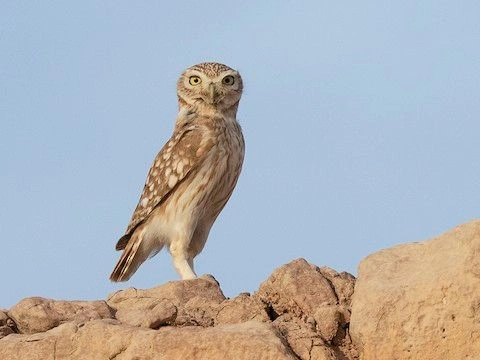
Scientific Name: Athene noctua
Picture Placeholder
The little owl is a small owl species native to Europe, Asia, and parts of North Africa.
It often sits in open areas during the day, making it easier to observe than many other owls.
Identification
- Small rounded body
- Yellow eyes
- White spotted feathers
- Short tail
Habitat
- Farmland
- Grasslands
- Open countryside
Diet
It feeds on insects, worms, small mammals, and small birds.
Interesting Fact
Little owls were associated with wisdom in ancient Greek culture.
Owl Species 11–20 Quick Comparison Table
| Owl Species | Size | Main Habitat | Key Identification Feature |
|---|---|---|---|
| Elf Owl | Very Small | Desert | World’s smallest owl |
| Great Gray Owl | Very Large | Boreal Forest | Huge facial disc |
| Spotted Owl | Medium | Old Forests | White body spots |
| Spectacled Owl | Medium | Rainforest | Glasses-like face markings |
| Northern Saw-whet Owl | Small | Forests | Round face |
| Ural Owl | Large | Woodlands | Long tail |
| Verreaux’s Eagle-Owl | Very Large | Africa | Pink eyelids |
| Eastern Screech-Owl | Small | Forests | Ear tufts |
| Western Screech-Owl | Small | Western Woodlands | Deep call |
| Little Owl | Small | Farmland | Daytime activity |
How Owl Identification Changes Around the World
Different regions have different owl species because owls adapt to local climates and habitats.
Arctic Regions
Cold environments are home to species like the snowy owl. These birds have thick feathers and pale colors for survival.
Forest Regions
Woodland owls such as the great gray owl and barred owl rely on camouflage to hide among trees.
Desert Areas
Species like the elf owl and burrowing owl survive with smaller bodies and unique nesting habits.
Tropical Regions
Rainforest owls often have darker feathers that help them disappear in dense vegetation.
Tips for Photographing and Identifying Owls
Finding an owl in the wild requires patience because most species are quiet and well camouflaged.
Look During Dawn and Dusk
Many owls become active around sunrise and sunset.
Listen Carefully
Owl calls are often easier to notice than their appearance.
Check Tree Cavities
Many species use natural holes for nesting and resting.
Avoid Disturbing Them
Keep a safe distance and avoid making loud noises near nests.
21. Powerful Owl
Scientific Name: Ninox strenua
Picture Placeholder
The powerful owl is Australia’s largest owl species. It gets its name from its strong body, large size, and ability to hunt larger prey compared with many other owls.
This owl prefers forests with old trees where it can find safe nesting places.
Identification
- Very large body
- Yellow eyes
- Dark brown feathers
- White stripes on the underside
- No ear tufts
Habitat
- Eucalyptus forests
- Woodland areas
- Coastal forests
Diet
Powerful owls mainly eat possums, gliders, birds, and other small animals.
Interesting Fact
Unlike many smaller owls, the powerful owl can capture prey that is almost as large as itself.
22. Brown Fish Owl
Scientific Name: Ketupa zeylonensis
Picture Placeholder
The brown fish owl is a unique owl species that spends much of its time near water. Unlike many owls that hunt rodents, this species specializes in catching fish and aquatic animals.
Identification
- Large rounded head
- Brown feathers
- Yellow eyes
- Small ear tufts
Habitat
- Rivers
- Lakes
- Forest streams
- Wetlands
Diet
It feeds on fish, frogs, crabs, and other small water animals.
Interesting Fact
Its rough, powerful feet help it grab slippery prey from water.
23. Blakiston’s Fish Owl
Scientific Name: Bubo blakistoni
Picture Placeholder
Blakiston’s fish owl is one of the world’s largest owl species. It is extremely rare and found mainly in parts of eastern Asia.
This giant owl depends on healthy rivers and old forests.
Identification
- Massive body
- Long ear tufts
- Orange-yellow eyes
- Thick feathers
Habitat
- River forests
- Mountain woodland
- Cold regions
Diet
It mainly hunts fish but can also catch frogs and small mammals.
Interesting Fact
It is one of the few owl species that regularly hunts aquatic prey.
24. Indian Eagle-Owl
Scientific Name: Bubo bengalensis
Picture Placeholder
The Indian eagle-owl is a large owl found across the Indian subcontinent. Its striking appearance and loud calls make it one of the most recognized owls in the region.
Identification
- Large ear tufts
- Orange eyes
- Brown body
- White throat patch
Habitat
- Rocky hills
- Forest edges
- Open countryside
Diet
It hunts rodents, birds, reptiles, and insects.
Interesting Fact
Its deep hooting calls are often heard during quiet nights in rural areas.
25. Oriental Bay Owl
Scientific Name: Phodilus badius
Picture Placeholder
The oriental bay owl has one of the most unusual faces among owl species. Its heart-shaped facial pattern makes it look similar to barn owls.
Identification
- Heart-shaped face
- Dark eyes
- Reddish-brown feathers
- Small body
Habitat
- Tropical forests
- Dense woodland
- Bamboo forests
Diet
It eats rodents, insects, frogs, and small reptiles.
Interesting Fact
Because it is secretive and lives in dense forests, sightings are uncommon.
26. Philippine Eagle-Owl
Scientific Name: Bubo philippensis
Picture Placeholder
The Philippine eagle-owl is one of the largest owls in Southeast Asia. It is found only in the Philippines and depends on forest habitats.
Identification
- Large size
- Brown feathers
- Long ear tufts
- Yellow eyes
Habitat
- Tropical forests
- Mountain woodland
Diet
It hunts mammals, birds, reptiles, and insects.
Interesting Fact
Habitat loss is one of the biggest challenges facing this species.
27. African Wood Owl
Scientific Name: Strix woodfordii
Picture Placeholder
The African wood owl is a medium-sized forest owl found in many parts of sub-Saharan Africa.
It is usually heard before it is seen because it remains hidden during the day.
Identification
- Rounded head
- Dark eyes
- Brown and white markings
- No ear tufts
Habitat
- Forests
- Woodland areas
- Plantations
Diet
It feeds on insects, rodents, frogs, and small birds.
Interesting Fact
Its soft calls help pairs communicate through thick forests.
28. Cape Eagle-Owl
Scientific Name: Bubo capensis
Picture Placeholder
The Cape eagle-owl is a powerful owl species found in southern Africa. It prefers rocky environments where it can hide and hunt.
Identification
- Large body
- Prominent ear tufts
- Orange eyes
- Dark facial markings
Habitat
- Rocky mountains
- Cliffs
- Dry woodland
Diet
It eats mammals, birds, reptiles, and insects.
Interesting Fact
Its camouflage allows it to blend into rocky landscapes during daylight.
29. Ferruginous Pygmy-Owl
Scientific Name: Glaucidium brasilianum
Picture Placeholder
The ferruginous pygmy-owl is a small but fearless owl found in the Americas. Despite its size, it can attack prey much larger than itself.
Identification
- Small round body
- Yellow eyes
- Brown head
- White spots on wings
Habitat
- Tropical forests
- Dry forests
- Open woodland
Diet
It eats insects, lizards, small birds, and rodents.
Interesting Fact
Unlike many owls, this species is often active during the day.
30. Northern Pygmy-Owl
Scientific Name: Glaucidium californicum
Picture Placeholder
The northern pygmy-owl is a tiny owl with a bold personality. It is a skilled daytime hunter and often watches prey from hidden branches.
Identification
- Very small body
- Long tail
- Yellow eyes
- Brown feathers
Habitat
- Mountain forests
- Conifer woodland
- Forest edges
Diet
It hunts small birds, insects, and rodents.
Interesting Fact
Small fake “eye spots” on the back of its head may confuse predators.
Owl Species 21–30 Quick Comparison Table
| Owl Species | Region | Habitat | Main Identification Feature |
|---|---|---|---|
| Powerful Owl | Australia | Forests | Australia’s largest owl |
| Brown Fish Owl | Asia | Wetlands | Hunts fish |
| Blakiston’s Fish Owl | East Asia | River Forests | Giant size |
| Indian Eagle-Owl | South Asia | Rocky Areas | Orange eyes |
| Oriental Bay Owl | Southeast Asia | Tropical Forests | Heart-shaped face |
| Philippine Eagle-Owl | Philippines | Rainforests | Large body |
| African Wood Owl | Africa | Forests | Rounded head |
| Cape Eagle-Owl | Southern Africa | Rocky Areas | Strong ear tufts |
| Ferruginous Pygmy-Owl | Americas | Woodland | Small fearless hunter |
| Northern Pygmy-Owl | North America | Mountain Forests | Daytime hunting |
Owl Adaptations That Help Them Survive
Owls have developed several special features that make them successful hunters.
Silent Flight
Their feathers have special edges that reduce noise when they fly. This allows them to approach prey without being detected.
Powerful Hearing
Owls can locate animals hidden under leaves, grass, or snow because their hearing is extremely sensitive.
Excellent Night Vision
Large eyes allow more light to enter, helping many owl species hunt in low-light conditions.
Strong Talons
Sharp claws help owls capture and hold their prey securely.
31. Eurasian Scops Owl
Scientific Name: Otus scops
Picture Placeholder
The Eurasian scops owl is a small owl species found across Europe, Asia, and parts of Africa. Its excellent camouflage allows it to disappear among tree branches.
Identification
- Small body
- Short ear tufts
- Yellow eyes
- Gray or brown feathers with patterns
Habitat
- Woodland
- Olive groves
- Parks
- Open forests
Diet
It mainly feeds on insects, beetles, moths, and small reptiles.
Interesting Fact
Its soft, repeated call is often heard at night during the breeding season.
32. Long-whiskered Owlet
Scientific Name: Xenoglaux loweryi
Picture Placeholder
The long-whiskered owlet is one of the rarest owl species in the world. It was discovered in Peru and is known for the unusual feathers around its face.
Identification
- Very small body
- Long facial feathers
- Dark eyes
- Brown plumage
Habitat
- Cloud forests
- Mountain forests
Diet
It feeds mainly on insects and small animals.
Interesting Fact
Because it lives in remote forests, very few people have seen this owl in the wild.
33. Pearl-spotted Owlet
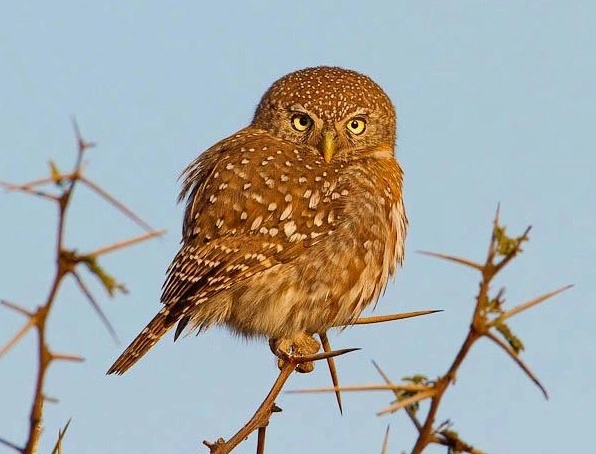
Scientific Name: Glaucidium perlatum
Picture Placeholder
The pearl-spotted owlet is a small African owl that is active during the day as well as at night.
Its small size does not stop it from being an effective hunter.
Identification
- Small round head
- Yellow eyes
- White spots on wings
- Brown body
Habitat
- Savannas
- Woodlands
- Dry forests
Diet
It eats insects, lizards, small birds, and rodents.
Interesting Fact
Small false eye markings on the back of its head may confuse predators.
34. Southern White-faced Owl
Scientific Name: Ptilopsis granti
Picture Placeholder
The southern white-faced owl is a beautiful African owl known for its bright facial markings and expressive eyes.
Identification
- White facial disc
- Orange eyes
- Gray-brown feathers
- Small ear tufts
Habitat
- Dry forests
- Savannas
- Woodland areas
Diet
It hunts insects, rodents, birds, and small reptiles.
Interesting Fact
Its facial markings help direct sound toward its ears while hunting.
35. Brown Boobook
Scientific Name: Ninox scutulata
Picture Placeholder
The brown boobook is a medium-sized owl found throughout parts of Asia and Australia.
It is commonly heard at night because it uses calls to communicate.
Identification
- Brown body
- Yellow eyes
- Rounded head
- No visible ear tufts
Habitat
- Forests
- Gardens
- Urban parks
Diet
It eats insects, small mammals, birds, and reptiles.
Interesting Fact
The brown boobook is one of the most widespread owls in Asia.
36. Tawny Fish Owl
Scientific Name: Ketupa flavipes
Picture Placeholder
The tawny fish owl is a large owl that lives near rivers and streams in Asia. Like other fish owls, it has adapted to hunting near water.
Identification
- Large body
- Yellow eyes
- Brown feathers
- Ear tufts
Habitat
- River forests
- Wetlands
- Mountain streams
Diet
It mainly eats fish, frogs, crabs, and aquatic animals.
Interesting Fact
Its rough feet help it grip slippery prey.
37. Desert Owl
Scientific Name: Strix hadorami
Picture Placeholder
The desert owl is a rare owl species adapted to dry environments. It survives in rocky desert landscapes where few other owls can live.
Identification
- Medium-sized body
- Brown-gray feathers
- Dark eyes
- Rounded head
Habitat
- Rocky deserts
- Canyons
- Dry mountain areas
Diet
It feeds on rodents, insects, and small reptiles.
Interesting Fact
Its feather colors help it blend into desert rocks during the day.
38. Black-and-white Owl
Scientific Name: Strix nigrolineata
Picture Placeholder
The black-and-white owl is a striking tropical owl with a unique feather pattern. It is found in Central and South America.
Identification
- Black and white striped feathers
- Dark eyes
- Rounded head
- No ear tufts
Habitat
- Tropical forests
- Forest edges
- Plantations
Diet
It eats insects, bats, rodents, and small birds.
Interesting Fact
Its bold coloring makes it one of the easiest tropical owls to recognize.
39. Burrowing Owl
Scientific Name: Athene cunicularia
Picture Placeholder
The burrowing owl was discussed earlier, but it deserves mention again because it is one of the most unusual owl species worldwide.
Unlike most owls, it spends much of its life close to the ground.
Identification
- Long legs
- Small body
- Yellow eyes
- White eyebrows
Habitat
- Grasslands
- Deserts
- Agricultural areas
Diet
It eats insects, rodents, reptiles, and small birds.
Interesting Fact
It often lives inside underground burrows created by other animals.
40. Great Horned Owl
Scientific Name: Bubo virginianus
Picture Placeholder
The great horned owl is one of the most famous owl species in North America. Its large ear tufts and powerful hunting skills make it easy to identify.
Identification
- Large ear tufts
- Yellow eyes
- White throat patch
- Brown patterned feathers
Habitat
- Forests
- Deserts
- Mountains
- Cities
Diet
It hunts mammals, birds, reptiles, and amphibians.
Interesting Fact
The great horned owl is sometimes called the “tiger of the sky” because of its strength and hunting ability.
Complete Owl Species Identification Checklist
When identifying an owl, check these important features:
| Feature | Questions to Ask |
|---|---|
| Size | Is the owl tiny, medium, or large? |
| Ear Tufts | Does it have feather horns or a smooth head? |
| Eyes | Are they yellow, orange, or dark? |
| Face Shape | Is the facial disc round or heart-shaped? |
| Color | Is it white, brown, gray, or patterned? |
| Habitat | Where was it spotted? |
| Behavior | Was it active during day or night? |
| Sound | What type of call did it make? |
Common Mistakes When Identifying Owls
Confusing Ear Tufts With Ears
Many people think owl ear tufts are actual ears. Real owl ears are hidden openings on the sides of their heads.
Using Only Color
Feather color can change depending on age, lighting, and location. Always consider size, shape, and habitat too.
Ignoring Location
A species found in North America may not appear in Asia or Africa. Geographic location is one of the strongest identification clues.
Disturbing Nesting Owls
Getting too close to nests can stress birds and affect their behavior. Always observe wildlife responsibly.
Expert Tips for Better Owl Identification
- Learn common owl calls in your region.
- Use binoculars instead of getting close.
- Take photos from a safe distance.
- Note the location, time, and habitat.
- Compare multiple features before deciding the species.
- Use trusted bird guides for confirmation.
Frequently Asked Questions About Owl Species
How many owl species are there in the world?
There are more than 250 recognized owl species worldwide. They live in almost every region except Antarctica.
What is the largest owl species?
The Blakiston’s fish owl and Eurasian eagle-owl are among the largest owl species in the world.
What is the smallest owl species?
The elf owl is considered one of the smallest owl species.
Are all owls nocturnal birds?
Most owls are active at night, but some species also hunt during the day, including snowy owls and northern hawk owls.
How can I identify an owl?
Look at its size, feather patterns, eye color, ear tufts, habitat, and call.
Are barn owls and eagle owls the same?
No. Barn owls belong to the Tytonidae family, while eagle owls belong to the Strigidae family.
Owl Species Identification Checklist for Beginners
Before identifying an owl, remember:
✓ Check the owl’s size
✓ Look for ear tufts
✓ Observe eye color
✓ Study feather patterns
✓ Note the location
✓ Listen to its call
✓ Compare several features
Conclusion
Owls are some of the most remarkable birds on Earth. From the tiny elf owl hiding in desert landscapes to the powerful eagle-owls ruling mountain forests, every species has developed unique features to survive.
Learning owl identification is not only enjoyable but also helps people appreciate and protect these important nocturnal birds.
By understanding their appearance, habitats, behaviors, and calls, anyone can become better at recognizing different types of owls around the world.
