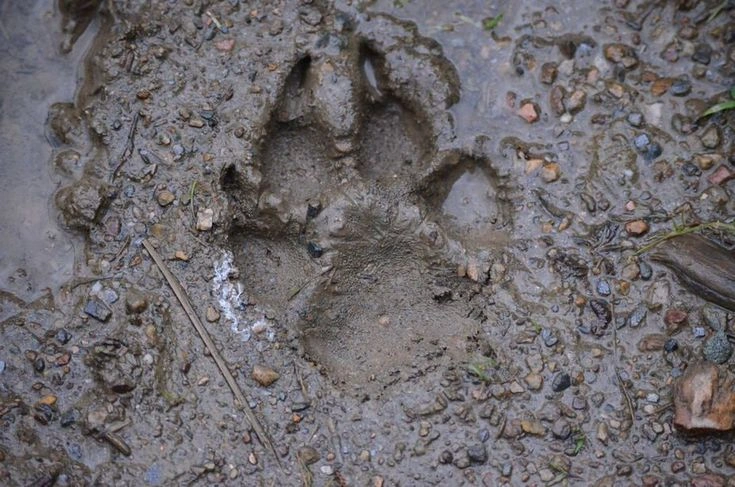
Key Takeaways
- Animal tracks reveal valuable information about wildlife behaviour and movement.
- Animal track identification relies on footprint shape, size, toes, claw marks, and walking pattern.
- Deer tracks have pointed, heart-shaped split hooves.
- Bear tracks show five toes and a large heel pad.
- Fox tracks are compact, while wolf tracks are larger and straighter.
- Rabbit tracks form a distinctive hopping pattern.
- Bird tracks vary depending on the species and habitat.
- Fresh snow tracks often provide the clearest details.
- Safe and responsible wildlife tracking protects both people and animals.
- Regular observation is the best way to improve your tracking skills.
Quick Answer
Animal tracks are footprints left by wild or domestic animals as they move across soil, sand, mud, or snow. Successful animal tracks identification depends on examining the footprint’s size, shape, toe arrangement, claw marks, stride length, and the surrounding environment. By learning these details, you can recognise common animal footprints such as deer tracks, bear tracks, fox tracks, wolf tracks, and many others with greater accuracy.
Have you ever spotted unusual animal tracks on a hiking trail, in fresh snow, or even in your backyard? Every footprint tells a story. It can reveal what animal passed by, where it was heading, how fast it moved, and sometimes even what it was doing.
In this guide, you’ll learn how to identify the most common animal tracks, understand the differences between species, and discover practical wildlife tracking techniques that beginners can use with confidence. Along the way, you’ll also see how deer tracks, bear tracks, fox tracks, wolf tracks, rabbit tracks, bird tracks, and snow tracks compare with one another.
What Are Animal Tracks?
Animal tracks are the impressions left behind when an animal walks, runs, jumps, or climbs across a surface. These prints may appear in mud, sand, snow, dust, or soft forest ground.
However, a single footprint rarely tells the whole story. Experienced trackers also study the spacing between prints, the walking pattern, nearby vegetation, and other signs such as droppings, feathers, fur, or broken branches. Together, these clues create a clearer picture of the animal’s behaviour.
As a result, animal tracks identification is not just about matching shapes. It is about understanding how wildlife interacts with its surroundings.
Why Animal Tracks Identification Matters
Learning animal tracks identification offers more than curiosity. It helps people connect with nature while staying aware of the wildlife around them.
Some of the biggest benefits include:
| Benefit | Why It Matters |
|---|---|
| Wildlife tracking | Discover which animals live nearby without seeing them. |
| Outdoor safety | Recognise signs of large predators before moving forward. |
| Nature education | Understand animal behaviour and habitats. |
| Photography | Find areas where wildlife is active. |
| Hunting | Locate recent animal activity responsibly and legally. |
| Conservation | Monitor wildlife populations and habitat use. |
Moreover, recognising animal footprints can turn an ordinary walk into an exciting outdoor adventure.
The Main Parts of Animal Footprints
Before identifying different animal tracks, it helps to understand what you’re looking at.
Toes
Most mammals leave between four and five toes. Birds usually have three forward-facing toes with one pointing backwards, although this varies by species.
Claw Marks
Some animals leave clear claw marks, while others do not. For example, dogs, wolves, and foxes usually show claws, whereas many cats keep their claws retracted while walking.
Heel Pad
The heel pad often provides valuable clues. Bears have large heel pads, while members of the dog family have a smaller, more triangular pad.
Hooves
Instead of toes, hoofed animals leave split or solid hoof impressions. These shapes make animal tracks identification much easier because they differ greatly from paw prints.
Stride and Gait
The distance between footprints reveals how the animal was moving. A walking animal leaves shorter strides, while a running animal creates longer gaps between prints.
How to Read Animal Tracks Like an Expert
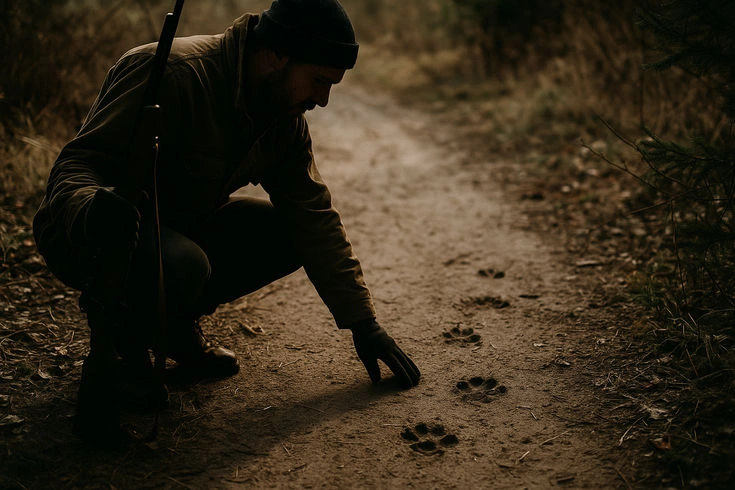
Finding animal tracks is only the first step. Reading them correctly takes careful observation.
Check the Ground
Soft mud, damp soil, and fresh snow usually produce the clearest animal footprints. Dry or rocky ground often leaves incomplete impressions.
Measure the Print
Carry a small ruler or measuring tape during hikes. Even a difference of a few centimetres can separate one species from another.
Look for Direction
Notice where the toes point. This helps determine the animal’s travel direction and whether it was moving steadily or changing course.
Study the Pattern
Rather than focusing on a single footprint, examine the full trail. Walking, trotting, hopping, and bounding each create unique patterns that improve animal tracks identification.
Observe the Surroundings
Nearby trees, streams, food sources, and shelter often explain why an animal travelled through the area. Context is just as important as the footprint itself.
Animal Tracks Identification by Track Shape
Most animal tracks fall into three broad groups.
| Track Type | Common Animals | Key Features |
|---|---|---|
| Hoof Prints | Deer, elk, moose, wild boar | Split or solid hoof marks |
| Paw Prints | Bears, wolves, foxes, dogs | Toes, pads, and often claw marks |
| Bird Prints | Ducks, turkeys, crows, herons | Long, slender toes with distinctive patterns |
Knowing which category a track belongs to quickly narrows down your search.
Hoofed Animal Tracks
Hoofed mammals create some of the easiest animal footprints to identify because their prints have clear, distinctive shapes.
Deer Tracks
Among all animal tracks, deer tracks are the ones hikers encounter most often.
A deer’s hoof is split into two narrow sections that form a heart-like shape. The front of each hoof comes to a pointed tip, while the rear remains rounded.
Key Features
- Two pointed hoof prints
- Heart-shaped appearance
- Narrow and symmetrical
- Usually found in forests, fields, and woodland edges
Fresh deer tracks often appear in groups because deer commonly travel together. During winter, snow tracks can clearly show their walking direction and feeding routes.
Elk Tracks
Elk leave tracks similar to deer, although they are noticeably larger and wider.
Because elk weigh much more than deer, their prints usually sink deeper into soft ground. In muddy areas, the rear dewclaws may also become visible.
Key Features
- Larger than deer tracks
- Wider hoof spread
- Deep impressions
- Common near meadows and mountain forests
Moose Tracks
Moose produce some of the largest hoof prints found in North America.
Their tracks appear broad with widely separated hoof halves. Due to their size, they often leave deep impressions in wet ground or snow.
Key Features
- Very large split hooves
- Broad, rounded shape
- Deep tracks
- Frequently found near wetlands and lakes
Wild Boar Tracks
Wild boar tracks differ from deer because the hoof tips are more rounded than pointed.
Additionally, dewclaws often register behind the main hoof print, especially when the ground is soft.
Key Features
- Rounded hoof tips
- Wider than deer tracks
- Dewclaws often visible
- Common in woodland habitats
Paw Print Animal Tracks
Unlike hoofed animals, paw-print species leave visible toes and pads, making animal tracks identification more detailed.
Bear Tracks
Among all animal footprints, bear tracks are the easiest to recognise because of their enormous size.
A bear’s front paw is broad and rounded, while the rear foot looks surprisingly similar to a human footprint. Five toes are visible, and long claw marks usually appear well ahead of the toes.
Key Features
- Five visible toes
- Large heel pad
- Long claw marks
- Wide front paw
- Human-like rear footprint
When fresh bear tracks are present, remain alert and avoid following them closely. Giving wildlife plenty of space is always the safest choice.
Fox Tracks
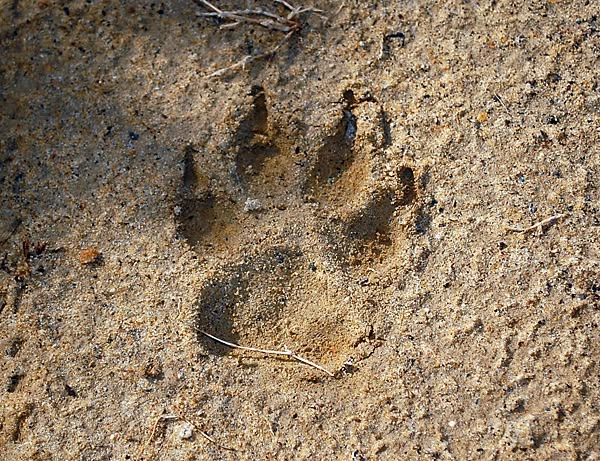
Although fox prints resemble those of domestic dogs, they are usually smaller, neater, and more compact.
Foxes often travel in remarkably straight lines, making their trails easy to recognise during wildlife tracking.
Key Features
- Four toes
- Small triangular pad
- Fine claw marks
- Narrow overall shape
Many beginners mistake fox tracks for small dog prints. Looking at the straight travel pattern often provides the best clue.
Wolf Tracks
Wolf tracks are larger than fox tracks and often resemble those of large domestic dogs. However, wolves usually travel with purpose, so their footprints form a straighter trail with consistent spacing.
Unlike many dogs, wolves waste very little energy. Their tracks often follow the easiest route through forests, valleys, or snowy landscapes.
Key Features
- Four toes with visible claw marks
- Large triangular heel pad
- Long, narrow print
- Straight walking pattern
- Front feet slightly larger than rear feet
During winter, fresh snow tracks can help distinguish wolves from dogs because wolf trails rarely wander from side to side.
Rabbit Tracks
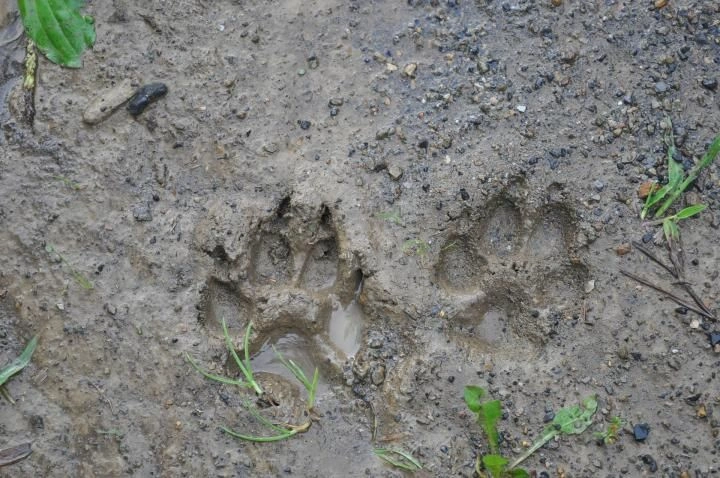
Rabbit tracks are easy to recognise because rabbits move by hopping instead of walking.
Their large hind feet land ahead of the smaller front feet, creating a unique pattern that looks almost upside down to beginners.
Key Features
- Two large hind prints
- Two smaller front prints
- Repeating hopping pattern
- Common in gardens, fields, and woodland edges
Fresh rabbit tracks often lead towards bushes, dense grass, or burrows where rabbits seek shelter from predators.
Raccoon Tracks
Raccoon footprints are among the easiest animal footprints to recognise because they closely resemble tiny human hands.
Each foot has five long fingers that spread apart clearly in mud or soft soil.
Key Features
- Five long toes
- Hand-like appearance
- Thin fingers
- Front and rear feet look different
- Often found near rivers and streams
Raccoons are mostly active at night, so fresh tracks seen in the morning usually indicate overnight activity.
Beaver Tracks
Beavers spend much of their time near water, so their tracks usually appear on muddy riverbanks or lake edges.
The front feet are small, while the rear feet are much larger and often show webbing.
Key Features
- Five toes
- Webbed hind feet
- Small front paws
- Often accompanied by tail drag marks
If you also notice freshly cut tree trunks nearby, there is a good chance beavers are active in the area.
Otter Tracks
Otters leave playful-looking tracks close to rivers, lakes, and marshes.
Their webbed feet create rounded prints, and sliding marks are often visible where they have travelled over snow or muddy banks.
Key Features
- Five toes
- Visible webbing
- Rounded paw shape
- Tail drag sometimes present
Finding tracks alongside fish remains or waterside slides is another useful clue during wildlife tracking.
Bird Tracks
Unlike mammals, bird tracks usually show three forward-facing toes. Some species also leave one backward-facing toe that helps them grip branches.
The exact shape depends on whether the bird spends more time walking, swimming, or climbing.
Songbird Tracks
Small garden birds leave delicate footprints that are only a few centimetres long.
Key Features
- Three forward toes
- One rear toe
- Small, light impressions
Duck Tracks
Ducks are easy to identify because their feet are webbed.
Key Features
- Three webbed front toes
- Broad footprint
- Common along ponds and rivers
Turkey Tracks
Wild turkeys leave much larger prints than most birds.
Key Features
- Long middle toe
- Thick, sturdy footprint
- Clear claw marks
- Often found in woodland habitats
Heron Tracks
Herons have extremely long, slender toes that spread widely across muddy ground.
These tracks are commonly found around marshes, wetlands, and shallow water.
Key Features
- Long narrow toes
- Wide toe spread
- Deep impressions in soft mud
Animal Tracks Identification in Snow
Fresh snow tracks often preserve incredible detail, making winter one of the best seasons for animal tracks identification.
Even tiny claw marks and toe pads can remain visible before the snow begins to melt.
Tips for Reading Snow Tracks
- Look for sharp edges, which usually indicate fresh tracks.
- Compare several footprints instead of only one.
- Follow the trail from a safe distance.
- Notice changes in stride length.
- Photograph the tracks before sunlight softens them.
Snow can also reveal resting spots, feeding areas, and escape routes that are difficult to see during warmer months.
Animal Tracks Comparison Table
| Animal | Toes | Claw Marks | Track Shape | Common Habitat |
|---|---|---|---|---|
| Deer | Split hoof | No | Heart shaped | Forests, fields |
| Bear | 5 | Yes | Large rounded paw | Forests, mountains |
| Fox | 4 | Yes | Small narrow paw | Forests, farmland |
| Wolf | 4 | Yes | Large oval paw | Forests, tundra |
| Rabbit | 4 | Small | Hopping pattern | Gardens, meadows |
| Raccoon | 5 | Small | Hand shaped | Rivers, forests |
| Beaver | 5 | Yes | Webbed hind foot | Rivers, lakes |
| Duck | 3 | Sometimes | Webbed foot | Wetlands |
| Turkey | 3 | Yes | Large bird print | Woodlands |
| Heron | 3 | Fine | Long narrow toes | Marshes |
Deer Tracks vs Bear Tracks vs Wolf Tracks
| Feature | Deer Tracks | Bear Tracks | Wolf Tracks |
|---|---|---|---|
| Foot Type | Split hoof | Paw | Paw |
| Toes | None visible | Five | Four |
| Claw Marks | No | Long | Visible |
| Shape | Heart | Rounded | Oval |
| Best Habitat | Forests | Mountains | Remote forests |
This simple comparison helps beginners narrow down their identification before looking at smaller details.
Practical Wildlife Tracking Tips
Successful wildlife tracking depends on patience more than speed. Instead of rushing ahead, stop often and observe your surroundings.
Arrive early in the morning whenever possible. Fresh animal tracks are easier to spot before people or changing weather disturb them.
Carry a small notebook or use your phone to record the location, habitat, weather, and track size. Over time, these observations will improve your animal tracks identification skills.
It is also helpful to photograph footprints beside a ruler, coin, or another object for scale. Later, you can compare your images with reliable field guides.
Finally, remember that tracks are only one clue. Broken branches, fur, feathers, droppings, feeding signs, and nests all provide valuable information about nearby wildlife.
Expert Tips for Accurate Animal Tracks Identification
Measure Before Guessing
Many animal footprints look similar at first glance. Measuring the print often provides the quickest answer.
Follow the Entire Trail
A complete trail tells a much clearer story than a single footprint.
Learn Local Wildlife
Knowing which animals live in your region makes identification much easier.
Consider the Habitat
A footprint found beside a river points towards different species than one found on a mountain trail.
Never Disturb Wildlife
If your animal tracks appear fresh, enjoy observing them from a safe distance and avoid following the animal too closely.
