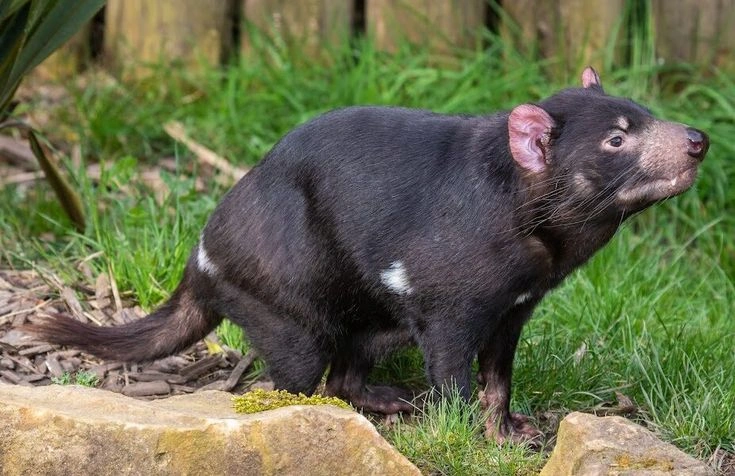
Tasmanian Devil Facts: The Tasmanian devil is one of Australia’s most unusual animals. Its name sounds fierce, but there is much more to this small marsupial than its screams and powerful bite. The Tasmanian devil is a skilled scavenger, an important part of Tasmania’s ecosystem, and one of the world’s most threatened mammals.
These animals are found naturally only in Tasmania, an island state of Australia. They spend much of their time searching for food after dark and can eat almost every part of a carcass, including bones, fur, and organs. Their strong jaws make them surprisingly effective at cleaning up remains left by other animals.
The biggest danger facing them today is Devil Facial Tumour Disease (DFTD), a contagious cancer that has caused major population declines. Conservation programs are now working to protect wild devils and give the species a better chance of survival.
This guide from viltnemnda explores the most important Tasmanian Devil facts, including where they live, what they eat, how they behave, how they reproduce, and why conservation efforts matter.
Key Takeaways
- The Tasmanian devil is the world’s largest surviving carnivorous marsupial.
- Wild Tasmanian devils are found only in Tasmania.
- They are mainly nocturnal and spend the day in dens or thick vegetation.
- Their diet includes carrion, mammals, birds, reptiles, insects, and other animal foods.
- Devils can travel long distances during the night while searching for food.
- Their famous snarls and open-mouth displays are not always signs of aggression.
- Devil Facial Tumour Disease remains the greatest threat to wild populations.
- Conservation programs are using monitoring, research, captive breeding, and other strategies to support the species.
What Is a Tasmanian Devil?
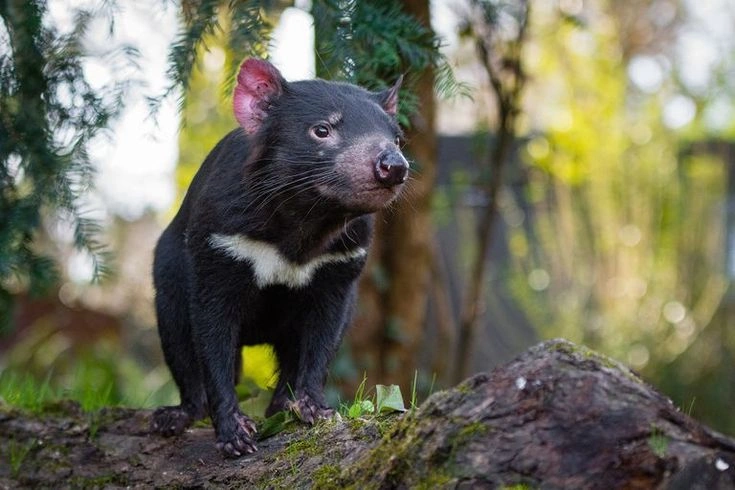
The Tasmanian devil (Sarcophilus harrisii) is a carnivorous marsupial native to Tasmania. It is the world’s largest surviving carnivorous marsupial.
A typical devil has a stocky body, short legs, a large head, and a thick tail. Its fur is usually black, although many animals have white markings on the chest, rump, or sides. Adult males are generally larger than females and can weigh up to around 14 kilograms.
Their oversized heads are not just for appearance. Devils have extremely strong jaws and teeth that help them crush bones and tear through tough parts of a carcass.
Despite their reputation, Tasmanian devils do not normally seek out humans. They usually prefer to escape when they feel threatened. Their frightening facial displays and loud noises can make them appear much more aggressive than they really are.
Where Do Tasmanian Devils Live?
Tasmanian devils live across much of Tasmania, from coastal areas to mountainous regions. They can survive in several types of habitat, including coastal heath, dry forests, mixed forests, and rainforest environments.
They can also live close to farmland because agricultural areas may provide access to food and shelter. During the day, a devil may hide in a hollow log, rock pile, dense vegetation, or an abandoned wombat burrow.
Did Tasmanian Devils Ever Live on Mainland Australia?
Yes. Fossil evidence shows that Tasmanian devils once lived on mainland Australia as well as Tasmania. They disappeared from mainland Australia thousands of years ago, although the exact reason is not completely certain.
Possible factors include changes in climate and increasing aridity, along with the arrival and spread of dingoes. Tasmania provided an isolated environment where devils survived.
What Do Tasmanian Devils Eat?
One of the most interesting Tasmanian Devil facts is that they are both hunters and scavengers. They are not picky eaters and will usually take advantage of whatever animal food is available.
Wallabies, possums, and wombats are among their preferred foods. They also eat smaller mammals, birds, reptiles, amphibians, insects, fish, and other available animal material. They have even been recorded eating sea squirts and carcasses that wash up along the coast.
Why Are Tasmanian Devils Such Good Scavengers?
Their powerful jaws allow them to consume almost an entire carcass. Fur, skin, organs, and even bones can become part of a meal.
This makes the devil more than just another predator. It works like nature’s cleanup crew by removing dead animals from the environment. In farming areas, eating animal carcasses can also reduce food sources for blowflies and help limit problems such as fly strike in sheep.
When carrion is scarce, devils can actively hunt. They may use ambushes or chase smaller prey rather than waiting for an animal to die naturally.
Tasmanian Devil Behavior
Tasmanian devils are mostly nocturnal, meaning they are most active after dark. During daylight hours, they generally rest inside a den or hide in thick vegetation.
At night, they can travel considerable distances while looking for food. Some individuals may cover up to 16 kilometres in a single night, particularly when food is difficult to find.
They are not pack animals like wolves or wild dogs. However, several devils may gather around a large carcass. This is when their famous sounds become especially noticeable.
Why Do Tasmanian Devils Scream?
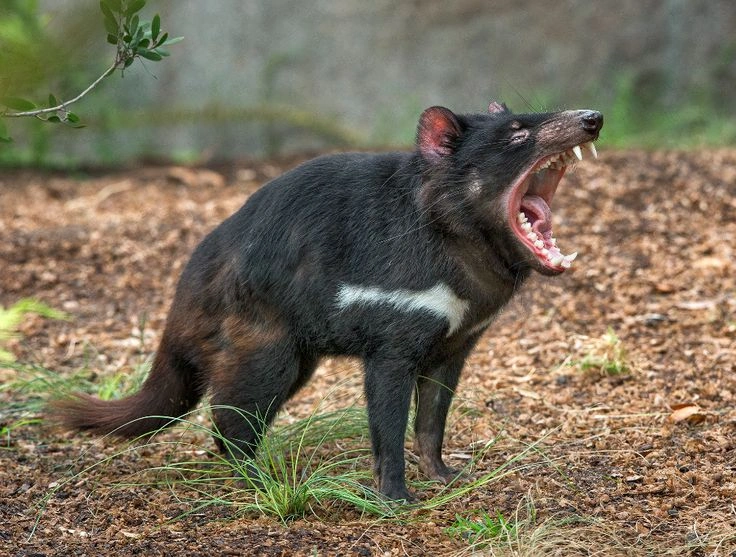
Tasmanian devils can make harsh growls, snarls, screams, coughs, and other loud sounds. These noises have helped create their frightening reputation.
However, not every aggressive-looking behavior means the animal wants to attack. Their famous open-mouth gape can be a response to fear or uncertainty. Noisy displays can also help devils communicate and avoid unnecessary physical fights when several animals are feeding together.
Their sense of smell is also extremely important. They use it to locate food and communicate information about other devils in the area through scent markings and communal latrine sites.
How Do Tasmanian Devils Reproduce?
Tasmanian devils usually breed between February and May. Pregnancy lasts only about 21 days, after which the mother gives birth to a large number of tiny young.
The surprising part is that the mother has only four teats inside her pouch. As a result, although many young may be born, only up to four can remain attached and develop in the pouch. The young stay there for roughly four months before beginning to explore outside.
After leaving the pouch, young devils continue using a secure den while they grow. They eventually become independent and normally begin breeding around the end of their second year.
This reproductive system is one reason disease can have such a serious effect on devil populations. If adult females die before producing several generations of young, population recovery becomes much harder.
Why Are Tasmanian Devils Endangered?
The most serious threat to Tasmanian devils is Devil Facial Tumour Disease, commonly called DFTD.
DFTD is unusual because it is a contagious form of cancer. Tumour cells can pass from one devil to another, mainly through biting during fighting or mating. The disease was first recorded in Tasmania in the 1990s and has had a major impact on wild populations.
How Does Devil Facial Tumour Disease Affect Them?
The disease usually produces tumours around the face and mouth. As the tumours grow, affected devils can have difficulty eating. Once visible signs develop, death often occurs within several months.
Researchers have identified two known forms of transmissible devil facial tumour disease, known as DFT1 and DFT2. Both are contagious and fatal, although they differ in their origins and genetic characteristics.
Populations affected by DFTD have experienced severe declines, with some areas recording reductions of up to around 80%. The disease also changes the age structure of populations because older breeding animals are particularly affected.
How Are Tasmanian Devils Being Protected?
The Save the Tasmanian Devil Program is the official conservation response to the threat posed by DFTD. It was established in 2003 through cooperation between the Australian and Tasmanian governments.
The program focuses on maintaining an enduring and ecologically functional wild population. Its work includes disease research, population monitoring, roadkill reduction, conservation breeding, and other strategies designed to improve the species’ chances of long-term survival.
Road deaths are another concern because devils often move along roads while searching for food. Conservation teams monitor roadkill hotspots and use the information to identify areas where practical measures could reduce deaths.
Tasmanian devils are legally protected, and the species is classified as endangered under Australian and Tasmanian conservation legislation.
Why Tasmanian Devils Matter to the Ecosystem
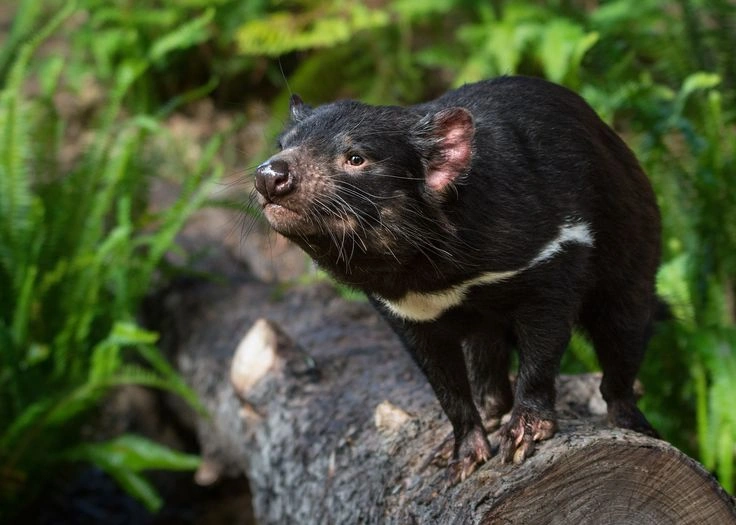
It is easy to focus on the devil’s unusual appearance and forget its ecological importance. These animals help remove dead and diseased animals from the environment.
By consuming carcasses, devils contribute to natural nutrient cycling and help keep parts of the landscape cleaner. They may also influence populations of other animals through their role as predators and scavengers.
Tasmanian devils are also an important part of Tasmania’s natural identity. Protecting them means protecting more than one species. Their survival is connected to the health and balance of the ecosystems where they live.
Interesting Tasmanian Devil Facts
Here are a few facts that make this animal even more fascinating:
- Tasmanian devils are marsupials, so females carry their young in a pouch.
- They are the largest surviving carnivorous marsupials.
- Their scientific name is Sarcophilus harrisii.
- They can swim and often enjoy being in water.
- Young devils can be more agile than adults and may climb trees.
- Their tail stores fat, which can provide an energy reserve when food is limited.
- They can consume bones and other tough parts of carcasses.
- Their loud sounds are often connected to feeding, communication, fear, or competition rather than an intention to attack humans.
What Reliable Sources Tell Us
The information in this article is based on wildlife and conservation material from the Tasmanian Department of Natural Resources and Environment, Tasmania Parks and Wildlife Service, and the official Save the Tasmanian Devil Program. These sources provide information on devil biology, habitat, diet, breeding, behavior, disease, and conservation work.
For wildlife topics, using government and conservation sources is especially important because population trends and disease information can change as researchers continue monitoring wild animals.
Conclusion
Tasmanian devils may look intimidating, but their real story is far more interesting. They are adaptable nocturnal marsupials with powerful jaws, sharp senses, unusual breeding habits, and an important role as scavengers in Tasmania’s ecosystems.
The biggest challenge is keeping these remarkable animals alive in the wild. Devil Facial Tumour Disease has caused serious population declines, but ongoing research and conservation work provide reasons for hope. Understanding these animals is an important first step toward protecting them.
For anyone interested in wildlife, the Tasmanian devil is a reminder that even the strangest-looking animals can have a vital place in nature.
Frequently Asked Questions
Are Tasmanian devils dangerous?
Tasmanian devils generally avoid people and are not considered animals that normally attack humans. They can bite if they are trapped, threatened, or handled, so wild devils should always be given plenty of space.
Where can Tasmanian devils be found?
Wild Tasmanian devils are naturally found in Tasmania, Australia. They occupy many habitats, including forests, coastal areas, heathland, and places near farmland.
What do Tasmanian devils eat?
They eat a wide range of animal foods. Their diet includes carrion, wallabies, possums, wombats, birds, reptiles, amphibians, insects, and other available food.
Why are Tasmanian devils endangered?
The biggest modern threat is Devil Facial Tumour Disease, a contagious cancer that spreads between devils through physical contact. Road deaths and other pressures can also affect populations.
How long do Tasmanian devils live?
Wild Tasmanian devils can live for up to about six years, although disease and other environmental pressures can reduce survival.
Do Tasmanian devils really scream?
Yes. They can make screams, snarls, growls, and other sounds. These noises are often linked to communication, feeding, fear, or competition between animals.
