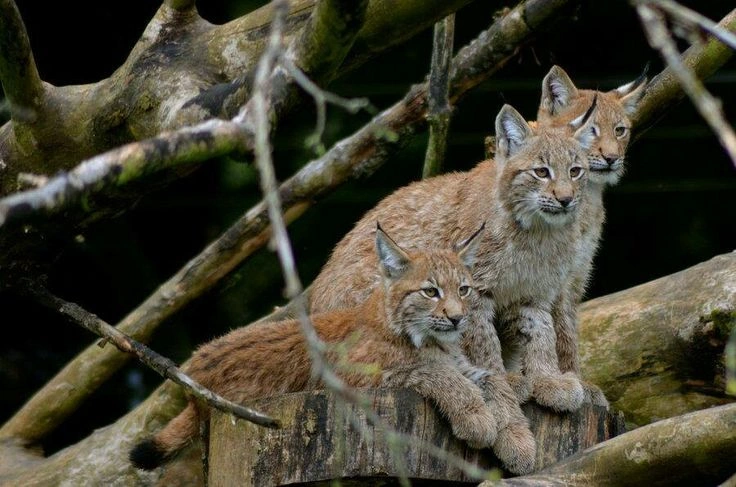
Lynx Facts: Lynx are secretive wild cats known for their tufted ears, short tails, broad paws, and quiet hunting style. They live across parts of North America, Europe, and Asia, but different lynx species prefer different habitats and prey. Some are strongly linked to rabbits or hares, while the larger Eurasian lynx can take deer and other ungulates. Their lives are shaped by forests, prey availability, snow, and human activity.
This viltnemnda guide explains the main lynx species, habitat, diet, hunting, behavior, and conservation.
What Is a Lynx?
A lynx is a wild cat in the genus Lynx and the family Felidae. Four living species are generally recognized: the Eurasian lynx, Canada lynx, Iberian lynx, and bobcat. Although they share several features, they are not identical in size, habitat, diet, or behavior.
Lynx are usually solitary and territorial. Adults normally hunt alone, while mothers teach hunting skills to their young. Their hearing and vision help them detect prey.
Key Takeaways
- There are four living lynx species: Eurasian lynx, Canada lynx, Iberian lynx, and bobcat.
- Lynx are solitary carnivores that usually hunt alone.
- Canada lynx depend heavily on snowshoe hares.
- Iberian lynx depend mainly on European rabbits.
- Eurasian lynx often hunt roe deer and other medium-sized prey.
- Bobcats have a broad and flexible diet.
- Lynx usually hunt by stalking, waiting, and ambushing rather than chasing prey for long distances.
- Large paws help Canada lynx move through deep snow.
- Habitat connectivity and healthy prey populations are essential for lynx survival.
- The Iberian lynx improved from Endangered to Vulnerable on the IUCN Red List in 2024.
Lynx Species and Where They Live
Eurasian Lynx
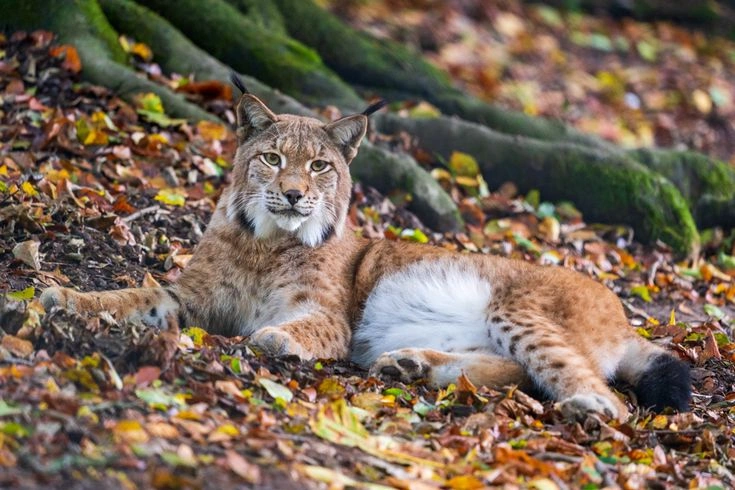
The Eurasian lynx is the largest lynx species. Its range stretches across parts of Europe and Asia, where it uses forests, mountains, rocky areas, and some open, lightly wooded landscapes. In many European regions, it is strongly associated with forest cover and healthy populations of deer.
Its diet can include roe deer, chamois, hares, rabbits, rodents, birds, foxes, and other animals. In some regions, however, its diet shifts toward smaller prey depending on local conditions.
Canada Lynx
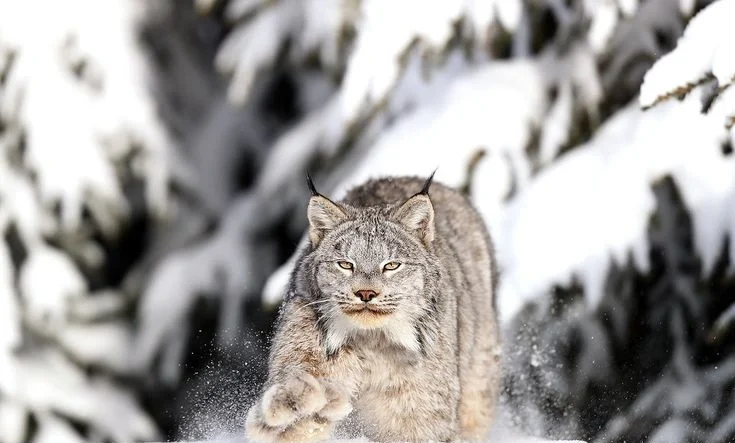
The Canada lynx lives mainly in the boreal forests of Canada and Alaska, with populations extending into parts of the northern United States. It is closely linked to the snowshoe hare, which can provide most of its food.
The species is well adapted to snow. Its unusually large paws spread its weight over soft snow, helping it move through conditions where many other predators would struggle. Dense, regenerating forests are especially useful because they provide cover and support strong snowshoe hare populations.
Iberian Lynx
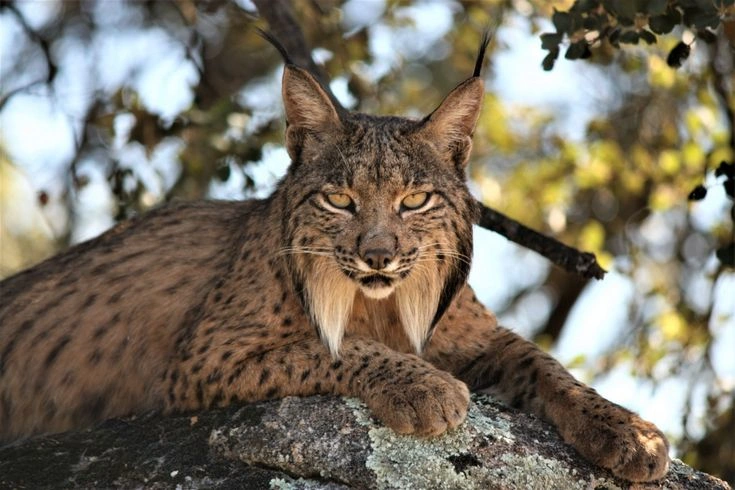
The Iberian lynx is native to the Iberian Peninsula, especially Spain and Portugal. It prefers Mediterranean landscapes with scrub, woodland, grassland patches, and enough cover for shelter.
Unlike the Eurasian lynx, the Iberian lynx depends heavily on the European rabbit. Rabbits can make up most of its food intake, so changes in rabbit numbers can have a direct effect on lynx populations.
The species has made a major conservation recovery. In 2024, the IUCN changed its status from Endangered to Vulnerable after sustained conservation work increased its population. The recovery involved habitat restoration, rabbit conservation, captive breeding, translocations, and reintroductions.
Bobcat
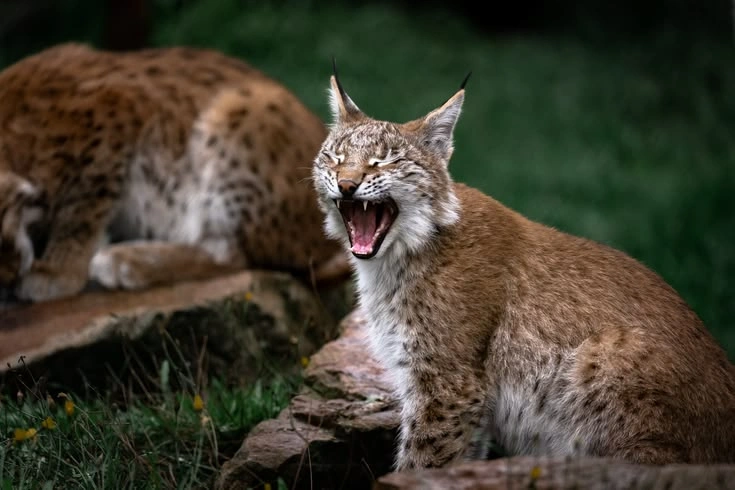
The bobcat is the most widely distributed member of the genus Lynx in North America. It occurs across a wide range of habitats, including forests, scrublands, grasslands, and areas close to human development.
Bobcats are adaptable hunters with a broader diet than the Canada lynx. They may eat rabbits, hares, rodents, birds, reptiles, and other small animals.
Where Do Lynx Live?
Lynx are strongly associated with habitats that provide cover and enough prey. Depending on the species, these include boreal forests, temperate forests, mountain woodland, Mediterranean scrub, rocky terrain, and forest edges.
Habitat quality matters because lynx usually avoid spending much time in large open areas when better cover is available. Forest connectivity is also important, particularly for populations that need to move between suitable areas.
For Canada lynx, regenerating forests can be valuable because these areas support snowshoe hares. For Iberian lynx, Mediterranean scrub provides shelter while nearby open areas support rabbits. Eurasian lynx use a wider range of landscapes, but forest cover remains important across much of Europe.
Lynx Facts: What Do Lynx Eat?
All lynx are carnivores, but their preferred prey differs by species and location. Canada lynx are specialists in hunting snowshoe hares. When hares are scarce, they may switch to rodents, birds, squirrels, and other available prey.
Iberian lynx are also prey specialists. European rabbits are their main food, often making up most of their daily biomass. They may also take rodents, birds, and occasionally young ungulates.
Eurasian lynx have a more varied diet. In many European populations, roe deer are an important prey species. They can also take chamois, musk deer, hares, rabbits, rodents, birds, foxes, and other animals. In difficult winter conditions, they may tackle larger prey when smaller animals are harder to find.
Bobcats are generalist predators. Their diet can change with location and season, allowing them to use whatever suitable prey is available.
How Do Lynx Hunt?
Lynx are ambush predators. Instead of chasing prey over long distances, they usually rely on stealth, cover, patience, and a sudden attack.
A lynx may move quietly through vegetation or wait near a route used by prey. Its hearing helps locate animals that cannot easily be seen. Once the cat gets close enough, it can make a short burst of speed and pounce.
The attack is usually quick. Lynx use their claws to hold prey and deliver a bite that kills it, often around the neck or head. Their hunting style works well because it saves energy compared with a long pursuit.
Snow can change the way a lynx hunts. Canada lynx are particularly adapted to moving through deep snow, while Eurasian lynx may use different prey when winter conditions make their usual targets harder to catch.
Lynx normally hunt alone. A mother with kittens is the main exception, as young lynx learn important hunting skills while growing.
Are Lynx Nocturnal?
Lynx activity varies by species, location, season, and prey behavior. They can be active at night, dawn, dusk, or during daylight, so calling every lynx strictly nocturnal is too simple.
Their excellent low-light vision helps them hunt when light is limited, but hearing is also extremely important. Lynx may adjust their activity to match when prey is most available or when human disturbance is lower.
Why Are Lynx Important to Ecosystems?
Lynx are predators, so they help shape prey populations and influence how other animals use their habitat. Their effect depends on the species, prey abundance, and the wider predator community.
The Eurasian lynx, for example, can influence deer populations where it is common. Canada lynx are closely connected to snowshoe hare population cycles. When prey numbers change, lynx numbers and movements can change as well.
Are Lynx Endangered?
The Iberian lynx has faced the greatest historical risk, but its status improved from Endangered to Vulnerable in the 2024 IUCN Red List update.
Its recovery is an important example of conservation working in practice. More than 400 Iberian lynx have been reintroduced to parts of Spain and Portugal since 2010, while efforts also focused on rabbits, habitat, genetic diversity, and reducing human-caused deaths.
Canada lynx, Eurasian lynx, and bobcats are generally more widespread, although some local populations face serious pressures. Habitat loss, fragmentation, roads, prey decline, illegal killing, and changes in environmental conditions can all create problems.
This Viltnemnda article is based on information from established wildlife and conservation sources, including the IUCN, U.S. Forest Service, National Park Service, Smithsonian’s National Zoo, and Animal Diversity Web. Species descriptions and conservation information can change as new research becomes available, so current scientific assessments should be checked when making conservation or wildlife-management decisions.
FAQs
Are lynx dangerous to humans?
Lynx generally avoid people and are difficult to see in the wild. They are wild predators, so they should be given plenty of space.
What is a lynx’s favorite food?
There is no single favorite food for every lynx species. Canada lynx depend on snowshoe hares, Iberian lynx on European rabbits, and Eurasian lynx often take roe deer.
Do lynx hunt in packs?
No. Lynx are normally solitary hunters. Mothers and kittens may hunt or move together while young animals are learning survival skills.
Can lynx climb trees?
Yes. Lynx can climb when needed, although their main hunting strategy is usually based on moving quietly on the ground, using cover, and ambushing prey.
Why do lynx have large paws?
Large paws help lynx move across snow. This is especially important for Canada lynx, whose wide, furry feet work like natural snowshoes.
How fast can a lynx run?
Lynx can make fast bursts when attacking prey, but they are not built for long-distance chases. Their strength is stealth and a sudden pounce.
