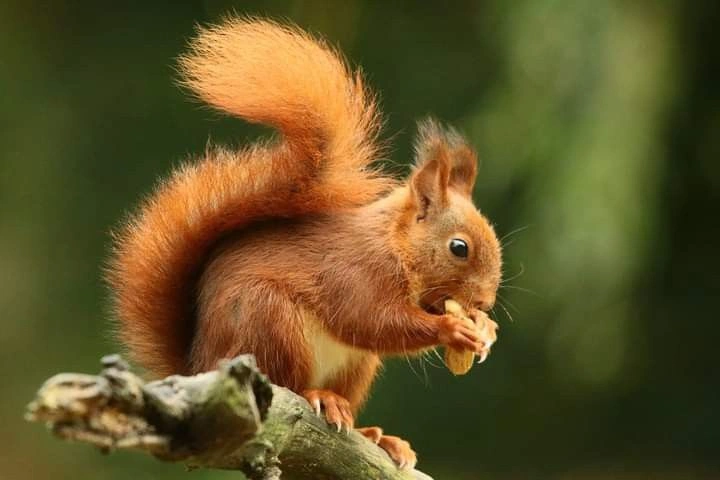
Squirrels are one of the best-known groups of wild mammals, although there is much more about them besides their bushy tails and ability to scamper up trees. The squirrel genus comprises tree squirrels, ground squirrels, flying squirrels, marmots, prairie dogs, and chipmunks.
The purpose of this Squirrel Facts guide is to analyze squirrels on a global scale, looking into the distribution, diet, behavior, and adaptation of different squirrel communities to various living conditions. All data are taken from zoological and conservation literature, including Smithsonian, Animal Diversity Web, and the National Park Service.
Quick Answer
The most helpful Squirrel Facts include the fact that squirrels are mammals that belong to the family Sciuridae, a widespread group of rodents that inhabit many places on Earth. Various species live in forests, grasslands, mountains, tundra, urban environments, and other regions.
While some squirrel species spend all their life in the trees, others build burrows underground. Flying squirrels also belong to the tree species, but they are capable of gliding in the air due to a membrane between their limbs.
Squirrels’ diet may differ from one species to another, though seeds, nuts, fruits, mushrooms, and other vegetable products make up the bulk of their nutrition. They also consume insects, eggs, and small animals sometimes. The behaviors of the squirrels include caching, territory defense, warning, climbing, burrowing, and sociality.
Key Takeaways
What Is a Squirrel?
A squirrel is a small to medium-sized mammal belonging to the family Sciuridae and order Rodentia. The family includes a remarkably wide range of animals, from tiny squirrels to much larger ground-dwelling species.
One important point is that the word “squirrel” does not describe just one type of animal. Squirrel Facts become much easier to understand when the family is divided into its major forms: tree squirrels, ground squirrels, and flying squirrels.
Tree squirrels usually have long tails and strong limbs suited to climbing. Ground squirrels generally have sturdier bodies and powerful limbs for digging. Flying squirrels have a membrane called a patagium that stretches between their limbs and allows them to glide between trees.
Where Do Squirrels Live?
Squirrels have adapted to an impressive range of environments. They occur across much of North America, Europe, Asia, Africa, and parts of Central and South America.
According to the Animal Diversity Web, members of Sciuridae occupy environments ranging from rainforests and temperate forests to grasslands, tundra, mountains, agricultural areas, suburbs, and cities. They are especially diverse in African and Southeast Asian forests.
Forests
Forests provide many squirrel species with food, shelter, nesting locations, and escape routes. Tree squirrels can move between branches, while some species use tree cavities or leafy nests for shelter.
Prevost’s squirrel, for example, lives in forests as well as cultivated areas and gardens in parts of Southeast Asia. It can climb rapidly and jump between trees using its claws and strong limbs.
Grasslands and Open Areas
Not every squirrel depends on trees. Ground squirrels have adapted to open landscapes where underground burrows provide shelter from predators and harsh weather.
Prairie dogs are a well-known example. Although they are commonly associated with open grasslands, they are actually ground squirrels and live in extensive underground burrow systems.
Cities and Suburbs
Some squirrel species have also adapted well to human-dominated environments. Parks, gardens, mature trees, and urban green spaces can provide food and shelter.
This ability to live around people is one reason squirrels are so familiar in many towns and cities.
What Do Squirrels Eat?
One of the most interesting Squirrel Facts is that squirrels do not all have the same diet.
Many species eat seeds, nuts, fruits, flowers, buds, fungi, and other plant material. However, some squirrels are opportunistic feeders and may also consume insects, eggs, or small vertebrates.
| Food | How Common Is It? |
|---|---|
| Seeds | Common among many species |
| Nuts | Common among many tree squirrels |
| Fruits | Eaten by many species |
| Fungi | Important for some species |
| Flowers and buds | Eaten by several species |
| Insects | Included in some diets |
| Eggs | Eaten opportunistically by some species |
| Small animals | Occasional food for some species |
The exact diet depends on the species and the food available in its habitat. For example, Smithsonian records show that Prevost’s squirrels eat fruit, nuts, seeds, buds, flowers, insects, and bird eggs.
Main Types of Squirrels
There are several major groups within the squirrel family, and their lifestyles can be very different.
Tree Squirrels
Tree squirrels are the animals most people picture when they hear the word squirrel. They are adapted for climbing, jumping, and moving through branches.
Their long tails help with balance, while their claws help them grip tree surfaces. Many build leafy nests or use tree cavities for shelter.
Examples include gray squirrels, red squirrels, and many tropical tree squirrel species.
Ground Squirrels
Ground squirrels spend much of their time on or beneath the ground. Many dig burrows that provide protection and places to rest or raise young.
The group includes prairie dogs, marmots, and several other burrowing squirrels. Their bodies are generally more suited to digging than those of typical tree squirrels.
Flying Squirrels
Despite their name, flying squirrels do not truly fly like birds or bats. Instead, they glide.
A loose membrane of skin called a patagium extends between the front and rear limbs. When the squirrel jumps from a tree, this membrane helps it control its movement through the air.
Many flying squirrels are nocturnal, which means they are mainly active at night. Their preference for mature trees and cavities also makes suitable forest habitat important for their survival.
How Do Squirrels Behave?
Squirrel behavior changes considerably between species. Some live mostly alone, while others form highly social groups.
Tree squirrels often spend their time climbing, searching for food, feeding, resting, defending space, and watching for predators. Their tails can also play a role in communication.
For example, Smithsonian research on Prevost’s squirrels describes whistles and trills used during excitement, disturbance, or communication. Their tails can also act as visual signals.
Ground squirrels can be much more social. Prairie dogs, for instance, live in large communities and use vocal warnings when danger approaches.
Squirrel Communication
Squirrels communicate through sounds, body movements, scents, and visual signals.
Alarm calls are particularly important. Depending on the species, a squirrel may respond differently to predators approaching from the air or ground.
Red squirrels, for example, are known for vocalizations, tail movements, foot stamping, and territorial behavior.
Why Do Squirrels Have Bushy Tails?
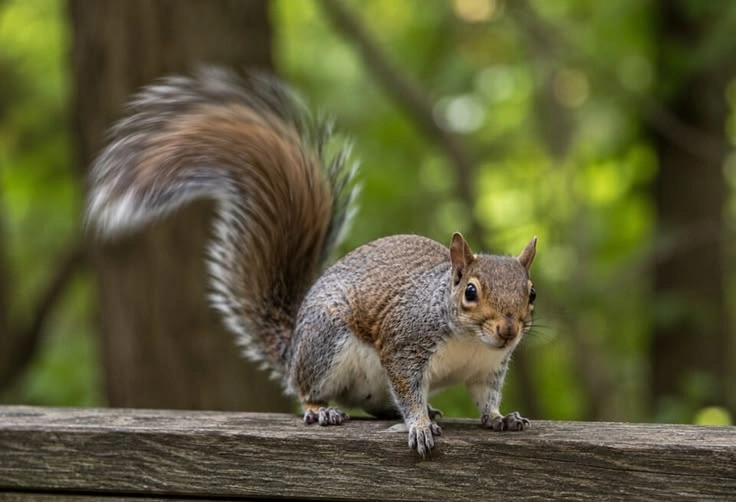
The tail is more than a fluffy feature. For tree squirrels, it helps with balance while moving through branches and making jumps. It can also assist with body positioning and communication.
Some squirrels may also use their tails as a covering in cold conditions. Smithsonian observations of Prevost’s squirrels note that they wrap their tails around their bodies while resting at night.
The shape and size of a squirrel’s tail vary between species because different lifestyles require different adaptations.
Do Squirrels Hibernate?
This is another area where Squirrel Facts can be misleading if all squirrels are treated alike.
Some ground squirrels enter true hibernation, while many tree squirrels do not. Tree squirrels may remain active through winter and rely on food they have stored or can find.
For example, Smithsonian notes that Prevost’s squirrels do not hibernate. Red squirrels also remain active during winter, although severe weather can reduce their activity.
Therefore, whether a squirrel hibernates depends on the species rather than simply being a squirrel.
How Squirrels Store Food
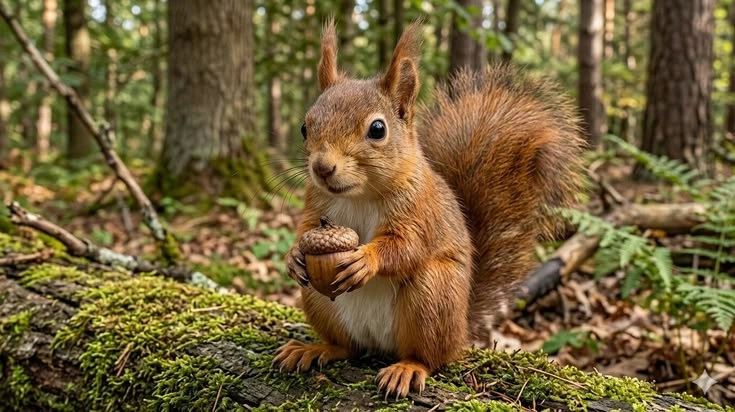
Food storage is one of the best-known squirrel behaviors. Many squirrels collect food when it is available and hide it for later. Acorns and other seeds can be buried in soil or stored in protected places.
The National Park Service explains that squirrels sometimes hide acorns and may fail to recover every one. When a forgotten acorn remains in suitable conditions, it can eventually grow into an oak tree.
Red squirrels use a different strategy. They can create large stores of cones and keep food in protected locations, helping them maintain supplies during winter.
Squirrels and the Environment
Squirrels are not simply animals that live in forests and parks. Their feeding and food-storage behavior can influence plant communities.
When squirrels bury seeds and do not recover all of them, some seeds may remain in the soil and germinate. This makes squirrels one of several animals that can contribute to seed movement and forest regeneration.
However, the ecological role differs between species and habitats. It is therefore better to look at individual species rather than assume that every squirrel has the same impact.
Interesting Squirrel Facts
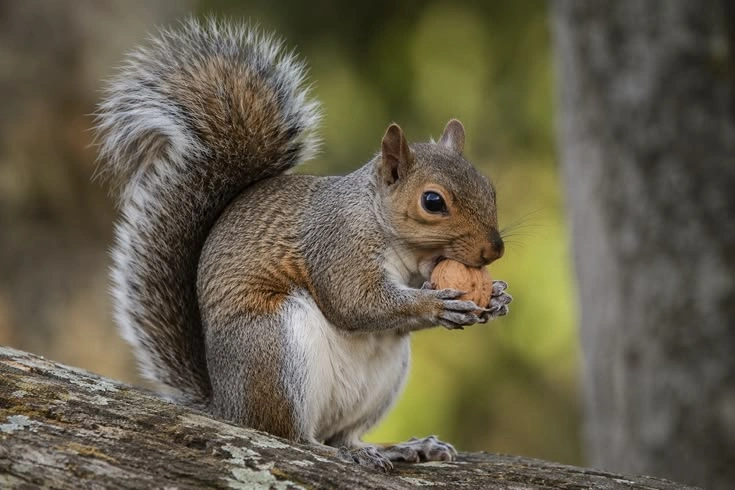
Here are some useful Squirrel Facts that show how diverse these animals are:
| Fact | What It Means |
| Squirrels are rodents | They belong to the order Rodentia |
| Their family is Sciuridae | This includes several different squirrel groups |
| Not all squirrels live in trees | Ground squirrels spend much of their lives on or below the ground |
| Flying squirrels glide | Their patagium helps them move between trees |
| Many squirrels store food | Caching helps some species survive periods of limited food |
| Some squirrels are social | Prairie dogs can live in large communities |
| Others are solitary | Some species spend much of their lives alone |
| Squirrel diets vary | Food choices depend on species and habitat |
| Tails have several functions | They can assist with balance, signaling, and protection |
| Squirrels live in many habitats | Their range includes forests, grasslands, mountains, tundra, and cities |
The family is also much more diverse than its familiar backyard representatives suggest. Scientific resources describe hundreds of recognized squirrel species and a wide variety of body forms and lifestyles.
Conclusion
The best Squirrel Facts reveal a much more varied animal family than the familiar squirrel seen running across a park. Around the world, squirrels have evolved different ways to climb, dig, glide, communicate, find food, and survive changing conditions.
From tree squirrels moving through forest canopies to ground squirrels living in burrows and flying squirrels gliding between trees, each group has its own adaptations. Their feeding and caching habits can also connect them closely with the plants and habitats around them.
For readers of Viltnemnda, learning these differences makes it easier to understand squirrels as wildlife rather than simply as common backyard animals. Reliable species-level information remains important because behavior, diet, habitat, and conservation needs can vary considerably from one squirrel to another.
Common Questions About Squirrels
What are the most interesting Squirrel Facts?
Some of the most interesting Squirrel Facts involve their different lifestyles. Some squirrels climb trees, others dig burrows, and flying squirrels glide between trees using a membrane between their limbs. Their diets and social behavior also vary widely.
Are squirrels rodents?
Yes. Squirrels belong to the order Rodentia and the family Sciuridae.
Do all squirrels live in trees?
No. Tree squirrels live primarily in trees, but ground squirrels spend much of their time on the ground or underground. Flying squirrels are also tree-dwelling animals that glide between trees.
What do squirrels normally eat?
Many squirrels eat seeds, nuts, fruits, fungi, flowers, buds, and other plant foods. Depending on the species, insects, eggs, and small animals can also be part of the diet.
Can squirrels really fly?
Flying squirrels do not fly under their own power. They glide from one place to another using a skin membrane called a patagium.
Why do squirrels bury food?
Food caching allows squirrels to save resources for later. Seeds and nuts can become especially valuable when seasonal food becomes harder to find.
Are squirrels active during winter?
Some are. Many tree squirrels remain active throughout winter, while certain ground squirrel species enter hibernation. The pattern depends on the species.
Where can squirrels be found?
Squirrels occur across large parts of the world. Their habitats include forests, grasslands, mountains, tundra, agricultural landscapes, suburbs, and cities.
