Key Takeaways
- Animals in Norway range from forest mammals and mountain herbivores to Arctic species and enormous marine mammals.
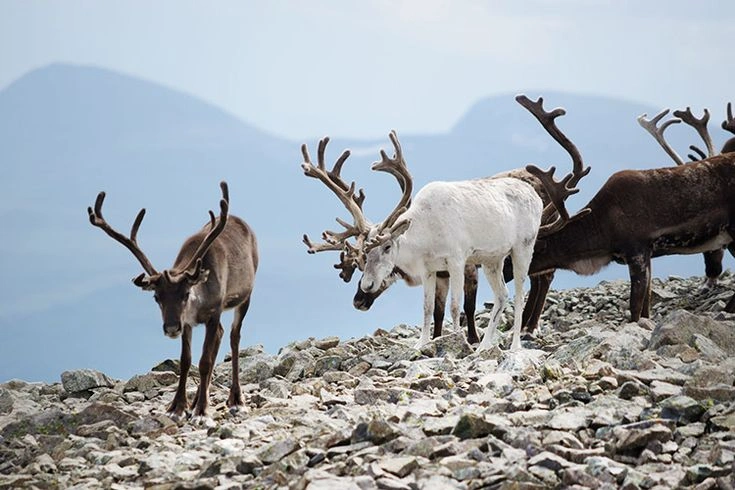
- Moose are Norway’s largest land mammals, while reindeer are strongly associated with northern and mountain landscapes.
- Svalbard has a distinctive Arctic wildlife community that includes polar bears, Arctic foxes, walruses, seals, reindeer, and seabirds.
- Norway’s seas support whales, dolphins, porpoises, seals, and numerous fish species.
- White-tailed eagles, golden eagles, puffins, ptarmigans, owls, and other birds make Norway an important destination for birdwatchers.
- Responsible wildlife viewing means keeping your distance, avoiding disturbance, and following local rules.
Quick Answer: What Animals Live in Norway?
Common and notable Animals in Norway include moose, reindeer, red deer, roe deer, Arctic foxes, red foxes, lynx, wolverines, brown bears, wolves, otters, beavers, musk oxen, polar bears, walruses, seals, whales, puffins, white-tailed eagles, golden eagles, ptarmigans, owls, salmon, trout, cod, and halibut.
However, their ranges are very different. Mainland Norway has most of the country’s familiar forest and mountain wildlife, whereas Svalbard has a distinctly Arctic community of animals.
Norway’s official biodiversity resources document thousands of species, while the Norwegian Polar Institute provides detailed information about wildlife in Svalbard.
40+ Animals in Norway to Know
| Animal | Where you may find it | What makes it interesting |
|---|---|---|
| Moose | Forests across mainland Norway | Norway’s largest land mammal |
| Reindeer | Mountain and northern regions | Both wild and domesticated herds occur |
| Svalbard reindeer | Svalbard | A distinctive Arctic reindeer population |
| Red deer | Forests and coastal areas | One of Norway’s important deer species |
| Roe deer | Woodland and farmland | Smaller than red deer and widely distributed |
| Arctic fox | High Arctic and mountain areas | Built for cold environments |
| Red fox | Across mainland Norway | Highly adaptable and widespread |
| Eurasian lynx | Forest and mountain regions | Norway’s largest wild cat |
| Wolverine | Mountain and northern regions | Powerful member of the weasel family |
| Brown bear | Mainly southeastern and northern areas | One of Norway’s major large predators |
| Wolf | Mainly parts of southeastern Norway | Rare and closely monitored |
| Otter | Rivers, lakes, fjords, and coast | Excellent swimmer |
| Eurasian beaver | Rivers and lakes | Creates ponds and changes habitats |
| Eurasian badger | Woodland and countryside | Mostly active at night |
| Pine marten | Forests | Agile tree-dwelling predator |
| Stoat | Forest, tundra, and mountain habitats | Changes coat colour seasonally |
| Mountain hare | Mountains and northern areas | Adapted to snowy conditions |
| Musk ox | Dovrefjell | Large Arctic-adapted herbivore |
| Polar bear | Svalbard | Closely connected to sea-ice ecosystems |
| Walrus | Svalbard coastal areas | Famous for its tusks and whiskers |
| Ringed seal | Arctic waters and sea ice | Important prey for polar bears |
| Bearded seal | Arctic marine areas | Large seal associated with sea ice |
| Harbour seal | Norwegian coast and fjords | One of Norway’s coastal seals |
| Grey seal | Outer coast | Lives in coastal colonies |
| Harp seal | Northern marine areas | Often associated with Arctic waters |
| Minke whale | Norwegian waters | Commonly recorded baleen whale |
| Humpback whale | Coastal and northern waters | Known for powerful breaches and long flippers |
| Fin whale | Norwegian seas | One of the world’s largest whales |
| Blue whale | Norwegian and Arctic waters | The largest animal known to science |
| Sperm whale | Offshore waters | Deep-diving toothed whale |
| Killer whale | Norwegian coastal and northern waters | Highly social marine predator |
| White-beaked dolphin | Norwegian waters | Frequently recorded in northern marine surveys |
| Harbour porpoise | Coastal waters | Smallest cetacean regularly found in Norway |
| Beluga whale | Especially Arctic waters | Often associated with Svalbard |
| Puffin | Coastal islands and bird cliffs | Recognisable seabird with a colourful bill |
| White-tailed eagle | Coastal regions | Europe’s largest eagle |
| Golden eagle | Mountains and forests | Powerful mountain predator |
| Gyrfalcon | Arctic and northern regions | Largest falcon species |
| Snowy owl | Arctic and mountain environments | Specialised for northern conditions |
| Willow ptarmigan | Mountain and northern habitats | Changes plumage with the seasons |
| Rock ptarmigan | High mountains and Arctic areas | Well adapted to alpine environments |
| Arctic tern | Coast and Arctic breeding areas | Famous for its long-distance migration |
| Atlantic salmon | Rivers and coastal waters | Important migratory fish |
| Brown trout | Lakes, rivers, and coastal waters | Widely distributed salmonid |
| Atlantic cod | Norwegian marine waters | Major North Atlantic fish |
| Greenland shark | Deep, cold northern waters | One of the world’s longest-lived vertebrates |
The species listed above are supported by Norwegian biodiversity, polar research, marine research, and bird records.
Land Animals in Norway
Moose
The moose is probably the animal most closely associated with Norwegian forests. It is also Norway’s largest land mammal, and large males can weigh up to about 800 kilograms.
Moose occur across much of mainland Norway. Therefore, drivers and hikers may encounter them in forested areas, particularly where roads pass through suitable habitat.
Reindeer
Reindeer are especially important in northern and mountainous Norway. Wild reindeer populations occur in several mountain areas, while domesticated reindeer are closely connected with Sámi culture.
Svalbard has its own reindeer population, adapted to the island’s Arctic environment.
Arctic Fox
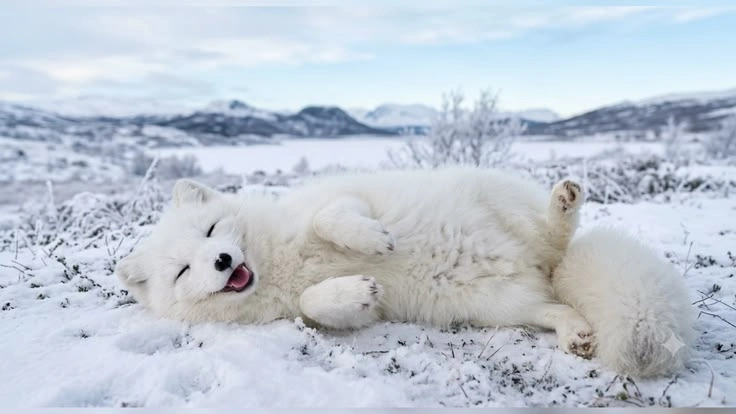
The Arctic fox is one of Norway’s most specialised cold-weather mammals. On Svalbard, it survives in an environment where winters are severe, and food availability changes dramatically through the year.
Interestingly, the Arctic fox has white and blue colour morphs, and its thick winter coat provides important insulation.
Red Fox
Unlike the Arctic fox, the red fox is remarkably adaptable. It occurs in coastal landscapes and forests to mountains to even urban areas.
Because it can use many different foods and habitats, it is one of the most widespread carnivores in Norway.
Lynx, Wolverine, Brown Bear, and Wolf
Norway’s large predators include the Eurasian lynx, wolverine, brown bear, and wolf. They are generally difficult to observe because many are secretive and occur at relatively low densities.
In addition, their conservation and management are important parts of Norwegian wildlife policy. Artsdatabanken identifies these four as Norway’s major large terrestrial predators.
Musk Ox
Musk oxen are among the most unusual Animals in Norway. The species is associated with the Dovrefjell mountains, where guided wildlife trips can provide opportunities to observe them.
Despite their heavy appearance, musk oxen can move surprisingly quickly. Visitors are advised to stay at least 200 metres away.
Birds in Norway
Norway’s birdlife is just as impressive as its mammals. Coastal cliffs, forests, wetlands, tundra, and mountains create habitats for resident and migratory species.
Eagles and Birds of Prey
The white-tailed eagle is especially associated with Norway’s coastline, while golden eagles occur across mountainous and forested landscapes. Gyrfalcons are linked with northern and Arctic environments.
BirdLife Norway’s records also document species such as rough-legged buzzards, ospreys, snowy owls, eagle owls, and several other birds of prey occurring within Norway.
Puffins and Seabirds
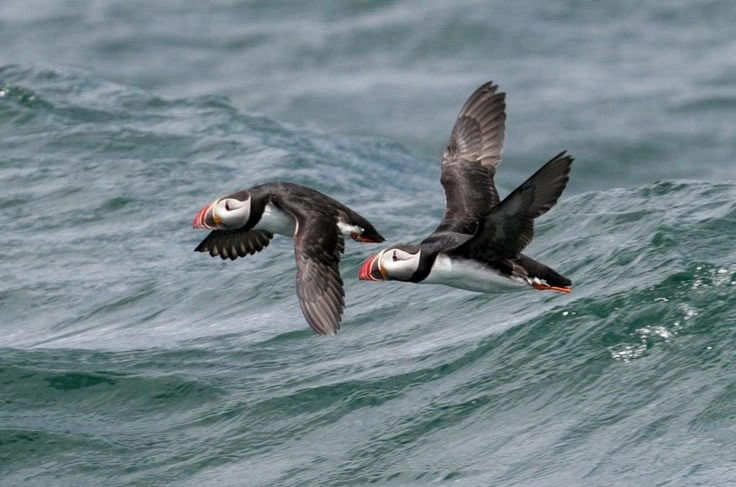
Atlantic puffins are among the most recognisable Animals in Norway. They breed in coastal colonies, where rocky islands and cliffs provide suitable nesting habitat.
Northern Norway is particularly well known for seabird watching. For example, Bleiksøya near Andøya supports a major puffin colony during the breeding season.
Ptarmigans and Arctic Birds
Willow ptarmigan and rock ptarmigan are adapted to cold northern and mountain habitats. Snowy owls, meanwhile, are strongly associated with Arctic environments but are much less predictable to encounter.
Svalbard also supports species such as Arctic terns, black guillemots, Brünnich’s guillemots, common eiders, and other Arctic seabirds.
Marine Animals in Norway
Norway’s wildlife does not stop at the shoreline. Its seas support a wide variety of marine mammals and fish.
The Institute of Marine Research notes that around 20 marine mammal species occur regularly in Norwegian waters, including whales, dolphins, porpoises, and seals.
Whales
Minke whales, humpback whales, fin whales, sperm whales, killer whales, and blue whales can occur in Norwegian waters.
For instance, systematic marine surveys have recorded minke, fin, humpback, blue, sperm, and killer whales in the Barents Sea and surrounding waters.
Sperm whales can be encountered around Vesterålen, while Northern Norway is also known for whale-watching opportunities. However, sightings are never guaranteed because wild animals determine when and where they surface.
Seals and Walruses
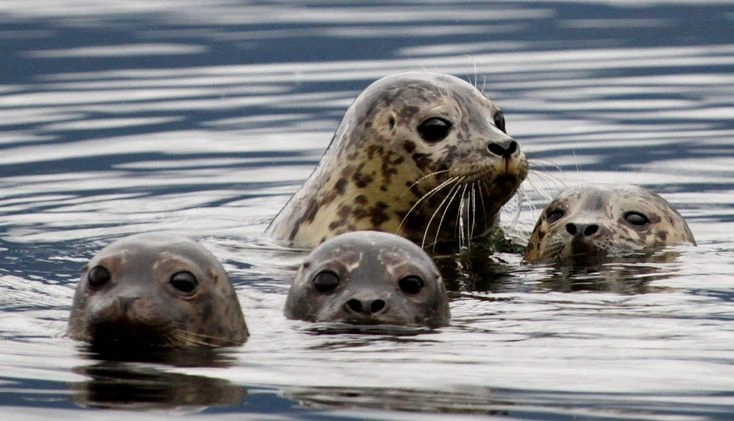
Harbour seals live along much of Norway’s mainland coast and can also enter fjords. Grey seals occur in coastal colonies from Rogaland to Finnmark.
Further north, Svalbard supports ringed seals, bearded seals, harbour seals, and walruses. These animals are strongly connected with Arctic marine ecosystems.
Fish and Other Aquatic Animals
Norway’s rivers and lakes support species such as Atlantic salmon and brown trout. Salmonids are an important part of Norway’s freshwater and coastal ecosystems.
The country’s marine waters also contain Atlantic cod, Greenland sharks, and many other fish species. The Institute of Marine Research maintains an extensive species resource covering Norwegian marine life.
Where to See Animals in Norway
The best place depends on the species you want to find.
| Region | Wildlife highlights |
| Dovrefjell | Musk ox, reindeer, birds of prey |
| Northern Norway | Moose, reindeer, eagles, whales, seabirds |
| Vesterålen | Moose, sperm whales, puffins, eagles |
| Norwegian forests | Moose, red fox, lynx, deer, beaver |
| Mountain regions | Reindeer, wolverine, ptarmigans, golden eagle |
| Norwegian coast | Seals, whales, seabirds, white-tailed eagles |
| Svalbard | Polar bear, Arctic fox, reindeer, walrus, seals, Arctic birds |
Norway has 47 national parks, and these protected landscapes cover a wide range of mountain, coastal, Arctic, and marine environments.
How to Watch Wildlife Responsibly
Seeing Animals in Norway is exciting, but responsible wildlife watching matters.
First, keep a safe distance. Never approach a wild animal simply to get a better photograph. Moreover, avoid disturbing nesting birds or blocking an animal’s escape route.
Musk oxen require particular caution, with Norwegian tourism guidance recommending a minimum distance of 200 metres. Moose should also be treated with respect, especially when females are with calves.
In addition, guided safaris are often the safer choice for species that are difficult or potentially dangerous to approach. Norway’s visitor guidance also recommends staying on marked trails, taking rubbish with you, and observing wildlife from a distance.
Frequently Asked Questions
What is the most famous animal in Norway?
The moose is one of Norway’s best-known wild animals and is widely found in mainland forests. It is also the country’s largest land mammal.
Does Norway have wild reindeer?
Yes. Wild reindeer occur in several Norwegian mountain areas. Norway also has domesticated reindeer herding, particularly in the north.
Are there polar bears in Norway?
Yes, but polar bears are associated with Svalbard rather than mainland Norway. They are closely connected to Arctic sea-ice ecosystems.
Are wolves found in Norway?
Yes. Wolves occur in Norway, although they are much harder to encounter than common wildlife such as moose or red foxes.
Can you see whales in Norway?
Yes. Several whale species occur in Norwegian waters, and whale-watching trips operate in parts of Northern Norway. However, sightings depend on natural conditions and animal movements.
What is the largest animal in Norway?
On land, the moose is Norway’s largest land mammal. In Norwegian waters, much larger animals occur, including the blue whale.
Are there dangerous animals in Norway?
Most wildlife avoids people. Nevertheless, moose, musk oxen, bears, and other large wild animals can be dangerous if approached or disturbed. Keeping distance is therefore essential.
Conclusion
Norway’s wildlife is shaped by an unusual combination of forests, mountains, fjords, open ocean, and Arctic landscapes. As a result, Animals in Norway include familiar European mammals alongside species adapted to some of the far north’s harshest conditions.
From a moose moving through a forest to a puffin on a coastal cliff or a whale surfacing offshore, each encounter depends on habitat, season, and luck. Meanwhile, Svalbard offers a completely different wildlife experience, where polar bears, walruses, seals, Arctic foxes, and seabirds live in an environment strongly influenced by sea ice.
For readers exploring more nature and wildlife topics on viltnemnda, Norway offers plenty of opportunities to look beyond the most famous species and understand how animals fit into the country’s wider ecosystems.
