Key Takeaways
- Wolf spiders are active hunters that do not use webs to catch prey.
- They are identified by their hairy bodies, eight eyes, and fast-running behavior.
- Most wolf spiders have a body length of 0.4 to 1.4 inches.
- They commonly live in gardens, forests, fields, and sometimes enter homes.
- A wolf spider bite is usually mild and uncommon.
- Wolf spiders are venomous to prey but are not poisonous to people.
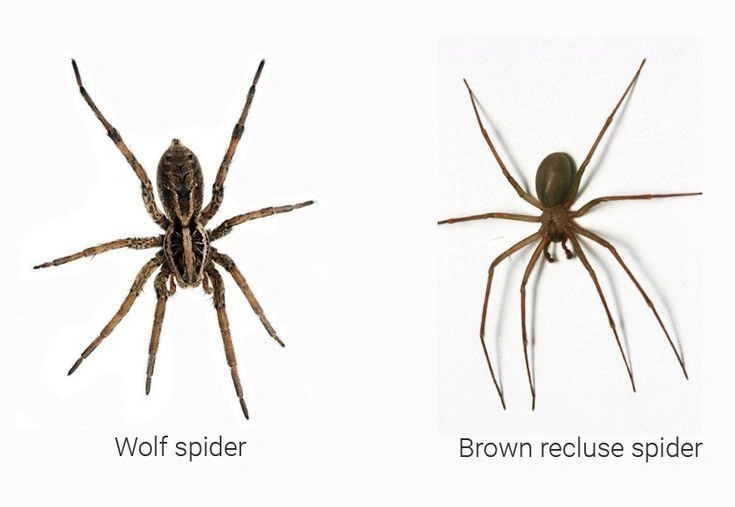
- They are often mistaken for brown recluses, but several physical features set them apart.
- These spiders help reduce insect populations naturally.
Quick Answer
A wolf spider is a fast-moving hunting spider that does not build webs to catch prey. It usually has a brown, gray, or black body with natural markings that help it blend into its surroundings. Most wolf spiders measure between 0.4 and 1.4 inches (10–35 mm) in body length, although their leg span makes them appear much larger.
Unlike many other spiders, wolf spiders actively chase insects instead of waiting in a web. They are commonly found outdoors but sometimes enter homes while searching for food or shelter.
What Is a Wolf Spider?
A wolf spider belongs to the family Lycosidae, which includes more than 2,000 known species found across much of the world. These spiders are skilled hunters that rely on excellent eyesight, speed, and camouflage rather than sticky webs.
Instead of trapping insects, a wolf spider quietly stalks its prey before quickly attacking it. This hunting style is similar to how wolves hunt, which is where the spider gets its name.
Although they can look intimidating because of their size, wolf spiders play an important role in nature. They help control insect populations by feeding on flies, beetles, ants, crickets, cockroaches, and other small pests.
How to Identify a Wolf Spider
Correct spider identification starts by looking at several features instead of focusing on size alone.
Body Color
Wolf spiders are usually:
- Brown
- Dark brown
- Gray
- Black
- Tan with darker stripes
Their colors help them blend into soil, leaves, rocks, and tree bark.
Hairy Body
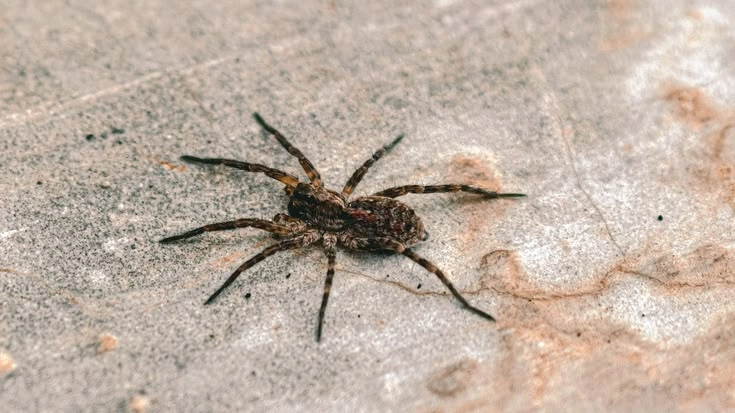
One of the easiest ways to recognize a wolf spider is its hairy appearance. Fine hairs cover both the legs and body, giving it a slightly fuzzy look.
These hairs also help the spider detect movement and vibrations while hunting.
Eye Arrangement
The eyes are one of the most reliable identification features.
A wolf spider has eight eyes arranged in three rows:
- Four small eyes on the bottom row
- Two very large eyes in the middle
- Two medium-sized eyes on top
This unique pattern gives the spider excellent vision, especially at night.
Strong Legs
Wolf spiders have thick, powerful legs designed for running instead of climbing webs. Their legs are often marked with darker bands that improve camouflage.
Fast Movement
Unlike web-building spiders that remain in one place, wolf spiders move quickly across the ground. They stop suddenly, change direction fast, and chase prey with surprising speed.
If you notice a large brown spider running instead of sitting in a web, there’s a good chance it is a wolf spider.
Wolf Spider Size
Many people are surprised by the wolf spider size because these spiders often appear much larger than they actually are.
| Feature | Average Size |
|---|---|
| Body Length | 10–35 mm (0.4–1.4 inches) |
| Leg Span | Up to 3 inches depending on species |
| Weight | Very light despite their large appearance |
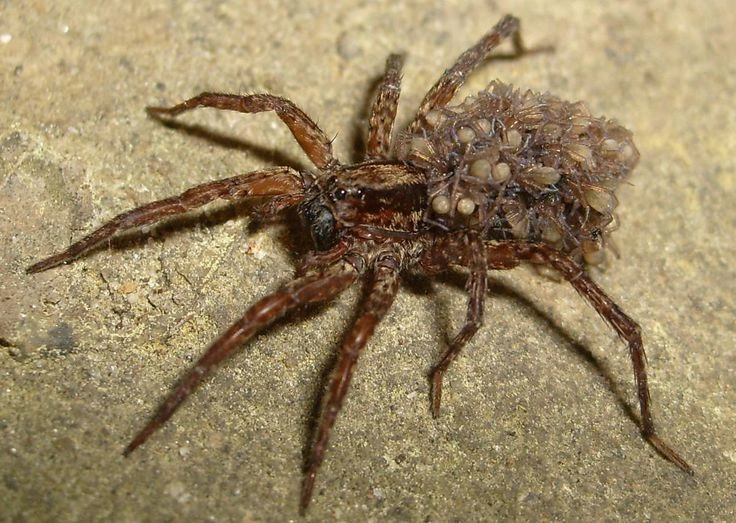
Female wolf spiders are usually larger than males. During breeding season, females may also carry an egg sac attached to the back of their abdomen.
After the eggs hatch, hundreds of tiny spiderlings climb onto their mother’s back. This behavior is one of the easiest ways to identify a female wolf spider and is rarely seen in other common spider species.
Wolf Spider Appearance
Although different species vary slightly, most wolf spiders share several common features.
| Characteristic | Description |
|---|---|
| Color | Brown, gray, black, or tan |
| Body | Hairy and sturdy |
| Legs | Long, thick, and powerful |
| Eyes | Eight eyes in three rows |
| Web | Does not build hunting webs |
| Movement | Fast runner and active hunter |
Their natural markings often resemble leaves, bark, or soil. This camouflage helps them hide from predators while waiting for prey.
Some species have lighter stripes running along the back, while others display darker patterns that break up their outline against the ground.
Where Do Wolf Spiders Live?
The wolf spider habitat is incredibly diverse. These spiders are highly adaptable and live in many different environments around the world.
Common outdoor locations include:
- Gardens
- Lawns
- Forest floors
- Grasslands
- Riverbanks
- Deserts
- Fields
- Woodland edges
Many species prefer loose soil where they can hide beneath rocks, logs, or fallen leaves during the day.
Some wolf spiders also dig shallow burrows, especially in dry areas. They wait near the entrance before rushing out to capture passing insects.
Because they hunt on the ground, they are most active at night when temperatures are cooler and insect activity increases.
Wolf Spider Habitat Around Homes
Although wolf spiders mainly live outdoors, people occasionally find a wolf spider indoors.
They often enter houses through:
- Open doors
- Small cracks
- Garage entrances
- Basement windows
- Gaps around pipes
In most cases, they are simply searching for insects or shelter from changing weather.
You may spot them in:
- Basements
- Garages
- Laundry rooms
- Storage spaces
- Closets
- Under furniture
Unlike many household spiders, wolf spiders usually do not stay in one corner spinning webs. Instead, they continue moving around as they hunt.
Finding a single wolf spider inside does not usually mean your home has an infestation. More often, it is a temporary visitor that wandered indoors.
Wolf Spider Behavior
Wolf spiders have several behaviors that make them different from many other spiders.
Active Hunters
They rely on speed, sharp eyesight, and patience rather than webs. Once they detect prey, they quickly chase and capture it.
Mostly Nocturnal
Most wolf spiders become active after sunset. Their excellent night vision allows them to hunt efficiently in low light.
Excellent Parents
Female wolf spiders are known for their unusual parenting behavior. They carry their egg sac until it hatches and then transport their spiderlings on their back for several days, protecting them during their earliest stage of life.
This level of parental care is uncommon among spiders and is one of the most fascinating wolf spider facts.
Interesting Wolf Spider Facts
Here are some surprising facts about wolf spiders:
| Fact | Details |
|---|---|
| They don’t hunt with webs | They chase prey instead of trapping it. |
| They have excellent eyesight | Their large middle eyes improve night vision. |
| Females carry their young | Spiderlings ride on their mother’s back after hatching. |
| They help control pests | They feed on many insects found around homes and gardens. |
| They are found worldwide | Different species live on nearly every continent except Antarctica. |
These characteristics make wolf spiders one of the most successful hunting spiders in nature.
Wolf Spider Bite
Many people worry about a wolf spider bite, especially after spotting one indoors. The good news is that bites are uncommon because wolf spiders usually try to escape instead of attacking people.
A bite may happen if the spider is trapped against the skin or accidentally handled. In most cases, the symptoms are mild and improve within a few days.
Common Symptoms of a Wolf Spider Bite
| Symptom | What You May Notice |
|---|---|
| Pain | Mild to moderate pain at the bite site |
| Redness | A small red area around the bite |
| Swelling | Slight swelling for a short time |
| Itching | Mild itching as the skin heals |
Most healthy adults recover without medical treatment. However, if you experience severe swelling, difficulty breathing, or signs of an allergic reaction, seek medical care immediately.
Is a Wolf Spider Poisonous?
A common question is whether a wolf spider is poisonous.
The answer is no. Wolf spiders are venomous, not poisonous. This means they use venom to catch insects, but they are not poisonous to touch or be around.
Their venom is designed for small prey, not humans. For most people, a wolf spider bite causes only temporary discomfort similar to a bee sting.
Although serious reactions are rare, every person responds differently. If symptoms become worse instead of better, it is safest to contact a healthcare professional.
Wolf Spider vs Brown Recluse
People often confuse a wolf spider with a brown recluse because both are brown and found in similar places. However, there are several important differences.
| Feature | Wolf Spider | Brown Recluse |
|---|---|---|
| Body | Hairy and sturdy | Smooth and slender |
| Color | Brown, gray, or black with patterns | Light to dark brown, usually plain |
| Markings | Stripes or natural patterns | Violin-shaped mark on the back |
| Eyes | Eight eyes in three rows | Six eyes in three pairs |
| Hunting Style | Hunts on the ground | Hides in quiet places and hunts at night |
| Bite | Usually mild | Can require medical attention in some cases |
The easiest way to tell them apart is by looking at the eyes and body. Wolf spiders are hairy with eight eyes, while brown recluses have six eyes and a smoother appearance.
If you are unsure about a spider’s identity, avoid touching it and consider taking a clear photo for spider identification.
Why Do Wolf Spiders Come Indoors?
Finding a wolf spider indoors can be surprising, but it does not usually mean your home has a spider problem.
These spiders often enter buildings while searching for food, shelter, or a way out of changing weather.
Common reasons include:
- Looking for insects to eat
- Escaping heavy rain or extreme heat
- Entering through open doors or windows
- Slipping inside through small cracks
Most wolf spiders do not stay indoors for long. They continue searching for prey and may eventually leave on their own.
How to Keep Wolf Spiders Out of Your Home
If you want to reduce the chances of seeing wolf spiders inside, a few simple steps can help.
| Prevention Tip | Why It Helps |
|---|---|
| Seal cracks around doors and windows | Blocks common entry points |
| Install door sweeps | Prevents spiders from crawling underneath |
| Remove clutter | Reduces hiding places |
| Vacuum regularly | Removes insects and spider egg sacs |
| Turn off unnecessary outdoor lights | Attracts fewer insects, which means less food for spiders |
Keeping insect populations low also makes your home less attractive to hunting spiders.
Are Wolf Spiders Helpful?
Despite their scary appearance, wolf spiders are beneficial predators.
They feed on many insects that people consider household or garden pests, including:
- Flies
- Crickets
- Beetles
- Cockroaches
- Ants
- Small caterpillars
Because they naturally control insect populations, many gardeners consider wolf spiders helpful visitors rather than pests.
Common Mistakes When Identifying Wolf Spiders
Misidentification is common because many spiders share similar colors.
Avoid these mistakes:
- Assuming every large brown spider is dangerous
- Confusing a wolf spider with a brown recluse
- Judging a spider by size alone
- Ignoring eye arrangement
- Believing every spider indoors is harmful
Looking at several features instead of just one leads to more accurate spider identification.
Wolf Spider Identification Checklist
Use this quick checklist if you find a spider around your home.
| Question | Yes / No |
|---|---|
| Is the body hairy? | ✓ |
| Does it have eight eyes in three rows? | ✓ |
| Is it running instead of sitting in a web? | ✓ |
| Is it brown, gray, or black with natural markings? | ✓ |
| Does it hunt on the ground? | ✓ |
If you answered “yes” to most of these questions, the spider is likely a wolf spider.
Frequently Asked Questions
Can a wolf spider bite humans?
Yes, but bites are uncommon. They usually happen only when the spider feels trapped or threatened.
Is a wolf spider poisonous to pets?
Wolf spiders are not poisonous. While a curious pet may be bitten, most cases result in only mild irritation. Contact a veterinarian if your pet shows unusual symptoms.
Do wolf spiders build webs?
No. They use webs mainly for egg sacs or shelter, not for catching prey.
Are wolf spiders aggressive?
No. They generally avoid people and prefer to run away rather than attack.
How big can a wolf spider get?
Most species have a body length of 0.4 to 1.4 inches (10–35 mm). Their long legs can make them appear much larger.
Should I remove a wolf spider from my house?
If possible, gently capture it with a container and release it outside. Since wolf spiders help control insects, there is usually no need to kill them.
Conclusion
A wolf spider may look intimidating at first, but it is usually more helpful than harmful. Its hairy body, unique eye arrangement, fast movement, and hunting behavior make it one of the easiest spiders to identify once you know what to look for.
Understanding wolf spider size, wolf spider habitat, and the difference between a wolf spider vs brown recluse can help you respond calmly if you find one around your home. While a wolf spider bite can happen, it is uncommon and is typically mild for most people.
Learning accurate spider identification not only reduces unnecessary fear but also helps you appreciate the important role these spiders play in controlling insect populations.
