Independent Norwegian wildlife news
Norway | Est. 2026
Moose vs Elk: 15 Key Differences in Size, Habitat, Antlers & Behavior (2026 Guide)

Moose vs Elk: 15 Key Differences in Size, Habitat, Antlers & Behavior (2026 Guide)

Key Takeaways

  • Moose are larger than elk in both height and moose weight.
  • Moose antlers are broad and paddle shaped, while elk antlers are long and pointed.
  • Moose habitat mainly includes wetlands and dense forests.
  • Elk habitat consists of grasslands, mountain forests, and open meadows.
  • Moose are usually solitary, whereas elk prefer living in herds.
  • Both animals are remarkable members of the deer family with unique adaptations for survival.

Quick Answer

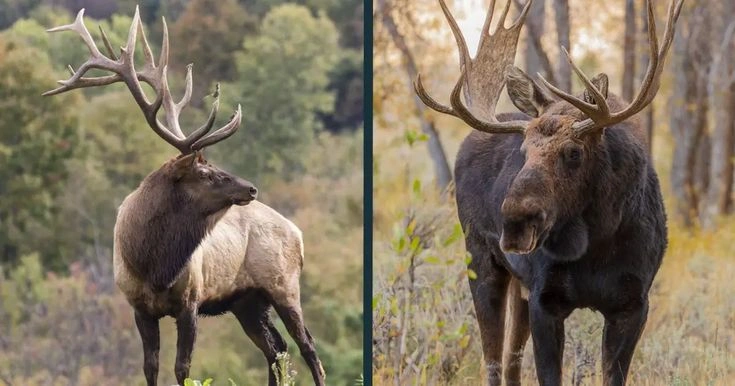
The biggest difference between moose and elk is their size and appearance. A moose is the largest member of the deer family, with broad, flat antlers and a dark brown body. An elk is smaller, has long pointed antlers, and usually has a lighter brown coat with a pale rump patch.

While both animals live in North America and parts of Europe and Asia, they prefer different habitats and behave differently in the wild.

Moose vs Elk at a Glance

Feature Moose Elk
Scientific Name Alces alces Cervus canadensis
Deer Family Yes Yes
Average Height Up to 2.1 m (7 ft) at the shoulder Around 1.5 m (5 ft)
Average Weight 270–700 kg 225–500 kg
Antlers Wide and flat Long and pointed
Habitat Forests, wetlands, lakes Forests, grasslands, mountains
Social Life Usually solitary Lives in herds
Sound Grunts and bellows Loud bugle calls

This overview makes it clear that although both belong to the deer family, they have several noticeable differences.

Moose vs Elk Size

One of the easiest ways to compare moose vs elk size is by looking at their height and overall body shape. A moose is significantly taller and heavier than an elk, making it the largest living member of the deer family.

Adult bull moose often stand over 2 metres tall at the shoulder. Their long legs help them move through deep snow, marshes, and shallow lakes with ease.

Elk, on the other hand, have a slimmer build and shorter legs. While they are still among the largest deer species in the world, they appear more athletic and graceful than moose.

Moose vs Elk Size Comparison

Measurement Moose Elk
Shoulder Height Up to 2.1 m Up to 1.5 m
Body Length Up to 3.2 m Up to 2.7 m
Leg Length Very long Moderate
Overall Build Massive and bulky Lean and muscular

If you ever see both animals side by side, the moose vs elk size difference becomes obvious almost immediately.

Moose Weight vs Elk Weight
Moose Weight vs Elk Weight

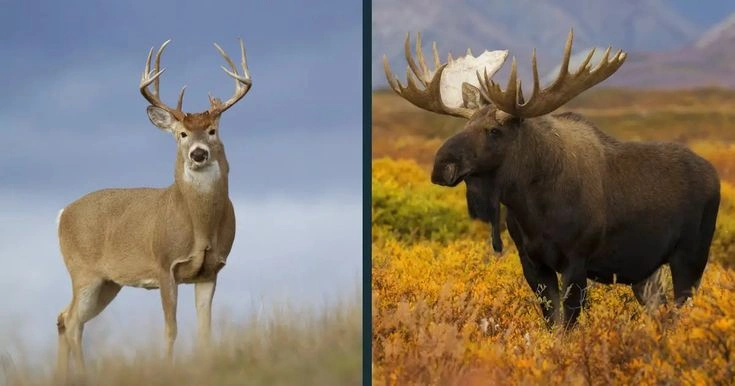
Another major difference in elk vs moose is body weight.

A mature bull moose can weigh anywhere between 380 and 700 kilograms depending on its location and age. Some individuals found in Alaska are even heavier.

Elk are much lighter. Most adult bulls weigh between 320 and 500 kilograms, while females are considerably smaller.

Moose Weight Comparison

Animal Typical Weight
Adult Bull Moose 380–700 kg
Adult Cow Moose 270–450 kg
Adult Bull Elk 320–500 kg
Adult Cow Elk 225–300 kg

The impressive moose weight gives it a natural advantage against predators. However, carrying such a large body also means it requires more food throughout the year.

Moose Antlers vs Elk Antlers

One of the most noticeable differences in moose vs elk is the shape of their antlers.

Moose Antlers

Moose antlers are broad, flat, and shaped like open hands or paddles. They can spread over 1.8 metres across and are among the largest antlers found in any living deer species.

Their unique shape helps bulls compete with rivals during the breeding season and makes them easy to identify from a distance.

Elk Antlers

In contrast, elk antlers are long, narrow, and branch upward with several pointed tines. Instead of looking flat, they resemble tall tree branches.

Bull elk use these antlers during rutting season to display strength and compete for mates.

Moose Antlers vs Elk Antlers

Feature Moose Antlers Elk Antlers
Shape Wide and flat Long and pointed
Appearance Paddle-like Branching tines
Width Often over 1.8 m Generally narrower
Best For Display and fighting Display and fighting

The shape of the antlers is often the quickest way to identify whether you’re looking at a moose or an elk.

Moose Habitat vs Elk Habitat
Moose Habitat vs Elk Habitat

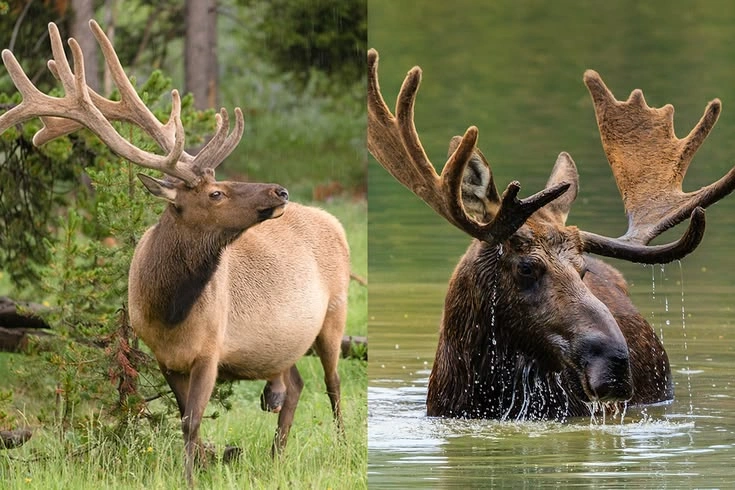
Comparing moose habitat and elk habitat reveals how each animal has adapted to different environments.

Moose thrive in cool forests filled with ponds, rivers, wetlands, and dense vegetation. They are excellent swimmers and often feed on underwater plants during warmer months.

Elk prefer more open landscapes. They commonly live in mountain forests, valleys, meadows, and grasslands where they can graze in large groups.

Moose Habitat

  • Boreal forests
  • Wetlands
  • Lakeshores
  • Swamps
  • Northern woodlands

Elk Habitat

  • Mountain forests
  • Grasslands
  • Meadows
  • Open woodlands
  • High-elevation valleys

Although their ranges sometimes overlap, moose habitat usually contains more water, while elk habitat offers larger open spaces for grazing.

Physical Appearance

Besides size, moose vs elk also differ in several physical features.

A moose has a long face, drooping nose, and a flap of loose skin beneath its throat known as a bell. Its shoulders are noticeably higher than its hips, giving it a distinctive profile.

An elk has a shorter face, slimmer body, and a lighter coat with a cream-coloured rump patch. Its neck becomes darker during the breeding season, especially in mature bulls.

These differences make it easier to tell the two animals apart, even from a distance.

Behaviour Differences

The behaviour of elk vs moose is another important distinction.

Moose are mostly solitary animals. Adults spend much of the year alone except during the breeding season or when females are raising calves. They tend to avoid unnecessary encounters and often move quietly through forests.

Elk are far more social. They form herds that can range from a few individuals to several hundred animals. Living in groups helps them detect predators earlier and provides extra protection during migration.

During autumn, bull elk are famous for their loud bugling calls, which echo across valleys as they compete for mates. Moose communicate differently, using lower grunts and bellows rather than high-pitched calls.

Diet Comparison

Diet is another area where moose vs elk differ. Both animals are herbivores, but they eat different types of plants depending on where they live and the season.

Moose are browsers. They prefer leaves, twigs, bark, shrubs, and aquatic plants. During summer, they often wade into lakes and ponds to feed on underwater vegetation rich in minerals.

Elk are grazers for much of the year. They mainly eat grasses but also browse on shrubs, leaves, and tree bark when food becomes scarce in winter.

Moose vs Elk Diet

Feature Moose Elk
Main Diet Leaves, twigs, bark, aquatic plants Grasses, shrubs, leaves
Feeding Style Browser Grazer and browser
Favourite Habitat for Feeding Wetlands and forests Meadows and grasslands
Water Plants Frequently eaten Rarely eaten

Although both animals survive on plants, their feeding habits reflect the environments they call home.

Reproduction and Breeding Season

The breeding season brings noticeable changes in both species.

Bull moose become more aggressive during autumn as they compete for females. They use their large antlers to challenge rivals and establish dominance. After a gestation period of about eight months, females usually give birth to one calf, although twins are possible.

Elk also breed in autumn during a period known as the rut. Bull elk gather groups of females and defend them from competing males. Their famous bugling calls can travel long distances and are one of the most recognisable sounds in North American forests.

Young calves of both species stay close to their mothers during their first year, learning where to find food and how to avoid predators.

Lifespan and Predators

Both animals face challenges from predators and harsh weather, especially when they are young.

Moose typically live between 15 and 20 years in the wild if they avoid disease and major injuries. Elk have a similar lifespan, although many live slightly fewer years because of predators and hunting pressure.

Common predators include:

Animal Main Predators
Moose Wolves, brown bears, black bears, humans
Elk Wolves, mountain lions, bears, coyotes (calves), humans

Adult moose are difficult for predators to bring down because of their massive moose weight and powerful kicks. Elk rely more on speed and the safety of the herd to escape danger.

15 Key Differences in Moose vs Elk

Feature Moose Elk
1. Size Largest member of the deer family Smaller than moose
2. Weight Much heavier Lighter
3. Height Taller shoulders Shorter shoulders
4. Antlers Broad, flat moose antlers Long pointed elk antlers
5. Face Long nose Shorter face
6. Colour Dark brown to black Light brown with pale rump
7. Habitat Wet forests and lakes Forests, meadows and mountains
8. Social Behaviour Mostly solitary Lives in herds
9. Calls Grunts and bellows Loud bugles
10. Diet Browses shrubs and aquatic plants Mostly grazes on grass
11. Swimming Excellent swimmer Good swimmer but less aquatic
12. Running Speed Moderate Faster over open ground
13. Temperament Can be unpredictable Generally cautious but social
14. Geographic Range Northern forests Wider variety of landscapes
15. Overall Appearance Bulky with long legs Lean and athletic

This side-by-side comparison highlights why understanding moose vs elk is easier once you know what features to look for.

Moose Facts

Learning a few moose facts makes these remarkable animals even more interesting.

  • Moose are the largest living members of the deer family.
  • Their long legs help them walk through deep snow and marshes.
  • Moose can swim several kilometres without stopping.
  • They can close their nostrils while feeding underwater.
  • Bulls shed their antlers every winter and grow new ones each year.
  • Despite their size, moose can run surprisingly fast over short distances.

Elk Facts

Here are some fascinating elk facts that set them apart.

  • Elk are among the largest deer species in the world.
  • Bull elk produce loud bugling calls during the breeding season.
  • Elk often migrate between summer and winter ranges.
  • Large herds provide better protection from predators.
  • Their antlers are shed and regrown every year.
  • Elk can cover long distances while searching for food.

Common Mistakes When Comparing Moose vs Elk

Many people confuse these two animals because they belong to the same family. Avoid these common mistakes.

  • Assuming every large deer is a moose.
  • Looking only at antler size instead of antler shape.
  • Ignoring habitat differences.
  • Forgetting that female moose and female elk usually do not have antlers.
  • Thinking elk and European elk are the same animal. In Europe, the animal called “elk” is actually the species known as the moose in North America.

Expert Tips for Identifying Moose and Elk

  • If you are watching wildlife, these simple tips can help you identify each animal quickly.
  •  Look at the antlers first. Flat antlers usually mean moose, while pointed branching antlers belong to elk.
  • Notice the body shape. Moose appear taller, heavier, and have longer legs.
  • Check the surroundings. Animals feeding near lakes and wetlands are more likely to be moose, while those grazing in open meadows are often elk.
  • Listen carefully. A bugling call almost always indicates an elk during the breeding season.

Moose vs Elk Identification Checklist

Use this checklist for a quick comparison.

Question Moose Elk
Very large body?
Flat paddle-shaped antlers?
Long pointed antlers?
Lives in a large herd?
Often found near wetlands?
Pale rump patch?
Long drooping nose?

Frequently Asked Questions

Is a moose bigger than an elk?

Yes. In almost every comparison of moose vs elk size, the moose is taller, heavier, and larger overall.

Are moose and elk in the same deer family?

Yes. Both belong to the deer family, but they are different species with distinct characteristics.

Which has larger antlers, a moose or an elk?

Moose antlers are generally wider because of their flat, paddle-like shape. Elk antlers are longer and more branched.

Can moose and elk live in the same area?

Yes. In some regions of North America, their ranges overlap, although they often prefer different habitats and food sources.

Which animal is more aggressive?

Both species can become aggressive during the breeding season or when protecting their young. Giving either animal plenty of space is always the safest choice.

Can moose swim?

Yes. Moose are excellent swimmers and frequently cross rivers and lakes while searching for food.

Conclusion

Understanding moose vs elk becomes much easier once you compare their size, antlers, habitat, behaviour, and diet. Although they belong to the same deer family, they have evolved to thrive in different environments.

A moose stands out with its towering height, impressive moose weight, paddle-shaped antlers, and preference for wetlands. An elk, by contrast, is leaner, more social, and well adapted to grasslands and mountain forests.

Whether you are exploring national parks, studying wildlife, or simply satisfying your curiosity, knowing these differences will help you identify each species with confidence.

Sam Sami

Sam loves discovering how things work and sharing ideas through writing. His goal is simple: create content that is interesting, useful, and helps readers learn something valuable every day. Sam@brandclickx.com